
中文 · 한국어 · 日本語 · Русский · Deutsch · Français · Español · Português · Türkçe · Tiếng Việt · العربية











Watch: How to Train a YOLO26 model on Your Custom Dataset in Google Colab.
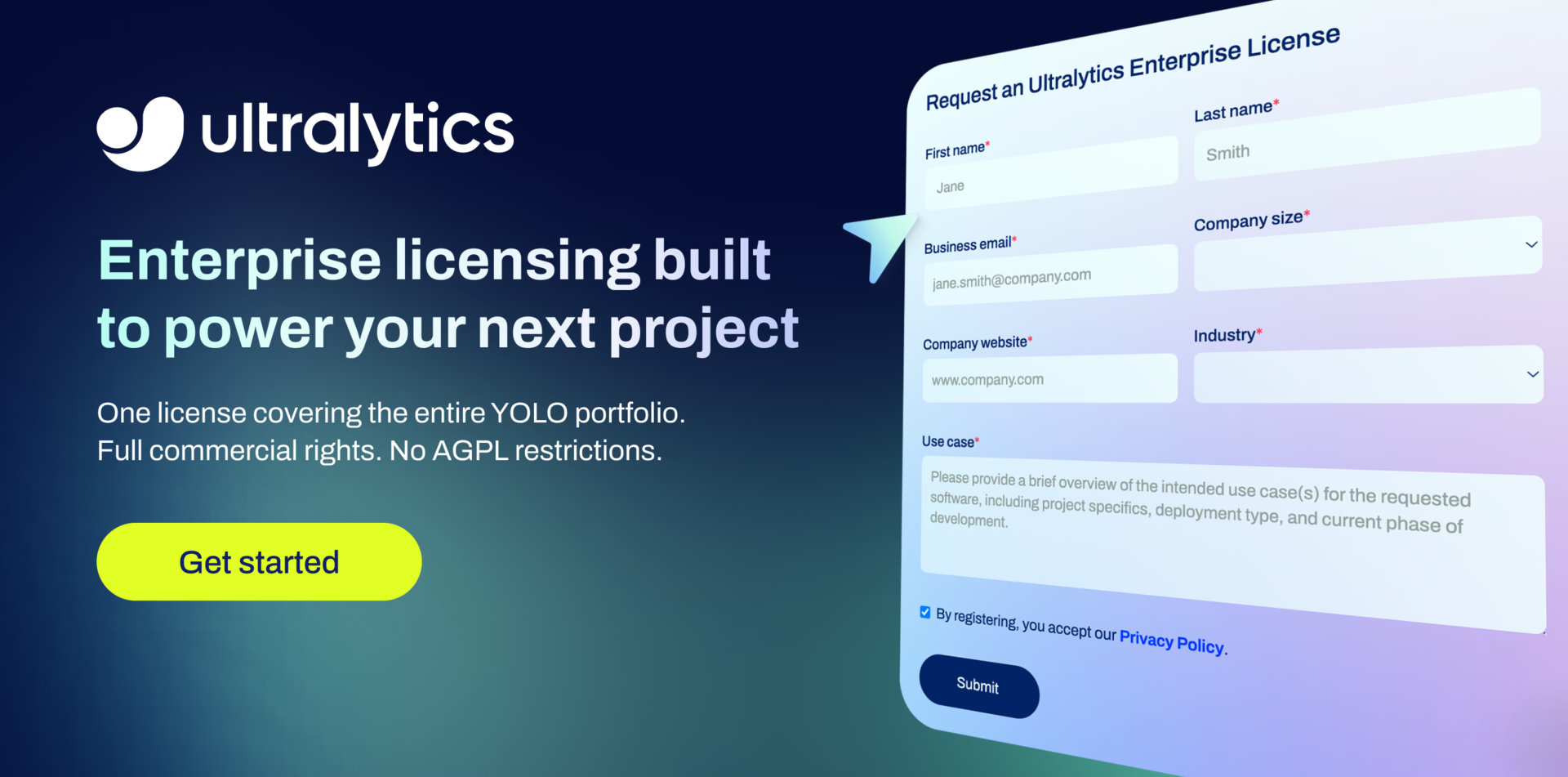 Ultralytics offers two licensing options to accommodate diverse use cases:
- **AGPL-3.0 License**: This [OSI-approved](https://opensource.org/license/agpl-3.0) open-source license is ideal for students and enthusiasts, promoting open collaboration and knowledge sharing. See the [LICENSE](https://github.com/ultralytics/ultralytics/blob/main/LICENSE) file for more details.
- **Enterprise License**: For development and production use, this license enables seamless integration of Ultralytics software and AI models into business products and services, including internal tools, automated workflows, and production deployments, bypassing the open-source requirements of AGPL-3.0. To get started, please contact us via [Ultralytics Licensing](https://www.ultralytics.com/license).
Our licensing strategy is designed to ensure that any improvements to our open-source projects are returned to the community. We believe in open source, and our mission is to ensure that our contributions can be used and expanded in ways that benefit everyone.
## The Evolution of Object Detection
Object detection has evolved significantly over the years, from traditional computer vision techniques to advanced deep learning models. The [YOLO family of models](https://www.ultralytics.com/blog/the-evolution-of-object-detection-and-ultralytics-yolo-models) has been at the forefront of this evolution, consistently pushing the boundaries of what's possible in real-time object detection.
YOLO's unique approach treats object detection as a single regression problem, predicting [bounding boxes](https://www.ultralytics.com/glossary/bounding-box) and class probabilities directly from full images in one evaluation. This revolutionary method has made YOLO models significantly faster than previous two-stage detectors while maintaining high accuracy.
With each new version, YOLO has introduced architectural improvements and innovative techniques that have enhanced performance across various metrics. YOLO26 continues this tradition by incorporating the latest advancements in computer vision research, featuring end-to-end NMS-free inference and optimized edge deployment for real-world applications.
## FAQ
### What is Ultralytics YOLO and how does it improve object detection?
Ultralytics YOLO is the acclaimed YOLO (You Only Look Once) series for real-time object detection and image segmentation. The latest model, [YOLO26](models/yolo26.md), builds on previous versions by introducing end-to-end NMS-free inference and optimized edge deployment. YOLO supports various [vision AI tasks](tasks/index.md) such as [detection](tasks/detect.md), [instance segmentation](tasks/segment.md), [semantic segmentation](tasks/semantic.md), [pose estimation](tasks/pose.md), [tracking](modes/track.md), and [classification](tasks/classify.md). Its efficient architecture ensures excellent speed and accuracy, making it suitable for diverse applications, including edge devices and cloud APIs.
### How can I get started with YOLO installation and setup?
Getting started with YOLO is quick and straightforward. You can install the Ultralytics package using [pip](https://pypi.org/project/ultralytics/) and get up and running in minutes. Here's a basic installation command:
!!! example "Installation using pip"
=== "CLI"
```bash
pip install -U ultralytics
```
For a comprehensive step-by-step guide, visit our [Quickstart](quickstart.md) page. This resource will help you with installation instructions, initial setup, and running your first model.
### How can I train a custom YOLO model on my dataset?
Training a custom YOLO model on your dataset involves a few detailed steps:
1. Prepare your annotated dataset.
2. Configure the training parameters in a YAML file.
3. Use the `yolo TASK train` command to start training. (Each `TASK` has its own argument)
Here's example code for the Object Detection Task:
!!! example "Train Example for Object Detection Task"
=== "Python"
```python
from ultralytics import YOLO
# Load a pretrained YOLO model (you can choose n, s, m, l, or x versions)
model = YOLO("yolo26n.pt")
# Start training on your custom dataset
model.train(data="path/to/dataset.yaml", epochs=100, imgsz=640)
```
=== "CLI"
```bash
# Train a YOLO model from the command line
yolo detect train data=path/to/dataset.yaml epochs=100 imgsz=640
```
For a detailed walkthrough, check out our [Train a Model](modes/train.md) guide, which includes examples and tips for optimizing your training process.
### What are the licensing options available for Ultralytics YOLO?
Ultralytics offers two licensing options for YOLO:
- **AGPL-3.0 License**: This open-source license is ideal for educational and non-commercial use, promoting open collaboration.
- **Enterprise License**: For development and production use, including internal tools, automated workflows, and production deployments, bypassing the open-source requirements of AGPL-3.0.
For more details, visit our [Licensing](https://www.ultralytics.com/license) page.
### How can Ultralytics YOLO be used for real-time object tracking?
Ultralytics YOLO supports efficient and customizable multi-object tracking. To utilize tracking capabilities, you can use the `yolo track` command, as shown below:
!!! example "Example for Object Tracking on a Video"
=== "Python"
```python
from ultralytics import YOLO
# Load a pretrained YOLO model
model = YOLO("yolo26n.pt")
# Start tracking objects in a video
# You can also use live video streams or webcam input
model.track(source="path/to/video.mp4")
```
=== "CLI"
```bash
# Perform object tracking on a video from the command line
# You can specify different sources like webcam (0) or RTSP streams
yolo track source=path/to/video.mp4
```
For a detailed guide on setting up and running object tracking, check our [Track Mode](modes/track.md) documentation, which explains the configuration and practical applications in real-time scenarios.
Ultralytics offers two licensing options to accommodate diverse use cases:
- **AGPL-3.0 License**: This [OSI-approved](https://opensource.org/license/agpl-3.0) open-source license is ideal for students and enthusiasts, promoting open collaboration and knowledge sharing. See the [LICENSE](https://github.com/ultralytics/ultralytics/blob/main/LICENSE) file for more details.
- **Enterprise License**: For development and production use, this license enables seamless integration of Ultralytics software and AI models into business products and services, including internal tools, automated workflows, and production deployments, bypassing the open-source requirements of AGPL-3.0. To get started, please contact us via [Ultralytics Licensing](https://www.ultralytics.com/license).
Our licensing strategy is designed to ensure that any improvements to our open-source projects are returned to the community. We believe in open source, and our mission is to ensure that our contributions can be used and expanded in ways that benefit everyone.
## The Evolution of Object Detection
Object detection has evolved significantly over the years, from traditional computer vision techniques to advanced deep learning models. The [YOLO family of models](https://www.ultralytics.com/blog/the-evolution-of-object-detection-and-ultralytics-yolo-models) has been at the forefront of this evolution, consistently pushing the boundaries of what's possible in real-time object detection.
YOLO's unique approach treats object detection as a single regression problem, predicting [bounding boxes](https://www.ultralytics.com/glossary/bounding-box) and class probabilities directly from full images in one evaluation. This revolutionary method has made YOLO models significantly faster than previous two-stage detectors while maintaining high accuracy.
With each new version, YOLO has introduced architectural improvements and innovative techniques that have enhanced performance across various metrics. YOLO26 continues this tradition by incorporating the latest advancements in computer vision research, featuring end-to-end NMS-free inference and optimized edge deployment for real-world applications.
## FAQ
### What is Ultralytics YOLO and how does it improve object detection?
Ultralytics YOLO is the acclaimed YOLO (You Only Look Once) series for real-time object detection and image segmentation. The latest model, [YOLO26](models/yolo26.md), builds on previous versions by introducing end-to-end NMS-free inference and optimized edge deployment. YOLO supports various [vision AI tasks](tasks/index.md) such as [detection](tasks/detect.md), [instance segmentation](tasks/segment.md), [semantic segmentation](tasks/semantic.md), [pose estimation](tasks/pose.md), [tracking](modes/track.md), and [classification](tasks/classify.md). Its efficient architecture ensures excellent speed and accuracy, making it suitable for diverse applications, including edge devices and cloud APIs.
### How can I get started with YOLO installation and setup?
Getting started with YOLO is quick and straightforward. You can install the Ultralytics package using [pip](https://pypi.org/project/ultralytics/) and get up and running in minutes. Here's a basic installation command:
!!! example "Installation using pip"
=== "CLI"
```bash
pip install -U ultralytics
```
For a comprehensive step-by-step guide, visit our [Quickstart](quickstart.md) page. This resource will help you with installation instructions, initial setup, and running your first model.
### How can I train a custom YOLO model on my dataset?
Training a custom YOLO model on your dataset involves a few detailed steps:
1. Prepare your annotated dataset.
2. Configure the training parameters in a YAML file.
3. Use the `yolo TASK train` command to start training. (Each `TASK` has its own argument)
Here's example code for the Object Detection Task:
!!! example "Train Example for Object Detection Task"
=== "Python"
```python
from ultralytics import YOLO
# Load a pretrained YOLO model (you can choose n, s, m, l, or x versions)
model = YOLO("yolo26n.pt")
# Start training on your custom dataset
model.train(data="path/to/dataset.yaml", epochs=100, imgsz=640)
```
=== "CLI"
```bash
# Train a YOLO model from the command line
yolo detect train data=path/to/dataset.yaml epochs=100 imgsz=640
```
For a detailed walkthrough, check out our [Train a Model](modes/train.md) guide, which includes examples and tips for optimizing your training process.
### What are the licensing options available for Ultralytics YOLO?
Ultralytics offers two licensing options for YOLO:
- **AGPL-3.0 License**: This open-source license is ideal for educational and non-commercial use, promoting open collaboration.
- **Enterprise License**: For development and production use, including internal tools, automated workflows, and production deployments, bypassing the open-source requirements of AGPL-3.0.
For more details, visit our [Licensing](https://www.ultralytics.com/license) page.
### How can Ultralytics YOLO be used for real-time object tracking?
Ultralytics YOLO supports efficient and customizable multi-object tracking. To utilize tracking capabilities, you can use the `yolo track` command, as shown below:
!!! example "Example for Object Tracking on a Video"
=== "Python"
```python
from ultralytics import YOLO
# Load a pretrained YOLO model
model = YOLO("yolo26n.pt")
# Start tracking objects in a video
# You can also use live video streams or webcam input
model.track(source="path/to/video.mp4")
```
=== "CLI"
```bash
# Perform object tracking on a video from the command line
# You can specify different sources like webcam (0) or RTSP streams
yolo track source=path/to/video.mp4
```
For a detailed guide on setting up and running object tracking, check our [Track Mode](modes/track.md) documentation, which explains the configuration and practical applications in real-time scenarios.