Ultralytics Explorer#
اعتبارًا من ultralytics>=8.3.12، أُزيل Ultralytics Explorer. لاستخدام Explorer، ثبّت pip install ultralytics==8.3.11. تتوفر ميزات مماثلة (وموسّعة) لاستكشاف مجموعات البيانات على منصة Ultralytics.
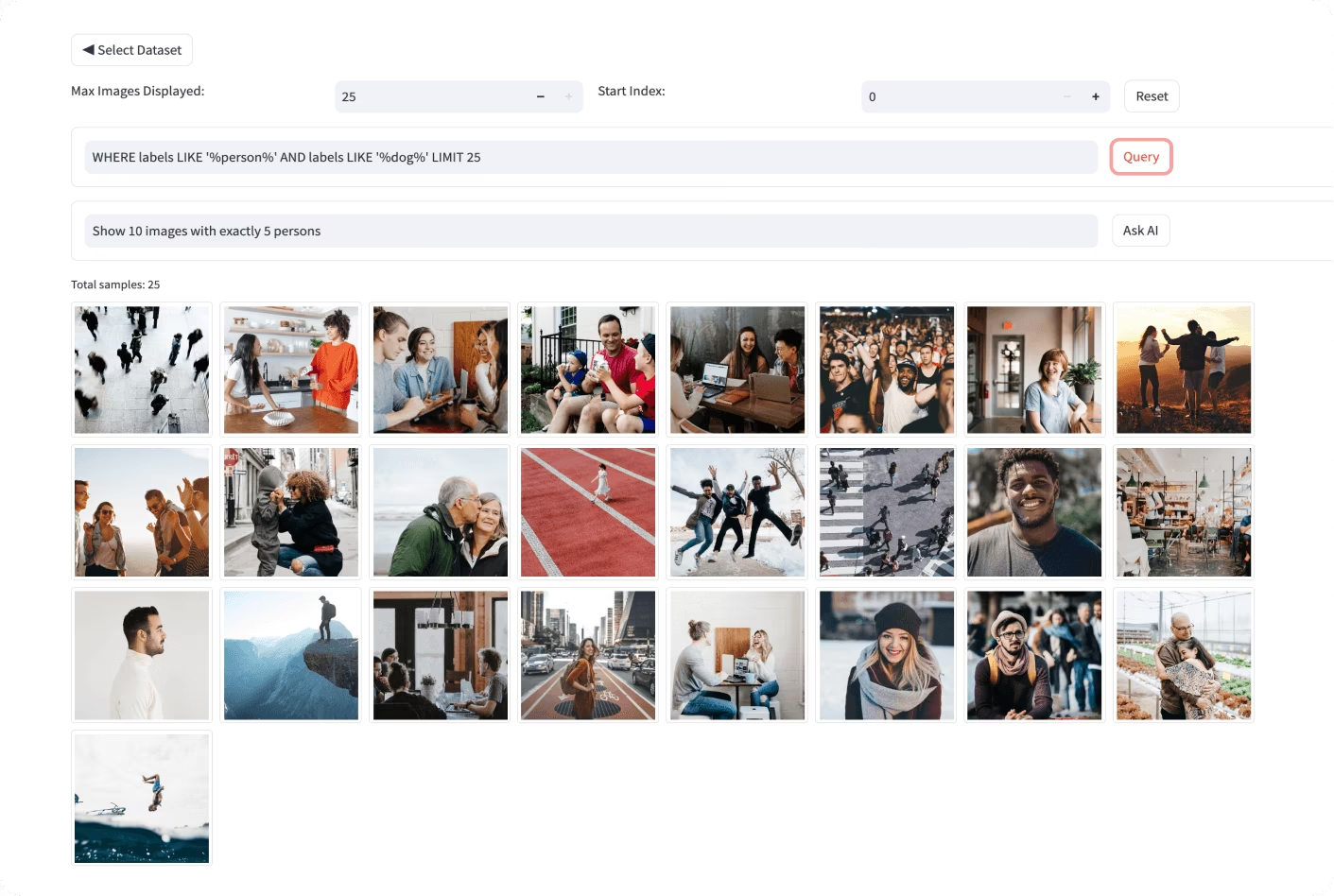
Ultralytics Explorer أداة لاستكشاف مجموعات بيانات الرؤية الحاسوبية باستخدام البحث الدلالي واستعلامات SQL والبحث عن تشابه المتجهات والمطالبات باللغة الطبيعية. كما توفر واجهة Python API للوصول إلى الوظائف نفسها.
شاهد: واجهة Explorer API من Ultralytics | البحث الدلالي واستعلامات SQL وميزات «اسأل الذكاء الاصطناعي»
تثبيت التبعيات الاختيارية#
يعتمد Explorer على مكتبات خارجية لبعض وظائفه. تُثبَّت هذه المكتبات تلقائيًا عند استخدام Explorer. لتثبيت هذه التبعيات يدويًا، استخدم الأمر التالي:
pip install "ultralytics[explorer]==8.3.11"يعتمد Explorer على التضمينات والبحث الدلالي واستعلامات SQL، ويستخدم خادم LanceDB عديم الخادم بوصفه قاعدة بيانات متجهية. وعلى خلاف قواعد البيانات التقليدية الموجودة في الذاكرة، تُحفظ بياناته على القرص من دون التضحية بالأداء، ما يتيح لك التوسع محليًا إلى مجموعات بيانات كبيرة مثل COCO من دون نفاد الذاكرة.
واجهة Explorer API#
هذه واجهة Python API لاستكشاف مجموعات بياناتك. وهي تشغّل أيضًا واجهة Explorer الرسومية. يمكنك استخدامها لإنشاء دفاتر ملاحظات أو برامج نصية خاصة بك للاستكشاف واستخلاص الرؤى من مجموعات بياناتك.
استكشف الإمكانات الكاملة وأمثلة الاستخدام في وثائق Explorer API.
استخدام واجهة Explorer الرسومية#
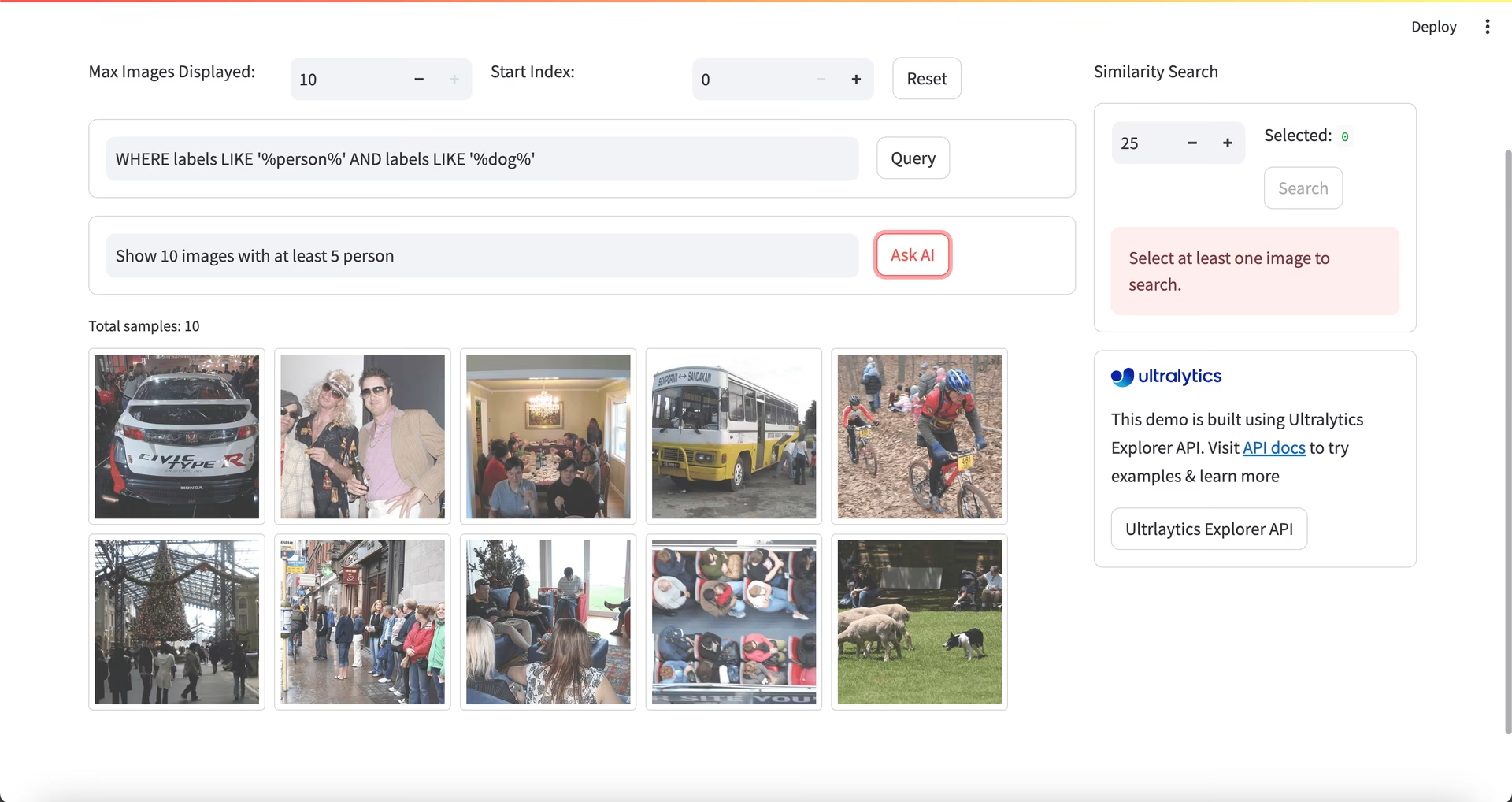
يعمل العرض التوضيحي للواجهة الرسومية في متصفحك، ويتيح لك إنشاء تضمينات لمجموعة بياناتك والبحث عن صور مشابهة، وتشغيل استعلامات SQL وإجراء البحث الدلالي. ويمكن تشغيله باستخدام الأمر التالي:
yolo explorerتستخدم ميزة Ask AI خدمة OpenAI، لذا سيُطلب منك تعيين مفتاح API الخاص بـ OpenAI عند تشغيل الواجهة الرسومية لأول مرة. يمكنك تعيينه بهذا الشكل - yolo settings openai_api_key="..."
الأسئلة الشائعة#
Ultralytics Explorer أداة لاستكشاف مجموعات بيانات الرؤية الحاسوبية (CV) باستخدام البحث الدلالي واستعلامات SQL والبحث عن تشابه المتجهات واللغة الطبيعية. وهي توفر واجهة مستخدم رسومية وواجهة Python API. وبفضل تخزين التضمينات على القرص باستخدام LanceDB، يمكنها التعامل مع مجموعات بيانات كبيرة دون استهلاك مفرط للذاكرة.
تعرّف على المزيد حول Explorer API.
لتثبيت التبعيات الاختيارية اللازمة لـ Ultralytics Explorer يدويًا، يمكنك استخدام الأمر
pipالتالي:pip install "ultralytics[explorer]==8.3.11"هذه التبعيات مطلوبة للبحث الدلالي واستعلامات SQL. وتشمل LanceDB، التي تحافظ على كفاءة عمليات قواعد البيانات وقابليتها للتوسع، حتى مع مجموعات البيانات الكبيرة مثل COCO.
استخدام الإصدار ذي الواجهة الرسومية من Ultralytics Explorer سهل ومباشر. بعد تثبيت التبعيات اللازمة، يمكنك تشغيل الواجهة الرسومية باستخدام الأمر التالي:
yolo explorerتوفر واجهة المستخدم الرسومية واجهة سهلة الاستخدام لإنشاء تضمينات مجموعات البيانات والبحث عن الصور المتشابهة وتشغيل استعلامات SQL وإجراء عمليات البحث الدلالي. كما تتيح ميزة Ask AI، المدعومة من OpenAI، الاستعلام عن مجموعات البيانات باستخدام اللغة الطبيعية.
للاطلاع على معلومات التخزين وقابلية التوسع، راجع تعليمات التثبيت.
تتيح ميزة Ask AI في Ultralytics Explorer للمستخدمين التفاعل مع مجموعات بياناتهم باستخدام استعلامات باللغة الطبيعية. وتتيح هذه الميزة، المدعومة من OpenAI، طرح أسئلة حول مجموعة البيانات دون كتابة استعلامات SQL أو أوامر مماثلة. لاستخدام هذه الميزة، ستحتاج إلى تعيين مفتاح OpenAI API في المرة الأولى التي تشغّل فيها واجهة المستخدم الرسومية:
yolo settings openai_api_key="YOUR_API_KEY"لمزيد من المعلومات حول هذه الميزة وكيفية دمجها، راجع قسم استخدام واجهة Explorer الرسومية.
نعم. ثبّت الإصدار المحدد باستخدام
pip install ultralytics==8.3.11في دفتر ملاحظات Colab، واتبع مثال استكشاف VOC لإنشاء التضمينات وإجراء عمليات البحث باستخدام موارد Google السحابية. تعرّف على المزيد في دليل Google Colab.
التعليقات13
اطرح سؤالًا، وشارك نتائجك، أو ساعد شخصًا آخر.
pooya-github
Hi,
In colab code after running !pip install ultralytics[explorer] and running: from ultralytics import explorer i got the following error:
ImportError Traceback (most recent call last) in <cell line: 1>() ----> 1 from ultralytics import explorer
ImportError: cannot import name 'explorer' from 'ultralytics' (/usr/local/lib/python3.10/dist-packages/ultralytics/init.py)
how can i fix it?
 Glenn JocherUltralytics(تم التعديل)
@pooya-github the
Ultralytics Explorerfeature has been removed as ofultralytics>=8.3.12. To access similar or enhanced functionality, we recommend using Ultralytics Platform, our platform for dataset exploration and management. Let me know if you have further questions!-2
mkutu
how can I set this up with a custom dataset? Could you direct me to any resources. Thanks!
- Glenn JocherUltralytics(تم التعديل)
@mkutu hello!
Setting up YOLO26 with a custom dataset can be straightforward! You'd primarily need a data YAML file to describe your dataset structure and then use it in your training command. Here’s a basic guide to get you started:
-
Prepare your data: Organize your dataset into two folders (images and labels), with corresponding files named identically.
-
Create a YAML file: This file should specify the paths to your training and validation data, the number of classes, and class names. Here's an example:
# custom_data.yaml train: path/to/train/images val: path/to/val/images nc: number_of_classes names: ['class1', 'class2', 'class3'] -
Start Training: Use the following command to train your model:
yolo train data=custom_data.yaml model=yolo26n.yaml
For exploring and managing your datasets efficiently, you might consider using the Ultralytics Explorer (removed in
ultralytics>=8.3.12; useultralytics==8.3.11or Ultralytics Platform). This tool offers features like semantic search, SQL queries, and even AI-based querying to derive insights from your data.Hope this helps! If you have any more questions, feel free to ask.
-2 -
BABAFAREEDDUDEKULA
how can i run above mentioned AI using yolo v8 previously i have tried yolo v9,v8,v7,rt-detr
AloshkaD
Can you be more specific?
- Glenn JocherUltralytics(تم التعديل)
Hey there! 🌟
It sounds like you've got a pretty wide range of experience with various YOLO versions and even RT-DETR! For running AI using YOLO26 specifically, the process is smoothly integrated into the Ultralytics framework, much like the versions you've mentioned.
To get started, make sure you have Ultralytics YOLO26 installed. If not, you can do so via pip:
pip install ultralyticsAnd then, to run your AI model with YOLO26, you can simply use:
from ultralytics import YOLO

# Load the model
model = YOLO('yolo26n.pt')  # Here 'yolo26n.pt' is an example model. Replace it with your model path.

# Run inference
results = model('path_to_your_image_or_video')
Or, if you prefer using the command line:
yolo detect predict model=yolo26n.pt source=path_to_your_image_or_videoRemember to replace 'yolo26n.pt' and 'path_to_your_image_or_video' with the actual paths to your YOLO26 model and the image or video you want to run inference on. 🚀
Since you've used various versions before, the process should feel quite familiar. If there's more specific functionality from the Ultralytics Explorer that you're interested in integrating with YOLO26, such as semantic search or SQL queries, the installation command provided in the documentation will be your first step:
pip install ultralytics[explorer]After that, you can launch the Ultralytics Explorer with:
yolo explorerAnd dive into explore mode (Explorer requires
ultralytics==8.3.11, as it was removed inultralytics>=8.3.12)! For any further details or if you've got a unique use case in mind, feel free to share more specifics. Happy to help further. Happy coding! 🎉1 Thanks a lot my brother
2- Glenn JocherUltralytics(تم التعديل)
Note: Ultralytics Explorer was removed in
ultralytics>=8.3.12; to use it, installultralytics==8.3.11. Similar dataset exploration features are available in Ultralytics Platform.@BABAFAREEDDUDEKULA hey there! 😄
Thanks for reaching out. If you're interested in diving into the Ultralytics Explorer to explore CV datasets with semantic search, SQL queries, vector similarity search, and more, it sounds like you're on the right track!
To get started, ensure you've got the Explorer installed via:
pip install ultralytics[explorer]Once installed, you can jump straight into using the GUI by typing:
yolo explorerThis launches the GUI in your browser, where you can experiment with creating embeddings, conducting image searches, and even using SQL or natural language queries!
If you encounter any issues or have specific questions as you use the Ultralytics Explorer, feel free to drop them here. Happy exploring! 🌟
The yolo explorer command will open the explorer on the local machine. How would I set it up to work on AWS while I'm connected with my local machine using ssh?
 Paula DerrengerUltralytics(تم التعديل)
Note: Ultralytics Explorer was removed in
ultralytics>=8.3.12; to use it, installultralytics==8.3.11. Similar dataset exploration features are available in Ultralytics Platform.To set up the Ultralytics Explorer to work on an AWS instance while you're connected via SSH from your local machine, you can use port forwarding to access the Explorer's web interface. Here's a concise step-by-step guide:
-
SSH into AWS with Port Forwarding: Use the
-Loption to forward a local port to a port on the AWS instance. Replacelocal_portwith a port on your local machine (e.g.,8080), andaws_portwith the port the Explorer runs on (usually5000).ssh -i /path/to/your/key.pem -L local_port:localhost:aws_port user @AloshkaD -
Run Explorer on AWS: Once connected, start the Explorer on the AWS instance:
yolo explorer -
Access Explorer Locally: Open a web browser on your local machine and navigate to
localhost:local_portto access the Explorer interface.
Remember to replace
/path/to/your/key.pemwith the path to your AWS key,userwith your AWS username, andaws_instance_ipwith your AWS instance's IP address. Also, ensure that the AWS security group allows inbound traffic on theaws_port.1-
Worked with a minor tweak to reference my config file. Thank you!
- Paula DerrengerUltralytics
@AloshkaD you're welcome! I'm glad to hear that you were able to get it working with your config file. If you have any more questions or need further assistance in the future, don't hesitate to reach out. Happy exploring with Ultralytics Explorer! 🚀😊
1