Dataset DOTA con OBB
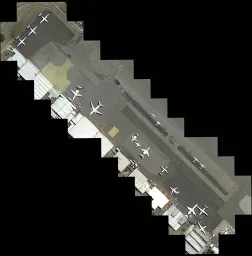
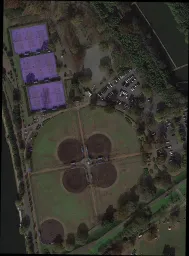
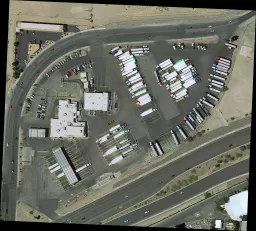
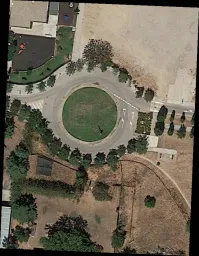
Il dataset DOTA è un benchmark su larga scala per il rilevamento di oggetti nelle immagini aeree, pubblicato in tre versioni (v1.0, v1.5, v2.0) con fino a 1,7 milioni di annotazioni di riquadri di delimitazione orientati (OBB) in 18 categorie, raccolte con sensori e piattaforme aeree diversi.
Esplora i dataset DOTA v1.5 e DOTA v1.0, ospitati ufficialmente sulla piattaforma Ultralytics, per visualizzare in anteprima le annotazioni orientate, esaminare le statistiche e clonarli per l'addestramento.
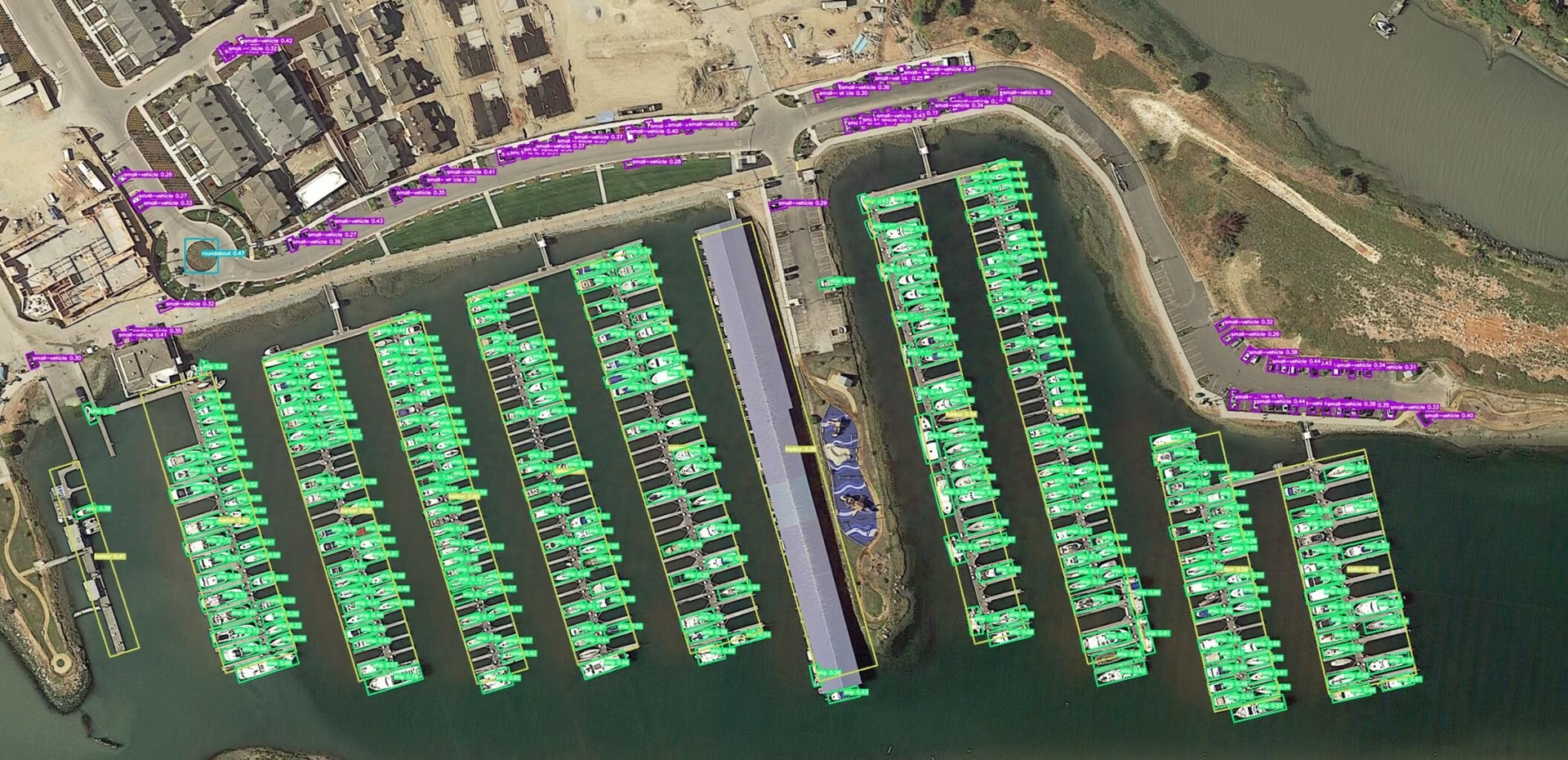
Funzionalità principali#
Guarda: Come addestrare Ultralytics YOLO sul dataset DOTA per bounding box orientate in Google Colab
- Raccolta effettuata con sensori e piattaforme diversi, con dimensioni delle immagini da 800 × 800 a 20.000 × 20.000 pixel.
- Include oltre 1,7 milioni di riquadri di delimitazione orientati in 18 categorie.
- Consente il rilevamento di oggetti su più scale grazie all'ampia gamma di dimensioni degli oggetti presenti in ogni immagine.
- Le istanze sono annotate da esperti usando quadrilateri arbitrari (8 d.o.f.), che rappresentano oggetti di scale, orientamenti e forme diversi.
Versioni del dataset#
DOTA-v1.0#
- Contiene 15 categorie comuni.
- Comprende 2.806 immagini con 188.282 istanze.
- Suddivisione: 1/2 per l'addestramento (1.411 immagini), 1/6 per la convalida (458 immagini) e 1/3 per il test (937 immagini).
DOTA-v1.5#
- Include le stesse immagini di DOTA-v1.0.
- Sono annotate anche le istanze molto piccole (meno di 10 pixel).
- Aggiunta di una nuova categoria: "gru a portale per container".
- Un totale di 403.318 istanze.
- Pubblicato per la DOAI Challenge 2019 sul rilevamento di oggetti in immagini aeree.
DOTA-v2.0#
- Raccolte da Google Earth, dal satellite GF-2 e da altre immagini aeree.
- Contiene 18 categorie comuni.
- Comprende 11.268 immagini con 1.793.658 istanze.
- Nuove categorie introdotte: "aeroporto" e "eliporto".
- Suddivisioni delle immagini:
- Addestramento: 1.830 immagini con 268.627 istanze.
- Validazione: 593 immagini con 81.048 istanze.
- Test-dev: 2.792 immagini con 353.346 istanze.
- Test-challenge: 6.053 immagini con 1.090.637 istanze.
Struttura del dataset#
DOTA presenta una struttura organizzata, pensata per le sfide di rilevamento di oggetti OBB:
- Immagini: una vasta raccolta di immagini aeree ad alta risoluzione che ritraggono terreni e strutture diversi.
- Bounding box orientati: annotazioni sotto forma di rettangoli ruotati che racchiudono gli oggetti indipendentemente dal loro orientamento, ideali per identificare oggetti come aerei, navi ed edifici.
Applicazioni#
DOTA funge da benchmark per addestrare e valutare modelli progettati per l'analisi di immagini aeree. Le sue annotazioni con bounding box orientate costituiscono una prova impegnativa per i modelli di rilevamento di oggetti su bersagli aerei ruotati e densamente raggruppati. Il dataset è ampiamente utilizzato nel telerilevamento, nella sorveglianza e nel monitoraggio ambientale.
YAML del dataset#
Un file YAML del dataset specifica le directory delle immagini e delle etichette, i nomi delle classi e altri metadati importanti. Ultralytics mantiene file YAML ufficiali per le due release più utilizzate:
Usa il file YAML corrispondente alla release che hai scaricato oppure creane uno personalizzato se lavori con DOTA-v2 o un'altra derivazione. Entrambe le release vengono scaricate automaticamente (2 GB) dagli asset GitHub di Ultralytics al primo addestramento.
# Ultralytics 🚀 AGPL-3.0 License - https://ultralytics.com/license

# DOTA 1.0 dataset https://captain-whu.github.io/DOTA/index.html for object detection in aerial images by Wuhan University
# Documentation: https://docs.ultralytics.com/datasets/obb/dota-v2
# Example usage: yolo train model=yolov8n-obb.pt data=DOTAv1.yaml
# parent
# ├── ultralytics
# └── datasets
#     └── DOTAv1 ← downloads here (2 GB)

# Train/val/test sets as 1) dir: path/to/imgs, 2) file: path/to/imgs.txt, or 3) list: [path/to/imgs1, path/to/imgs2, ..]
path: DOTAv1 # dataset root dir
train: images/train # train images (relative to 'path') 1411 images
val: images/val # val images (relative to 'path') 458 images
test: images/test # test images (optional) 937 images

# Classes for DOTA 1.0
names:
  0: plane
  1: ship
  2: storage tank
  3: baseball diamond
  4: tennis court
  5: basketball court
  6: ground track field
  7: harbor
  8: bridge
  9: large vehicle
  10: small vehicle
  11: helicopter
  12: roundabout
  13: soccer ball field
  14: swimming pool

# Download script/URL (optional)
download: https://github.com/ultralytics/assets/releases/download/v0.0.0/DOTAv1.zip
Suddividere le immagini DOTA#
Le immagini originali superano regolarmente i 10.000 pixel per lato, quindi è consigliabile suddividerle in riquadri prima di passare i dati a YOLO. Usa la funzione di supporto qui sotto per suddividere le immagini originali in ritagli sovrapposti da 1024 × 1024 a più scale, mantenendo sincronizzate le annotazioni.
from ultralytics.data.split_dota import split_test, split_trainval

# Suddividi i set di train e val, con le etichette.
split_trainval(
    data_root="path/to/DOTAv1.0/",
    save_dir="path/to/DOTAv1.0-split/",
    rates=[0.5, 1.0, 1.5],  # multiscale
    gap=500,
)
# Suddividi il set di test, senza etichette.
split_test(
    data_root="path/to/DOTAv1.0/",
    save_dir="path/to/DOTAv1.0-split/",
    rates=[0.5, 1.0, 1.5],  # multiscale
    gap=500,
)Mantieni la directory di output organizzata secondo la struttura YOLO standard (images/train, labels/train e così via), così potrai farvi riferimento direttamente dal file YAML del dataset.
Utilizzo#
Per addestrare un modello YOLO26n-obb sul dataset DOTA v1, usa i seguenti frammenti di codice. Consulta sempre la documentazione del tuo modello per un elenco completo degli argomenti disponibili. Se vuoi prima sperimentare con un sottoinsieme più piccolo, valuta l'uso del dataset DOTA8, che contiene solo 8 immagini per test rapidi ed è consultabile sulla piattaforma Ultralytics.
Tutte le immagini e le relative annotazioni del dataset DOTAv1 possono essere utilizzate solo a fini accademici; l'uso commerciale è vietato. Ultralytics interpreta tali restrizioni come applicabili al dataset di origine, ma non ai pesi dei modelli preaddestrati o sottoposti a fine-tuning. Consulta i termini di DOTA per l'uso che intendi farne.
from ultralytics import YOLO

# Carica un modello YOLO26n-OBB preaddestrato
model = YOLO("yolo26n-obb.pt")

# Addestra il modello sul dataset DOTAv1
results = model.train(data="DOTAv1.yaml", epochs=100, imgsz=1024)
Dati di esempio e annotazioni#
L'esempio seguente mostra scene e annotazioni DOTA tipiche:
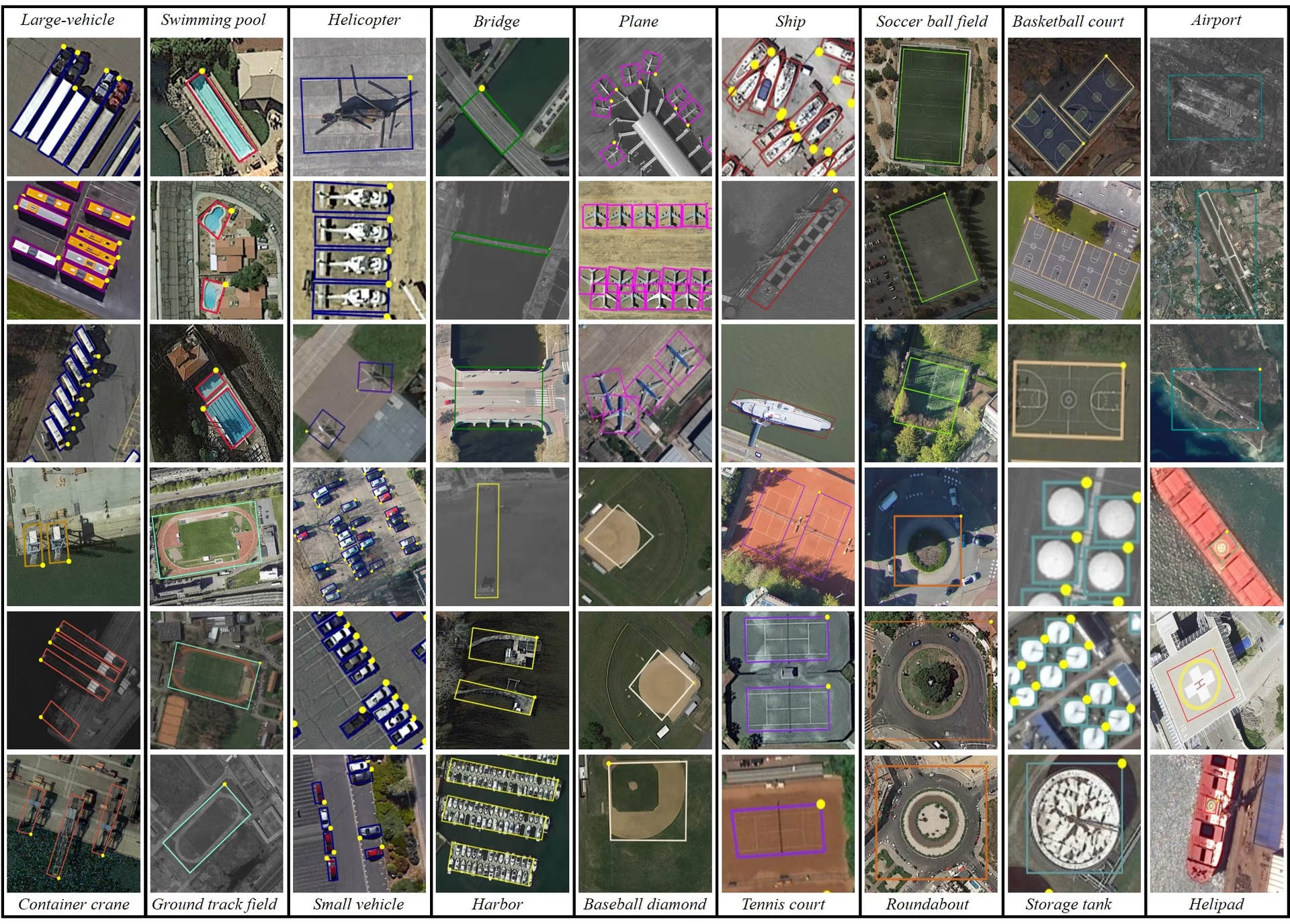
- Esempi DOTA: questa immagine evidenzia la complessità delle scene aeree e l'importanza delle annotazioni di bounding box orientati, che identificano gli oggetti nel loro orientamento naturale.
Queste scene mettono in evidenza le sfide di rilevamento specifiche delle immagini aeree. DOTA-v2.0 è ampiamente utilizzato nei progetti di telerilevamento e sorveglianza aerea grazie alle sue annotazioni complete e alle diverse categorie di oggetti.
Citazioni e ringraziamenti#
Se usi DOTA nel tuo lavoro, cita gli articoli di ricerca pertinenti:
@article{9560031,
  author={Ding, Jian and Xue, Nan and Xia, Gui-Song and Bai, Xiang and Yang, Wen and Yang, Michael and Belongie, Serge and Luo, Jiebo and Datcu, Mihai and Pelillo, Marcello and Zhang, Liangpei},
  journal={IEEE Transactions on Pattern Analysis and Machine Intelligence},
  title={Object Detection in Aerial Images: A Large-Scale Benchmark and Challenges},
  year={2022},
  volume={44},
  number={11},
  pages={7778-7796},
  doi={10.1109/TPAMI.2021.3117983}
}
Ringraziamo il team che cura i dataset DOTA. Per tutti i dettagli sul dataset, visita il sito ufficiale di DOTA.
Domande frequenti#
Il dataset DOTA è un dataset specializzato nel rilevamento degli oggetti nelle immagini aeree. Include bounding box orientati (OBB) e immagini annotate provenienti da diverse scene aeree. La varietà di orientamento, scala e forma degli oggetti nelle 1,7 milioni di annotazioni e nelle 18 categorie rende DOTA ideale per sviluppare e valutare modelli destinati all'analisi delle immagini aeree, come quelli utilizzati per la sorveglianza, il monitoraggio ambientale e la gestione delle emergenze.
DOTA usa bounding box orientate (OBB) per le annotazioni, rappresentate da rettangoli ruotati che racchiudono gli oggetti indipendentemente dal loro orientamento. Questo metodo consente di rilevare con precisione gli oggetti, anche quando sono piccoli o inclinati. Le immagini multiscala del dataset, che vanno da 800 × 800 a 20.000 × 20.000 pixel, consentono inoltre di rilevare efficacemente sia gli oggetti piccoli sia quelli grandi. Questo approccio è particolarmente utile per le immagini aeree, in cui gli oggetti appaiono con angolazioni e dimensioni diverse.
Per addestrare un modello sul dataset DOTA, puoi usare il seguente esempio con Ultralytics YOLO:
Esempio di addestramentofrom ultralytics import YOLO # Carica un modello YOLO26n-OBB preaddestrato model = YOLO("yolo26n-obb.pt") # Addestra il modello sul dataset DOTAv1 results = model.train(data="DOTAv1.yaml", epochs=100, imgsz=1024)Per ulteriori dettagli su come suddividere e preelaborare le immagini DOTA, consulta la sezione sulla suddivisione delle immagini DOTA.
- DOTA-v1.0: include 15 categorie comuni in 2.806 immagini con 188.282 istanze. Il dataset è suddiviso in set di addestramento, validazione e test.
- DOTA-v1.5: amplia DOTA-v1.0 annotando istanze molto piccole (meno di 10 pixel) e aggiungendo una nuova categoria, «gru per container», per un totale di 403.318 istanze.
- DOTA-v2.0: si amplia ulteriormente con annotazioni provenienti da Google Earth e dal satellite GF-2 e include 11.268 immagini e 1.793.658 istanze. Aggiunge nuove categorie come «aeroporto» ed «eliporto».
Per un confronto dettagliato e ulteriori informazioni, consulta la sezione sulle versioni del dataset.
Le immagini DOTA, che possono essere molto grandi, vengono suddivise in risoluzioni più piccole per semplificare l'addestramento. Ecco un frammento di Python per suddividere le immagini:
Esempiofrom ultralytics.data.split_dota import split_test, split_trainval # suddividi i set di train e val, con le etichette. split_trainval( data_root="path/to/DOTAv1.0/", save_dir="path/to/DOTAv1.0-split/", rates=[0.5, 1.0, 1.5], # multiscale gap=500, ) # suddividi il set di test, senza etichette. split_test( data_root="path/to/DOTAv1.0/", save_dir="path/to/DOTAv1.0-split/", rates=[0.5, 1.0, 1.5], # multiscale gap=500, )Questo processo migliora l'efficienza dell'addestramento e le prestazioni del modello. Per istruzioni dettagliate, consulta la sezione sulla suddivisione delle immagini DOTA.


Commenti17
Fai una domanda, condividi i tuoi risultati o aiuta qualcun altro.
XWP-PPP
May I ask how you converted the inference results from YOLOV8 OBB into inference results that can be uploaded to DOTA's Task 1 server? I saved the final inference results of the model in the form of xyxyxy and uploaded them via email. However, the mAP results provided on YOLO's official website differ significantly. I would like to know the reason for this. Can you provide me with a conversion code to convert the test image set into a result that can be uploaded to DOTA's Task 1 server? Thank you very much for your help!
1 Paula DerrengerUltralytics(modificato)
@XWP-PPP hi there!
DOTA's Task 1 server expects a zip of one text file per class (
Task1_plane.txt,Task1_storage-tank.txt, ...), where each line isimgname score x1 y1 x2 y2 x3 y3 x4 y4, with the image name given without extension. OBB results are stored inresult.obb, notresult.boxes. Here is a snippet that builds those files:import shutil from collections import defaultdict from pathlib import Path from ultralytics import YOLO # Load your trained YOLO26-OBB model model = YOLO("path/to/your/yolo26n-obb.pt") # Collect one DOTA Task1 line per detection: imgname score x1 y1 x2 y2 x3 y3 x4 y4 (pixels) category_results = defaultdict(list) for r in model.predict(source="path/to/test/images", stream=True): img_name = Path(r.path).stem for cls, conf, pts in zip(r.obb.cls.int().tolist(), r.obb.conf.tolist(), r.obb.xyxyxyxy.flatten(1).tolist()): coords = " ".join(f"{p:.1f}" for p in pts) category_results[f"Task1_{model.names[cls].replace(' ', '-')}.txt"].append(f"{img_name} {conf:.6f} {coords}\n") # Save one file per category and zip the submission folder output_dir = Path("submission") output_dir.mkdir(exist_ok=True) for category_file, lines in category_results.items(): (output_dir / category_file).write_text("".join(lines)) shutil.make_archive("submission", "zip", output_dir)Upload
submission.zipto the DOTA Task 1 server. If your mAP differs from your local validation, check that image names match the test set and that the coordinates are in pixels of the original (unsplit) images. For more details, see the DOTA Dataset Documentation. Happy coding! 😊
Taufiq-Ahmed-pranto
Hi, I want to use the DOTA dataset only for YOLOv11 Nano. I don't want to use the model with oriented bounding boxes (OBB). What is the procedure?
 Jie Liu
I have download dotav1 form
https://github.com/ultralytics/assets/releases/download/v0.0.0/DOTAv1.zipand use script split dataset.from ultralytics.data.split_dota import split_test, split_trainval # split train and val set, with labels. split_trainval( data_root="/dataset/coco/DOTAv1", save_dir="/dataset/coco/DOTAv1.0-split/", rates=[0.5, 1.0, 1.5], # multiscale gap=500, ) # split test set, without labels. split_test( data_root="/dataset/coco/DOTAv1/", save_dir="/dataset/coco/DOTAv1.0-split/", rates=[0.5, 1.0, 1.5], # multiscale gap=500, )how to reproduce yolov11 obb result, please show me the command like
yolo train model=ultralytics-8.3.13/ultralytics/cfg/models/11/yolo11n-obb.yaml data=DOTAv1/DOTAv1.yaml epochs=500 batch=32*4 imgsz=640 device=4,5,6,7 cache=disk amp=True Glenn JocherUltralytics(modificato)
@keeper-jie for training YOLO26-OBB on DOTAv1 after splitting, use this command with your 4 GPUs:
yolo obb train data=DOTAv1.yaml model=yolo26n-obb.pt epochs=500 imgsz=1024 batch=128 device=4,5,6,7Key parameters from our DOTA documentation:
imgsz=1024(matches dataset's multiscale split)- Use official model name
yolo26n-obb.ptrather than YAML path - Batch size 128 (32*4 GPUs) via
batch=128
Ensure your dataset YAML paths point to the split images directory.
huynhkhoa44
I have labeled data in YOLOv8 object detection format, our label data format is already rotated rectangles to the correct angle of the object, however since it is in YOLOv8 object detection format, the "angle" parameter is missing. I no longer keep the label folder on CVAT so I cannot export to a different label format. Is there a way to add the angle value from the 4 pre-existing <x_center> <y_center> values?
- Glenn JocherUltralytics
To add the angle value from your existing YOLOv8 labels, you'll need to calculate it based on the coordinates. Unfortunately, without the original CVAT labels, this requires manual computation or using a tool that supports angle annotations. For guidance on datasets with oriented bounding boxes, you can refer to the DOTA dataset documentation at https://docs.ultralytics.com/datasets/obb/dota-v2/.
jack-ready
Recently, I've been using YOLOv8 to train the DOTAv1 dataset and encountered some issues. I was wondering if I could seek advice. 1.To train the DOTA dataset, we split the original DOTA images with high-resolution into images with 1024x1024. I noticed that the provided segmentation code provides three sizes, rates=[0.5, 1.0, 1.5]. In order to obtain 1024×1024 images, it seems that we should choose rates=1, but I noticed that some images in the segmentation results of the validation set are smaller than 1024×1024, such as 1024×1023, 824*1024, etc. What is the reason for this?Will it affect the experiment? 2.Another issue arises during the training process. I noticed that the training process conducts validation after each epoch. I attempted to disable validation by setting val=False, but it seems to have no effect. What could be the reason for this? The training code snippet is as follows: results = model.train(data="DOTAv1.yaml", epochs=100, imgsz=640, batch=10, workers=0, val=False). Additionally, during validation, it seems that the images are not being resized to 640. Printing the results in the code yields torch.Size([10, 3, 672, 672]), whereas during the training process, images are correctly resized to 640. Could someone help me understand this?
- Glenn JocherUltralytics(modificato)
@jack-ready hi there!
Thank you for reaching out with your questions regarding training the DOTA dataset with YOLOv8. Let's address each of your concerns:
-
Image Splitting and Sizes: When splitting high-resolution DOTA images into 1024x1024 segments using
rates=[0.5, 1.0, 1.5], you might notice some resulting images are slightly smaller than 1024x1024 (e.g., 1024x1023 or 824x1024). This occurs due to the way the splitting algorithm handles the edges of the original images. If the original image dimensions are not perfectly divisible by 1024, the last segment in each row or column might be smaller. This should not significantly affect your experiment as long as the majority of your data maintains the expected size. However, you can ensure consistency by padding these smaller images to 1024x1024 if necessary. -
Disabling Validation: The
val=Falseargument should indeed disable validation during training. If it doesn't seem to work, please ensure you are using the latest version of the Ultralytics package. You can update it using:pip install --upgrade ultralyticsIf the issue persists, providing a minimum reproducible example would be very helpful for us to diagnose the problem. You can find guidance on creating one here: Minimum Reproducible Example.
-
Image Resizing During Validation: The discrepancy in image sizes during validation (e.g.,
torch.Size([10, 3, 672, 672])instead of 640) might be due to the model's internal resizing logic. Ensure that theimgszparameter is correctly set for both training and validation. Validation uses the sameimgszas training, so set it explicitly in your training script:results = model.train(data="DOTAv1.yaml", epochs=100, imgsz=640, batch=10, workers=0, val=True)
I hope this helps! If you have any further questions or need additional assistance, feel free to ask. Happy training! 🚀
-
Thank you very much for your help. I have another question regarding the YOLOV8 training on the DOTA v1.0 dataset. I would like to know how to set the training parameters, such as learning rate, optimizer, and loss function. When I try to reproduce the results, my mAP50 is about 74%, but it does not reach 78%. I would greatly appreciate any assistance you can provide.Below is my training code. from ultralytics import YOLO model = YOLO("yolov8n-obb.yaml") model.load("yolov8n-obb.pt") model = YOLO("yolov8n-obb.yaml").load("yolov8n.pt") results = model.train(data="DOTAv1.yaml", epochs=100, imgsz=640, batch=48, workers=0,project="runs/DOTAV1.0",val=True,resume=True)
- Glenn JocherUltralytics(modificato)
Hi there! Glad to help with your training setup. To fine-tune your training parameters for better mAP50 results, you can adjust the learning rate, optimizer, and loss function. For instance, you might try a lower learning rate or switch to a different optimizer like Adam. Here's a quick example:
from ultralytics import YOLO

model = YOLO("yolo26n-obb.yaml").load("yolo26n-obb.pt")
results = model.train(
    data="DOTAv1.yaml",
    epochs=100,
    imgsz=640,
    batch=48,
    workers=0,
    project="runs/DOTAV1.0",
    val=True,
    lr0=0.001,  # Adjust learning rate
    optimizer='Adam'  # Change optimizer
)
Ensure you're using the latest version of the Ultralytics package to avoid any bugs. If you still face issues, feel free to share more details. Happy training! 🚀
Tintin26100
How can I find the number of instances per class in DOTA v1.5 ? I've been searching for this information for a moment and I can't find any answers
- Paula DerrengerUltralytics
@Tintin26100 hello!
The number of instances per class in DOTA v1.5 isn't directly listed in the dataset's summary. However, you can obtain this information by analyzing the annotation files provided with the dataset. Each object instance in these files is labeled with a class, and you can count the number of times each class appears.
If you need further guidance on how to process these annotation files or any other assistance with the DOTA dataset, feel free to ask!
Happy coding! 😊
Hi, thanks for your quick answer, I will gladly accept your help because I don't really know what to do to extract those informations, where do you find the annotation files ? Is it on the github ? If it is what's it's path ? Thanks for the time you spend helping
- Paula DerrengerUltralytics
@Tintin26100 hello!
The annotation files for the DOTA dataset are typically included within the dataset download itself. These files contain the details for each instance, including class labels and oriented bounding box coordinates.
For the DOTA v1.5 dataset, you can find these files in the dataset directory after you download it from the official DOTA dataset page or the provided download link in the dataset's YAML configuration file. The path to the annotations will usually be structured under the
labelsorannotationsdirectory within the main dataset folder.If you've already downloaded the dataset, you should look for
.txtor.jsonfiles corresponding to each image in the dataset, which contain the annotations. If you need further assistance navigating these files or extracting specific data, feel free to ask!Thank you for reaching out, and happy analyzing! 😊
hencai
how to test DOTA datatests online using YOLOv8-obb? somebody help me ?
- Glenn JocherUltralytics(modificato)
Hey there! 😊 Testing the DOTA dataset online using YOLO26-obb is quite straightforward. If you've already prepared your dataset according to the Ultralytics guidelines and split the images, here's a simple example to get you started with training:
# Train a YOLO26n-OBB model on the DOTA v1 dataset
yolo obb train data=DOTAv1.yaml model=yolo26n-obb.pt epochs=100 imgsz=640
This command uses DOTA v1 and the corresponding
.yamlfile (DOTAv1.yaml) describing your dataset paths and classes. Adjustepochsandimgszbased on your needs.Just make sure to check out the DOTA dataset page on Ultralytics docs for more info on dataset preparation and additional configurations! Happy detecting! 🚀