Ultralytics YOLO26을 사용한 객체 크롭
객체 크롭이란 무엇인가요?#
Ultralytics YOLO26을 사용한 객체 크롭은 이미지나 비디오에서 감지된 특정 객체를 분리하고 추출하는 작업입니다. YOLO26은 바운딩 박스를 사용해 각 객체의 위치를 찾고, 크롭 도구는 해당 영역을 추가 분석이나 처리를 위한 별도 이미지로 저장합니다.
시청: Ultralytics YOLO를 사용한 객체 자르기
객체 크롭의 장점#
- 집중 분석: YOLO26을 사용하면 특정 객체를 대상으로 크롭할 수 있어 장면 속 개별 항목을 심층적으로 조사하거나 처리할 수 있습니다.
- 데이터 용량 감소: 객체 크롭은 관련 객체만 추출하여 데이터 크기를 줄이므로 저장, 전송 및 후속 연산 작업의 효율성이 높아집니다.
- 정밀도 향상: YOLO26의 객체 감지 정확도가 높아 추가 분석에 필요한 시각적 세부 정보를 보존하는 정밀한 크롭을 생성합니다.
시각 자료#
| 공항 수하물 |
|---|
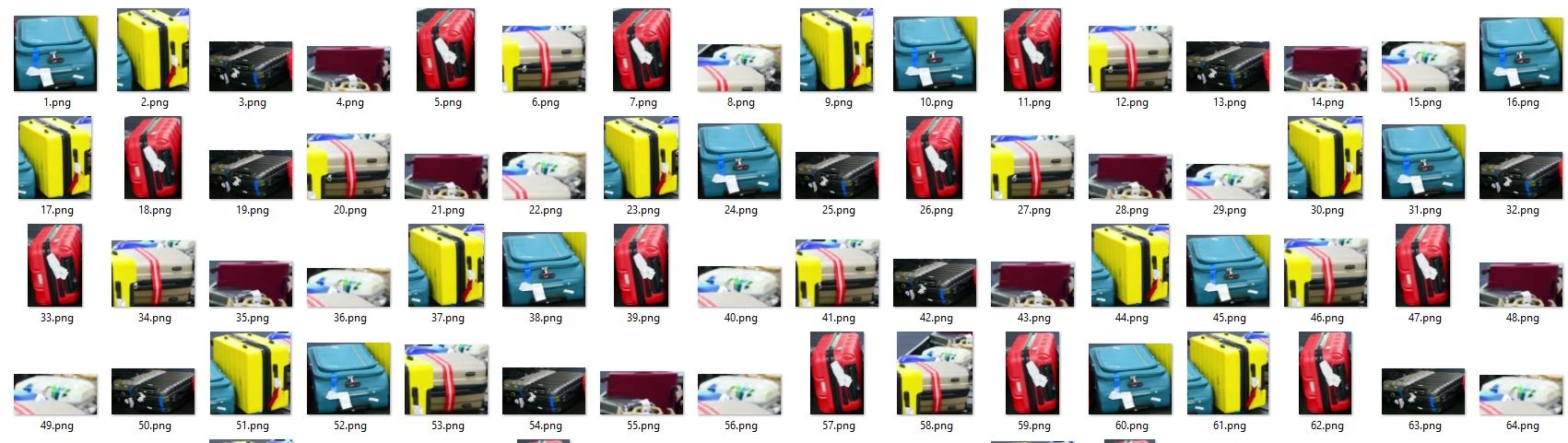 |
| Ultralytics YOLO26을 사용한 공항 컨베이어 벨트의 여행 가방 크롭 |
YOLO26으로 객체 크롭#
동영상을 ObjectCropper 솔루션에 전달하면 각 프레임에서 객체를 검출하고 각 검출 결과를 별도의 이미지로 저장합니다. 크롭 대상을 특정 classes으로 제한하고, 신뢰도 높은 검출 결과만 유지하도록 conf를 높인 다음, 크롭 이미지를 저장할 위치를 지정하려면 crop_dir을 설정합니다.
# Crop the objects
yolo solutions crop

# Pass a source video
yolo solutions crop source="path/to/video.mp4"

# Crop specific classes
yolo solutions crop classes="[0, 2]"
ObjectCropper 인수#
다음은 ObjectCropper 인수 표입니다:
| 인수 | 유형 | 기본값 | 설명 |
|---|---|---|---|
model | str | None | Ultralytics YOLO 모델 파일의 경로입니다. |
crop_dir | str | 'cropped-detections' | 잘라낸 감지 결과를 저장할 디렉터리 이름입니다. |
verbose | bool | True | 프레임별 입력 형태, 클래스 개수 및 처리 속도 로그를 활성화합니다. 추적 호출 자체는 항상 로그를 출력하지 않습니다. |
ObjectCropper은 track가 아닌 predict을 실행하므로, tracker을 제외한 다음 추론 매개변수를 지원합니다.
| 인수 | 유형 | 기본값 | 설명 |
|---|---|---|---|
tracker | str | 'tracktrack.yaml' | 사용할 추적 알고리즘을 지정합니다. 기본 제공 옵션: botsort.yaml, bytetrack.yaml, ocsort.yaml, deepocsort.yaml, fasttrack.yaml, tracktrack.yaml. |
conf | float | 0.25 | 탐지에 대한 신뢰도 임계값을 설정합니다. 값을 낮추면 추적할 수 있는 객체가 늘어나지만 오탐이 포함될 수 있습니다. |
iou | float | 0.5 | 중복 탐지를 필터링하기 위한 교집합 대비 합집합 (IoU) 임계값을 설정합니다. |
classes | list | None | 클래스 인덱스로 결과를 필터링합니다. 예를 들어 classes=[0, 2, 3]은 지정된 클래스만 추적합니다. |
device | str | None | 추론에 사용할 장치를 지정합니다(예: cpu, cuda:0 또는 0). 사용자는 모델 실행에 사용할 CPU, 특정 GPU 또는 기타 연산 장치를 선택할 수 있습니다. |
imgsz | int or tuple | 640 | 추론 대상 이미지 크기입니다. 정사각형을 나타내는 정수 또는 (height, width) 쌍을 지정합니다. 모델 stride에 맞춰 형태가 조정됩니다. |
max_det | int | 300 | 추적 전에 프레임별로 유지할 최대 탐지 수를 지정하여 밀집된 장면에서 솔루션이 처리하는 객체 수를 제한합니다. |
quantize | int or str | None | 추론 정밀도: CPU 이외의 환경에서 PyTorch 및 TorchScript 모델은 16(FP16) 또는 32/unset(FP32)을 사용하며, 다른 형식은 아티팩트와 런타임이 선택하는 정밀도를 사용합니다. 더 이상 사용되지 않는 half 인수를 대체합니다. |
자주 묻는 질문#
Ultralytics YOLO26을 사용한 객체 크롭은 YOLO26의 감지 기능을 바탕으로 이미지나 비디오에서 특정 객체를 분리하고 추출하는 작업입니다. YOLO26으로 객체를 정확하게 식별한 다음 적절히 크롭하면 집중적인 분석이 가능하고 데이터 용량을 줄일 수 있습니다.
Ultralytics YOLO26을 사용해 이미지나 비디오에서 관련 객체만 크롭하면 데이터 크기를 크게 줄여 저장과 처리 효율을 높일 수 있습니다. 사전 학습된 모델을 사용하거나 필요한 객체를 감지하도록 모델을 학습한 다음, 해당 영역만 크롭하고 저장하세요.
Ultralytics YOLO26은 CPU와 GPU 환경 모두에 최적화되어 있지만, 특히 실시간 또는 대량 추론에서 최적의 성능을 얻으려면 전용 GPU(예: NVIDIA RTX 또는 데이터센터 GPU)를 사용하는 것이 좋습니다. 경량 디바이스에 배포하려면 iOS에는 CoreML, Android에는 LiteRT를 고려하세요.


댓글15
질문을 하거나 결과를 공유하거나 다른 사람을 도와주세요.
NOSPAA21
Can i use it so as to train a model especially for printed circuit board defect detection to find defects in certain regions of a pcb?Would this be helpful?
RizwanMunawar
@NOSPAA21 Yes, you can train the Ultralytics YOLO11 model on the circuit board defect detection dataset by following the training documentation. Once the model is trained, you can use the object-cropping solution to crop the different defects that the model detects.
AdityaJaiswal99
Can we make the model, so it does not take the same pictures in the frame again?
 Glenn JocherUltralytics
@AdityaJaiswal99 thank you for your question! If you're looking to avoid capturing the same objects multiple times within a frame, you can leverage the Non-Maximum Suppression (NMS) feature of YOLOv8. NMS helps in eliminating redundant bounding boxes by keeping only the highest confidence detections and discarding others that overlap significantly.
Here's a brief example of how you can adjust the
iouthreshold to refine your detections and reduce duplicates:from ultralytics import YOLO # Load the model model = YOLO("yolov8n.pt") # Set the IoU threshold to a lower value to reduce overlapping detections results = model.predict("path/to/your/image_or_video", iou=0.5) # Process the results as needed for result in results: boxes = result.boxes.xyxy.cpu().tolist() clss = result.boxes.cls.cpu().tolist() # Further processing...In this example, setting the
iouparameter to a lower value (e.g., 0.5) helps in reducing the number of overlapping boxes, thus minimizing the chances of capturing the same object multiple times.For a more comprehensive guide on object cropping and additional tips, please visit our Object Cropping Guide.
If you encounter any issues or have further questions, feel free to provide a reproducible example, and ensure you are using the latest version of the packages. This will help us assist you more effectively. 😊
Happy coding!
How can we change the frame height and width to a specific pixel and change FPS?
 Paula DerrengerUltralytics
@AdityaJaiswal99 hi there!
To change the frame height, width, and FPS of a video using OpenCV, you can set these properties directly on the
cv2.VideoCaptureandcv2.VideoWriterobjects. Below is an example of how you can achieve this:import cv2 # Load the video cap = cv2.VideoCapture("path/to/video/file.mp4") assert cap.isOpened(), "Error reading video file" # Set the desired frame width, height, and FPS frame_width = 640 # Set your desired width frame_height = 480 # Set your desired height fps = 30 # Set your desired FPS # Create a VideoWriter object to save the modified video video_writer = cv2.VideoWriter("modified_video.avi", cv2.VideoWriter_fourcc(*"mp4v"), fps, (frame_width, frame_height)) while cap.isOpened(): success, frame = cap.read() if not success: break # Resize the frame to the desired dimensions resized_frame = cv2.resize(frame, (frame_width, frame_height)) # Write the resized frame to the output video video_writer.write(resized_frame) # Display the frame (optional) cv2.imshow("Resized Video", resized_frame) if cv2.waitKey(1) & 0xFF == ord("q"): break # Release resources cap.release() video_writer.release() cv2.destroyAllWindows()This script reads a video, resizes each frame to the specified width and height, and writes the modified frames to a new video file with the desired FPS.
For more detailed information on object cropping using YOLOv8, you can refer to our Object Cropping Guide.
Feel free to reach out if you have any more questions! 😊
1
HsnKmlMt
Hi! How can i specify classed to be cropped like for my case i just want people.
- Glenn JocherUltralytics(수정됨)
Hello! To crop only people from your video, filter the detections by class. In COCO-trained models 'person' is class 0, so the simplest way is the
classesargument ofpredict:import os import cv2 from ultralytics import YOLO model = YOLO("yolo26n.pt") cap = cv2.VideoCapture("path/to/video/file.mp4") assert cap.isOpened(), "Error reading video file" crop_dir_name = "ultralytics_crop" os.makedirs(crop_dir_name, exist_ok=True) idx = 0 while cap.isOpened(): success, im0 = cap.read() if not success: break results = model.predict(im0, classes=[0]) # 0 = 'person' in COCO boxes = results[0].boxes.xyxy.cpu().tolist() for box in boxes: idx += 1 crop_obj = im0[int(box[1]) : int(box[3]), int(box[0]) : int(box[2])] cv2.imwrite(os.path.join(crop_dir_name, f"person_{idx}.png"), crop_obj) cap.release() cv2.destroyAllWindows()This will crop and save images only for detected persons. Note that
model.namesis a dictionary mapping class IDs to names, so to look up an ID by name usenext(k for k, v in model.names.items() if v == "person"). Adjust according to your specific classes and needs! 👍 Thank you, I really appreciate it!
- Glenn JocherUltralytics(수정됨)
Hello! We're really glad you found the materials helpful! If you ever need to crop specific classes, such as 'people', filter the detections by class ID. Here's a quick example:
import cv2

from ultralytics import YOLO

model = YOLO("yolo26n.pt")  # Load your model
person_class_id = next(k for k, v in model.names.items() if v == "person")  # model.names maps class ID -> name

cap = cv2.VideoCapture("path/to/video.mp4")
assert cap.isOpened(), "Error reading video file"

while cap.isOpened():
    ret, frame = cap.read()
    if not ret:
        break
    results = model.predict(frame, classes=[person_class_id])  # only 'person' detections
    boxes = results[0].boxes.xyxy.cpu().tolist()

    for idx, box in enumerate(boxes):
        x1, y1, x2, y2 = map(int, box[:4])
        crop_img = frame[y1:y2, x1:x2]
        cv2.imwrite(f"cropped_person_{idx}.jpg", crop_img)
Feel free to replace 'person' with any class you're interested in, and make sure the class name matches what's defined in your model's class names. Let us know if you need further assistance! 🚀
1 umairrkhn
Hey Glenn, I am getting this error using your implementation:
person_class_id = model.names.index('person') # Ensure 'person' is in the model's class names ^^^^^^^^^^^^^^^^^ AttributeError: 'dict' object has no attribute 'index'
- Glenn JocherUltralytics(수정됨)
Hey there!
It looks like you're trying to use the
.index()method on a dictionary, which isn't supported.model.namesis a dictionary mapping class IDs to class names, not a list. Here's how to find the ID for a class name:model = YOLO("yolo26n.pt") person_class_id = next(k for k, v in model.names.items() if v == "person")For COCO-trained models this is simply
0. If the issue persists, could you share more of your code context? That might help diagnose the issue better. 😊 - Glenn JocherUltralytics(수정됨)
Hey there! It looks like you're trying to use the
index()method on a dictionary, which isn't supported.model.namesis a dictionary mapping class IDs to class names, so you need to look up the ID by name:person_class_id = next(k for k, v in model.names.items() if v == "person")Make sure that 'person' is indeed the name of the class you're interested in. Let me know if this helps or if you need further assistance! 😊
zakirh
To those who are facing issue on finding person class:
person_class_id = None for class_id, class_name in model.names.items(): if class_name =='person': person_class_id = class_id break
if person_class_id is None: print("The 'person' class was not found.") else: print(f"'person' class ID: {person_class_id}")
- Glenn JocherUltralytics(수정됨)
@zakirh thank you for sharing this helpful approach to finding the class ID for 'person.' For others who might encounter similar issues, note that
model.namesis a dictionary mapping class IDs to class names, so finding an ID by name requires searching the values. If any further clarification is needed, feel free to ask!1