Ultralytics YOLO11 için Sony IMX500 Dışa Aktarımı
Bu kılavuz, Sony IMX500 sensörüne sahip Raspberry Pi AI Kameralara Ultralytics YOLOv8n ve YOLO11n modellerinin dışa aktarımını ve dağıtımını açıklar.
Bilgisayarlı görü modellerini, Raspberry Pi AI Camera gibi işlem gücü kısıtlı cihazlarda dağıtmak zor olabilir. Daha hızlı performans için optimize edilmiş bir model biçimi kullanmak büyük fark yaratır.
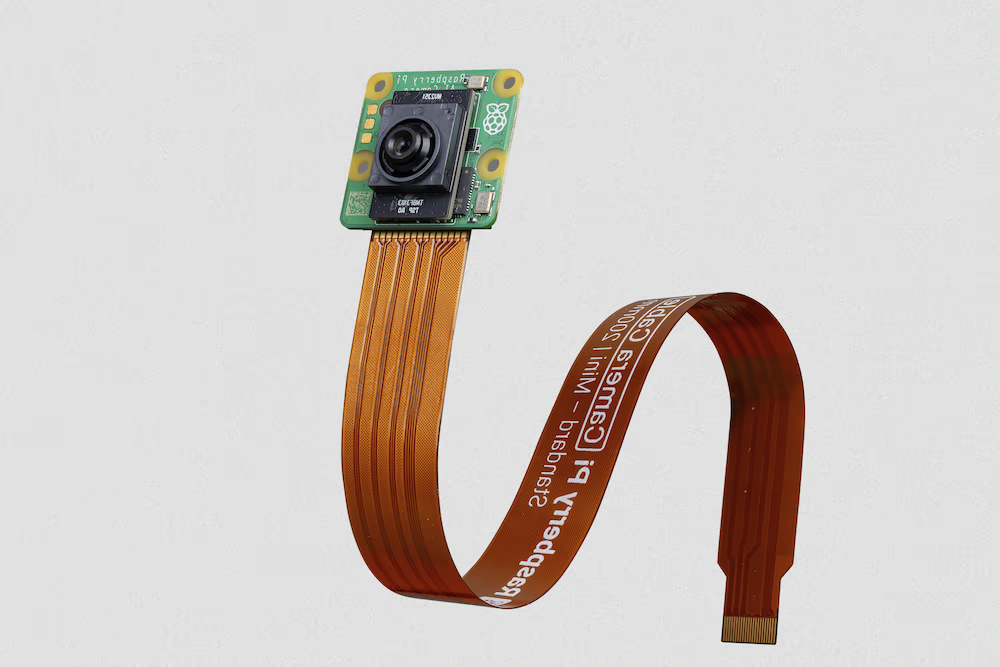
IMX500 model biçimi, sinir ağlarına hızlı performans sağlarken güç tüketimini en aza indirecek şekilde tasarlanmıştır. Ultralytics YOLO11 modellerini yüksek hızlı ve düşük güçlü çıkarım için optimize etmene olanak tanır. Bu kılavuz, modellerini IMX500 biçimine aktarma ve Raspberry Pi AI Camera'da dağıtma adımlarını açıklar.
Neden IMX500'e Aktarım Yapmalısın?#
Sony'nin IMX500 Akıllı Görüntü Sensörü, yapay zekâ işlemlerini doğrudan sensör üzerinde gerçekleştiriyor; Sony bu özelliği akıllı görüntü sensörleri dünyasında bir ilk olarak tanımlıyor. Bu sensör, veri işleme darboğazları, gizlilik endişeleri ve performans kısıtlamaları dahil olmak üzere yaygın uç yapay zekâ sorunlarının üstesinden gelmeye yardımcı oluyor. Geleneksel sensörler yalnızca görüntü ve kareleri aktarırken IMX500, yakaladığı görüntüleri yorumlayarak cihazların gerçek zamanlı olarak içgörüler üretmesini sağlıyor.
YOLO11 Modelleri için Sony IMX500 Dışa Aktarımı#
IMX500, verileri işlenmek üzere buluta göndermeden doğrudan sensör üzerinde işlemek için tasarlanmıştır.
IMX500, nicemlenmiş modellerle çalışır. Nicemleme, doğruluktan fazla ödün vermeden modelleri küçültür ve hızlandırır. Uç bilişimin sınırlı kaynaklarına uygundur; gecikmeyi azaltarak ve buluta bağımlı olmadan verilerin yerel olarak hızla işlenmesini sağlayarak uygulamaların hızlı yanıt vermesine olanak tanır. Yerel işleme, kullanıcı verilerini uzak bir sunucuya göndermediği için verileri gizli ve güvende tutar.
IMX500 Temel Özellikleri:
- Meta Veri Çıktısı: IMX500, yalnızca görüntüleri aktarmak yerine hem görüntü hem de meta veri (çıkarım sonucu) çıktısı verebilir. Veri boyutunu, bant genişliğini ve maliyetleri azaltmak için yalnızca meta veri çıktısı da verebilir.
- Gizlilik Kaygılarını Giderir: IMX500, verileri cihazda işleyerek gizlilik kaygılarını giderir ve bu sayede kişi sayımı ve doluluk takibi gibi insan odaklı uygulamalar için çok uygundur.
- Gerçek Zamanlı İşleme: Sensör üzerinde hızlı işleme, otonom sistemler gibi uç yapay zekâ uygulamalarında gerçek zamanlı kararları destekler.
Başlamadan Önce: En iyi sonuçları elde etmek için Model Eğitimi Kılavuzu, Veri Setlerine Genel Bakış ve Hiperparametre Ayarlama Kılavuzu adımlarını izleyerek YOLO11 modelinin dışa aktarıma hazır olduğundan emin ol.
Desteklenen Görevler#
IMX500 dışa aktarımı, yedi Ultralytics görevinin dördünü ve yalnızca YOLOv8n ile YOLO11n modellerini destekler: diğer model aileleri, ölçekleri ve mimarileri desteklenmez; anlamsal segmentasyon, OBB veya derinlik tahmini modelini dışa aktarmaya çalışmak hata verir.
| Görev | YOLOv8 | YOLO11 | YOLO26 |
|---|---|---|---|
| Algılama | ✅ | ✅ | ❌ |
| Segmentasyon | ✅ | ✅ | ❌ |
| Anlamsal | ❌ | ❌ | ❌ |
| Derinlik | ❌ | ❌ | ❌ |
| Sınıflandırma | ✅ | ✅ | ❌ |
| Poz | ✅ | ✅ | ❌ |
| OBB | ❌ | ❌ | ❌ |
Kullanım Örnekleri#
Bir Ultralytics YOLO11 modelini IMX500 biçimine aktar ve aktarılan modelle çıkarım yap.
IMX500 biçimi Dışa Aktar, Tahmin Et ve Doğrula modlarını destekler. Ultralytics çıkarımı ve doğrulaması, dışa aktarılan model_imx.onnx dosyasını ana makinenin CPU'sunda çalıştırır.
Buradaki çıkarım işlemi, dışa aktarılan modelin Raspberry Pi AI Camera'ya dağıtılmadan önce beklendiği gibi çalıştığını doğrular.
from ultralytics import YOLO

# Bir YOLO11n PyTorch modeli yükle
model = YOLO("yolo11n.pt")

# Modeli dışa aktar
model.export(format="imx", data="coco8.yaml")  # varsayılan olarak PTQ nicemlemesiyle dışa aktarır

# Dışa aktarılan modeli yükle
imx_model = YOLO("yolo11n_imx_model")

# Çıkarımı çalıştır
results = imx_model("https://ultralytics.com/images/bus.jpg")from ultralytics import YOLO
# Bir YOLO11n-pose PyTorch modeli yükle
model = YOLO("yolo11n-pose.pt")
# Modeli dışa aktar
model.export(format="imx", data="coco8-pose.yaml") # varsayılan olarak PTQ nicemlemesiyle dışa aktarır
# Dışa aktarılan modeli yükle
imx_model = YOLO("yolo11n-pose_imx_model")
# Çıkarımı çalıştır
results = imx_model("https://ultralytics.com/images/bus.jpg")from ultralytics import YOLO
# Bir YOLO11n-cls PyTorch modeli yükle
model = YOLO("yolo11n-cls.pt")
# Modeli dışa aktar
model.export(format="imx", data="imagenet10") # varsayılan olarak PTQ nicemlemesiyle dışa aktarır
# Dışa aktarılan modeli yükle
imx_model = YOLO("yolo11n-cls_imx_model")
# Çıkarımı çalıştır
results = imx_model("https://ultralytics.com/images/bus.jpg", imgsz=224)from ultralytics import YOLO
# Bir YOLO11n-seg PyTorch modeli yükle
model = YOLO("yolo11n-seg.pt")
# Modeli dışa aktar
model.export(format="imx", data="coco8-seg.yaml") # varsayılan olarak PTQ nicemlemesiyle dışa aktarır
# Dışa aktarılan modeli yükle
imx_model = YOLO("yolo11n-seg_imx_model")
# Çıkarımı çalıştır
results = imx_model("https://ultralytics.com/images/bus.jpg")from ultralytics import YOLO
# Dışa aktarılan IMX500 modelini yükle
model = YOLO("yolo11n_imx_model")
# COCO8 veri kümesinde doğruluğu doğrula
metrics = model.val(data="coco8.yaml")IMX dışa aktarma yalnızca Python 3.10–3.12 yüklü Linux sistemlerinde desteklenir ve Java 17 veya üzerini gerektirir. Ultralytics paketi, çalışma zamanında dışa aktarma için ek bağımlılıklar yükler. Dışa aktarma komutunu ilk kez çalıştırdığında, düzgün çalıştığından emin olmak için konsolu yeniden başlatman gerekebilir.
Dışa Aktarma Bağımsız Değişkenleri#
| Bağımsız değişken | Tür | Varsayılan | Açıklama |
|---|---|---|---|
format | str | 'imx' | Dışa aktarılan modelin hedef biçimi; çeşitli dağıtım ortamlarıyla uyumluluğu tanımlar. |
imgsz | int veya tuple | 640 | Model girişi için istenen görüntü boyutu. Kare görüntüler için bir tam sayı, belirli boyutlar içinse (height, width) demeti kullanılabilir. |
quantize | int veya str | 8/otomatik | Nicemleme hassasiyeti. IMX500 için 8 (INT8/PTQ) gereklidir ve otomatik olarak etkinleştirilir. Yalnızca FP32 ve FP16 dışa aktarımı desteklenmez. Kullanımdan kaldırılan half/int8 bayraklarının yerini alır. |
data | str | None | Nicemleme için gerekli olan veri kümesi YAML dosyasının yolu; sınıflandırma için bunun yerine bir veri kümesi dizini veya yerleşik bir veri kümesi adı gerekir. Belirtilmezse Ultralytics, model görevi için varsayılan kalibrasyon veri kümesini seçer. |
fraction | float, int veya list | 1.0 | Oran, görüntü sayısı veya [train, val, test] oranları/sayıları olarak kalibrasyon alt kümesi. İki öğeli listelerde test tam kalır; 0 ise onu atlar. |
nms | bool, isteğe bağlı | None | Ham çıktıyı (None, varsayılan), gömülü NMS'yi (True) veya NMS'siz başlığı (False) seç. IMX, detect, segment ve pose için nms=True gerektirir ve bu seçeneği otomatik olarak belirler. |
device | str | None | Dışa aktarma cihazını belirtir: GPU (device=0), CPU (device=cpu). |
Dışa aktarma süreci hakkında daha fazla bilgi için Ultralytics dışa aktarma belgeleri sayfasını ziyaret et.
Dışa aktarma işlemi <model-name>_imx_model adlı bir dizin oluşturur. Bu dizin, nicemleme doğrulaması için model_imx.onnx öğesini ve modeli IMX500 donanımında dağıtım için paketlemek açısından gerekli olan packerOut.zip dosyasını içerir. Ayrıca <model-name>_imx_model klasöründe, modelle ilişkili tüm etiketleri listeleyen bir metin dosyası (labels.txt) bulunur.
yolo11n_imx_model
├── dnnParams.xml
├── labels.txt
├── packerOut.zip
├── model_imx.onnx
├── model_imx_MemoryReport.json
└── model_imx.pbtxt
Dağıtımda IMX500 Dışa Aktarımını Kullanma#
Ultralytics YOLO11n modelini IMX500 biçimine aktardıktan sonra, çıkarım için Raspberry Pi AI Camera'ya dağıtabilirsin.
Donanım Gereksinimleri#
Aşağıdaki donanımlara sahip olduğundan emin ol:
- Raspberry Pi 5 veya Raspberry Pi 4 Model B
- Raspberry Pi AI Camera
Raspberry Pi AI Camera'yı Raspberry Pi üzerindeki 15 pinli MIPI CSI konektörüne bağla ve Raspberry Pi'yi aç.
Yazılım Gereksinimleri#
Bu kılavuz, Raspberry Pi 5 üzerinde çalışan Raspberry Pi OS Bookworm ile test edilmiştir.
Adım 1: Bir terminal penceresi aç ve Raspberry Pi yazılımını en son sürüme güncellemek için aşağıdaki komutları çalıştır.
sudo apt update && sudo apt full-upgradeAdım 2: IMX500 sensörünü çalıştırmak için gereken IMX500 ürün yazılımını yükle.
sudo apt install imx500-allAdım 3: Değişikliklerin geçerli olması için Raspberry Pi'yi yeniden başlat.
sudo rebootAdım 4: AITRIOS Raspberry Pi uygulama modülü kitaplığını yükle.
pip install git+https://github.com/SonySemiconductorSolutions/aitrios-rpi-application-module-library.gitAdım 5: YOLO11 nesne algılama, poz tahmini, sınıflandırma ve segmentasyon işlemlerini, aitrios-rpi-application-module-library örneklerinde bulunan aşağıdaki betikleri kullanarak çalıştır.
Bu betikleri çalıştırmadan önce model_file ve labels.txt dizinlerini ortamına göre değiştirdiğinden emin ol.
import numpy as np
from modlib.apps import Annotator
from modlib.devices import AiCamera
from modlib.models import COLOR_FORMAT, MODEL_TYPE, Model
from modlib.models.post_processors import pp_od_yolo_ultralytics

class YOLO(Model):
    """YOLO model for IMX500 deployment."""

    def __init__(self):
        """Initialize the YOLO model for IMX500 deployment."""
        super().__init__(
            model_file="yolo11n_imx_model/packerOut.zip",  # replace with proper directory
            model_type=MODEL_TYPE.CONVERTED,
            color_format=COLOR_FORMAT.RGB,
            preserve_aspect_ratio=False,
        )

        self.labels = np.genfromtxt(
            "yolo11n_imx_model/labels.txt",  # replace with proper directory
            dtype=str,
            delimiter="\n",
        )

    def post_process(self, output_tensors):
        """Post-process the output tensors for object detection."""
        return pp_od_yolo_ultralytics(output_tensors)

device = AiCamera(frame_rate=16)  # Optimal frame rate for maximum FPS of the YOLO model running on the AI Camera
model = YOLO()
device.deploy(model)

annotator = Annotator()

with device as stream:
    for frame in stream:
        detections = frame.detections[frame.detections.confidence > 0.55]
        labels = [f"{model.labels[class_id]}: {score:0.2f}" for _, score, class_id, _ in detections]

        annotator.annotate_boxes(frame, detections, labels=labels, alpha=0.3, corner_radius=10)
frame.display()Kıyaslamalar#
Aşağıdaki YOLOv8n, YOLO11n, YOLOv8n-pose, YOLO11n-pose, YOLOv8n-cls ve YOLO11n-cls kıyaslamaları, hız ve doğruluğu ölçmek için Ultralytics ekibi tarafından Raspberry Pi AI Kamera'da imx model biçimiyle gerçekleştirildi.
| Model | Biçim | Boyut (piksel) | packerOut.zip boyutu (MB) | mAP50-95(B) | Çıkarım süresi (ms/im) |
|---|---|---|---|---|---|
| YOLOv8n | imx | 640 | 2.1 | 0.470 | 58.79 |
| YOLO11n | imx | 640 | 2.2 | 0.517 | 58.82 |
| YOLOv8n-pose | imx | 640 | 2.0 | 0.687 | 58.79 |
| YOLO11n-pose | imx | 640 | 2.1 | 0.788 | 62.50 |
| Model | Biçim | Boyut (piksel) | packerOut.zip boyutu (MB) | acc (top1) | acc (top5) | Çıkarım süresi (ms/im) |
|---|---|---|---|---|---|---|
| YOLOv8n-cls | imx | 224 | 2.3 | 0.25 | 0.5 | 33.31 |
| YOLO11n-cls | imx | 224 | 2.3 | 0.25 | 0.417 | 33.31 |
Yukarıdaki kıyaslamaların doğrulaması, algılama modelleri için COCO128 veri seti, poz tahmin modelleri için COCO8-Pose veri seti ve sınıflandırma modelleri için ImageNet10 kullanılarak yapılmıştır.
Kaputun Altında Neler Var?#

Sony Model Sıkıştırma Araç Seti (MCT)#
Sony'nin Model Sıkıştırma Araç Takımı (MCT), nicemleme ve budama yoluyla derin öğrenme modellerini optimize etmeye yönelik bir araç takımıdır. Çeşitli nicemleme yöntemlerini destekler ve doğruluktan önemli ölçüde ödün vermeden model boyutunu ve hesaplama karmaşıklığını azaltan gelişmiş algoritmalar sunar. MCT, verimli çıkarım ve düşük gecikme sağladığı kaynakları kısıtlı cihazlara model dağıtmak için özellikle kullanışlıdır.
MCT'nin Desteklediği Özellikler#
Sony'nin MCT'si, sinir ağı modellerini optimize etmek için tasarlanmış çeşitli özellikler sunar:
- Grafik Optimizasyonları: Yığın normalleştirme gibi katmanları önceki katmanlarla birleştirerek modelleri daha verimli sürümlere dönüştürür.
- Kuantizasyon Parametresi Arama: Ortalama Kare Hata, Kırpmasız ve Ortalama Mutlak Hata gibi ölçütleri kullanarak kuantizasyon gürültüsünü en aza indirir.
- Gelişmiş Kuantizasyon Algoritmaları:
- Negatif Kayma Düzeltmesi: Simetrik aktivasyon kuantizasyonundan kaynaklanan performans sorunlarını giderir.
- Aykırı Değerleri Filtreleme: Aykırı değerleri tespit edip kaldırmak için z puanını kullanır.
- Kümeleme: Dağılım eşleşmesini iyileştirmek için tekdüze olmayan nicemleme ızgaraları kullanır.
- Karma Hassasiyet Araması: Duyarlılığa göre her katmana farklı kuantizasyon bit genişlikleri atar.
- Görselleştirme: Model performansı içgörülerini, kuantizasyon aşamalarını ve bit genişliği yapılandırmalarını gözlemlemek için TensorBoard'u kullan.
Kuantizasyon#
MCT, model boyutunu küçültmek ve çıkarım hızını artırmak için çeşitli kuantizasyon yöntemlerini destekler:
- Eğitim Sonrası Kuantizasyon (PTQ):
- Keras ve PyTorch API'leri üzerinden kullanılabilir.
- Karmaşıklık: Düşük
- Hesaplama Maliyeti: Düşük (CPU ile birkaç dakika)
- Gradyan Tabanlı Eğitim Sonrası Kuantizasyon (GPTQ):
- Keras ve PyTorch API'leri üzerinden kullanılabilir.
- Karmaşıklık: Orta
- Hesaplama Maliyeti: Orta (GPU ile 2-3 saat)
- Nicemleme Farkındalıklı Eğitim (QAT):
- Karmaşıklık: Yüksek
- Hesaplama Maliyeti: Yüksek (GPU ile 12-36 saat)
MCT, ağırlıklar ve aktivasyonlar için çeşitli kuantizasyon şemalarını da destekler:
- İkinin Kuvvetleri (donanım dostu)
- Simetrik
- Tekdüze
Yapılandırılmış Budama#
MCT, belirli donanım mimarileri için tasarlanmış yapılandırılmış ve donanım farkındalıklı model budama yöntemini sunar. Bu teknik, SIMD gruplarını budayarak hedef platformun SIMD yeteneklerinden yararlanır. Ağırlık belleği kullanımını hedeflenen kaynak tüketimine göre optimize etmek üzere SIMD mimarisiyle uyumlu kanallardan yararlanırken model boyutunu ve karmaşıklığını azaltır. Keras ve PyTorch API'leri üzerinden kullanılabilir.
IMX500 Dönüştürücü Aracı (Derleyici)#
IMX500 Converter Tool, IMX500 araç setinin ayrılmaz bir parçasıdır ve modellerin Sony'nin IMX500 sensöründe (örneğin Raspberry Pi AI Kameralarda) dağıtım için derlenmesini sağlar. Nicemlenmiş Ultralytics YOLO11 modellerini hedef donanımda verimli çalışacak bir biçime derler. Nicemlemeden sonra dışa aktarma işlemi, modeli Raspberry Pi AI Camera'da dağıtmak için gereken model verilerini ve cihaza özgü yapılandırmayı içeren ikili dosyalar oluşturur.
Gerçek Dünya Kullanım Senaryoları#
IMX500 biçimine dışa aktarma, çeşitli sektörlerde geniş kullanım alanına sahiptir. İşte bazı örnekler:
- Uç Yapay Zekâ ve IoT: Düşük güçlü cihazlarda gerçek zamanlı işleme gerektiren drone'larda veya güvenlik kameralarında nesne algılamayı etkinleştir.
- Giyilebilir Cihazlar: Sağlık takibi yapan giyilebilir cihazlarda küçük ölçekli yapay zekâ işleme için optimize edilmiş modelleri kullanıma al.
- Akıllı Şehirler: Daha hızlı işleme ve minimum gecikmeyle trafik izleme ve güvenlik analizi için IMX500 biçimine aktarılmış YOLO11 modellerini kullan.
- Perakende Analitiği: Satış noktası sistemlerine veya akıllı raflara optimize edilmiş modeller dağıtarak mağaza içi izlemeyi iyileştir.
Sonuç#
Ultralytics YOLO11 modellerini Sony'nin IMX500 biçimine aktarmak, modellerini IMX500 tabanlı kameralarda verimli çıkarım için dağıtmana olanak tanır. Nicemleme, doğrulukta yalnızca küçük bir kayıp karşılığında model boyutunu küçültür ve çıkarım hızını artırır.
Daha fazla bilgi ve ayrıntılı yönergeler için Sony'nin IMX500 web sitesine göz at.
Sık Sorulan Sorular#
Bir YOLO11 modelini IMX500 biçimine aktarmak için Python API'sini veya CLI komutunu kullan:
from ultralytics import YOLO

model = YOLO("yolo11n.pt")
model.export(format="imx")  # PTQ kuantizasyonuyla dışa aktarır (varsayılan)
Dışa aktarma işlemi,
packerOut.zipdahil dağıtım için gerekli dosyaları içeren bir dizin oluşturur.IMX500 biçimi, uç dağıtım için bazı önemli avantajlar sunar:
- Çip üzerinde yapay zekâ işleme, gecikmeyi ve güç tüketimini azaltır
- Yalnızca görüntü yerine hem görüntü hem de meta veri (çıkarım sonucu) çıktısı verir
- Verileri buluta bağlı olmadan yerel olarak işleyerek gizliliği artırır
- Zamana duyarlı uygulamalar için ideal gerçek zamanlı işleme özellikleri sunar
- Kaynakları kısıtlı cihazlarda verimli model dağıtımı için optimize edilmiş kuantizasyon sağlar
IMX500 modellerini dağıtmak için şunlara ihtiyacın olacak:
Donanım:
- Raspberry Pi 5 veya Raspberry Pi 4 Model B
- IMX500 sensörlü Raspberry Pi AI Camera
Yazılım:
- Raspberry Pi OS Bookworm
- IMX500 ürün yazılımı ve araçları (
sudo apt install imx500-all)
Raspberry Pi AI Camera üzerinde Ultralytics kıyaslamalarına göre:
- YOLO11n, görüntü başına 58.82 ms çıkarım süresine ulaşır
- COCO128 veri kümesinde mAP50-95 değeri 0.517
- Kuantizasyon sonrasında model boyutu yalnızca 2.2 MB'tır
Bu sonuçlar, IMX500 biçiminin uç yapay zekâ uygulamaları için iyi doğruluğu korurken verimli, gerçek zamanlı çıkarım sağladığını gösterir.


Yorumlar86
Bir soru sor, sonuçlarını paylaş veya başka birine yardım et.
 Chad Walsh
where is the best place to get support on the IMX500. I am running into multiple issues: i. my first yolo11n model built fine and exported to imx500, no problem, but my second model with a LOT more training images build fine but crashed the imx500 export. ii. the output of the imx500 during inference is giving a lot of none outputs between solid recognitions. it seems like there is something interfering with or disrupting the inference outputs (e.g., good output, none, none, none, none, good output, ...). where is the best place to get help with these issues?
 Glenn JocherUltralytics
Please continue the discussion here so the Ultralytics team can help; for the export crash, share the exact export command, full text traceback, and output from
yolo checks, and for intermittentNoneresults include a minimal inference script, confidence threshold, and a short reproducible input sample. Note that IMX export uses the calibration dataset specified bydataand defaults to the full dataset, so testing a smallerfractionmay help isolate resource-related failures.
leeprevost
I've made considerable progress by moving conducting this model compression process with a Container using dtcooper/raspberrypi-os:python3.11 after considerable problems with dependencies. Now getting a container most of the way through the process of compressing my yolov11s model and its trained best.pt weights.
At the end of the process - I get a simple "killed" after the Calculation of quantization parameters step. I see memory spiking close to 100% on top and think I'm hitting OOM with my pi4 8gb.
root@a5e132f6b333:/app# yolo export model=./models/yolov11/best.pt data='Billfish-Breeds-1/data.yaml' format=imx verbos>
Ultralytics 8.3.221 🚀 Python-3.11.14 torch-2.9.0+cpu CPU (aarch64)
WARNING ⚠️ IMX export requires nms=True, setting nms=True.
YOLO11s summary (fused): 100 layers, 9,413,187 parameters, 0 gradients, 21.3 GFLOPs

PyTorch: starting from 'models/yolov11/best.pt' with input shape (1, 3, 640, 640) BCHW and output shape(s) ((1, 8400, 4>
IMX: collecting INT8 calibration images from 'data=Billfish-Breeds-1/data.yaml'
Fast image access ✅ (ping: 0.1±0.0 ms, read: 16.1±2.7 MB/s, size: 16.4 KB)
Scanning /app/Billfish-Breeds-1/valid/labels.cache... 268 images, 0 backgrounds, 0 corrupt: 100% ━━━━━━━━━━━━ 268/268 1>
WARNING ⚠️ IMX: >300 images recommended for INT8 calibration, found 268 images.

IMX: starting export with model_compression_toolkit 2.4.4...
representative_data_gen generates a batch size of 1 which can be slow for optimization: consider increasing the batch s>
WARNING:Model Compression Toolkit:OperatorSetNames.DEPTHWISE_CONV is not in model.
Statistics Collection: 268it [1:01:26, 13.76s/it]
Calculating quantization parameters: 100%|█████████████████████████████████████████████████████| 294/294 [12:44<00:00, >
Killed
Would appreciate any suggestion around this but think it probably pushes me over the edge to order my pi5? Or do I try to train on the yolov8 or yolov11n? I've not had very good success with the nano models. I've convinced myself the tradeoffs to the small is well worth it but that may be incompatible with this process?
@glenn-jocher am I posting at the right place? Put this in issues on gh?
- Glenn JocherUltralytics
@leeprevost you’re in the right place for discussion, but the OOM during IMX export is a new issue—please open a new issue for visibility. In the issue, include: the exact export command and full log,
yolo checksoutput (orultralytics.utils.checks.collect_system_info()), Java version (java --version), and the versions of IMX toolchain (pip freeze | grep -E "imx500|model-compression|sony-custom"). As immediate workarounds: export on a Linux x86_64 machine with more RAM, target YOLO11n/YOLOv8n (the IMX path is tuned for “n” models), and reduce calibration load withfraction(e.g., 0.25). Example:yolo export model=best.pt format=imx data=your.yaml imgsz=640 fraction=0.25IMX-specific knobs are summarized in the IMX500 export arguments here: Sony IMX500 export guide – Export arguments, and the exporter function requirements here: export_imx reference.
Thank you. I'll dig into the logs and see if I can add anything before opening new issue.
a few more questions and I will open an issue:
- Note that I was using a model trained on yolov11s rather than n as I've seen large degradation in the number of false positives in my model.
- I assume by "full log" you mean the output from the yolo export command with verbose at default (true). In other words, what I posted above?
- For some reason, I thought I read int he docs that i had to perform the model compression on the target machine. for me, the ultimate target is RpiZero2 but no way the model will export on that footprint . so, I went to the largest pi I have which is a Rpi4 -- that resulted in the OOM. So, am unsure by your guidance pointing me to the larger x86 linux machine. How will the process know the device limits if I perform it on that?
Trying to read these guides as best I can. I have not spent much time on the Sony site yet. If you'll point me, I don't want to start an issue that isn't an issue.
I opened an issue: https://github.com/ultralytics/ultralytics/issues/22512
Just tried the export again with the fraction=0.25 argument and got to "Optimal Solution Found" with objective measure of 0.94, then died with error:
Error x IMX: export failure 12662.7s: No module named 'onnxscript'
https://github.com/pytorch/pytorch/issues/166352 -- adding to my requirements.txt pointed to by Containerfile.
- Glenn JocherUltralytics(düzenlendi)
@leeprevost great progress. IMX export/quantization does not need to run on the target; it cross-compiles for IMX500, so doing it on a larger Linux host is recommended. “Full log” means the complete stdout/stderr from the export run.
The “No module named 'onnxscript'” failure is a missing dependency. Current Ultralytics installs the IMX toolchain (including
imx500-converterandmodel-compression-toolkit) itself, so upgrade withpip install -U ultralyticsand re-run the export rather than pinning old versions by hand. Let’s continue the deep-dive in the issue you opened for traceability. Ok -- @glenn-jocher: am moving this to my opened issue. Still trying this on my pi4 but can move to my dev machine with plenty of RAM + Cuda. Got further but still died with a torch error -- will post there.
- Glenn JocherUltralytics
Thanks—let’s continue in the issue for traceability. On the larger Linux host, try GPU-assisted export to reduce RAM pressure and speed up calibration; if needed, temporarily lower
imgszto validate the pipeline:yolo export model=path/to/best.pt format=imx data=path/to/data.yaml device=0 imgsz=640 # if memory is still tight during calibration yolo export model=path/to/best.pt format=imx data=path/to/data.yaml device=0 imgsz=512For a concise list of export options and behavior, see the Export mode docs at Ultralytics YOLO — Export.
Much thanks for posting this guide. Thank you.
I am having very solid success running the standard detection models right out of the box on the RpiZero 2 which is my target platform. I'm actually amazed at the power draw (ran detection/streaming for about 175 minutes on a 4400mahr battery using about 60% of its capacity). Also, very solid top/htop scores showing less than 1/8 of CPU utilization. Memory is still such a problem on a rpiz2 but not any more so than what is being used with streaming only on the pi. Still have about 50% of memory left over as I recall. I've got screen shots of top screens if needed.
But, I need to get a trained model working on my RpiZ2 and am running into problems. As the guide seemed to indicate (or perhaps Sony's), I need to do most of the quantization on my target platform. I assumed that meant my zero. I have a very good model trained with yolov11m or large. I've tried to reduce that to a nano but I'm getting too much loss of MAP scores and too much false positive rates. So, am now trying to get a yolov11s to work. On my quantization process (it was not clear how to do this with a custom model) but am first loading the yolov11s.pt and then loading my best.pt on top of that. Ultralytics successfully loads my data, gives me a warning prompt about my 290 images (< 300 not ideal) and then another about processing speed with 1 batch. The program then goes off the rails with no UI messages. I assume I'm running out of memory on the piz2. So, my next steps seem to be either:
- Start over and try with nano model.
- Do my quantization on a larger pi (i've got a spare pi4).
I guess another option would be to spend more time understanding Sony's under the hood tools to optimize those settings?
Would appreciate some guidance here down the right path.
One thing that would be very helpful is to show how to do this on something other than the target platform. i'm trying to get a small detection model to run on a rpi zero2 and hate to have to download all of my training data to the zero to do the quantization.
Idea: Have a step that allows collection of the "target_platform_capabilities" information using Sony's model compression toolkit you are using under the hood, pickle it, and then use that object to drive the model compression on a larger machine.
I could probably dig in and try to follow your code and follow the "imx" part of your export process...
bohlebots
Wie schaffe ich es, dass das Modell im Speicher des IMX500 bleibt? Die PICAM wurde ja angepriesen mit der Aussage, dass sie selbst an einem Pi zero-2 mit gleicher Geschwindigkeit läuft und in der Tat, das täte sie, aber das Modell muss jedes Mal neu aufgeladen werden, und das dauert beim Pi Zero ewig, ja selbst mit einem Pi5 dauert es Minuten. Grundsätzlich muss die imx500 aber ein Modell auch bei ausgeschaltetem Strom im Speicher halten können, so dass nach dem Anschalten das letzte Modell direkt zur Verfügung steht. Wie bekomme ich das hin?
Gruß Roland
Teo-treny
Hello ! When running object detection (step 5), I get the following error :
Exception in thread Thread-2 (_process_requests_func):
Traceback (most recent call last):
  File "/home/pi/.pyenv/versions/3.11.9/lib/python3.11/threading.py", line 1045, in _bootstrap_inner
    self.run()
  File "/home/pi/.pyenv/versions/3.11.9/lib/python3.11/threading.py", line 982, in run
    self._target(*self._args, **self._kwargs)
  File "/home/pi/Desktop/imx_test/venv/lib/python3.11/site-packages/modlib/devices/ai_camera/ai_camera.py", line 193, in _process_requests_func
    callback()
  File "/home/pi/Desktop/imx_test/venv/lib/python3.11/site-packages/modlib/devices/ai_camera/ai_camera.py", line 207, in _process_requests
    self._parse_request(req)
  File "/home/pi/Desktop/imx_test/venv/lib/python3.11/site-packages/modlib/devices/ai_camera/ai_camera.py", line 256, in _parse_request
    detections = self.model.post_process(outputs)
                 ^^^^^^^^^^^^^^^^^^^^^^^^^^^^^^^^
  File "/home/pi/Desktop/imx_test/Test_1.py", line 23, in post_process
    return pp_od_yolo_ultralytics(output_tensors)
           ^^^^^^^^^^^^^^^^^^^^^^^^^^^^^^^^^^^^^^
  File "/home/pi/Desktop/imx_test/venv/lib/python3.11/site-packages/modlib/models/post_processors/post_processors.py", line 129, in pp_od_yolo_ultralytics
    n_detections = int(output_tensors[3])
                   ^^^^^^^^^^^^^^^^^^^^^^
TypeError: only length-1 arrays can be converted to Python scalars
I'm running Python 3.11.9 and installed all the dependencies following the guide. My Raspberry PI is a 3B+ model with Bookworm 64 bits and is up to date.
aytacsekmen
In the official IMX500 documentation provided by Sony (https://developer.sony.com/tinyml-23/developer-tools/documentation/imx500-evaluation-kit-user-guide?version=2023-11-28&progLang=), they describe the process of generating the network.fpk and network_info.txt files that will be used to deploy the model to IMX500, using the Packager.sh script. However, when I attempt to apply the same procedure to the packerOut.zip file I created by following the tutorial on https://docs.ultralytics.com/integrations/sony-imx500, I am unable to run the model on the IMX500. Also I couldn't run your implementation because it says that some packages are not found which I believe is related to the version of the OS. Currently I use the Pi OS that is provided by SONY for compatibility issues. I could run some other deep learning models following the steps in the (https://developer.sony.com/tinyml-23/developer-tools/documentation/imx500-evaluation-kit-user-guide?version=2023-11-28&progLang=), but I believe, there must be something different related to the creation of packerOut.zip file.
Could you assist in resolving this issue with the conversion process? @glenn-jocher
HelloCigar
Hello, per picamera2 docs, creating apps with "a camera window embedded into the GUI is through Qt", is there no other way to embed the video feed in other GUI frameworks?
skim-sony
Hi, I followed the steps in this page to convert the yolov8n model with imx500 converter and tested it with raspberry ai camera. But I get 29.5 ms for the inference time with 640x640 input tensor size. So I wonder why my inference time is better than your result (58.82ms). Which version of imx500 converter did you use?
Also, how did you measure the inference time? Did you use imx500.get_kpi_info(metadata) or calculate the elapsed time of picam2.capture_metadata()?
- Glenn JocherUltralytics(düzenlendi)
@skim-sony congratulations on the faster result! Our documented figure (58.82 ms for YOLO11n, see the Benchmarks) was measured by the Ultralytics team on a Raspberry Pi AI Camera with the
imxformat. Differences can come from the converter version, firmware, hardware (Pi 5 vs Pi 4) or how the time is measured. Would you mind sharing which converter version and Raspberry Pi model you're using? This could help other community members. Hi, I have used Pi5 and tried both 3.14.3 and 3.16.1 for imx500-converter. And both produces 29.5ms for inference time. It seems like you also use Pi5, so I wonder why our results are different. I'd like to reproduce your results 58.82 ms to learn what improves the inference time. So it would be helpful if you could share some info how to sync with your environment. Thanks!
- Glenn JocherUltralytics(düzenlendi)
@skim-sony that's interesting you're seeing better performance! The discrepancy could be due to several factors:
- Measurement methodology: end-to-end time (pre/post-processing + inference) differs from model-only inference time
- Firmware and converter versions
- Image resolution and resizing
- Test conditions: background processes, temperature, and power settings
Our published numbers are in the Benchmarks. If you'd like to share more details about your implementation, the community would certainly benefit.
fracipriano
Hello, I'm trying to run the standard YOLOv8n model on a Raspberry Pi AI Camera. I followed the exemple in the documentation
from ultralytics import YOLO

# Load a YOLOv8n PyTorch model
model = YOLO("yolov8n.pt")

# Export the model
model.export(format="imx", data="coco8.yaml")  # exports with PTQ quantization by default

# Load the exported model
imx_model = YOLO("yolov8n_imx_model")

# Run inference
results = imx_model("https://ultralytics.com/images/bus.jpg")
I got a bunch of warnings during the execution (export_log.txt), but the imx_model seemed to work properly in the end.
I then packaged it via IMX500 Packager and test it using the imx500_object_detection_demo.py. The Network Firmware gets uploaded, the application starts, but I get no detection. I tried to lower the detection threshold, but it didn't help. Any idea on what could be the problem? Any suggestion would be much appreciated.
- Glenn JocherUltralytics
Thank you for the detailed issue. Let's troubleshoot step by step. First, ensure your Raspberry Pi AI Camera is correctly connected and recognized by running
libcamera-helloin the terminal. If the camera works, verify that thelabels.txtpath in your demo command matches the exported file. You can also try inference on a static image first withimx_model.predict("test.jpg")to isolate live feed issues. For further assistance, please share the full export log and a screenshot of your camera output.For additional guidance, refer to the Sony IMX500 and AITRIOS integration blog post which demonstrates successful deployment steps.
Hello @glenn-jocher,
libcamera-hello works fine as does the imx500_object_detection_demo.py when using the default model ("/usr/share/imx500-models/imx500_network_ssd_mobilenetv2_fpnlite_320x320_pp.rpk").
There seems to be no problem with the labels.txt file as, if a run the imx500_object_detection_demo.py specifying the path to my label.txt, it works fine.
The imx_model also works fine before the packaging.
Here a screenshot of the camera output:
You can find the full export log file in my first post. Do you think any of the errors and/or warnings there could cause any problem with the packaging process via the IMX500-Packager?
- Glenn JocherUltralytics
Thank you for sharing these details. The warnings in your export log about "No BN layers to fold" and quantization parameters are normal during IMX conversion and shouldn't affect packaging. Since your camera feed works with the default model but not your custom export, please verify:
- Your
imx500-packagecommand uses the exactpackerOut.zipfromyolov8n_imx_model - The input tensor shape in your exported model matches IMX500 expectations (640x640 by default)
If issues persist, we recommend trying the IMX500 conversion process with our pretrained YOLOv8n model from https://github.com/ultralytics/assets/releases as a validation step.
- Your
Hello @glenn-jocher , thank you for your answer.
- Yes, I'm the one specifying the packerOut.zip path when running imx500-package
- I think so. Here is the content of the dnnParams.xml file generated by the export function
<?xml version="1.0" encoding="UTF-8" standalone="yes"?>
<dnnParams>
    <networks>
        <network name="yolov8n_new_imx" ordinal="0" type="">
            <inputTensors>
                <inputTensor persistency="0" ordinal="0" name="Placeholder.input.uid1:0" l2Offset="260480" numOfDimensions="3" bitsPerElement="8" shift="0" scale="0.00390625" format="unsigned">
                    <dimensions>
                        <dimension size="3" serializationOrder="2" ordinal="0" padding="0"/>
                        <dimension size="640" serializationOrder="1" ordinal="1" padding="0"/>
                        <dimension size="640" serializationOrder="0" ordinal="2" padding="0"/>
                    </dimensions>
                </inputTensor>
            </inputTensors>
            <outputTensors>
                <outputTensor ordinal="1" name="transform-83-/MultiClassNMS:0" l2Offset="281984" numOfDimensions="1" bitsPerElement="8" shift="0" scale="0.00390625" format="unsigned">
                    <dimensions>
                        <dimension size="300" serializationOrder="0" ordinal="0" padding="0"/>
                    </dimensions>
                </outputTensor>
                <outputTensor ordinal="2" name="transform-84-/MultiClassNMS:0" l2Offset="280960" numOfDimensions="1" bitsPerElement="16" shift="0" scale="1.0" format="signed">
                    <dimensions>
                        <dimension size="300" serializationOrder="0" ordinal="0" padding="0"/>
                    </dimensions>
                </outputTensor>
                <outputTensor ordinal="3" name="transform-85-/MultiClassNMS:0" l2Offset="279936" numOfDimensions="1" bitsPerElement="16" shift="0" scale="1.0" format="signed">
                    <dimensions>
                        <dimension size="1" serializationOrder="0" ordinal="0" padding="0"/>
                    </dimensions>
                </outputTensor>
                <outputTensor ordinal="0" name="transform-86-/MultiClassNMS:0" l2Offset="260480" numOfDimensions="2" bitsPerElement="16" shift="0" scale="0.03125" format="signed">
                    <dimensions>
                        <dimension size="300" serializationOrder="0" ordinal="0" padding="0"/>
                        <dimension size="4" serializationOrder="1" ordinal="1" padding="0"/>
                    </dimensions>
                </outputTensor>
            </outputTensors>
        </network>
    </networks>
    <l2memory totalSize="8388480" coefficientsSize="2604544" reservedMemorySize="1024" networksRuntimeSize="5523456"/>
</dnnParams>
I downloaded the yolov8n.pt file from the Sep 29, 2024 Release and repeated the process from the beginning. Same result.
I'm adding here the terminal outputs I get when running the imx500-package: imx500-package_log.txt
- Glenn JocherUltralytics(düzenlendi)
Thanks for sharing the details. The
dnnParams.xmlshows correct 640x640 input dimensions. Since the default Mobilenet model works but your YOLOv8 export doesn't, please verify that your output tensor dimensions and ordering match the demo's expectations. YOLO IMX exports have a different output layout from Mobilenet, so the demo's post-processing must match. The deployment section of the IMX500 guide uses thepp_od_yolo_ultralyticspost-processor from the AITRIOS module library for Ultralytics YOLO IMX exports. Okay. So the problem was actually related to the output. The ordering is fine, as the scores and the classes. The problem are the bboxes. The values that I obtain are completely out of scale.
Example:
detection label: cup (0.56)
detection box: (396100, 107520, 0, 0)
whereas I would expect something like this:
detection label: cup (0.56)
detection box: (39, 459, 440, 177)
I'm not sure how to interpret this results. Is (396100, 107520, 0, 0) supposed to be the raw output of YOLOv8n? Also, in the dnnParams.xml posted above, I see that there is a scale="0.00390625" associated with the component of the output tensor relative to the bboxes. Should I renormalize my output using this factor?
Thank you for any insight you can provide.
- Glenn JocherUltralytics(düzenlendi)
The raw IMX500 outputs are quantized and need post-processing. Rather than decoding them by hand, use the
pp_od_yolo_ultralyticspost-processor shown in the deployment section of the IMX500 guide. Hello @glenn-jocher, a code snippet would be much appreciated for double-checking. Also, I can't find the documentation you mentioned—could you link it to me, please?
- Glenn JocherUltralytics(düzenlendi)
The IMX500 outputs are decoded for you by the AITRIOS module library, as shown in the deployment section of the IMX500 guide:
from modlib.models.post_processors import pp_od_yolo_ultralytics


def post_process(self, output_tensors):
    return pp_od_yolo_ultralytics(output_tensors)
Let us know if this resolves the coordinate scaling issue!
I think there’s been a misunderstanding. I thought there were other changes to be made besides rescaling. Scaling alone cannot be the solution since (396100, 107520, 0, 0) cannot become (39, 459, 440, 177) just by a scalar multiplication.
Also, I cannot find the "What's Under the Hood?" section anywhere here https://developer.sony.com/imx500. Could you be more precise about where I should look?
- Glenn JocherUltralytics(düzenlendi)
The "What's Under the Hood?" section refers to our Ultralytics IMX500 documentation, not Sony's site, but it describes the quantization and conversion toolchain, not output decoding. For box decoding use the post-processor from the deployment section:
from modlib.models.post_processors import pp_od_yolo_ultralytics def post_process(self, output_tensors): return pp_od_yolo_ultralytics(output_tensors) Hi @glenn-jocher , thank you very much for all the support. It finally works! There was no need to rescale the boxes by 0.03125. I was missing the --bbox-normalization flag when launching the script.
Once I added the flag, everything worked fine.
- Glenn JocherUltralytics(düzenlendi)
Great to hear you resolved it! For the current deployment workflow, including post-processing of the model outputs, see the IMX500 deployment guide. Happy detecting with your Raspberry Pi setup! 🚀