مجموعة بيانات Ultralytics Construction-PPE
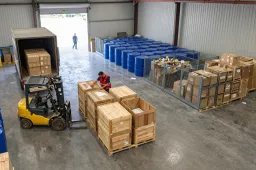
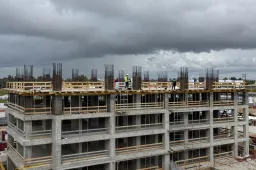
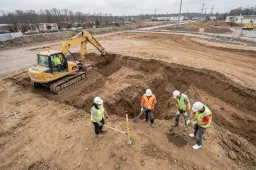
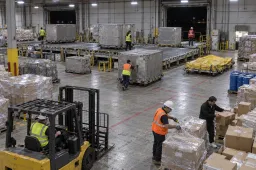
Ultralytics Construction-PPE هي مجموعة بيانات أصلية لـاكتشاف الكائنات، تضم 1,000 صورة و14,863 صندوق إحاطة و12 فئة، وتغطي الأشخاص والرافعات الشوكية ومعدات الوقاية الشخصية ومعدات الوقاية المفقودة الظاهرة في مواقع البناء والمنشآت الصناعية.
أنشأ فريق Ultralytics مجموعة البيانات وأتاحها مفتوحة المصدر في نوفمبر 2026. وهي تجمع بين صور جمعتها جهات بشرية وصور مولّدة، مع إكمال التعليقات التوضيحية بواسطة خبراء بشريين والتعليقات التوضيحية الآلية بالذكاء الاصطناعي في نوفمبر 2026 على يد فريق Ultralytics. تُنشر الصور والتعليقات التوضيحية بموجب رخصة المشاع الإبداعي نَسب المُصنَّف 4.0 الدولية (CC BY 4.0).
استكشف Construction-PPE على منصة Ultralytics لتصفح الصور والوسوم، أو استنساخ مجموعة البيانات، أو تدريب نموذج.
الصور والوسوم#
تغطي الصور مواقع البناء وورش العمل والمستودعات ومناطق التحميل وأعمال الصيانة. وتضم زوايا تصوير متنوعة وظروف إضاءة مختلفة وتوزيعات متعددة للعاملين ومعدات الوقاية وأنشطة الرافعات الشوكية.
تتضمن الصور تكوينات أفقية وعمودية ومربعة، وبدقات متنوعة.
تستخدم الوسوم الصناديق المحيطة وفق تنسيق Ultralytics YOLO. وتحدد فئات المعدات العناصر الظاهرة؛ أما فئات المعدات المفقودة فتحدد منطقة الجسم الظاهرة المقابلة عند غياب المعدات. ولا يثبت حجب جزء من الجسم أو وجوده خارج إطار الصورة وحده غياب المعدات.
بنية مجموعة البيانات#
تتضمن مجموعة البيانات تقسيمًا ثابتًا بنسبة 80/20 إلى التدريب/التحقق:
| المجموعة الفرعية | الصور | الغرض |
|---|---|---|
| التدريب | 800 | تدريب النموذج |
| التحقق | 200 | التقييم أثناء التطوير |
| الإجمالي | 1,000 |
لا يوجد تقسيم مستقل للاختبار. استخدم صورًا مستقلة من بيئة النشر المستهدفة لإجراء التقييم النهائي، وخصوصًا عند قياس الأداء على لقطات كاميرات حقيقية.
الفئات#
تتطابق معرّفات الفئات أدناه مع وسوم مجموعة البيانات وconstruction-ppe.yaml:
| المعرّف | الفئة | الهدف |
|---|---|---|
| 0 | helmet | خوذة واقية أو خوذة صلبة |
| 1 | gloves | قفازات العمل |
| 2 | vest | سترة أو سترة قصيرة أو قميص أمان عالي الوضوح |
| 3 | boots | أحذية واقية للعمل أو أحذية عمل |
| 4 | goggles | نظارات واقية |
| 5 | Person | شخص |
| 6 | no_helmet | رأس ظاهر دون خوذة |
| 7 | no_goggle | منطقة عين ظاهرة دون نظارات واقية |
| 8 | no_gloves | يد ظاهرة دون قفاز |
| 9 | no_boots | قدم أو حذاء ظاهر دون حذاء عمل واقٍ |
| 10 | forklift | رافعة شوكية |
| 11 | no_vest | جذع ظاهر دون ملابس أمان عالية الوضوح |
ملف YAML لمجموعة البيانات#
يحدد إعداد مجموعة البيانات مسارات الصور وترتيب الفئات وعنوان URL للتنزيل:
# Ultralytics 🚀 AGPL-3.0 License - https://ultralytics.com/license

# Ultralytics Construction-PPE dataset, November 2026, CC BY 4.0
# Documentation: https://docs.ultralytics.com/datasets/detect/construction-ppe
# Example usage: yolo train data=construction-ppe.yaml
# parent
# ├── ultralytics
# └── datasets
#     └── construction-ppe ← downloads here

# Train/val/test sets as 1) dir: path/to/imgs, 2) file: path/to/imgs.txt, or 3) list: [path/to/imgs1, path/to/imgs2, ..]
path: construction-ppe # dataset root dir
train: images/train # train images (relative to 'path') 800 images
val: images/val # val images (relative to 'path') 200 images

# Classes
names:
  0: helmet
  1: gloves
  2: vest
  3: boots
  4: goggles
  5: Person
  6: no_helmet
  7: no_goggle
  8: no_gloves
  9: no_boots
  10: forklift
  11: no_vest

# Download script/URL (optional)
download: https://github.com/ultralytics/assets/releases/download/v0.0.0/construction-ppe.zip
يحتوي أرشيف مجموعة البيانات لشهر نوفمبر 2026 على الصور وتسميات YOLO وبيانات مجموعة البيانات الوصفية ورخصة CC BY 4.0. ويُستخرج محتواه إلى construction-ppe.
الاستخدام#
ثبّت حزمة Ultralytics أو حدّثها، ثم درّب نموذج YOLO26 مُدرّبًا مسبقًا. ينزّل YOLO مجموعة البيانات ويستخرجها تلقائيًا عند استخدامها للمرة الأولى.
from ultralytics import YOLO

model = YOLO("yolo26n.pt")
model.train(
    data="https://github.com/ultralytics/assets/releases/download/v0.0.0/construction-ppe.zip",
    epochs=100,
    imgsz=640,
)
راجع دليل التدريب للاطلاع على خيارات الإعداد، ودليل التحقق لتقييم نموذج مدرّب. ويوفر دفتر Construction-PPE شرحًا عمليًا على Colab.
التطبيقات#
- كشف معدات الوقاية الشخصية: تحديد الخوذ والقفازات والسترات والأحذية والنظارات الواقية.
- كشف المعدات المفقودة: تحديد أمثلة ظاهرة على معدات الوقاية الشخصية المفقودة لمراجعتها.
- تحليل مواقع العمل: كشف الأشخاص والرافعات الشوكية في الصور المتعلقة بالبناء والصناعة.
- البحث والتعليم: قارن بين النماذج وادرس التدريب باستخدام صور جمعتها جهات بشرية وصور مولّدة.
الترخيص والإسناد#
تُصدر Ultralytics صور مجموعة البيانات ووسومها بموجب CC BY 4.0، التي تسمح بالمشاركة والتعديل، بما في ذلك الاستخدام التجاري، مع نسب العمل إلى مؤلفيه. اذكر فريق Ultralytics، وأدرج رابطًا إلى مجموعة البيانات والرخصة، وبيّن أي تغييرات أجريتها.
صيغة النسب المقترحة: مجموعة بيانات Ultralytics Construction-PPE، فريق Ultralytics، نوفمبر 2026، CC BY 4.0.
@dataset{Ultralytics_Construction_PPE_2026,
    author = "{Ultralytics team}",
    title = {Ultralytics Construction-PPE Dataset},
    month = {November},
    year = {2026},
    license = {CC-BY-4.0},
    url = {https://docs.ultralytics.com/datasets/detect/construction-ppe},
    publisher = {Ultralytics}
}


التعليقات9
اطرح سؤالًا، وشارك نتائجك، أو ساعد شخصًا آخر.
panagiotamoraiti
Hello, may i ask what does the none class represents?
1Wally18796
It represents the missing of an item. I recommend not using the "no" classes and use the person bounding box to detect missing item. e.g if a helmet bounding box is missing inside a "person" bouding boxes. It's automatically "no helmet"
On Mon, 3 Aug 2026, 9:38 pm Panagiota Moraiti, @.***> wrote:
Hello, may i ask what does the none class represents?
— Reply to this email directly, view it on GitHub https://github.com/orgs/ultralytics/discussions/23364?email_source=notifications&email_token=A6BHGJNLIEEG3PDKZYO5CJD5IC5ZXA5CNFSNUABIM5UWIORPF5TWS5BNNB2WEL2ENFZWG5LTONUW63SDN5WW2ZLOOQXTCNZYHAZTEOBXUZZGKYLTN5XKOY3PNVWWK3TUUVSXMZLOOSWGM33PORSXEX3DNRUWG2Y#discussioncomment-17883287, or unsubscribe https://github.com/notifications/unsubscribe-auth/A6BHGJMNF5G3KG5GLTBGRH35IC5ZXAVCNFSNUABHKJSXA33TNF2G64TZHM2TGNJTGYYDINBVHNCGS43DOVZXG2LPNY5TSMZXGQZDINFBOYBA . You are receiving this because you commented.Message ID: @.*** com>
But what if the person is holding the helmet in their hand? With what you're proposing, the system won't raise an alert in that case, which isn't correct. The "No" classes exist for a reason in the dataset.
I think the None class means "no vest," though I'm not 100% sure. When I removed it, results got worse, so it's doing something useful.
 Glenn JocherUltralytics
You’re right that person–PPE association matters: a helmet merely inside a person box does not prove it is worn. However,
noneis a generic class and is not documented asno_vest; the Construction-PPE class list explicitly notes that no dedicated missing-vest class exists. Please keep questions and findings here so the Ultralytics team can clarify the source annotation semantics.
 Murat Raimbekov
hey @nhatminh-115, the numbers back up your observation, though i'd be careful about calling it a "problem" - some of this looks intentional given how construction sites actually look. i pulled the dataset and counted instances:
positive vs negative instances:
split positives negatives pos/neg ratio train 5410 1267 4.27 : 1 val 706 146 4.84 : 1 test 796 154 5.17 : 1 so yes, positives outnumber negatives roughly 4-5x in every split. but that ratio is actually close to what you'd see on real construction sites - most workers do wear ppe most of the time.
per-class breakdown (train):
class instances counterpart ratio helmet (0) 1341 no_helmet (7) -> 400 3.35 gloves (1) 1146 no_gloves (9) -> 442 2.59 boots (3) 1235 no_boots (10) -> 88 14.03 goggles (4) 419 no_goggle (8) -> 337 1.24 vest (2) 1269 no_vest does not exist - a few things worth understanding before treating these as bugs:
- no
no_vestclass: high-vis vests are essentially binary - they're either on or completely off, and they're very visible. ano_vestlabel would basically be "person box without overlapping vest box", which you can derive in post-processing without needing a dedicated class. - no_boots is rare (88 instances): boots are often occluded by trousers, dust, or camera angle, so annotators can't always confidently mark "missing boots". the rarity probably reflects what's actually verifiable in the imagery rather than an annotation gap.
co-occurrence in training images (1142 total):
- 900 contain only positive classes ("compliant" scenes)
- 184 contain only negative classes ("non-compliant" scenes)
- 56 contain both (~5%)
- 2 contain neither
the docs explicitly say the dataset "includes both compliant and non-compliant cases", which matches what we see - scenes tend to be one or the other, not heavily mixed.
if your specific use case needs better recall on the
no_*classes, the data distribution does work against you. some things that help:- class weighting or focal loss to compensate for imbalance
- oversampling images containing negative-class instances
- aggressive augmentation on rare classes (especially
no_boots) - derive "missing PPE" rules in post-processing: detect
Personboxes, then check for overlappinghelmet/gloves/boots/vest, infer missing items from absence. this scales better with limited neg examples
so: the imbalance is real, the data behaves as you described, but a lot of it is consistent with how the dataset is designed rather than an annotation defect.
- no
nhatminh-115
I think this dataset has a huge problem of partial annotation and prior distribution. It works great on the Positive but kinda bad on Neg. Can anyone confirm on this or is it just me?
Waqas7717
# Train/val/test sets as 1) dir: path/to/imgs, 2) file: path/to/imgs.txt, or 3) list: [path/to/imgs1, path/to/imgs2, ..]
path: construction-ppe # dataset root dir
train: images/train # train images (relative to 'path') 1132 images
val: images/val # val images (relative to 'path') 143 images
test: images/test # test images (relative to 'path') 141 images
1,132 images for training really isn’t enough for anything close to a real-world setup. Most of these images are close-up shots of people clearly posing in helmets and vests. That’s not how this would work in practice. In a real deployment, you’re dealing with CCTV cameras fixed angles, wide shots, bad lighting, blur, occlusion, and workers far from the camera. I’ve spent the last year banging my head against the wall just trying to get models to cross 80% accuracy. This isn’t going to generalize. What’s actually needed is real CCTV footage of real workers on real sites not internet images of models wearing PPE.
Sir, have u found a solution or a better dataset? I'm trying to find one for my fyp sice you're saying it won't go up more than 80%, I don't wanna waste my time with it.
hungtrieu07
Sir, have u found a solution or a better dataset? I'm trying to find one for my fyp sice you're saying it won't go up more than 80%, I don't wanna waste my time with it.
Lots of company will private this dataset for their AI team to process, so we have zero chance to get it in high quality :( I'm also get into this problem.