مجموعة بيانات DOTA مع OBB
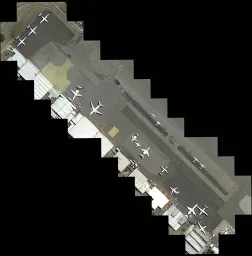
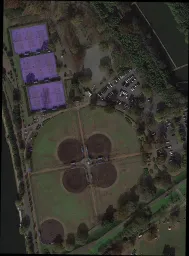
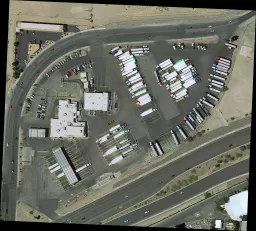
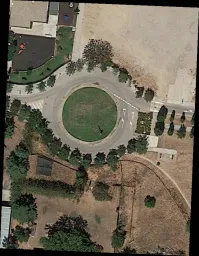
تُعد مجموعة بيانات DOTA معيارًا مرجعيًا واسع النطاق لاكتشاف الأجسام في الصور الجوية. وقد صدرت في ثلاثة إصدارات (v1.0 وv1.5 وv2.0)، وتضم ما يصل إلى 1.7 مليون تعليق توضيحي لـصناديق الإحاطة الموجهة (OBB) ضمن 18 فئة، جُمعت باستخدام مستشعرات ومنصات جوية متنوعة.
استكشف مجموعتي البيانات DOTA v1.5 وDOTA v1.0 المستضافتين رسميًا على منصة Ultralytics لمعاينة تعليقاتهما التوضيحية الموجّهة، وفحص الإحصاءات، واستنساخهما للتدريب.
الميزات الرئيسية#
شاهد: كيفية تدريب Ultralytics YOLO على مجموعة بيانات DOTA لمربعات الإحاطة الموجّهة في Google Colab
- مجموعة بيانات من مستشعرات ومنصات متنوعة، وتتراوح أحجام الصور فيها بين 800 × 800 و20,000 × 20,000 بكسل.
- تضم أكثر من 1.7 مليون صندوق إحاطة موجه ضمن 18 فئة.
- تتيح اكتشاف الأجسام متعددة المقاييس بفضل التفاوت الكبير في أحجام الأجسام داخل الصور.
- يضع الخبراء تعليقات توضيحية على المثيلات باستخدام أشكال رباعية اعتباطية (8 درجات حرية)، لالتقاط الأجسام باختلاف مقاييسها واتجاهاتها وأشكالها.
إصدارات مجموعة البيانات#
DOTA-v1.0#
- تضم 15 فئة شائعة.
- تتكون من 2,806 صور تضم 188,282 مثيلًا.
- نسب التقسيم: النصف للتدريب (1,411 صورة)، والسدس للتحقق (458 صورة)، والثلث للاختبار (937 صورة).
DOTA-v1.5#
- تتضمن الصور نفسها الموجودة في DOTA-v1.0.
- تتضمن أيضًا تعليقات توضيحية للمثيلات الصغيرة جدًا (أقل من 10 بكسلات).
- إضافة فئة جديدة: "رافعة حاويات".
- يبلغ إجمالي عدد المثيلات 403,318.
- صدر الإصدار ضمن تحدي DOAI لعام 2019 لاكتشاف الأجسام في الصور الجوية.
DOTA-v2.0#
- مجموعات من صور Google Earth والقمر الصناعي GF-2 وصور جوية أخرى.
- تضم 18 فئة شائعة.
- تضم 11,268 صورة و1,793,658 مثيلًا.
- الفئات الجديدة المضافة: "مطار" و"مهبط طائرات الهليكوبتر".
- تقسيمات الصور:
- التدريب: 1,830 صورة تضم 268,627 مثيلاً.
- التحقق: 593 صورة تضم 81,048 مثيلاً.
- مجموعة الاختبار التطويرية: 2,792 صورة تضم 353,346 مثيلاً.
- مجموعة اختبار التحدي: 6,053 صورة تضم 1,090,637 مثيلاً.
بنية مجموعة البيانات#
يتميز DOTA بتخطيط منظم مُصمم خصيصًا لتحديات اكتشاف الأجسام باستخدام OBB:
- الصور: مجموعة ضخمة من الصور الجوية عالية الدقة التي تلتقط تضاريس ومنشآت متنوعة.
- مربعات الإحاطة الموجّهة: تعليقات توضيحية على شكل مستطيلات مُدارة تحيط بالأجسام بغض النظر عن اتجاهها، وهي مثالية لالتقاط أجسام مثل الطائرات والسفن والمباني.
التطبيقات#
تُستخدم DOTA معيارًا مرجعيًا لتدريب النماذج المصممة لتحليل الصور الجوية وتقييمها. وتجعل تعليقات مربعات الإحاطة الموجّهة منها اختبارًا صعبًا لنماذج اكتشاف الكائنات التي تتعامل مع أهداف جوية مدوّرة ومتراصة. وتُستخدم مجموعة البيانات على نطاق واسع في الاستشعار عن بُعد والمراقبة والرصد البيئي.
ملف YAML لمجموعة البيانات#
يحدد ملف YAML لمجموعة البيانات مسارات جذر الصور والتسميات وأسماء الفئات والبيانات الوصفية المهمة الأخرى. تحتفظ Ultralytics بملفات YAML رسمية للإصدارين الأكثر استخدامًا:
استخدم ملف YAML المطابق للإصدار الذي نزّلته، أو أنشئ ملف YAML مخصصًا إذا كنت تعمل باستخدام DOTA-v2 أو إصدار مشتق آخر. يُنزّل كلا الإصدارين تلقائيًا (2 GB) من أصول Ultralytics على GitHub عند التدريب لأول مرة.
# Ultralytics 🚀 AGPL-3.0 License - https://ultralytics.com/license

# DOTA 1.0 dataset https://captain-whu.github.io/DOTA/index.html for object detection in aerial images by Wuhan University
# Documentation: https://docs.ultralytics.com/datasets/obb/dota-v2
# Example usage: yolo train model=yolov8n-obb.pt data=DOTAv1.yaml
# parent
# ├── ultralytics
# └── datasets
#     └── DOTAv1 ← downloads here (2 GB)

# Train/val/test sets as 1) dir: path/to/imgs, 2) file: path/to/imgs.txt, or 3) list: [path/to/imgs1, path/to/imgs2, ..]
path: DOTAv1 # dataset root dir
train: images/train # train images (relative to 'path') 1411 images
val: images/val # val images (relative to 'path') 458 images
test: images/test # test images (optional) 937 images

# Classes for DOTA 1.0
names:
  0: plane
  1: ship
  2: storage tank
  3: baseball diamond
  4: tennis court
  5: basketball court
  6: ground track field
  7: harbor
  8: bridge
  9: large vehicle
  10: small vehicle
  11: helicopter
  12: roundabout
  13: soccer ball field
  14: swimming pool

# Download script/URL (optional)
download: https://github.com/ultralytics/assets/releases/download/v0.0.0/DOTAv1.zip
تقسيم صور DOTA#
غالبًا ما يتجاوز حجم الصور الخام 10,000 بكسل في أحد أبعادها، لذا يُنصح بتقسيمها إلى رقع قبل إدخال البيانات إلى YOLO. استخدم الدالة المساعدة أدناه لتقسيم الصور المصدر إلى قصاصات متداخلة بحجم 1024 × 1024 على مقاييس متعددة، مع الحفاظ على مزامنة التعليقات التوضيحية.
from ultralytics.data.split_dota import split_test, split_trainval
# تقسيم مجموعتي التدريب والتحقق، مع التسميات.
split_trainval(
data_root="path/to/DOTAv1.0/",
save_dir="path/to/DOTAv1.0-split/",
rates=[0.5, 1.0, 1.5], # multiscale
gap=500,
)
# تقسيم مجموعة الاختبار، من دون تسميات.
split_test(
data_root="path/to/DOTAv1.0/",
save_dir="path/to/DOTAv1.0-split/",
rates=[0.5, 1.0, 1.5], # multiscale
gap=500,
)حافظ على تنظيم دليل المخرجات وفق بنية YOLO القياسية (images/train, labels/train, إلخ.) كي تتمكن من الإشارة إليه مباشرةً من ملف YAML لمجموعة البيانات.
الاستخدام#
لتدريب نموذج YOLO26n-obb على مجموعة بيانات DOTA v1، استخدم مقتطفات التعليمات البرمجية التالية. ارجع دائمًا إلى وثائق النموذج للاطلاع على قائمة شاملة بالوسائط المتاحة. وإذا كنت ترغب في تجربة مجموعة فرعية أصغر أولًا، ففكّر في استخدام مجموعة بيانات DOTA8، التي لا تضم سوى 8 صور للاختبار السريع، ويمكن تصفحها على منصة Ultralytics.
لا يجوز استخدام الصور والتعليقات التوضيحية المرتبطة بها في مجموعة بيانات DOTAv1 إلا للأغراض الأكاديمية؛ ويُحظر استخدامها تجاريًا. تفسر Ultralytics هذه القيود على أنها تنطبق على مجموعة البيانات المصدر، لا على أوزان النماذج المدرّبة مسبقًا أو المضبوطة ضبطًا دقيقًا. راجع شروط DOTA للاستخدام الذي تنوي القيام به.
from ultralytics import YOLO
# تحميل نموذج YOLO26n-OBB مدرّب مسبقًا
model = YOLO("yolo26n-obb.pt")
# تدريب النموذج على مجموعة بيانات DOTAv1
results = model.train(data="DOTAv1.yaml", epochs=100, imgsz=1024)البيانات النموذجية والتعليقات التوضيحية#
تعرض العينة أدناه مشاهد DOTA وتعليقاتها التوضيحية النموذجية:
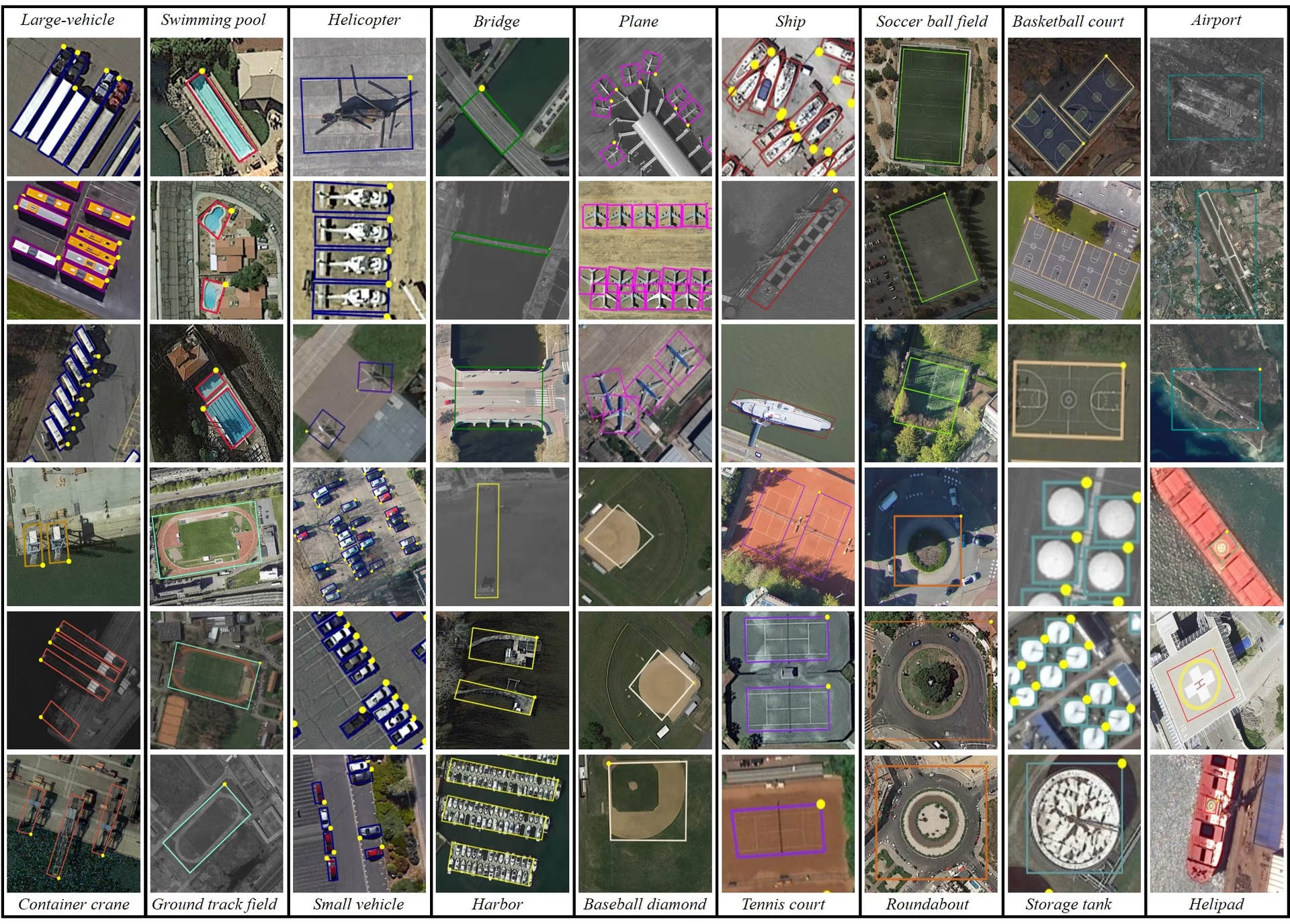
- أمثلة DOTA: توضح هذه اللقطة مدى تعقيد المشاهد الجوية وأهمية تعليقات مربعات الإحاطة الموجّهة، التي تلتقط الأجسام وفق اتجاهها الطبيعي.
تُبرز هذه المشاهد تحديات الاكتشاف الخاصة بالصور الجوية. ويُستخدم DOTA-v2.0 على نطاق واسع في مشاريع الاستشعار عن بُعد والمراقبة الجوية بفضل تعليقاته التوضيحية الشاملة وفئاته المتنوعة من الكائنات.
الاستشهادات والشكر والتقدير#
إذا استخدمت DOTA في عملك، فيُرجى الاستشهاد بالأوراق البحثية ذات الصلة:
@article{9560031,
  author={Ding, Jian and Xue, Nan and Xia, Gui-Song and Bai, Xiang and Yang, Wen and Yang, Michael and Belongie, Serge and Luo, Jiebo and Datcu, Mihai and Pelillo, Marcello and Zhang, Liangpei},
  journal={IEEE Transactions on Pattern Analysis and Machine Intelligence},
  title={Object Detection in Aerial Images: A Large-Scale Benchmark and Challenges},
  year={2022},
  volume={44},
  number={11},
  pages={7778-7796},
  doi={10.1109/TPAMI.2021.3117983}
}
نشكر الفريق الذي أعد مجموعات بيانات DOTA. للاطلاع على التفاصيل الكاملة لمجموعة البيانات، تفضل بزيارة موقع DOTA الرسمي.
الأسئلة الشائعة#
مجموعة بيانات DOTA هي مجموعة بيانات متخصصة تركز على اكتشاف الأجسام في الصور الجوية. وتضم مربعات إحاطة موجّهة (OBB)، وتوفر صورًا مشروحة من مشاهد جوية متنوعة. إن تنوع اتجاهات الأجسام وأحجامها وأشكالها عبر 1.7M تعليق توضيحي و18 فئة يجعل DOTA مثالية لتطوير النماذج المصممة لتحليل الصور الجوية وتقييمها، مثل النماذج المستخدمة في المراقبة والرصد البيئي وإدارة الكوارث.
تستخدم DOTA مربعات الإحاطة الموجّهة (OBB) للتعليق التوضيحي، وتمثلها مستطيلات مدوّرة تحيط بالكائنات بصرف النظر عن اتجاهها. وتضمن هذه الطريقة رصد الكائنات بدقة، سواء أكانت صغيرة أم مائلة بزوايا مختلفة. وتتيح صور مجموعة البيانات متعددة المقاييس، التي تتراوح أحجامها من 800 × 800 إلى 20,000 × 20,000 بكسل، اكتشاف الكائنات الصغيرة والكبيرة بفاعلية. وتكتسب هذه الطريقة أهمية خاصة في الصور الجوية، حيث تظهر الكائنات بزوايا ومقاييس متنوعة.
لتدريب نموذج على مجموعة بيانات DOTA، يمكنك استخدام المثال التالي مع Ultralytics YOLO:
مثال على التدريبfrom ultralytics import YOLO # تحميل نموذج YOLO26n-OBB مدرّب مسبقًا model = YOLO("yolo26n-obb.pt") # تدريب النموذج على مجموعة بيانات DOTAv1 results = model.train(data="DOTAv1.yaml", epochs=100, imgsz=1024)لمزيد من التفاصيل حول كيفية تقسيم صور DOTA ومعالجتها مسبقًا، راجع قسم تقسيم صور DOTA.
- DOTA-v1.0: تضم 15 فئة شائعة ضمن 2,806 صور تحتوي على 188,282 مثيلاً. وتنقسم مجموعة البيانات إلى مجموعات التدريب والتحقق والاختبار.
- DOTA-v1.5: توسّع DOTA-v1.0 بإضافة تعليقات توضيحية للمثيلات الصغيرة جدًا (أقل من 10 بكسلات)، وإضافة فئة جديدة هي «رافعة الحاويات»، ليصل الإجمالي إلى 403,318 مثيلاً.
- DOTA-v2.0: تتوسع أكثر بإضافة تعليقات توضيحية من Google Earth والقمر الصناعي GF-2، وتضم 11,268 صورة و1,793,658 مثيلاً. كما تشمل فئات جديدة مثل «المطار» و«مهبط المروحيات».
للاطلاع على مقارنة مفصلة ومعلومات إضافية، راجع قسم إصدارات مجموعة البيانات.
تُقسّم صور DOTA الكبيرة جدًا إلى أجزاء بدقة أقل لتسهيل التدريب. إليك مقطعًا برمجيًا بلغة Python لتقسيم الصور:
مثالfrom ultralytics.data.split_dota import split_test, split_trainval # تقسيم مجموعتي التدريب والتحقق، مع التسميات. split_trainval( data_root="path/to/DOTAv1.0/", save_dir="path/to/DOTAv1.0-split/", rates=[0.5, 1.0, 1.5], # multiscale gap=500, ) # تقسيم مجموعة الاختبار، من دون تسميات. split_test( data_root="path/to/DOTAv1.0/", save_dir="path/to/DOTAv1.0-split/", rates=[0.5, 1.0, 1.5], # multiscale gap=500, )تسهم هذه العملية في تحسين كفاءة التدريب وأداء النموذج. للاطلاع على تعليمات مفصلة، تفضل بزيارة قسم تقسيم صور DOTA.


التعليقات17
اطرح سؤالًا، وشارك نتائجك، أو ساعد شخصًا آخر.
XWP-PPP
May I ask how you converted the inference results from YOLOV8 OBB into inference results that can be uploaded to DOTA's Task 1 server? I saved the final inference results of the model in the form of xyxyxy and uploaded them via email. However, the mAP results provided on YOLO's official website differ significantly. I would like to know the reason for this. Can you provide me with a conversion code to convert the test image set into a result that can be uploaded to DOTA's Task 1 server? Thank you very much for your help!
1 Paula DerrengerUltralytics(تم التعديل)
@XWP-PPP hi there!
DOTA's Task 1 server expects a zip of one text file per class (
Task1_plane.txt,Task1_storage-tank.txt, ...), where each line isimgname score x1 y1 x2 y2 x3 y3 x4 y4, with the image name given without extension. OBB results are stored inresult.obb, notresult.boxes. Here is a snippet that builds those files:import shutil from collections import defaultdict from pathlib import Path from ultralytics import YOLO # Load your trained YOLO26-OBB model model = YOLO("path/to/your/yolo26n-obb.pt") # Collect one DOTA Task1 line per detection: imgname score x1 y1 x2 y2 x3 y3 x4 y4 (pixels) category_results = defaultdict(list) for r in model.predict(source="path/to/test/images", stream=True): img_name = Path(r.path).stem for cls, conf, pts in zip(r.obb.cls.int().tolist(), r.obb.conf.tolist(), r.obb.xyxyxyxy.flatten(1).tolist()): coords = " ".join(f"{p:.1f}" for p in pts) category_results[f"Task1_{model.names[cls].replace(' ', '-')}.txt"].append(f"{img_name} {conf:.6f} {coords}\n") # Save one file per category and zip the submission folder output_dir = Path("submission") output_dir.mkdir(exist_ok=True) for category_file, lines in category_results.items(): (output_dir / category_file).write_text("".join(lines)) shutil.make_archive("submission", "zip", output_dir)Upload
submission.zipto the DOTA Task 1 server. If your mAP differs from your local validation, check that image names match the test set and that the coordinates are in pixels of the original (unsplit) images. For more details, see the DOTA Dataset Documentation. Happy coding! 😊
Taufiq-Ahmed-pranto
Hi, I want to use the DOTA dataset only for YOLOv11 Nano. I don't want to use the model with oriented bounding boxes (OBB). What is the procedure?
 Jie Liu
I have download dotav1 form
https://github.com/ultralytics/assets/releases/download/v0.0.0/DOTAv1.zipand use script split dataset.from ultralytics.data.split_dota import split_test, split_trainval # split train and val set, with labels. split_trainval( data_root="/dataset/coco/DOTAv1", save_dir="/dataset/coco/DOTAv1.0-split/", rates=[0.5, 1.0, 1.5], # multiscale gap=500, ) # split test set, without labels. split_test( data_root="/dataset/coco/DOTAv1/", save_dir="/dataset/coco/DOTAv1.0-split/", rates=[0.5, 1.0, 1.5], # multiscale gap=500, )how to reproduce yolov11 obb result, please show me the command like
yolo train model=ultralytics-8.3.13/ultralytics/cfg/models/11/yolo11n-obb.yaml data=DOTAv1/DOTAv1.yaml epochs=500 batch=32*4 imgsz=640 device=4,5,6,7 cache=disk amp=True Glenn JocherUltralytics(تم التعديل)
@keeper-jie for training YOLO26-OBB on DOTAv1 after splitting, use this command with your 4 GPUs:
yolo obb train data=DOTAv1.yaml model=yolo26n-obb.pt epochs=500 imgsz=1024 batch=128 device=4,5,6,7Key parameters from our DOTA documentation:
imgsz=1024(matches dataset's multiscale split)- Use official model name
yolo26n-obb.ptrather than YAML path - Batch size 128 (32*4 GPUs) via
batch=128
Ensure your dataset YAML paths point to the split images directory.
huynhkhoa44
I have labeled data in YOLOv8 object detection format, our label data format is already rotated rectangles to the correct angle of the object, however since it is in YOLOv8 object detection format, the "angle" parameter is missing. I no longer keep the label folder on CVAT so I cannot export to a different label format. Is there a way to add the angle value from the 4 pre-existing <x_center> <y_center> values?
- Glenn JocherUltralytics
To add the angle value from your existing YOLOv8 labels, you'll need to calculate it based on the coordinates. Unfortunately, without the original CVAT labels, this requires manual computation or using a tool that supports angle annotations. For guidance on datasets with oriented bounding boxes, you can refer to the DOTA dataset documentation at https://docs.ultralytics.com/datasets/obb/dota-v2/.
jack-ready
Recently, I've been using YOLOv8 to train the DOTAv1 dataset and encountered some issues. I was wondering if I could seek advice. 1.To train the DOTA dataset, we split the original DOTA images with high-resolution into images with 1024x1024. I noticed that the provided segmentation code provides three sizes, rates=[0.5, 1.0, 1.5]. In order to obtain 1024×1024 images, it seems that we should choose rates=1, but I noticed that some images in the segmentation results of the validation set are smaller than 1024×1024, such as 1024×1023, 824*1024, etc. What is the reason for this?Will it affect the experiment? 2.Another issue arises during the training process. I noticed that the training process conducts validation after each epoch. I attempted to disable validation by setting val=False, but it seems to have no effect. What could be the reason for this? The training code snippet is as follows: results = model.train(data="DOTAv1.yaml", epochs=100, imgsz=640, batch=10, workers=0, val=False). Additionally, during validation, it seems that the images are not being resized to 640. Printing the results in the code yields torch.Size([10, 3, 672, 672]), whereas during the training process, images are correctly resized to 640. Could someone help me understand this?
- Glenn JocherUltralytics(تم التعديل)
@jack-ready hi there!
Thank you for reaching out with your questions regarding training the DOTA dataset with YOLOv8. Let's address each of your concerns:
-
Image Splitting and Sizes: When splitting high-resolution DOTA images into 1024x1024 segments using
rates=[0.5, 1.0, 1.5], you might notice some resulting images are slightly smaller than 1024x1024 (e.g., 1024x1023 or 824x1024). This occurs due to the way the splitting algorithm handles the edges of the original images. If the original image dimensions are not perfectly divisible by 1024, the last segment in each row or column might be smaller. This should not significantly affect your experiment as long as the majority of your data maintains the expected size. However, you can ensure consistency by padding these smaller images to 1024x1024 if necessary. -
Disabling Validation: The
val=Falseargument should indeed disable validation during training. If it doesn't seem to work, please ensure you are using the latest version of the Ultralytics package. You can update it using:pip install --upgrade ultralyticsIf the issue persists, providing a minimum reproducible example would be very helpful for us to diagnose the problem. You can find guidance on creating one here: Minimum Reproducible Example.
-
Image Resizing During Validation: The discrepancy in image sizes during validation (e.g.,
torch.Size([10, 3, 672, 672])instead of 640) might be due to the model's internal resizing logic. Ensure that theimgszparameter is correctly set for both training and validation. Validation uses the sameimgszas training, so set it explicitly in your training script:results = model.train(data="DOTAv1.yaml", epochs=100, imgsz=640, batch=10, workers=0, val=True)
I hope this helps! If you have any further questions or need additional assistance, feel free to ask. Happy training! 🚀
-
Thank you very much for your help. I have another question regarding the YOLOV8 training on the DOTA v1.0 dataset. I would like to know how to set the training parameters, such as learning rate, optimizer, and loss function. When I try to reproduce the results, my mAP50 is about 74%, but it does not reach 78%. I would greatly appreciate any assistance you can provide.Below is my training code. from ultralytics import YOLO model = YOLO("yolov8n-obb.yaml") model.load("yolov8n-obb.pt") model = YOLO("yolov8n-obb.yaml").load("yolov8n.pt") results = model.train(data="DOTAv1.yaml", epochs=100, imgsz=640, batch=48, workers=0,project="runs/DOTAV1.0",val=True,resume=True)
- Glenn JocherUltralytics(تم التعديل)
Hi there! Glad to help with your training setup. To fine-tune your training parameters for better mAP50 results, you can adjust the learning rate, optimizer, and loss function. For instance, you might try a lower learning rate or switch to a different optimizer like Adam. Here's a quick example:
from ultralytics import YOLO

model = YOLO("yolo26n-obb.yaml").load("yolo26n-obb.pt")
results = model.train(
    data="DOTAv1.yaml",
    epochs=100,
    imgsz=640,
    batch=48,
    workers=0,
    project="runs/DOTAV1.0",
    val=True,
    lr0=0.001,  # Adjust learning rate
    optimizer='Adam'  # Change optimizer
)
Ensure you're using the latest version of the Ultralytics package to avoid any bugs. If you still face issues, feel free to share more details. Happy training! 🚀
Tintin26100
How can I find the number of instances per class in DOTA v1.5 ? I've been searching for this information for a moment and I can't find any answers
- Paula DerrengerUltralytics
@Tintin26100 hello!
The number of instances per class in DOTA v1.5 isn't directly listed in the dataset's summary. However, you can obtain this information by analyzing the annotation files provided with the dataset. Each object instance in these files is labeled with a class, and you can count the number of times each class appears.
If you need further guidance on how to process these annotation files or any other assistance with the DOTA dataset, feel free to ask!
Happy coding! 😊
Hi, thanks for your quick answer, I will gladly accept your help because I don't really know what to do to extract those informations, where do you find the annotation files ? Is it on the github ? If it is what's it's path ? Thanks for the time you spend helping
- Paula DerrengerUltralytics
@Tintin26100 hello!
The annotation files for the DOTA dataset are typically included within the dataset download itself. These files contain the details for each instance, including class labels and oriented bounding box coordinates.
For the DOTA v1.5 dataset, you can find these files in the dataset directory after you download it from the official DOTA dataset page or the provided download link in the dataset's YAML configuration file. The path to the annotations will usually be structured under the
labelsorannotationsdirectory within the main dataset folder.If you've already downloaded the dataset, you should look for
.txtor.jsonfiles corresponding to each image in the dataset, which contain the annotations. If you need further assistance navigating these files or extracting specific data, feel free to ask!Thank you for reaching out, and happy analyzing! 😊
hencai
how to test DOTA datatests online using YOLOv8-obb? somebody help me ?
- Glenn JocherUltralytics(تم التعديل)
Hey there! 😊 Testing the DOTA dataset online using YOLO26-obb is quite straightforward. If you've already prepared your dataset according to the Ultralytics guidelines and split the images, here's a simple example to get you started with training:
# Train a YOLO26n-OBB model on the DOTA v1 dataset
yolo obb train data=DOTAv1.yaml model=yolo26n-obb.pt epochs=100 imgsz=640
This command uses DOTA v1 and the corresponding
.yamlfile (DOTAv1.yaml) describing your dataset paths and classes. Adjustepochsandimgszbased on your needs.Just make sure to check out the DOTA dataset page on Ultralytics docs for more info on dataset preparation and additional configurations! Happy detecting! 🚀