Ultralytics-Datensatz Construction-PPE
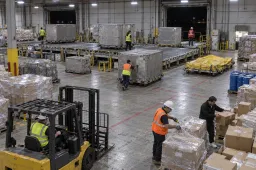
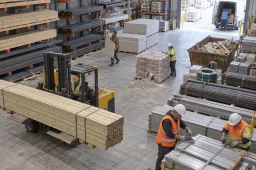
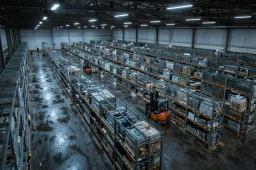
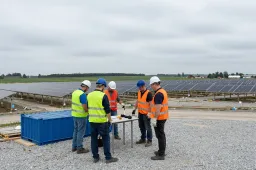
Ultralytics Construction-PPE ist ein originaler Datensatz zur Objekterkennung mit 1.000 Bildern, 14.863 Begrenzungsrahmen und 12 Klassen. Er umfasst Personen, Gabelstapler, persönliche Schutzausrüstung und sichtbar fehlende Ausrüstung in Bau- und Industrieumgebungen.
Der Datensatz wurde im November 2026 vom Ultralytics-Team erstellt und als Open Source veröffentlicht. Er kombiniert von Menschen aufgenommene und generierte Bilder. Die fachkundige Annotation durch Menschen und die automatische Annotation durch künstliche Intelligenz wurden im November 2026 vom Ultralytics-Team abgeschlossen. Bilder und Annotationen werden unter Creative Commons Namensnennung 4.0 International (CC BY 4.0) veröffentlicht.
Entdecke Construction-PPE auf der Ultralytics Platform, um die Bilder und Annotationen anzusehen, den Datensatz zu klonen oder ein Modell zu trainieren.
Bilder und Annotationen#
Die Bilder zeigen Baustellen, Werkstätten, Lagerhäuser, Ladebereiche und Wartungsarbeiten. Sie umfassen unterschiedliche Perspektiven, Lichtverhältnisse, Anordnungen von Beschäftigten, Schutzausrüstung und Aktivitäten mit Gabelstaplern.
Die Bilder umfassen Quer-, Hoch- und quadratische Formate mit unterschiedlichen Auflösungen.
Die Annotationen verwenden Begrenzungsrahmen im Ultralytics-YOLO-Format. Die Klassen für Ausrüstung kennzeichnen sichtbare Gegenstände; die Klassen für fehlende Ausrüstung kennzeichnen den entsprechenden sichtbaren Körperbereich, wenn die Ausrüstung fehlt. Ein verdeckter oder außerhalb des Bildausschnitts liegender Körperteil allein belegt nicht, dass Ausrüstung fehlt.
Datensatzstruktur#
Der Datensatz hat eine feste Aufteilung von 80/20 in Trainings- und Validierungsdaten:
| Aufteilung | Bilder | Zweck |
|---|---|---|
| Trainieren | 800 | Modelltraining |
| Validierung | 200 | Auswertung während der Entwicklung |
| Gesamt | 1,000 |
Es gibt keine separate Testaufteilung. Verwende für die abschließende Auswertung unabhängige Bilder aus der vorgesehenen Einsatzumgebung, insbesondere wenn du die Leistung mit echten Kameraaufnahmen beurteilst.
Klassen#
Die Klassen-IDs unten entsprechen den Annotationen des Datensatzes und construction-ppe.yaml:
| ID | Klasse | Ziel |
|---|---|---|
| 0 | helmet | Schutzhelm oder Bauhelm |
| 1 | gloves | Arbeitshandschuhe |
| 2 | vest | Warnweste, Warnjacke oder Warnhemd |
| 3 | boots | Sicherheitsschuhe oder Arbeitsschuhe |
| 4 | goggles | Schutzbrille |
| 5 | Person | Person |
| 6 | no_helmet | Sichtbarer Kopf ohne Helm |
| 7 | no_goggle | Sichtbarer Augenbereich ohne Schutzbrille |
| 8 | no_gloves | Sichtbare Hand ohne Handschuh |
| 9 | no_boots | Sichtbarer Fuß oder sichtbares Schuhwerk ohne Sicherheitsschuhe |
| 10 | forklift | Gabelstapler |
| 11 | no_vest | Sichtbarer Oberkörper ohne Warnkleidung |
YAML-Datei des Datensatzes#
Die Datensatzkonfiguration legt die Bildpfade, die Reihenfolge der Klassen und die Download-URL fest:
# Ultralytics 🚀 AGPL-3.0 License - https://ultralytics.com/license

# Ultralytics Construction-PPE dataset, November 2026, CC BY 4.0
# Documentation: https://docs.ultralytics.com/datasets/detect/construction-ppe
# Example usage: yolo train data=construction-ppe.yaml
# parent
# ├── ultralytics
# └── datasets
#     └── construction-ppe ← downloads here

# Train/val/test sets as 1) dir: path/to/imgs, 2) file: path/to/imgs.txt, or 3) list: [path/to/imgs1, path/to/imgs2, ..]
path: construction-ppe # dataset root dir
train: images/train # train images (relative to 'path') 800 images
val: images/val # val images (relative to 'path') 200 images

# Classes
names:
  0: helmet
  1: gloves
  2: vest
  3: boots
  4: goggles
  5: Person
  6: no_helmet
  7: no_goggle
  8: no_gloves
  9: no_boots
  10: forklift
  11: no_vest

# Download script/URL (optional)
download: https://github.com/ultralytics/assets/releases/download/v0.0.0/construction-ppe.zip
Das Datensatzarchiv vom November 2026 enthält Bilder, YOLO-Labels, Datensatzmetadaten und die CC BY 4.0-Lizenz. Es wird in construction-ppe entpackt.
Verwendung#
Installiere oder aktualisiere das Ultralytics-Paket und trainiere anschließend ein vortrainiertes YOLO26-Modell. YOLO lädt den Datensatz bei der ersten Verwendung automatisch herunter und entpackt ihn.
from ultralytics import YOLO

model = YOLO("yolo26n.pt")
model.train(
    data="https://github.com/ultralytics/assets/releases/download/v0.0.0/construction-ppe.zip",
    epochs=100,
    imgsz=640,
)
In der Trainingsanleitung findest du Konfigurationsoptionen und in der Validierungsanleitung erfährst du, wie du ein trainiertes Modell auswertest. Das Construction-PPE-Notebook führt dich Schritt für Schritt durch die Arbeit in Colab.
Anwendungsfälle#
- Erkennung persönlicher Schutzausrüstung: Helme, Handschuhe, Warnwesten, Sicherheitsschuhe und Schutzbrillen erkennen.
- Erkennung fehlender Ausrüstung: Sichtbare Fälle fehlender persönlicher Schutzausrüstung zur Überprüfung identifizieren.
- Analyse von Baustellen: Personen und Gabelstapler in Bildern aus Bau- und Industrieumgebungen erkennen.
- Forschung und Bildung: Vergleiche Modelle und untersuche das Training mit von Menschen aufgenommenen und generierten Bildern.
Lizenz und Namensnennung#
Die Bilder und Annotationen des Datensatzes werden von Ultralytics unter der CC BY 4.0 veröffentlicht. Diese Lizenz erlaubt das Teilen und Bearbeiten, auch für kommerzielle Zwecke, sofern die Urheberschaft angegeben wird. Nenne das Ultralytics-Team als Urheber, verlinke den Datensatz und die Lizenz und gib an, ob du Änderungen vorgenommen hast.
Empfohlene Quellenangabe: Ultralytics-Datensatz Construction-PPE, Ultralytics-Team, November 2026, CC BY 4.0.
@dataset{Ultralytics_Construction_PPE_2026,
    author = "{Ultralytics team}",
    title = {Ultralytics Construction-PPE Dataset},
    month = {November},
    year = {2026},
    license = {CC-BY-4.0},
    url = {https://docs.ultralytics.com/datasets/detect/construction-ppe},
    publisher = {Ultralytics}
}


Kommentare9
Stell eine Frage, teile deine Ergebnisse oder hilf jemand anderem.
panagiotamoraiti
Hello, may i ask what does the none class represents?
1Wally18796
It represents the missing of an item. I recommend not using the "no" classes and use the person bounding box to detect missing item. e.g if a helmet bounding box is missing inside a "person" bouding boxes. It's automatically "no helmet"
On Mon, 3 Aug 2026, 9:38 pm Panagiota Moraiti, @.***> wrote:
Hello, may i ask what does the none class represents?
— Reply to this email directly, view it on GitHub https://github.com/orgs/ultralytics/discussions/23364?email_source=notifications&email_token=A6BHGJNLIEEG3PDKZYO5CJD5IC5ZXA5CNFSNUABIM5UWIORPF5TWS5BNNB2WEL2ENFZWG5LTONUW63SDN5WW2ZLOOQXTCNZYHAZTEOBXUZZGKYLTN5XKOY3PNVWWK3TUUVSXMZLOOSWGM33PORSXEX3DNRUWG2Y#discussioncomment-17883287, or unsubscribe https://github.com/notifications/unsubscribe-auth/A6BHGJMNF5G3KG5GLTBGRH35IC5ZXAVCNFSNUABHKJSXA33TNF2G64TZHM2TGNJTGYYDINBVHNCGS43DOVZXG2LPNY5TSMZXGQZDINFBOYBA . You are receiving this because you commented.Message ID: @.*** com>
But what if the person is holding the helmet in their hand? With what you're proposing, the system won't raise an alert in that case, which isn't correct. The "No" classes exist for a reason in the dataset.
I think the None class means "no vest," though I'm not 100% sure. When I removed it, results got worse, so it's doing something useful.
 Glenn JocherUltralytics
You’re right that person–PPE association matters: a helmet merely inside a person box does not prove it is worn. However,
noneis a generic class and is not documented asno_vest; the Construction-PPE class list explicitly notes that no dedicated missing-vest class exists. Please keep questions and findings here so the Ultralytics team can clarify the source annotation semantics.
 Murat Raimbekov
hey @nhatminh-115, the numbers back up your observation, though i'd be careful about calling it a "problem" - some of this looks intentional given how construction sites actually look. i pulled the dataset and counted instances:
positive vs negative instances:
split positives negatives pos/neg ratio train 5410 1267 4.27 : 1 val 706 146 4.84 : 1 test 796 154 5.17 : 1 so yes, positives outnumber negatives roughly 4-5x in every split. but that ratio is actually close to what you'd see on real construction sites - most workers do wear ppe most of the time.
per-class breakdown (train):
class instances counterpart ratio helmet (0) 1341 no_helmet (7) -> 400 3.35 gloves (1) 1146 no_gloves (9) -> 442 2.59 boots (3) 1235 no_boots (10) -> 88 14.03 goggles (4) 419 no_goggle (8) -> 337 1.24 vest (2) 1269 no_vest does not exist - a few things worth understanding before treating these as bugs:
- no
no_vestclass: high-vis vests are essentially binary - they're either on or completely off, and they're very visible. ano_vestlabel would basically be "person box without overlapping vest box", which you can derive in post-processing without needing a dedicated class. - no_boots is rare (88 instances): boots are often occluded by trousers, dust, or camera angle, so annotators can't always confidently mark "missing boots". the rarity probably reflects what's actually verifiable in the imagery rather than an annotation gap.
co-occurrence in training images (1142 total):
- 900 contain only positive classes ("compliant" scenes)
- 184 contain only negative classes ("non-compliant" scenes)
- 56 contain both (~5%)
- 2 contain neither
the docs explicitly say the dataset "includes both compliant and non-compliant cases", which matches what we see - scenes tend to be one or the other, not heavily mixed.
if your specific use case needs better recall on the
no_*classes, the data distribution does work against you. some things that help:- class weighting or focal loss to compensate for imbalance
- oversampling images containing negative-class instances
- aggressive augmentation on rare classes (especially
no_boots) - derive "missing PPE" rules in post-processing: detect
Personboxes, then check for overlappinghelmet/gloves/boots/vest, infer missing items from absence. this scales better with limited neg examples
so: the imbalance is real, the data behaves as you described, but a lot of it is consistent with how the dataset is designed rather than an annotation defect.
- no
nhatminh-115
I think this dataset has a huge problem of partial annotation and prior distribution. It works great on the Positive but kinda bad on Neg. Can anyone confirm on this or is it just me?
Waqas7717
# Train/val/test sets as 1) dir: path/to/imgs, 2) file: path/to/imgs.txt, or 3) list: [path/to/imgs1, path/to/imgs2, ..]
path: construction-ppe # dataset root dir
train: images/train # train images (relative to 'path') 1132 images
val: images/val # val images (relative to 'path') 143 images
test: images/test # test images (relative to 'path') 141 images
1,132 images for training really isn’t enough for anything close to a real-world setup. Most of these images are close-up shots of people clearly posing in helmets and vests. That’s not how this would work in practice. In a real deployment, you’re dealing with CCTV cameras fixed angles, wide shots, bad lighting, blur, occlusion, and workers far from the camera. I’ve spent the last year banging my head against the wall just trying to get models to cross 80% accuracy. This isn’t going to generalize. What’s actually needed is real CCTV footage of real workers on real sites not internet images of models wearing PPE.
Sir, have u found a solution or a better dataset? I'm trying to find one for my fyp sice you're saying it won't go up more than 80%, I don't wanna waste my time with it.
hungtrieu07
Sir, have u found a solution or a better dataset? I'm trying to find one for my fyp sice you're saying it won't go up more than 80%, I don't wanna waste my time with it.
Lots of company will private this dataset for their AI team to process, so we have zero chance to get it in high quality :( I'm also get into this problem.