Dataset Construction-PPE di Ultralytics
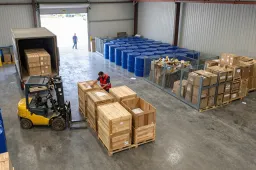
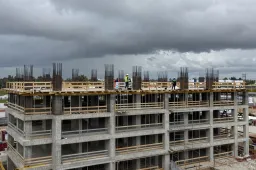
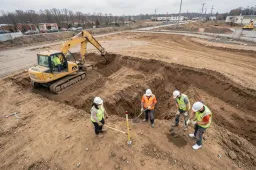
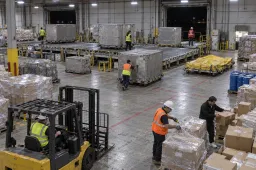
Ultralytics Construction-PPE è un dataset originale di rilevamento degli oggetti composto da 1.000 immagini, 14.863 riquadri delimitatori e 12 classi, che include persone, carrelli elevatori, dispositivi di protezione individuale e dispositivi mancanti visibili in contesti edili e industriali.
Il dataset è stato creato e reso open source nel novembre 2026 dal team Ultralytics. Combina immagini raccolte da persone e generate, con annotazioni esperte realizzate da persone e annotazioni automatiche tramite IA completate nel novembre 2026 dal team Ultralytics. Immagini e annotazioni sono distribuite con licenza Creative Commons Attribuzione 4.0 Internazionale (CC BY 4.0).
Esplora Construction-PPE su Ultralytics Platform per consultare le immagini e le annotazioni, clonare il dataset o addestrare un modello.
Immagini e annotazioni#
Le immagini mostrano cantieri, officine, magazzini, aree di carico e lavori di manutenzione. Includono diverse prospettive, condizioni di illuminazione, disposizioni dei lavoratori, dispositivi di protezione e attività dei carrelli elevatori.
Le immagini presentano composizioni orizzontali, verticali e quadrate, con risoluzioni diverse.
Le annotazioni utilizzano riquadri di delimitazione nel formato Ultralytics YOLO. Le classi dei dispositivi identificano gli elementi visibili; le classi dei dispositivi mancanti identificano la corrispondente regione visibile del corpo quando il dispositivo è assente. Una parte del corpo occlusa o fuori dall'inquadratura non è di per sé sufficiente a stabilire che manchi un dispositivo.
Struttura del dataset#
Il dataset ha una suddivisione fissa 80/20 tra addestramento e convalida:
| Subset | Immagini | Scopo |
|---|---|---|
| Addestra | 800 | Addestramento del modello |
| Validazione | 200 | Valutazione durante lo sviluppo |
| Totale | 1,000 |
Non esiste una suddivisione separata per il test. Per la valutazione finale, usa immagini indipendenti provenienti dall'ambiente in cui prevedi di distribuire il modello, soprattutto quando valuti le prestazioni su riprese di videocamere reali.
Classi#
Gli ID delle classi riportati di seguito corrispondono alle annotazioni del dataset e a construction-ppe.yaml:
| ID | Classe | Destinazione |
|---|---|---|
| 0 | helmet | Casco protettivo o elmetto |
| 1 | gloves | Guanti da lavoro |
| 2 | vest | Gilet, giacca o maglia di sicurezza ad alta visibilità |
| 3 | boots | Stivali o scarpe da lavoro protettivi |
| 4 | goggles | Occhiali protettivi |
| 5 | Person | Persona |
| 6 | no_helmet | Testa visibile senza casco |
| 7 | no_goggle | Regione oculare visibile senza occhiali protettivi |
| 8 | no_gloves | Mano visibile senza guanto |
| 9 | no_boots | Piede o calzatura visibile senza calzature protettive da lavoro |
| 10 | forklift | Carrello elevatore |
| 11 | no_vest | Torso visibile senza indumenti di sicurezza ad alta visibilità |
YAML del dataset#
La configurazione del dataset definisce i percorsi delle immagini, l'ordine delle classi e l'URL di download:
# Ultralytics 🚀 AGPL-3.0 License - https://ultralytics.com/license

# Ultralytics Construction-PPE dataset, November 2026, CC BY 4.0
# Documentation: https://docs.ultralytics.com/datasets/detect/construction-ppe
# Example usage: yolo train data=construction-ppe.yaml
# parent
# ├── ultralytics
# └── datasets
#     └── construction-ppe ← downloads here

# Train/val/test sets as 1) dir: path/to/imgs, 2) file: path/to/imgs.txt, or 3) list: [path/to/imgs1, path/to/imgs2, ..]
path: construction-ppe # dataset root dir
train: images/train # train images (relative to 'path') 800 images
val: images/val # val images (relative to 'path') 200 images

# Classes
names:
  0: helmet
  1: gloves
  2: vest
  3: boots
  4: goggles
  5: Person
  6: no_helmet
  7: no_goggle
  8: no_gloves
  9: no_boots
  10: forklift
  11: no_vest

# Download script/URL (optional)
download: https://github.com/ultralytics/assets/releases/download/v0.0.0/construction-ppe.zipL'archivio del dataset di novembre 2026 contiene immagini, etichette YOLO, metadati del dataset e la licenza CC BY 4.0. Viene estratto in construction-ppe.
Utilizzo#
Installa o aggiorna il pacchetto Ultralytics, quindi addestra un modello YOLO26 preaddestrato. Al primo utilizzo, YOLO scarica ed estrae automaticamente il dataset.
from ultralytics import YOLO

model = YOLO("yolo26n.pt")
model.train(
    data="https://github.com/ultralytics/assets/releases/download/v0.0.0/construction-ppe.zip",
    epochs=100,
    imgsz=640,
)
Consulta la guida all'addestramento per le opzioni di configurazione e la guida alla convalida per valutare un modello addestrato. Il notebook Construction-PPE offre una guida pratica su Colab.
Applicazioni#
- Rilevamento dei dispositivi di protezione individuale: individua caschi, guanti, gilet, stivali e occhiali protettivi.
- Rilevamento dei dispositivi mancanti: individua esempi visibili di dispositivi di protezione individuale mancanti da sottoporre a verifica.
- Analisi dei luoghi di lavoro: rileva persone e carrelli elevatori in immagini di contesti edili e industriali.
- Ricerca e istruzione: confronta i modelli e studia l'addestramento con immagini raccolte da persone e generate.
Licenza e attribuzione#
Le immagini e le annotazioni del dataset sono rilasciate da Ultralytics con licenza CC BY 4.0, che consente la condivisione e l'adattamento, anche per uso commerciale, con attribuzione. Cita il team Ultralytics, aggiungi un link al dataset e alla licenza e indica eventuali modifiche.
Attribuzione suggerita: Dataset Construction-PPE di Ultralytics, team Ultralytics, novembre 2026, CC BY 4.0.
@dataset{Ultralytics_Construction_PPE_2026,
    author = "{Ultralytics team}",
    title = {Ultralytics Construction-PPE Dataset},
    month = {November},
    year = {2026},
    license = {CC-BY-4.0},
    url = {https://docs.ultralytics.com/datasets/detect/construction-ppe},
    publisher = {Ultralytics}
}


Commenti9
Fai una domanda, condividi i tuoi risultati o aiuta qualcun altro.
panagiotamoraiti
Hello, may i ask what does the none class represents?
1Wally18796
It represents the missing of an item. I recommend not using the "no" classes and use the person bounding box to detect missing item. e.g if a helmet bounding box is missing inside a "person" bouding boxes. It's automatically "no helmet"
On Mon, 3 Aug 2026, 9:38 pm Panagiota Moraiti, @.***> wrote:
Hello, may i ask what does the none class represents?
— Reply to this email directly, view it on GitHub https://github.com/orgs/ultralytics/discussions/23364?email_source=notifications&email_token=A6BHGJNLIEEG3PDKZYO5CJD5IC5ZXA5CNFSNUABIM5UWIORPF5TWS5BNNB2WEL2ENFZWG5LTONUW63SDN5WW2ZLOOQXTCNZYHAZTEOBXUZZGKYLTN5XKOY3PNVWWK3TUUVSXMZLOOSWGM33PORSXEX3DNRUWG2Y#discussioncomment-17883287, or unsubscribe https://github.com/notifications/unsubscribe-auth/A6BHGJMNF5G3KG5GLTBGRH35IC5ZXAVCNFSNUABHKJSXA33TNF2G64TZHM2TGNJTGYYDINBVHNCGS43DOVZXG2LPNY5TSMZXGQZDINFBOYBA . You are receiving this because you commented.Message ID: @.*** com>
But what if the person is holding the helmet in their hand? With what you're proposing, the system won't raise an alert in that case, which isn't correct. The "No" classes exist for a reason in the dataset.
I think the None class means "no vest," though I'm not 100% sure. When I removed it, results got worse, so it's doing something useful.
 Glenn JocherUltralytics
You’re right that person–PPE association matters: a helmet merely inside a person box does not prove it is worn. However,
noneis a generic class and is not documented asno_vest; the Construction-PPE class list explicitly notes that no dedicated missing-vest class exists. Please keep questions and findings here so the Ultralytics team can clarify the source annotation semantics.
 Murat Raimbekov
hey @nhatminh-115, the numbers back up your observation, though i'd be careful about calling it a "problem" - some of this looks intentional given how construction sites actually look. i pulled the dataset and counted instances:
positive vs negative instances:
split positives negatives pos/neg ratio train 5410 1267 4.27 : 1 val 706 146 4.84 : 1 test 796 154 5.17 : 1 so yes, positives outnumber negatives roughly 4-5x in every split. but that ratio is actually close to what you'd see on real construction sites - most workers do wear ppe most of the time.
per-class breakdown (train):
class instances counterpart ratio helmet (0) 1341 no_helmet (7) -> 400 3.35 gloves (1) 1146 no_gloves (9) -> 442 2.59 boots (3) 1235 no_boots (10) -> 88 14.03 goggles (4) 419 no_goggle (8) -> 337 1.24 vest (2) 1269 no_vest does not exist - a few things worth understanding before treating these as bugs:
- no
no_vestclass: high-vis vests are essentially binary - they're either on or completely off, and they're very visible. ano_vestlabel would basically be "person box without overlapping vest box", which you can derive in post-processing without needing a dedicated class. - no_boots is rare (88 instances): boots are often occluded by trousers, dust, or camera angle, so annotators can't always confidently mark "missing boots". the rarity probably reflects what's actually verifiable in the imagery rather than an annotation gap.
co-occurrence in training images (1142 total):
- 900 contain only positive classes ("compliant" scenes)
- 184 contain only negative classes ("non-compliant" scenes)
- 56 contain both (~5%)
- 2 contain neither
the docs explicitly say the dataset "includes both compliant and non-compliant cases", which matches what we see - scenes tend to be one or the other, not heavily mixed.
if your specific use case needs better recall on the
no_*classes, the data distribution does work against you. some things that help:- class weighting or focal loss to compensate for imbalance
- oversampling images containing negative-class instances
- aggressive augmentation on rare classes (especially
no_boots) - derive "missing PPE" rules in post-processing: detect
Personboxes, then check for overlappinghelmet/gloves/boots/vest, infer missing items from absence. this scales better with limited neg examples
so: the imbalance is real, the data behaves as you described, but a lot of it is consistent with how the dataset is designed rather than an annotation defect.
- no
nhatminh-115
I think this dataset has a huge problem of partial annotation and prior distribution. It works great on the Positive but kinda bad on Neg. Can anyone confirm on this or is it just me?
Waqas7717
# Train/val/test sets as 1) dir: path/to/imgs, 2) file: path/to/imgs.txt, or 3) list: [path/to/imgs1, path/to/imgs2, ..]
path: construction-ppe # dataset root dir
train: images/train # train images (relative to 'path') 1132 images
val: images/val # val images (relative to 'path') 143 images
test: images/test # test images (relative to 'path') 141 images
1,132 images for training really isn’t enough for anything close to a real-world setup. Most of these images are close-up shots of people clearly posing in helmets and vests. That’s not how this would work in practice. In a real deployment, you’re dealing with CCTV cameras fixed angles, wide shots, bad lighting, blur, occlusion, and workers far from the camera. I’ve spent the last year banging my head against the wall just trying to get models to cross 80% accuracy. This isn’t going to generalize. What’s actually needed is real CCTV footage of real workers on real sites not internet images of models wearing PPE.
Sir, have u found a solution or a better dataset? I'm trying to find one for my fyp sice you're saying it won't go up more than 80%, I don't wanna waste my time with it.
hungtrieu07
Sir, have u found a solution or a better dataset? I'm trying to find one for my fyp sice you're saying it won't go up more than 80%, I don't wanna waste my time with it.
Lots of company will private this dataset for their AI team to process, so we have zero chance to get it in high quality :( I'm also get into this problem.