Esportazione di Sony IMX500 per Ultralytics YOLO11
Questa guida spiega come esportare e distribuire i modelli Ultralytics YOLOv8n e YOLO11n sulle Raspberry Pi AI Camera dotate di sensore Sony IMX500.
Distribuire modelli di visione artificiale su dispositivi con potenza di calcolo limitata, come la Raspberry Pi AI Camera, può essere complicato. Usare un formato modello ottimizzato per prestazioni più elevate fa una grande differenza.
Il formato modello IMX500 è progettato per consumare poca energia e offrire prestazioni elevate per le reti neurali. Ti consente di ottimizzare i tuoi modelli Ultralytics YOLO11 per inferenze rapide e a basso consumo. Questa guida ti accompagna nell'esportazione dei modelli nel formato IMX500 e nella loro distribuzione sulla Raspberry Pi AI Camera.
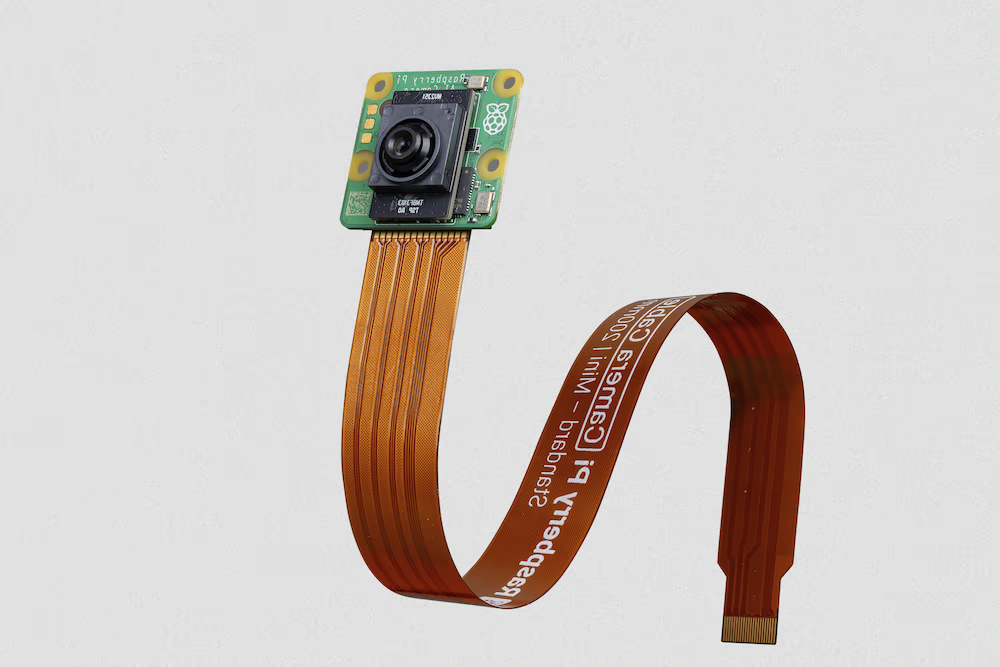
Perché esportare in formato IMX500?#
Il sensore di visione intelligente IMX500 di Sony esegue l'elaborazione AI direttamente sul sensore, una caratteristica che Sony descrive come una prima mondiale per un sensore di visione intelligente. Aiuta a superare le comuni difficoltà dell'AI edge, tra cui i colli di bottiglia nell'elaborazione dei dati, i problemi di privacy e i limiti di prestazioni. Mentre i sensori convenzionali trasmettono soltanto immagini e fotogrammi, l'IMX500 interpreta ciò che acquisisce, consentendo ai dispositivi di generare informazioni utili in tempo reale.
Esportazione di Sony IMX500 per i modelli YOLO11#
IMX500 è progettato per elaborare i dati direttamente sul sensore, senza inviarli al cloud per l'elaborazione.
IMX500 funziona con modelli quantizzati. La quantizzazione rende i modelli più piccoli e veloci senza perdere molta accuratezza. È adatta alle risorse limitate dell'edge computing: riduce la latenza, consente di elaborare rapidamente i dati in locale e permette alle applicazioni di rispondere in tempi brevi senza dipendere dal cloud. L'elaborazione locale mantiene inoltre i dati degli utenti privati e sicuri, perché non vengono inviati a un server remoto.
Funzionalità principali di IMX500:
- Output dei metadati: Invece di trasmettere soltanto immagini, IMX500 può fornire sia le immagini sia i metadati (risultati dell'inferenza), oppure soltanto i metadati per ridurre al minimo la quantità di dati, il consumo di banda e i costi.
- Tutela della privacy: elaborando i dati sul dispositivo, IMX500 affronta i problemi di privacy e si presta particolarmente ad applicazioni incentrate sulle persone, come il conteggio delle persone e il monitoraggio dell'occupazione.
- Elaborazione in tempo reale: l'elaborazione rapida sul sensore supporta decisioni in tempo reale per applicazioni di AI edge come i sistemi autonomi.
Prima di iniziare: per ottenere i migliori risultati, assicurati che il tuo modello YOLO11 sia pronto per l'esportazione seguendo la nostra Guida all'addestramento dei modelli, la Panoramica dei dataset e la Guida all'ottimizzazione degli iperparametri.
Attività supportate#
L'esportazione IMX500 supporta quattro dei sette task Ultralytics, esclusivamente per YOLOv8n e YOLO11n: le altre famiglie di modelli, dimensioni e architetture non sono supportate; inoltre, l'esportazione di un modello di segmentazione semantica, OBB o stima della profondità genera un errore.
| Attività | YOLOv8 | YOLO11 | YOLO26 |
|---|---|---|---|
| Rilevamento | ✅ | ✅ | ❌ |
| Segmentazione | ✅ | ✅ | ❌ |
| Semantica | ❌ | ❌ | ❌ |
| Profondità | ❌ | ❌ | ❌ |
| Classificazione | ✅ | ✅ | ❌ |
| Stima della posa | ✅ | ✅ | ❌ |
| OBB | ❌ | ❌ | ❌ |
Esempi d'uso#
Esporta un modello Ultralytics YOLO11 in formato IMX500 ed esegui l'inferenza con il modello esportato.
Il formato IMX500 supporta le modalità Esporta, Prevedi e Valida. L'inferenza e la validazione di Ultralytics eseguono sul processore host il file esportato model_imx.onnx.
L'inferenza serve solo a verificare che il modello esportato funzioni come previsto prima di distribuirlo sulla Raspberry Pi AI Camera.
from ultralytics import YOLO

# Carica un modello YOLO11n PyTorch
model = YOLO("yolo11n.pt")

# Esporta il modello
model.export(format="imx", data="coco8.yaml")  # esporta con la quantizzazione PTQ per impostazione predefinita

# Carica il modello esportato
imx_model = YOLO("yolo11n_imx_model")

# Esegui l'inferenza
results = imx_model("https://ultralytics.com/images/bus.jpg")from ultralytics import YOLO
# Carica un modello YOLO11n-pose PyTorch
model = YOLO("yolo11n-pose.pt")
# Esporta il modello
model.export(format="imx", data="coco8-pose.yaml") # esporta con la quantizzazione PTQ per impostazione predefinita
# Carica il modello esportato
imx_model = YOLO("yolo11n-pose_imx_model")
# Esegui l'inferenza
results = imx_model("https://ultralytics.com/images/bus.jpg")from ultralytics import YOLO
# Carica un modello YOLO11n-cls PyTorch
model = YOLO("yolo11n-cls.pt")
# Esporta il modello
model.export(format="imx", data="imagenet10") # esporta con la quantizzazione PTQ per impostazione predefinita
# Carica il modello esportato
imx_model = YOLO("yolo11n-cls_imx_model")
# Esegui l'inferenza
results = imx_model("https://ultralytics.com/images/bus.jpg", imgsz=224)from ultralytics import YOLO
# Carica un modello YOLO11n-seg PyTorch
model = YOLO("yolo11n-seg.pt")
# Esporta il modello
model.export(format="imx", data="coco8-seg.yaml") # esporta con la quantizzazione PTQ per impostazione predefinita
# Carica il modello esportato
imx_model = YOLO("yolo11n-seg_imx_model")
# Esegui l'inferenza
results = imx_model("https://ultralytics.com/images/bus.jpg")from ultralytics import YOLO
# Carica il modello IMX500 esportato
model = YOLO("yolo11n_imx_model")
# # Convalida l'accuratezza sul dataset COCO8
metrics = model.val(data="coco8.yaml")L'esportazione IMX è supportata solo su Linux con Python 3.10–3.12 e richiede Java 17 o versioni successive. Il pacchetto Ultralytics installa ulteriori dipendenze per l'esportazione in fase di esecuzione. La prima volta che esegui il comando di esportazione, potrebbe essere necessario riavviare la console per assicurarti che funzioni correttamente.
Argomenti di esportazione#
| Argomento | Tipo | Predefinito | Descrizione |
|---|---|---|---|
format | str | 'imx' | Formato di destinazione del modello esportato, che definisce la compatibilità con i vari ambienti di distribuzione. |
imgsz | int o tuple | 640 | Dimensione dell'immagine desiderata per l'input del modello. Può essere un intero per immagini quadrate o una tupla (height, width) per dimensioni specifiche. |
quantize | int o str | 8/auto | Precisione della quantizzazione. 8 (INT8/PTQ) è obbligatorio e viene abilitato automaticamente per IMX500. L'esportazione solo in FP32 e FP16 non è supportata. Sostituisce i flag deprecati half/int8. |
data | str | None | Percorso al file YAML del dataset, indispensabile per la quantizzazione; per la classificazione, invece, è necessario specificare una directory del dataset o il nome di un dataset integrato. Se non lo specifichi, Ultralytics seleziona il dataset di calibrazione predefinito per il task del modello. |
fraction | float, int o list | 1.0 | Sottoinsieme di calibrazione espresso come rapporto, numero di immagini o rapporti/conteggi [train, val, test]. Gli elenchi di due elementi lasciano completo test, mentre 0 lo esclude. |
nms | bool, facoltativo | None | Seleziona l'output grezzo (None, predefinito), NMS integrato (True) oppure la testa senza NMS (False). IMX richiede nms=True per detect, segment e pose e lo seleziona automaticamente. |
device | str | None | Specifica il dispositivo per l'esportazione: GPU (device=0), CPU (device=cpu). |
Per ulteriori dettagli sul processo di esportazione, visita la pagina della documentazione Ultralytics dedicata all'esportazione.
Il processo di esportazione crea una directory denominata <model-name>_imx_model. Questa directory contiene model_imx.onnx per la convalida della quantizzazione e il file packerOut.zip, essenziale per preparare il modello alla distribuzione sull'hardware IMX500. Inoltre, la cartella <model-name>_imx_model conterrà un file di testo (labels.txt) con l'elenco di tutte le etichette associate al modello.
yolo11n_imx_model
├── dnnParams.xml
├── labels.txt
├── packerOut.zip
├── model_imx.onnx
├── model_imx_MemoryReport.json
└── model_imx.pbtxt
Usare l'esportazione IMX500 nella distribuzione#
Dopo aver esportato un modello Ultralytics YOLO11n nel formato IMX500, puoi distribuirlo sulla Raspberry Pi AI Camera per eseguire l'inferenza.
Requisiti hardware#
Assicurati di avere il seguente hardware:
- Raspberry Pi 5 o Raspberry Pi 4 Model B
- Videocamera Raspberry Pi AI
Collega la Raspberry Pi AI Camera al connettore MIPI CSI a 15 pin della Raspberry Pi e accendi la Raspberry Pi.
Requisiti software#
Questa guida è stata testata con Raspberry Pi OS Bookworm in esecuzione su una Raspberry Pi 5.
Passaggio 1: apri una finestra del terminale ed esegui i seguenti comandi per aggiornare il software Raspberry Pi alla versione più recente.
sudo apt update && sudo apt full-upgradePassaggio 2: installa il firmware IMX500 necessario per utilizzare il sensore IMX500.
sudo apt install imx500-allPassaggio 3: riavvia la Raspberry Pi affinché le modifiche abbiano effetto.
sudo rebootPassaggio 4: installa la libreria del modulo applicativo AITRIOS per Raspberry Pi
pip install git+https://github.com/SonySemiconductorSolutions/aitrios-rpi-application-module-library.gitPassaggio 5: esegui il rilevamento degli oggetti, la stima della posa, la classificazione e la segmentazione con YOLO11 usando gli script seguenti, disponibili negli esempi della libreria del modulo applicativo aitrios-rpi.
Prima di eseguire questi script, assicurati di sostituire le directory model_file e labels.txt in base al tuo ambiente.
import numpy as np
from modlib.apps import Annotator
from modlib.devices import AiCamera
from modlib.models import COLOR_FORMAT, MODEL_TYPE, Model
from modlib.models.post_processors import pp_od_yolo_ultralytics

class YOLO(Model):
    """YOLO model for IMX500 deployment."""

    def __init__(self):
        """Initialize the YOLO model for IMX500 deployment."""
        super().__init__(
            model_file="yolo11n_imx_model/packerOut.zip",  # replace with proper directory
            model_type=MODEL_TYPE.CONVERTED,
            color_format=COLOR_FORMAT.RGB,
            preserve_aspect_ratio=False,
        )

        self.labels = np.genfromtxt(
            "yolo11n_imx_model/labels.txt",  # replace with proper directory
            dtype=str,
            delimiter="\n",
        )

    def post_process(self, output_tensors):
        """Post-process the output tensors for object detection."""
        return pp_od_yolo_ultralytics(output_tensors)

device = AiCamera(frame_rate=16)  # Optimal frame rate for maximum FPS of the YOLO model running on the AI Camera
model = YOLO()
device.deploy(model)

annotator = Annotator()

with device as stream:
    for frame in stream:
        detections = frame.detections[frame.detections.confidence > 0.55]
        labels = [f"{model.labels[class_id]}: {score:0.2f}" for _, score, class_id, _ in detections]

        annotator.annotate_boxes(frame, detections, labels=labels, alpha=0.3, corner_radius=10)
frame.display()Benchmark#
I benchmark riportati di seguito per YOLOv8n, YOLO11n, YOLOv8n-pose, YOLO11n-pose, YOLOv8n-cls e YOLO11n-cls sono stati eseguiti dal team Ultralytics su Raspberry Pi AI Camera con il formato del modello imx, misurando velocità e precisione.
| Modello | Formato | Dimensioni (pixel) | Dimensioni di packerOut.zip (MB) | mAP50-95(B) | Tempo di inferenza (ms/im) |
|---|---|---|---|---|---|
| YOLOv8n | imx | 640 | 2.1 | 0.470 | 58.79 |
| YOLO11n | imx | 640 | 2.2 | 0.517 | 58.82 |
| YOLOv8n-pose | imx | 640 | 2.0 | 0.687 | 58.79 |
| YOLO11n-pose | imx | 640 | 2.1 | 0.788 | 62.50 |
| Modello | Formato | Dimensioni (pixel) | Dimensioni di packerOut.zip (MB) | acc (top1) | acc (top5) | Tempo di inferenza (ms/im) |
|---|---|---|---|---|---|---|
| YOLOv8n-cls | imx | 224 | 2.3 | 0.25 | 0.5 | 33.31 |
| YOLO11n-cls | imx | 224 | 2.3 | 0.25 | 0.417 | 33.31 |
La convalida dei benchmark riportati sopra è stata eseguita usando il dataset COCO128 per i modelli di rilevamento, il dataset COCO8-Pose per i modelli di stima della posa e ImageNet10 per i modelli di classificazione.
Cosa succede sotto il cofano?#

Toolkit di compressione dei modelli Sony (MCT)#
Model Compression Toolkit (MCT) di Sony è un toolkit per ottimizzare i modelli di deep learning tramite quantizzazione e potatura. Supporta diversi metodi di quantizzazione e offre algoritmi avanzati per ridurre le dimensioni del modello e la complessità computazionale senza compromettere significativamente l'accuratezza. MCT è particolarmente utile per distribuire modelli su dispositivi con risorse limitate, dove consente inferenze efficienti e una latenza ridotta.
Funzionalità supportate di MCT#
MCT di Sony offre diverse funzionalità progettate per ottimizzare i modelli di reti neurali:
- Ottimizzazioni del grafo: trasforma i modelli in versioni più efficienti, ad esempio incorporando i livelli di normalizzazione del batch nei livelli precedenti.
- Ricerca dei parametri di quantizzazione: riduce al minimo il rumore di quantizzazione usando metriche come l'errore quadratico medio, l'assenza di clipping e l'errore medio assoluto.
- Algoritmi avanzati di quantizzazione:
- Correzione degli shift negativi: risolve i problemi di prestazioni derivanti dalla quantizzazione simmetrica delle attivazioni.
- Filtraggio dei valori anomali: usa lo z-score per rilevare e rimuovere i valori anomali.
- Clustering: utilizza griglie di quantizzazione non uniformi per adattarsi meglio alla distribuzione.
- Ricerca a precisione mista: assegna a ogni livello una diversa larghezza di bit per la quantizzazione in base alla sensibilità.
- Visualizzazione: usa TensorBoard per esaminare informazioni sulle prestazioni del modello, le fasi di quantizzazione e le configurazioni della larghezza di bit.
Quantizzazione#
MCT supporta diversi metodi di quantizzazione per ridurre le dimensioni dei modelli e migliorare la velocità di inferenza:
- Quantizzazione post-addestramento (PTQ):
- Disponibile tramite le API Keras e PyTorch.
- Complessità: bassa
- Costo computazionale: basso (minuti di CPU)
- Quantizzazione post-addestramento basata sul gradiente (GPTQ):
- Disponibile tramite le API Keras e PyTorch.
- Complessità: media
- Costo computazionale: moderato (2-3 ore di GPU)
- Addestramento consapevole della quantizzazione (QAT):
- Complessità: alta
- Costo computazionale: elevato (12-36 ore di GPU)
MCT supporta inoltre diversi schemi di quantizzazione per pesi e attivazioni:
- Potenza di due (adatta all'hardware)
- Simmetrica
- Uniforme
Pruning strutturato#
MCT introduce la potatura dei modelli strutturata e consapevole dell'hardware, progettata per architetture hardware specifiche. Questa tecnica sfrutta le capacità SIMD (istruzione singola, dati multipli) della piattaforma di destinazione potando i gruppi SIMD. Riduce le dimensioni e la complessità del modello e ottimizza l'utilizzo dei canali, in linea con l'architettura SIMD, per sfruttare in modo mirato le risorse occupate dai pesi in memoria. Disponibile tramite le API Keras e PyTorch.
Strumento di conversione IMX500 (compilatore)#
IMX500 Converter Tool è un componente fondamentale del toolkit IMX500 e permette di compilare modelli per la distribuzione sul sensore IMX500 di Sony (ad esempio, nelle Raspberry Pi AI Camera). Compila i modelli Ultralytics YOLO11 quantizzati in un formato che funziona in modo efficiente sull'hardware di destinazione. Dopo la quantizzazione, l'esportazione genera file binari contenenti i dati del modello e la configurazione specifica del dispositivo necessari per distribuirlo sulla Raspberry Pi AI Camera.
Casi d’uso nel mondo reale#
L'esportazione nel formato IMX500 è applicabile in molti settori. Ecco alcuni esempi:
- AI edge e IoT: abilita il rilevamento degli oggetti su droni o telecamere di sicurezza, dove è essenziale elaborare i dati in tempo reale su dispositivi a basso consumo.
- Dispositivi indossabili: distribuisci modelli ottimizzati per l'elaborazione AI su piccola scala su dispositivi indossabili per il monitoraggio della salute.
- Città intelligenti: usa i modelli YOLO11 esportati in IMX500 per il monitoraggio del traffico e l'analisi della sicurezza, con elaborazione più rapida e latenza minima.
- Analisi per il commercio al dettaglio: migliora il monitoraggio in negozio distribuendo modelli ottimizzati nei sistemi di pagamento o sugli scaffali intelligenti.
Conclusione#
Esportando i modelli Ultralytics YOLO11 nel formato IMX500 di Sony, puoi distribuirli per eseguire inferenze efficienti sulle videocamere basate su IMX500. La quantizzazione riduce le dimensioni del modello e migliora la velocità di inferenza con una perdita minima di accuratezza.
Per ulteriori informazioni e indicazioni dettagliate, consulta il sito web IMX500 di Sony.
Domande frequenti#
Per esportare un modello YOLO11 nel formato IMX500, usa l'API Python o il comando CLI:
from ultralytics import YOLO

model = YOLO("yolo11n.pt")
model.export(format="imx")  # Esporta con quantizzazione PTQ per impostazione predefinita
Il processo di esportazione creerà una directory contenente i file necessari per la distribuzione, incluso
packerOut.zip.Il formato IMX500 offre diversi importanti vantaggi per la distribuzione edge:
- L'elaborazione AI sul chip riduce la latenza e il consumo energetico
- Fornisce sia l'immagine sia i metadati (risultato dell'inferenza), anziché solo le immagini
- Maggiore privacy grazie all'elaborazione locale dei dati, senza dipendere dal cloud
- Capacità di elaborazione in tempo reale, ideali per le applicazioni sensibili ai tempi
- Quantizzazione ottimizzata per distribuire i modelli in modo efficiente su dispositivi con risorse limitate
Per distribuire modelli IMX500, ti serviranno:
Hardware:
- Raspberry Pi 5 o Raspberry Pi 4 Model B
- Fotocamera AI per Raspberry Pi con sensore IMX500
Software:
- Raspberry Pi OS Bookworm
- Firmware e strumenti IMX500 (
sudo apt install imx500-all)
In base ai benchmark di Ultralytics sulla fotocamera AI per Raspberry Pi:
- YOLO11n raggiunge un tempo di inferenza di 58.82ms per immagine
- mAP50-95 pari a 0.517 sul dataset COCO128
- Dimensioni del modello di soli 2.2MB dopo la quantizzazione
Questo dimostra che il formato IMX500 consente inferenze efficienti in tempo reale, mantenendo una buona precisione per le applicazioni di AI edge.


Commenti86
Fai una domanda, condividi i tuoi risultati o aiuta qualcun altro.
 Chad Walsh
where is the best place to get support on the IMX500. I am running into multiple issues: i. my first yolo11n model built fine and exported to imx500, no problem, but my second model with a LOT more training images build fine but crashed the imx500 export. ii. the output of the imx500 during inference is giving a lot of none outputs between solid recognitions. it seems like there is something interfering with or disrupting the inference outputs (e.g., good output, none, none, none, none, good output, ...). where is the best place to get help with these issues?
 Glenn JocherUltralytics
Please continue the discussion here so the Ultralytics team can help; for the export crash, share the exact export command, full text traceback, and output from
yolo checks, and for intermittentNoneresults include a minimal inference script, confidence threshold, and a short reproducible input sample. Note that IMX export uses the calibration dataset specified bydataand defaults to the full dataset, so testing a smallerfractionmay help isolate resource-related failures.
leeprevost
I've made considerable progress by moving conducting this model compression process with a Container using dtcooper/raspberrypi-os:python3.11 after considerable problems with dependencies. Now getting a container most of the way through the process of compressing my yolov11s model and its trained best.pt weights.
At the end of the process - I get a simple "killed" after the Calculation of quantization parameters step. I see memory spiking close to 100% on top and think I'm hitting OOM with my pi4 8gb.
root@a5e132f6b333:/app# yolo export model=./models/yolov11/best.pt data='Billfish-Breeds-1/data.yaml' format=imx verbos>
Ultralytics 8.3.221 🚀 Python-3.11.14 torch-2.9.0+cpu CPU (aarch64)
WARNING ⚠️ IMX export requires nms=True, setting nms=True.
YOLO11s summary (fused): 100 layers, 9,413,187 parameters, 0 gradients, 21.3 GFLOPs

PyTorch: starting from 'models/yolov11/best.pt' with input shape (1, 3, 640, 640) BCHW and output shape(s) ((1, 8400, 4>
IMX: collecting INT8 calibration images from 'data=Billfish-Breeds-1/data.yaml'
Fast image access ✅ (ping: 0.1±0.0 ms, read: 16.1±2.7 MB/s, size: 16.4 KB)
Scanning /app/Billfish-Breeds-1/valid/labels.cache... 268 images, 0 backgrounds, 0 corrupt: 100% ━━━━━━━━━━━━ 268/268 1>
WARNING ⚠️ IMX: >300 images recommended for INT8 calibration, found 268 images.

IMX: starting export with model_compression_toolkit 2.4.4...
representative_data_gen generates a batch size of 1 which can be slow for optimization: consider increasing the batch s>
WARNING:Model Compression Toolkit:OperatorSetNames.DEPTHWISE_CONV is not in model.
Statistics Collection: 268it [1:01:26, 13.76s/it]
Calculating quantization parameters: 100%|█████████████████████████████████████████████████████| 294/294 [12:44<00:00, >
Killed
Would appreciate any suggestion around this but think it probably pushes me over the edge to order my pi5? Or do I try to train on the yolov8 or yolov11n? I've not had very good success with the nano models. I've convinced myself the tradeoffs to the small is well worth it but that may be incompatible with this process?
@glenn-jocher am I posting at the right place? Put this in issues on gh?
- Glenn JocherUltralytics
@leeprevost you’re in the right place for discussion, but the OOM during IMX export is a new issue—please open a new issue for visibility. In the issue, include: the exact export command and full log,
yolo checksoutput (orultralytics.utils.checks.collect_system_info()), Java version (java --version), and the versions of IMX toolchain (pip freeze | grep -E "imx500|model-compression|sony-custom"). As immediate workarounds: export on a Linux x86_64 machine with more RAM, target YOLO11n/YOLOv8n (the IMX path is tuned for “n” models), and reduce calibration load withfraction(e.g., 0.25). Example:yolo export model=best.pt format=imx data=your.yaml imgsz=640 fraction=0.25IMX-specific knobs are summarized in the IMX500 export arguments here: Sony IMX500 export guide – Export arguments, and the exporter function requirements here: export_imx reference.
Thank you. I'll dig into the logs and see if I can add anything before opening new issue.
a few more questions and I will open an issue:
- Note that I was using a model trained on yolov11s rather than n as I've seen large degradation in the number of false positives in my model.
- I assume by "full log" you mean the output from the yolo export command with verbose at default (true). In other words, what I posted above?
- For some reason, I thought I read int he docs that i had to perform the model compression on the target machine. for me, the ultimate target is RpiZero2 but no way the model will export on that footprint . so, I went to the largest pi I have which is a Rpi4 -- that resulted in the OOM. So, am unsure by your guidance pointing me to the larger x86 linux machine. How will the process know the device limits if I perform it on that?
Trying to read these guides as best I can. I have not spent much time on the Sony site yet. If you'll point me, I don't want to start an issue that isn't an issue.
I opened an issue: https://github.com/ultralytics/ultralytics/issues/22512
Just tried the export again with the fraction=0.25 argument and got to "Optimal Solution Found" with objective measure of 0.94, then died with error:
Error x IMX: export failure 12662.7s: No module named 'onnxscript'
https://github.com/pytorch/pytorch/issues/166352 -- adding to my requirements.txt pointed to by Containerfile.
- Glenn JocherUltralytics(modificato)
@leeprevost great progress. IMX export/quantization does not need to run on the target; it cross-compiles for IMX500, so doing it on a larger Linux host is recommended. “Full log” means the complete stdout/stderr from the export run.
The “No module named 'onnxscript'” failure is a missing dependency. Current Ultralytics installs the IMX toolchain (including
imx500-converterandmodel-compression-toolkit) itself, so upgrade withpip install -U ultralyticsand re-run the export rather than pinning old versions by hand. Let’s continue the deep-dive in the issue you opened for traceability. Ok -- @glenn-jocher: am moving this to my opened issue. Still trying this on my pi4 but can move to my dev machine with plenty of RAM + Cuda. Got further but still died with a torch error -- will post there.
- Glenn JocherUltralytics
Thanks—let’s continue in the issue for traceability. On the larger Linux host, try GPU-assisted export to reduce RAM pressure and speed up calibration; if needed, temporarily lower
imgszto validate the pipeline:yolo export model=path/to/best.pt format=imx data=path/to/data.yaml device=0 imgsz=640 # if memory is still tight during calibration yolo export model=path/to/best.pt format=imx data=path/to/data.yaml device=0 imgsz=512For a concise list of export options and behavior, see the Export mode docs at Ultralytics YOLO — Export.
Much thanks for posting this guide. Thank you.
I am having very solid success running the standard detection models right out of the box on the RpiZero 2 which is my target platform. I'm actually amazed at the power draw (ran detection/streaming for about 175 minutes on a 4400mahr battery using about 60% of its capacity). Also, very solid top/htop scores showing less than 1/8 of CPU utilization. Memory is still such a problem on a rpiz2 but not any more so than what is being used with streaming only on the pi. Still have about 50% of memory left over as I recall. I've got screen shots of top screens if needed.
But, I need to get a trained model working on my RpiZ2 and am running into problems. As the guide seemed to indicate (or perhaps Sony's), I need to do most of the quantization on my target platform. I assumed that meant my zero. I have a very good model trained with yolov11m or large. I've tried to reduce that to a nano but I'm getting too much loss of MAP scores and too much false positive rates. So, am now trying to get a yolov11s to work. On my quantization process (it was not clear how to do this with a custom model) but am first loading the yolov11s.pt and then loading my best.pt on top of that. Ultralytics successfully loads my data, gives me a warning prompt about my 290 images (< 300 not ideal) and then another about processing speed with 1 batch. The program then goes off the rails with no UI messages. I assume I'm running out of memory on the piz2. So, my next steps seem to be either:
- Start over and try with nano model.
- Do my quantization on a larger pi (i've got a spare pi4).
I guess another option would be to spend more time understanding Sony's under the hood tools to optimize those settings?
Would appreciate some guidance here down the right path.
One thing that would be very helpful is to show how to do this on something other than the target platform. i'm trying to get a small detection model to run on a rpi zero2 and hate to have to download all of my training data to the zero to do the quantization.
Idea: Have a step that allows collection of the "target_platform_capabilities" information using Sony's model compression toolkit you are using under the hood, pickle it, and then use that object to drive the model compression on a larger machine.
I could probably dig in and try to follow your code and follow the "imx" part of your export process...
bohlebots
Wie schaffe ich es, dass das Modell im Speicher des IMX500 bleibt? Die PICAM wurde ja angepriesen mit der Aussage, dass sie selbst an einem Pi zero-2 mit gleicher Geschwindigkeit läuft und in der Tat, das täte sie, aber das Modell muss jedes Mal neu aufgeladen werden, und das dauert beim Pi Zero ewig, ja selbst mit einem Pi5 dauert es Minuten. Grundsätzlich muss die imx500 aber ein Modell auch bei ausgeschaltetem Strom im Speicher halten können, so dass nach dem Anschalten das letzte Modell direkt zur Verfügung steht. Wie bekomme ich das hin?
Gruß Roland
Teo-treny
Hello ! When running object detection (step 5), I get the following error :
Exception in thread Thread-2 (_process_requests_func):
Traceback (most recent call last):
  File "/home/pi/.pyenv/versions/3.11.9/lib/python3.11/threading.py", line 1045, in _bootstrap_inner
    self.run()
  File "/home/pi/.pyenv/versions/3.11.9/lib/python3.11/threading.py", line 982, in run
    self._target(*self._args, **self._kwargs)
  File "/home/pi/Desktop/imx_test/venv/lib/python3.11/site-packages/modlib/devices/ai_camera/ai_camera.py", line 193, in _process_requests_func
    callback()
  File "/home/pi/Desktop/imx_test/venv/lib/python3.11/site-packages/modlib/devices/ai_camera/ai_camera.py", line 207, in _process_requests
    self._parse_request(req)
  File "/home/pi/Desktop/imx_test/venv/lib/python3.11/site-packages/modlib/devices/ai_camera/ai_camera.py", line 256, in _parse_request
    detections = self.model.post_process(outputs)
                 ^^^^^^^^^^^^^^^^^^^^^^^^^^^^^^^^
  File "/home/pi/Desktop/imx_test/Test_1.py", line 23, in post_process
    return pp_od_yolo_ultralytics(output_tensors)
           ^^^^^^^^^^^^^^^^^^^^^^^^^^^^^^^^^^^^^^
  File "/home/pi/Desktop/imx_test/venv/lib/python3.11/site-packages/modlib/models/post_processors/post_processors.py", line 129, in pp_od_yolo_ultralytics
    n_detections = int(output_tensors[3])
                   ^^^^^^^^^^^^^^^^^^^^^^
TypeError: only length-1 arrays can be converted to Python scalars
I'm running Python 3.11.9 and installed all the dependencies following the guide. My Raspberry PI is a 3B+ model with Bookworm 64 bits and is up to date.
aytacsekmen
In the official IMX500 documentation provided by Sony (https://developer.sony.com/tinyml-23/developer-tools/documentation/imx500-evaluation-kit-user-guide?version=2023-11-28&progLang=), they describe the process of generating the network.fpk and network_info.txt files that will be used to deploy the model to IMX500, using the Packager.sh script. However, when I attempt to apply the same procedure to the packerOut.zip file I created by following the tutorial on https://docs.ultralytics.com/integrations/sony-imx500, I am unable to run the model on the IMX500. Also I couldn't run your implementation because it says that some packages are not found which I believe is related to the version of the OS. Currently I use the Pi OS that is provided by SONY for compatibility issues. I could run some other deep learning models following the steps in the (https://developer.sony.com/tinyml-23/developer-tools/documentation/imx500-evaluation-kit-user-guide?version=2023-11-28&progLang=), but I believe, there must be something different related to the creation of packerOut.zip file.
Could you assist in resolving this issue with the conversion process? @glenn-jocher
HelloCigar
Hello, per picamera2 docs, creating apps with "a camera window embedded into the GUI is through Qt", is there no other way to embed the video feed in other GUI frameworks?
skim-sony
Hi, I followed the steps in this page to convert the yolov8n model with imx500 converter and tested it with raspberry ai camera. But I get 29.5 ms for the inference time with 640x640 input tensor size. So I wonder why my inference time is better than your result (58.82ms). Which version of imx500 converter did you use?
Also, how did you measure the inference time? Did you use imx500.get_kpi_info(metadata) or calculate the elapsed time of picam2.capture_metadata()?
- Glenn JocherUltralytics(modificato)
@skim-sony congratulations on the faster result! Our documented figure (58.82 ms for YOLO11n, see the Benchmarks) was measured by the Ultralytics team on a Raspberry Pi AI Camera with the
imxformat. Differences can come from the converter version, firmware, hardware (Pi 5 vs Pi 4) or how the time is measured. Would you mind sharing which converter version and Raspberry Pi model you're using? This could help other community members. Hi, I have used Pi5 and tried both 3.14.3 and 3.16.1 for imx500-converter. And both produces 29.5ms for inference time. It seems like you also use Pi5, so I wonder why our results are different. I'd like to reproduce your results 58.82 ms to learn what improves the inference time. So it would be helpful if you could share some info how to sync with your environment. Thanks!
- Glenn JocherUltralytics(modificato)
@skim-sony that's interesting you're seeing better performance! The discrepancy could be due to several factors:
- Measurement methodology: end-to-end time (pre/post-processing + inference) differs from model-only inference time
- Firmware and converter versions
- Image resolution and resizing
- Test conditions: background processes, temperature, and power settings
Our published numbers are in the Benchmarks. If you'd like to share more details about your implementation, the community would certainly benefit.
fracipriano
Hello, I'm trying to run the standard YOLOv8n model on a Raspberry Pi AI Camera. I followed the exemple in the documentation
from ultralytics import YOLO

# Load a YOLOv8n PyTorch model
model = YOLO("yolov8n.pt")

# Export the model
model.export(format="imx", data="coco8.yaml")  # exports with PTQ quantization by default

# Load the exported model
imx_model = YOLO("yolov8n_imx_model")

# Run inference
results = imx_model("https://ultralytics.com/images/bus.jpg")
I got a bunch of warnings during the execution (export_log.txt), but the imx_model seemed to work properly in the end.
I then packaged it via IMX500 Packager and test it using the imx500_object_detection_demo.py. The Network Firmware gets uploaded, the application starts, but I get no detection. I tried to lower the detection threshold, but it didn't help. Any idea on what could be the problem? Any suggestion would be much appreciated.
- Glenn JocherUltralytics
Thank you for the detailed issue. Let's troubleshoot step by step. First, ensure your Raspberry Pi AI Camera is correctly connected and recognized by running
libcamera-helloin the terminal. If the camera works, verify that thelabels.txtpath in your demo command matches the exported file. You can also try inference on a static image first withimx_model.predict("test.jpg")to isolate live feed issues. For further assistance, please share the full export log and a screenshot of your camera output.For additional guidance, refer to the Sony IMX500 and AITRIOS integration blog post which demonstrates successful deployment steps.
Hello @glenn-jocher,
libcamera-hello works fine as does the imx500_object_detection_demo.py when using the default model ("/usr/share/imx500-models/imx500_network_ssd_mobilenetv2_fpnlite_320x320_pp.rpk").
There seems to be no problem with the labels.txt file as, if a run the imx500_object_detection_demo.py specifying the path to my label.txt, it works fine.
The imx_model also works fine before the packaging.
Here a screenshot of the camera output:
You can find the full export log file in my first post. Do you think any of the errors and/or warnings there could cause any problem with the packaging process via the IMX500-Packager?
- Glenn JocherUltralytics
Thank you for sharing these details. The warnings in your export log about "No BN layers to fold" and quantization parameters are normal during IMX conversion and shouldn't affect packaging. Since your camera feed works with the default model but not your custom export, please verify:
- Your
imx500-packagecommand uses the exactpackerOut.zipfromyolov8n_imx_model - The input tensor shape in your exported model matches IMX500 expectations (640x640 by default)
If issues persist, we recommend trying the IMX500 conversion process with our pretrained YOLOv8n model from https://github.com/ultralytics/assets/releases as a validation step.
- Your
Hello @glenn-jocher , thank you for your answer.
- Yes, I'm the one specifying the packerOut.zip path when running imx500-package
- I think so. Here is the content of the dnnParams.xml file generated by the export function
<?xml version="1.0" encoding="UTF-8" standalone="yes"?>
<dnnParams>
    <networks>
        <network name="yolov8n_new_imx" ordinal="0" type="">
            <inputTensors>
                <inputTensor persistency="0" ordinal="0" name="Placeholder.input.uid1:0" l2Offset="260480" numOfDimensions="3" bitsPerElement="8" shift="0" scale="0.00390625" format="unsigned">
                    <dimensions>
                        <dimension size="3" serializationOrder="2" ordinal="0" padding="0"/>
                        <dimension size="640" serializationOrder="1" ordinal="1" padding="0"/>
                        <dimension size="640" serializationOrder="0" ordinal="2" padding="0"/>
                    </dimensions>
                </inputTensor>
            </inputTensors>
            <outputTensors>
                <outputTensor ordinal="1" name="transform-83-/MultiClassNMS:0" l2Offset="281984" numOfDimensions="1" bitsPerElement="8" shift="0" scale="0.00390625" format="unsigned">
                    <dimensions>
                        <dimension size="300" serializationOrder="0" ordinal="0" padding="0"/>
                    </dimensions>
                </outputTensor>
                <outputTensor ordinal="2" name="transform-84-/MultiClassNMS:0" l2Offset="280960" numOfDimensions="1" bitsPerElement="16" shift="0" scale="1.0" format="signed">
                    <dimensions>
                        <dimension size="300" serializationOrder="0" ordinal="0" padding="0"/>
                    </dimensions>
                </outputTensor>
                <outputTensor ordinal="3" name="transform-85-/MultiClassNMS:0" l2Offset="279936" numOfDimensions="1" bitsPerElement="16" shift="0" scale="1.0" format="signed">
                    <dimensions>
                        <dimension size="1" serializationOrder="0" ordinal="0" padding="0"/>
                    </dimensions>
                </outputTensor>
                <outputTensor ordinal="0" name="transform-86-/MultiClassNMS:0" l2Offset="260480" numOfDimensions="2" bitsPerElement="16" shift="0" scale="0.03125" format="signed">
                    <dimensions>
                        <dimension size="300" serializationOrder="0" ordinal="0" padding="0"/>
                        <dimension size="4" serializationOrder="1" ordinal="1" padding="0"/>
                    </dimensions>
                </outputTensor>
            </outputTensors>
        </network>
    </networks>
    <l2memory totalSize="8388480" coefficientsSize="2604544" reservedMemorySize="1024" networksRuntimeSize="5523456"/>
</dnnParams>
I downloaded the yolov8n.pt file from the Sep 29, 2024 Release and repeated the process from the beginning. Same result.
I'm adding here the terminal outputs I get when running the imx500-package: imx500-package_log.txt
- Glenn JocherUltralytics(modificato)
Thanks for sharing the details. The
dnnParams.xmlshows correct 640x640 input dimensions. Since the default Mobilenet model works but your YOLOv8 export doesn't, please verify that your output tensor dimensions and ordering match the demo's expectations. YOLO IMX exports have a different output layout from Mobilenet, so the demo's post-processing must match. The deployment section of the IMX500 guide uses thepp_od_yolo_ultralyticspost-processor from the AITRIOS module library for Ultralytics YOLO IMX exports. Okay. So the problem was actually related to the output. The ordering is fine, as the scores and the classes. The problem are the bboxes. The values that I obtain are completely out of scale.
Example:
detection label: cup (0.56)
detection box: (396100, 107520, 0, 0)
whereas I would expect something like this:
detection label: cup (0.56)
detection box: (39, 459, 440, 177)
I'm not sure how to interpret this results. Is (396100, 107520, 0, 0) supposed to be the raw output of YOLOv8n? Also, in the dnnParams.xml posted above, I see that there is a scale="0.00390625" associated with the component of the output tensor relative to the bboxes. Should I renormalize my output using this factor?
Thank you for any insight you can provide.
- Glenn JocherUltralytics(modificato)
The raw IMX500 outputs are quantized and need post-processing. Rather than decoding them by hand, use the
pp_od_yolo_ultralyticspost-processor shown in the deployment section of the IMX500 guide. Hello @glenn-jocher, a code snippet would be much appreciated for double-checking. Also, I can't find the documentation you mentioned—could you link it to me, please?
- Glenn JocherUltralytics(modificato)
The IMX500 outputs are decoded for you by the AITRIOS module library, as shown in the deployment section of the IMX500 guide:
from modlib.models.post_processors import pp_od_yolo_ultralytics


def post_process(self, output_tensors):
    return pp_od_yolo_ultralytics(output_tensors)
Let us know if this resolves the coordinate scaling issue!
I think there’s been a misunderstanding. I thought there were other changes to be made besides rescaling. Scaling alone cannot be the solution since (396100, 107520, 0, 0) cannot become (39, 459, 440, 177) just by a scalar multiplication.
Also, I cannot find the "What's Under the Hood?" section anywhere here https://developer.sony.com/imx500. Could you be more precise about where I should look?
- Glenn JocherUltralytics(modificato)
The "What's Under the Hood?" section refers to our Ultralytics IMX500 documentation, not Sony's site, but it describes the quantization and conversion toolchain, not output decoding. For box decoding use the post-processor from the deployment section:
from modlib.models.post_processors import pp_od_yolo_ultralytics def post_process(self, output_tensors): return pp_od_yolo_ultralytics(output_tensors) Hi @glenn-jocher , thank you very much for all the support. It finally works! There was no need to rescale the boxes by 0.03125. I was missing the --bbox-normalization flag when launching the script.
Once I added the flag, everything worked fine.
- Glenn JocherUltralytics(modificato)
Great to hear you resolved it! For the current deployment workflow, including post-processing of the model outputs, see the IMX500 deployment guide. Happy detecting with your Raspberry Pi setup! 🚀