Ultralytics Construction-PPEデータセット
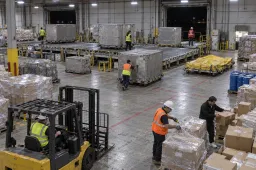
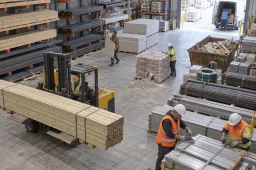
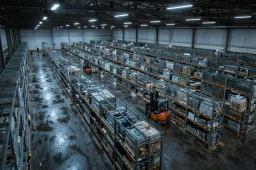
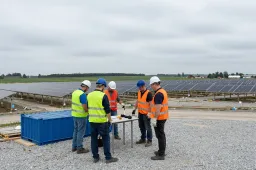
Ultralytics Construction-PPEは、建設現場や産業現場における人物、フォークリフト、個人用保護具、および目視で確認できる保護具の未着用を対象とした、1,000枚の画像、14,863個のバウンディングボックス、12クラスを含む独自の物体検出データセットです。
このデータセットは、2026年11月にUltralyticsチームが作成し、オープンソースとして公開しました。人手で収集した画像と生成画像を組み合わせており、専門家による人手でのアノテーションとAIによる自動アノテーションは、2026年11月にUltralyticsチームが完了しました。画像とアノテーションは、クリエイティブ・コモンズ 表示 4.0 国際 (CC BY 4.0)の下で公開されています。
Ultralytics PlatformでConstruction-PPEを確認すると、画像とアノテーションの閲覧、データセットのクローン、モデルのトレーニングができます。
画像とアノテーション#
画像には、建設現場、作業場、倉庫、荷積みエリア、メンテナンス作業が含まれます。さまざまな視点、照明、作業員の配置、保護具、フォークリフトの動作が写っています。
画像は、さまざまな解像度の横長、縦長、正方形の構図で構成されています。
アノテーションにはUltralytics YOLO形式のバウンディングボックスを使用します。保護具のクラスは視認できる装備品を示し、未着用クラスは装備品がない場合に、対応する視認可能な身体の領域を示します。身体の一部が遮蔽されている、またはフレーム外にあることだけでは、保護具の未着用とは判断できません。
データセットの構成#
データセットは、固定の80/20のトレーニング/検証分割になっています。
| 分割 | 画像 | 用途 |
|---|---|---|
| 学習 | 800 | モデルのトレーニング |
| 検証 | 200 | 開発中の評価 |
| 合計 | 1,000 |
独立したテスト分割はありません。最終評価には、実際のカメラ映像での性能を評価する場合など、特に、想定するデプロイ環境から独立した画像を使用してください。
クラス#
以下のクラスIDは、データセットのアノテーションおよびconstruction-ppe.yamlに対応しています。
| ID | クラス | ターゲット |
|---|---|---|
| 0 | helmet | 保護ヘルメットまたは安全帽 |
| 1 | gloves | 作業用手袋 |
| 2 | vest | 高視認性安全ベスト、ジャケット、またはシャツ |
| 3 | boots | 保護用作業ブーツまたは作業靴 |
| 4 | goggles | 保護メガネ |
| 5 | Person | 人 |
| 6 | no_helmet | ヘルメットを着用していない、視認可能な頭部 |
| 7 | no_goggle | 保護メガネを着用していない、視認可能な目の周辺 |
| 8 | no_gloves | 手袋を着用していない、視認可能な手 |
| 9 | no_boots | 保護用作業靴を着用していない、視認可能な足または履物 |
| 10 | forklift | フォークリフト |
| 11 | no_vest | 高視認性の安全服を着用していない、視認可能な胴体 |
データセットYAML#
データセット設定では、画像のパス、クラスの順序、ダウンロードURLを定義します。
# Ultralytics 🚀 AGPL-3.0 License - https://ultralytics.com/license

# Ultralytics Construction-PPE dataset, November 2026, CC BY 4.0
# Documentation: https://docs.ultralytics.com/datasets/detect/construction-ppe
# Example usage: yolo train data=construction-ppe.yaml
# parent
# ├── ultralytics
# └── datasets
#     └── construction-ppe ← downloads here

# Train/val/test sets as 1) dir: path/to/imgs, 2) file: path/to/imgs.txt, or 3) list: [path/to/imgs1, path/to/imgs2, ..]
path: construction-ppe # dataset root dir
train: images/train # train images (relative to 'path') 800 images
val: images/val # val images (relative to 'path') 200 images

# Classes
names:
  0: helmet
  1: gloves
  2: vest
  3: boots
  4: goggles
  5: Person
  6: no_helmet
  7: no_goggle
  8: no_gloves
  9: no_boots
  10: forklift
  11: no_vest

# Download script/URL (optional)
download: https://github.com/ultralytics/assets/releases/download/v0.0.0/construction-ppe.zip2026年11月のデータセットアーカイブには、画像、YOLOラベル、データセットのメタデータ、CC BY 4.0ライセンスが含まれています。展開先はconstruction-ppeです。
使用方法#
Ultralyticsパッケージをインストールまたは更新してから、事前学習済みのYOLO26モデルをトレーニングします。初回使用時に、YOLOがデータセットを自動的にダウンロードして展開します。
from ultralytics import YOLO

model = YOLO("yolo26n.pt")
model.train(
    data="https://github.com/ultralytics/assets/releases/download/v0.0.0/construction-ppe.zip",
    epochs=100,
    imgsz=640,
)設定オプションについてはトレーニングガイド、トレーニング済みモデルの評価については検証ガイドをご覧ください。Construction-PPEノートブックでは、Colabでの手順を確認できます。
用途#
- PPE検出: ヘルメット、手袋、ベスト、ブーツ、保護メガネを検出します。
- 保護具未着用の検出: PPEの未着用が視認できる事例を特定し、確認に回します。
- 作業現場の分析: 建設現場や産業環境の画像から、人やフォークリフトを検出します。
- 研究および教育: 人手で収集した画像と生成画像を用いて、モデルを比較し、トレーニングについて学習します。
ライセンスと帰属表示#
データセットの画像とアノテーションは、UltralyticsによりCC BY 4.0ライセンスで公開されています。このライセンスでは、クレジットを表示すれば、商用利用を含めて共有や改変が認められます。Ultralyticsチームをクレジット表記し、データセットとライセンスへのリンクを記載して、変更点があれば明示してください。
クレジット表記の例:Ultralytics Construction-PPE Dataset、Ultralyticsチーム、2026年11月、CC BY 4.0。
@dataset{Ultralytics_Construction_PPE_2026,
    author = "{Ultralytics team}",
    title = {Ultralytics Construction-PPE Dataset},
    month = {November},
    year = {2026},
    license = {CC-BY-4.0},
    url = {https://docs.ultralytics.com/datasets/detect/construction-ppe},
    publisher = {Ultralytics}
}


コメント9
質問したり、結果を共有したり、ほかの人をサポートしたりできます。
panagiotamoraiti
Hello, may i ask what does the none class represents?
1Wally18796
It represents the missing of an item. I recommend not using the "no" classes and use the person bounding box to detect missing item. e.g if a helmet bounding box is missing inside a "person" bouding boxes. It's automatically "no helmet"
On Mon, 3 Aug 2026, 9:38 pm Panagiota Moraiti, @.***> wrote:
Hello, may i ask what does the none class represents?
— Reply to this email directly, view it on GitHub https://github.com/orgs/ultralytics/discussions/23364?email_source=notifications&email_token=A6BHGJNLIEEG3PDKZYO5CJD5IC5ZXA5CNFSNUABIM5UWIORPF5TWS5BNNB2WEL2ENFZWG5LTONUW63SDN5WW2ZLOOQXTCNZYHAZTEOBXUZZGKYLTN5XKOY3PNVWWK3TUUVSXMZLOOSWGM33PORSXEX3DNRUWG2Y#discussioncomment-17883287, or unsubscribe https://github.com/notifications/unsubscribe-auth/A6BHGJMNF5G3KG5GLTBGRH35IC5ZXAVCNFSNUABHKJSXA33TNF2G64TZHM2TGNJTGYYDINBVHNCGS43DOVZXG2LPNY5TSMZXGQZDINFBOYBA . You are receiving this because you commented.Message ID: @.*** com>
But what if the person is holding the helmet in their hand? With what you're proposing, the system won't raise an alert in that case, which isn't correct. The "No" classes exist for a reason in the dataset.
I think the None class means "no vest," though I'm not 100% sure. When I removed it, results got worse, so it's doing something useful.
 Glenn JocherUltralytics
You’re right that person–PPE association matters: a helmet merely inside a person box does not prove it is worn. However,
noneis a generic class and is not documented asno_vest; the Construction-PPE class list explicitly notes that no dedicated missing-vest class exists. Please keep questions and findings here so the Ultralytics team can clarify the source annotation semantics.
 Murat Raimbekov
hey @nhatminh-115, the numbers back up your observation, though i'd be careful about calling it a "problem" - some of this looks intentional given how construction sites actually look. i pulled the dataset and counted instances:
positive vs negative instances:
split positives negatives pos/neg ratio train 5410 1267 4.27 : 1 val 706 146 4.84 : 1 test 796 154 5.17 : 1 so yes, positives outnumber negatives roughly 4-5x in every split. but that ratio is actually close to what you'd see on real construction sites - most workers do wear ppe most of the time.
per-class breakdown (train):
class instances counterpart ratio helmet (0) 1341 no_helmet (7) -> 400 3.35 gloves (1) 1146 no_gloves (9) -> 442 2.59 boots (3) 1235 no_boots (10) -> 88 14.03 goggles (4) 419 no_goggle (8) -> 337 1.24 vest (2) 1269 no_vest does not exist - a few things worth understanding before treating these as bugs:
- no
no_vestclass: high-vis vests are essentially binary - they're either on or completely off, and they're very visible. ano_vestlabel would basically be "person box without overlapping vest box", which you can derive in post-processing without needing a dedicated class. - no_boots is rare (88 instances): boots are often occluded by trousers, dust, or camera angle, so annotators can't always confidently mark "missing boots". the rarity probably reflects what's actually verifiable in the imagery rather than an annotation gap.
co-occurrence in training images (1142 total):
- 900 contain only positive classes ("compliant" scenes)
- 184 contain only negative classes ("non-compliant" scenes)
- 56 contain both (~5%)
- 2 contain neither
the docs explicitly say the dataset "includes both compliant and non-compliant cases", which matches what we see - scenes tend to be one or the other, not heavily mixed.
if your specific use case needs better recall on the
no_*classes, the data distribution does work against you. some things that help:- class weighting or focal loss to compensate for imbalance
- oversampling images containing negative-class instances
- aggressive augmentation on rare classes (especially
no_boots) - derive "missing PPE" rules in post-processing: detect
Personboxes, then check for overlappinghelmet/gloves/boots/vest, infer missing items from absence. this scales better with limited neg examples
so: the imbalance is real, the data behaves as you described, but a lot of it is consistent with how the dataset is designed rather than an annotation defect.
- no
nhatminh-115
I think this dataset has a huge problem of partial annotation and prior distribution. It works great on the Positive but kinda bad on Neg. Can anyone confirm on this or is it just me?
Waqas7717
# Train/val/test sets as 1) dir: path/to/imgs, 2) file: path/to/imgs.txt, or 3) list: [path/to/imgs1, path/to/imgs2, ..]
path: construction-ppe # dataset root dir
train: images/train # train images (relative to 'path') 1132 images
val: images/val # val images (relative to 'path') 143 images
test: images/test # test images (relative to 'path') 141 images
1,132 images for training really isn’t enough for anything close to a real-world setup. Most of these images are close-up shots of people clearly posing in helmets and vests. That’s not how this would work in practice. In a real deployment, you’re dealing with CCTV cameras fixed angles, wide shots, bad lighting, blur, occlusion, and workers far from the camera. I’ve spent the last year banging my head against the wall just trying to get models to cross 80% accuracy. This isn’t going to generalize. What’s actually needed is real CCTV footage of real workers on real sites not internet images of models wearing PPE.
Sir, have u found a solution or a better dataset? I'm trying to find one for my fyp sice you're saying it won't go up more than 80%, I don't wanna waste my time with it.
hungtrieu07
Sir, have u found a solution or a better dataset? I'm trying to find one for my fyp sice you're saying it won't go up more than 80%, I don't wanna waste my time with it.
Lots of company will private this dataset for their AI team to process, so we have zero chance to get it in high quality :( I'm also get into this problem.