Датасет Ultralytics Construction-PPE
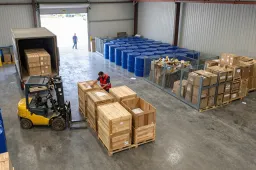
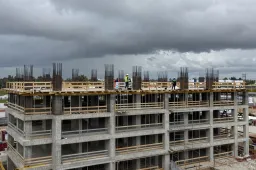
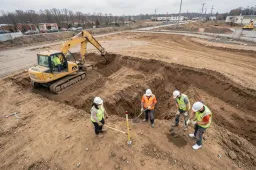
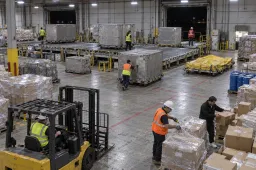
Ultralytics Construction-PPE — оригинальный набор данных для обнаружения объектов, включающий 1 000 изображений, 14 863 ограничивающие рамки и 12 классов: людей, вилочные погрузчики, средства индивидуальной защиты и видимые случаи отсутствия средств защиты на строительных и промышленных объектах.
Набор данных создан и опубликован с открытым исходным кодом командой Ultralytics в ноябре 2026 года. Он объединяет изображения, собранные людьми, и сгенерированные изображения; экспертная разметка людьми и автоматическая разметка с помощью ИИ выполнены командой Ultralytics в ноябре 2026 года. Изображения и аннотации распространяются по лицензии Creative Commons «С указанием авторства 4.0» (CC BY 4.0).
Открой датасет Construction-PPE на платформе Ultralytics, чтобы просмотреть изображения и аннотации, создать копию датасета или обучить модель.
Изображения и аннотации#
Изображения охватывают строительные площадки, мастерские, склады, зоны погрузки и ремонтные работы. На них представлены разные ракурсы, условия освещения, расположение работников, средства защиты и работа вилочных погрузчиков.
Изображения представлены в альбомной, портретной и квадратной ориентации с разным разрешением.
В аннотациях используются ограничивающие рамки в формате Ultralytics YOLO. Классы экипировки обозначают видимые предметы; классы отсутствующей экипировки указывают на соответствующую видимую часть тела, если экипировка отсутствует. Если часть тела закрыта или находится за кадром, это само по себе не означает отсутствие экипировки.
Структура набора данных#
Датасет разделён на обучающую и валидационную выборки в фиксированном соотношении 80/20:
| Подвыборка | Изображения | Назначение |
|---|---|---|
| Обучение | 800 | Обучение модели |
| Валидация | 200 | Оценка в процессе разработки |
| Всего | 1,000 |
Отдельной тестовой выборки нет. Для итоговой оценки используй независимые изображения из среды, где планируется развернуть модель, особенно если оцениваешь производительность на реальных записях с камер.
Классы#
Идентификаторы классов ниже соответствуют аннотациям датасета и construction-ppe.yaml:
| ID | Класс | Целевая платформа |
|---|---|---|
| 0 | helmet | Защитная каска |
| 1 | gloves | Рабочие перчатки |
| 2 | vest | Сигнальный жилет, куртка или рубашка повышенной видимости |
| 3 | boots | Защитные рабочие ботинки или обувь |
| 4 | goggles | Защитные очки |
| 5 | Person | Человек |
| 6 | no_helmet | Видимая голова без каски |
| 7 | no_goggle | Видимая область глаз без защитных очков |
| 8 | no_gloves | Видимая рука без перчатки |
| 9 | no_boots | Видимая ступня или обувь без защитной рабочей обуви |
| 10 | forklift | Вилочный погрузчик |
| 11 | no_vest | Видимый торс без сигнальной одежды повышенной видимости |
Файл YAML набора данных#
Конфигурация датасета задаёт пути к изображениям, порядок классов и URL для скачивания:
# Ultralytics 🚀 AGPL-3.0 License - https://ultralytics.com/license

# Ultralytics Construction-PPE dataset, November 2026, CC BY 4.0
# Documentation: https://docs.ultralytics.com/datasets/detect/construction-ppe
# Example usage: yolo train data=construction-ppe.yaml
# parent
# ├── ultralytics
# └── datasets
#     └── construction-ppe ← downloads here

# Train/val/test sets as 1) dir: path/to/imgs, 2) file: path/to/imgs.txt, or 3) list: [path/to/imgs1, path/to/imgs2, ..]
path: construction-ppe # dataset root dir
train: images/train # train images (relative to 'path') 800 images
val: images/val # val images (relative to 'path') 200 images

# Classes
names:
  0: helmet
  1: gloves
  2: vest
  3: boots
  4: goggles
  5: Person
  6: no_helmet
  7: no_goggle
  8: no_gloves
  9: no_boots
  10: forklift
  11: no_vest

# Download script/URL (optional)
download: https://github.com/ultralytics/assets/releases/download/v0.0.0/construction-ppe.zip
Архив набора данных за ноябрь 2026 года содержит изображения, метки YOLO, метаданные набора данных и лицензию CC BY 4.0. При распаковке файлы помещаются в construction-ppe.
Использование#
Установи или обнови пакет Ultralytics, а затем обучи предварительно обученную модель YOLO26. При первом использовании YOLO автоматически скачивает и распаковывает набор данных.
from ultralytics import YOLO

model = YOLO("yolo26n.pt")
model.train(
    data="https://github.com/ultralytics/assets/releases/download/v0.0.0/construction-ppe.zip",
    epochs=100,
    imgsz=640,
)
Информацию о параметрах конфигурации смотри в руководстве по обучению, а об оценке обученной модели — в руководстве по валидации. В ноутбуке Construction-PPE приведена пошаговая инструкция для Colab.
Применение#
- Обнаружение СИЗ: находи каски, перчатки, жилеты, ботинки и защитные очки.
- Обнаружение отсутствующей экипировки: выявляй видимые случаи отсутствия СИЗ для проверки.
- Анализ рабочих площадок: обнаруживай людей и вилочные погрузчики на изображениях строительных и промышленных объектов.
- Исследования и образование: сравнивай модели и изучай процесс обучения на изображениях, собранных людьми, и сгенерированных изображениях.
Лицензия и указание авторства#
Изображения и аннотации датасета выпущены Ultralytics по лицензии CC BY 4.0, которая разрешает распространение и адаптацию, в том числе для коммерческого использования, при указании авторства. Укажи команду Ultralytics, добавь ссылки на датасет и лицензию, а также обозначь внесённые изменения.
Рекомендуемая атрибуция: Датасет Ultralytics Construction-PPE, команда Ultralytics, ноябрь 2026 года, CC BY 4.0.
@dataset{Ultralytics_Construction_PPE_2026,
    author = "{Ultralytics team}",
    title = {Ultralytics Construction-PPE Dataset},
    month = {November},
    year = {2026},
    license = {CC-BY-4.0},
    url = {https://docs.ultralytics.com/datasets/detect/construction-ppe},
    publisher = {Ultralytics}
}


Комментарии9
Задай вопрос, поделись результатами или помоги кому-нибудь.
panagiotamoraiti
Hello, may i ask what does the none class represents?
1Wally18796
It represents the missing of an item. I recommend not using the "no" classes and use the person bounding box to detect missing item. e.g if a helmet bounding box is missing inside a "person" bouding boxes. It's automatically "no helmet"
On Mon, 3 Aug 2026, 9:38 pm Panagiota Moraiti, @.***> wrote:
Hello, may i ask what does the none class represents?
— Reply to this email directly, view it on GitHub https://github.com/orgs/ultralytics/discussions/23364?email_source=notifications&email_token=A6BHGJNLIEEG3PDKZYO5CJD5IC5ZXA5CNFSNUABIM5UWIORPF5TWS5BNNB2WEL2ENFZWG5LTONUW63SDN5WW2ZLOOQXTCNZYHAZTEOBXUZZGKYLTN5XKOY3PNVWWK3TUUVSXMZLOOSWGM33PORSXEX3DNRUWG2Y#discussioncomment-17883287, or unsubscribe https://github.com/notifications/unsubscribe-auth/A6BHGJMNF5G3KG5GLTBGRH35IC5ZXAVCNFSNUABHKJSXA33TNF2G64TZHM2TGNJTGYYDINBVHNCGS43DOVZXG2LPNY5TSMZXGQZDINFBOYBA . You are receiving this because you commented.Message ID: @.*** com>
But what if the person is holding the helmet in their hand? With what you're proposing, the system won't raise an alert in that case, which isn't correct. The "No" classes exist for a reason in the dataset.
I think the None class means "no vest," though I'm not 100% sure. When I removed it, results got worse, so it's doing something useful.
 Glenn JocherUltralytics
You’re right that person–PPE association matters: a helmet merely inside a person box does not prove it is worn. However,
noneis a generic class and is not documented asno_vest; the Construction-PPE class list explicitly notes that no dedicated missing-vest class exists. Please keep questions and findings here so the Ultralytics team can clarify the source annotation semantics.
 Murat Raimbekov
hey @nhatminh-115, the numbers back up your observation, though i'd be careful about calling it a "problem" - some of this looks intentional given how construction sites actually look. i pulled the dataset and counted instances:
positive vs negative instances:
split positives negatives pos/neg ratio train 5410 1267 4.27 : 1 val 706 146 4.84 : 1 test 796 154 5.17 : 1 so yes, positives outnumber negatives roughly 4-5x in every split. but that ratio is actually close to what you'd see on real construction sites - most workers do wear ppe most of the time.
per-class breakdown (train):
class instances counterpart ratio helmet (0) 1341 no_helmet (7) -> 400 3.35 gloves (1) 1146 no_gloves (9) -> 442 2.59 boots (3) 1235 no_boots (10) -> 88 14.03 goggles (4) 419 no_goggle (8) -> 337 1.24 vest (2) 1269 no_vest does not exist - a few things worth understanding before treating these as bugs:
- no
no_vestclass: high-vis vests are essentially binary - they're either on or completely off, and they're very visible. ano_vestlabel would basically be "person box without overlapping vest box", which you can derive in post-processing without needing a dedicated class. - no_boots is rare (88 instances): boots are often occluded by trousers, dust, or camera angle, so annotators can't always confidently mark "missing boots". the rarity probably reflects what's actually verifiable in the imagery rather than an annotation gap.
co-occurrence in training images (1142 total):
- 900 contain only positive classes ("compliant" scenes)
- 184 contain only negative classes ("non-compliant" scenes)
- 56 contain both (~5%)
- 2 contain neither
the docs explicitly say the dataset "includes both compliant and non-compliant cases", which matches what we see - scenes tend to be one or the other, not heavily mixed.
if your specific use case needs better recall on the
no_*classes, the data distribution does work against you. some things that help:- class weighting or focal loss to compensate for imbalance
- oversampling images containing negative-class instances
- aggressive augmentation on rare classes (especially
no_boots) - derive "missing PPE" rules in post-processing: detect
Personboxes, then check for overlappinghelmet/gloves/boots/vest, infer missing items from absence. this scales better with limited neg examples
so: the imbalance is real, the data behaves as you described, but a lot of it is consistent with how the dataset is designed rather than an annotation defect.
- no
nhatminh-115
I think this dataset has a huge problem of partial annotation and prior distribution. It works great on the Positive but kinda bad on Neg. Can anyone confirm on this or is it just me?
Waqas7717
# Train/val/test sets as 1) dir: path/to/imgs, 2) file: path/to/imgs.txt, or 3) list: [path/to/imgs1, path/to/imgs2, ..]
path: construction-ppe # dataset root dir
train: images/train # train images (relative to 'path') 1132 images
val: images/val # val images (relative to 'path') 143 images
test: images/test # test images (relative to 'path') 141 images
1,132 images for training really isn’t enough for anything close to a real-world setup. Most of these images are close-up shots of people clearly posing in helmets and vests. That’s not how this would work in practice. In a real deployment, you’re dealing with CCTV cameras fixed angles, wide shots, bad lighting, blur, occlusion, and workers far from the camera. I’ve spent the last year banging my head against the wall just trying to get models to cross 80% accuracy. This isn’t going to generalize. What’s actually needed is real CCTV footage of real workers on real sites not internet images of models wearing PPE.
Sir, have u found a solution or a better dataset? I'm trying to find one for my fyp sice you're saying it won't go up more than 80%, I don't wanna waste my time with it.
hungtrieu07
Sir, have u found a solution or a better dataset? I'm trying to find one for my fyp sice you're saying it won't go up more than 80%, I don't wanna waste my time with it.
Lots of company will private this dataset for their AI team to process, so we have zero chance to get it in high quality :( I'm also get into this problem.