Экспорт для Sony IMX500 в Ultralytics YOLO11
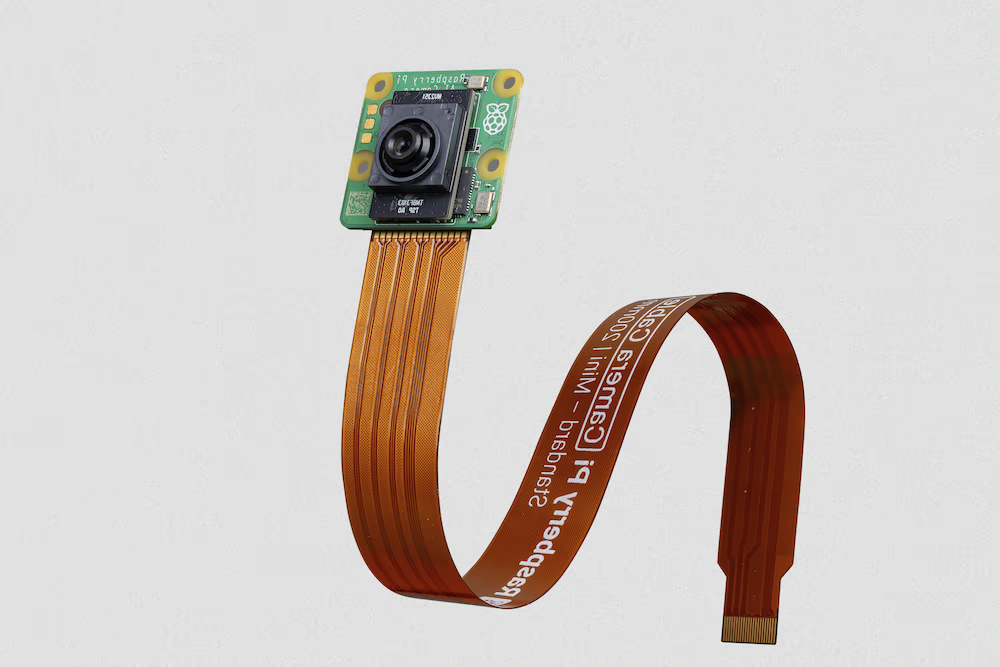
В этом руководстве описан экспорт моделей Ultralytics YOLOv8n и YOLO11n и их развертывание на камерах Raspberry Pi AI Camera с сенсором Sony IMX500.
Развертывание моделей компьютерного зрения на устройствах с ограниченными вычислительными ресурсами, например на Raspberry Pi AI Camera, может быть непростой задачей. Существенно улучшить производительность помогает формат модели, оптимизированный для быстрого выполнения.
Формат моделей IMX500 разработан для минимального энергопотребления и высокой скорости работы нейронных сетей. Он позволяет оптимизировать модели Ultralytics YOLO11 для быстрого инференса с низким энергопотреблением. В этом руководстве показано, как экспортировать модели в формат IMX500 и развернуть их на Raspberry Pi AI Camera.
Зачем экспортировать модель в IMX500?#
Интеллектуальный датчик зрения IMX500 от Sony выполняет обработку ИИ непосредственно на датчике — Sony называет это первым в мире подобным решением для интеллектуального датчика зрения. Он помогает преодолеть распространённые проблемы периферийного ИИ, включая узкие места при обработке данных, вопросы конфиденциальности и ограничения производительности. В отличие от обычных датчиков, которые лишь передают изображения и кадры, IMX500 интерпретирует захваченные данные, позволяя устройствам получать полезные сведения в реальном времени.
Экспорт Sony IMX500 для моделей YOLO11#
IMX500 предназначен для обработки данных непосредственно на сенсоре без отправки данных в облако.
IMX500 работает с квантованными моделями. Квантование уменьшает размер моделей и ускоряет их работу без существенной потери точности. Это хорошо подходит для ограниченных ресурсов периферийных вычислений: приложения быстрее реагируют благодаря меньшей задержке и быстрой локальной обработке данных, не зависящей от облака. Локальная обработка также помогает сохранять конфиденциальность и безопасность пользовательских данных, поскольку они не отправляются на удалённый сервер.
Основные возможности IMX500:
- Вывод метаданных: вместо передачи только изображений IMX500 может выводить как изображения, так и метаданные (результаты инференса), а также только метаданные, чтобы уменьшить объём данных, снизить нагрузку на пропускную способность и сократить расходы.
- Решение проблем конфиденциальности: Обрабатывая данные на устройстве, IMX500 помогает решать вопросы конфиденциальности и хорошо подходит для человекоориентированных приложений, таких как подсчёт людей и отслеживание заполняемости помещений.
- Обработка в реальном времени: Быстрая обработка непосредственно на сенсоре помогает принимать решения в реальном времени в приложениях периферийного ИИ, например в автономных системах.
Перед началом работы: Чтобы добиться наилучших результатов, подготовь модель YOLO11 к экспорту, следуя нашим руководствам: Обучение моделей, Обзор наборов данных и Настройка гиперпараметров.
Поддерживаемые задачи#
Экспорт IMX500 поддерживает четыре из семи задач Ultralytics и только модели YOLOv8n и YOLO11n: другие семейства моделей, размеры и архитектуры не поддерживаются. При экспорте модели семантической сегментации, OBB или оценки глубины возникает ошибка.
| Задача | YOLOv8 | YOLO11 | YOLO26 |
|---|---|---|---|
| Обнаружение | ✅ | ✅ | ❌ |
| Сегментация | ✅ | ✅ | ❌ |
| Семантическая сегментация | ❌ | ❌ | ❌ |
| Глубина | ❌ | ❌ | ❌ |
| Классификация | ✅ | ✅ | ❌ |
| Оценка позы | ✅ | ✅ | ❌ |
| OBB | ❌ | ❌ | ❌ |
Примеры использования#
Экспортируй модель Ultralytics YOLO11 в формат IMX500 и выполни инференс с помощью экспортированной модели.
Формат IMX500 поддерживает режимы Экспорт, Предсказание и Валидация. Инференс и валидация Ultralytics выполняют экспортированный model_imx.onnx на CPU хоста.
Инференс здесь нужен лишь для проверки того, что экспортированная модель работает как задумано, прежде чем развернуть её на Raspberry Pi AI Camera.
from ultralytics import YOLO

# Загрузить модель YOLO11n PyTorch
model = YOLO("yolo11n.pt")

# Экспортировать модель
model.export(format="imx", data="coco8.yaml")  # по умолчанию выполняется экспорт с квантованием PTQ

# Загрузить экспортированную модель
imx_model = YOLO("yolo11n_imx_model")

# Выполнить инференс
results = imx_model("https://ultralytics.com/images/bus.jpg")from ultralytics import YOLO
# Загрузить модель YOLO11n-pose PyTorch
model = YOLO("yolo11n-pose.pt")
# Экспортировать модель
model.export(format="imx", data="coco8-pose.yaml") # по умолчанию выполняется экспорт с квантованием PTQ
# Загрузить экспортированную модель
imx_model = YOLO("yolo11n-pose_imx_model")
# Выполнить инференс
results = imx_model("https://ultralytics.com/images/bus.jpg")from ultralytics import YOLO
# Загрузить модель YOLO11n-cls PyTorch
model = YOLO("yolo11n-cls.pt")
# Экспортировать модель
model.export(format="imx", data="imagenet10") # по умолчанию выполняется экспорт с квантованием PTQ
# Загрузить экспортированную модель
imx_model = YOLO("yolo11n-cls_imx_model")
# Выполнить инференс
results = imx_model("https://ultralytics.com/images/bus.jpg", imgsz=224)from ultralytics import YOLO
# Загрузить модель YOLO11n-seg PyTorch
model = YOLO("yolo11n-seg.pt")
# Экспортировать модель
model.export(format="imx", data="coco8-seg.yaml") # по умолчанию выполняется экспорт с квантованием PTQ
# Загрузить экспортированную модель
imx_model = YOLO("yolo11n-seg_imx_model")
# Выполнить инференс
results = imx_model("https://ultralytics.com/images/bus.jpg")from ultralytics import YOLO
# Загрузить экспортированную модель IMX500
model = YOLO("yolo11n_imx_model")
# Проверить точность на наборе данных COCO8
metrics = model.val(data="coco8.yaml")Экспорт IMX поддерживается только в Linux с Python 3.10–3.12 и требует Java 17 или новее. Пакет Ultralytics устанавливает дополнительные зависимости для экспорта во время выполнения. При первом запуске команды экспорта может потребоваться перезапустить консоль, чтобы всё работало правильно.
Аргументы экспорта#
| Аргумент | Тип | По умолчанию | Описание |
|---|---|---|---|
format | str | 'imx' | Целевой формат экспортируемой модели, определяющий совместимость с различными средами развертывания. |
imgsz | int или tuple | 640 | Заданный размер изображения на входе модели. Можно указать целое число для квадратных изображений или кортеж (height, width) для конкретных размеров. |
quantize | int или str | 8/авто | Точность квантования. Для IMX500 требуется и автоматически включается 8 (INT8/PTQ). Экспорт только в FP32 и FP16 не поддерживается. Заменяет устаревшие флаги half/int8. |
data | str | None | Путь к YAML-файлу набора данных, необходимому для квантования; для классификации вместо него укажи каталог набора данных или имя встроенного набора данных. Если параметр не задан, Ultralytics выбирает набор данных калибровки по умолчанию для задачи модели. |
fraction | float, int или list | 1.0 | Подмножество для калибровки, заданное как доля, количество изображений или [train, val, test] отношения/количества. Если список содержит два элемента, test остаётся без изменений, а 0 пропускает его. |
nms | bool, необязательно | None | Выбери необработанный вывод (None, по умолчанию), встроенный NMS (True) или голову без NMS (False). Для задач обнаружения, сегментации и оценки позы IMX требует nms=True и выбирает его автоматически. |
device | str | None | Указывает устройство для экспорта: GPU (device=0) или CPU (device=cpu). |
Подробнее о процессе экспорта смотри на странице документации Ultralytics об экспорте.
В результате экспорта создаётся каталог <model-name>_imx_model. В нём находятся model_imx.onnx для проверки квантования и файл packerOut.zip, необходимый для упаковки модели и её развертывания на оборудовании IMX500. Кроме того, в папке <model-name>_imx_model будет текстовый файл (labels.txt) со списком всех меток модели.
yolo11n_imx_model
├── dnnParams.xml
├── labels.txt
├── packerOut.zip
├── model_imx.onnx
├── model_imx_MemoryReport.json
└── model_imx.pbtxt
Использование экспорта IMX500 при развёртывании#
Экспортировав модель Ultralytics YOLO11n в формат IMX500, ты можешь развернуть её на Raspberry Pi AI Camera для инференса.
Требования к оборудованию#
Подготовь следующее оборудование:
- Raspberry Pi 5 или Raspberry Pi 4 Model B
- Камера Raspberry Pi AI
Подключи Raspberry Pi AI Camera к 15-контактному разъёму MIPI CSI на Raspberry Pi и включи Raspberry Pi.
Требования к программному обеспечению#
Это руководство проверено на Raspberry Pi 5 с установленной Raspberry Pi OS Bookworm (Raspberry Pi 5).
Шаг 1. Открой окно терминала и выполни следующие команды, чтобы обновить программное обеспечение Raspberry Pi до последней версии.
sudo apt update && sudo apt full-upgradeШаг 2. Установи прошивку IMX500, необходимую для работы датчика IMX500.
sudo apt install imx500-allШаг 3. Перезагрузи Raspberry Pi, чтобы изменения вступили в силу.
sudo rebootШаг 4. Установи библиотеку модуля приложения AITRIOS для Raspberry Pi
pip install git+https://github.com/SonySemiconductorSolutions/aitrios-rpi-application-module-library.gitШаг 5. Запусти обнаружение объектов, оценку позы, классификацию и сегментацию с помощью YOLO11, используя следующие скрипты из примеров библиотеки модуля приложения aitrios-rpi.
Перед запуском этих скриптов не забудь заменить каталоги model_file и labels.txt на соответствующие пути в своей среде.
import numpy as np
from modlib.apps import Annotator
from modlib.devices import AiCamera
from modlib.models import COLOR_FORMAT, MODEL_TYPE, Model
from modlib.models.post_processors import pp_od_yolo_ultralytics

class YOLO(Model):
    """YOLO model for IMX500 deployment."""

    def __init__(self):
        """Initialize the YOLO model for IMX500 deployment."""
        super().__init__(
            model_file="yolo11n_imx_model/packerOut.zip",  # replace with proper directory
            model_type=MODEL_TYPE.CONVERTED,
            color_format=COLOR_FORMAT.RGB,
            preserve_aspect_ratio=False,
        )

        self.labels = np.genfromtxt(
            "yolo11n_imx_model/labels.txt",  # replace with proper directory
            dtype=str,
            delimiter="\n",
        )

    def post_process(self, output_tensors):
        """Post-process the output tensors for object detection."""
        return pp_od_yolo_ultralytics(output_tensors)

device = AiCamera(frame_rate=16)  # Optimal frame rate for maximum FPS of the YOLO model running on the AI Camera
model = YOLO()
device.deploy(model)

annotator = Annotator()

with device as stream:
    for frame in stream:
        detections = frame.detections[frame.detections.confidence > 0.55]
        labels = [f"{model.labels[class_id]}: {score:0.2f}" for _, score, class_id, _ in detections]

        annotator.annotate_boxes(frame, detections, labels=labels, alpha=0.3, corner_radius=10)
frame.display()Бенчмарки#
Приведённые ниже тесты YOLOv8n, YOLO11n, YOLOv8n-pose, YOLO11n-pose, YOLOv8n-cls и YOLO11n-cls команда Ultralytics провела на Raspberry Pi AI Camera, измеряя скорость и точность в формате модели imx.
| Модель | Формат | Размер (пиксели) | Размер packerOut.zip (МБ) | mAP50-95(B) | Время инференса (мс/изобр.) |
|---|---|---|---|---|---|
| YOLOv8n | imx | 640 | 2.1 | 0.470 | 58.79 |
| YOLO11n | imx | 640 | 2.2 | 0.517 | 58.82 |
| YOLOv8n-pose | imx | 640 | 2.0 | 0.687 | 58.79 |
| YOLO11n-pose | imx | 640 | 2.1 | 0.788 | 62.50 |
| Модель | Формат | Размер (пиксели) | Размер packerOut.zip (МБ) | точность (top1) | точность (top5) | Время инференса (мс/изобр.) |
|---|---|---|---|---|---|---|
| YOLOv8n-cls | imx | 224 | 2.3 | 0.25 | 0.5 | 33.31 |
| YOLO11n-cls | imx | 224 | 2.3 | 0.25 | 0.417 | 33.31 |
Для проверки приведённых выше результатов использовались набор данных COCO128 для моделей обнаружения, набор данных COCO8-Pose для моделей оценки позы и ImageNet10 для моделей классификации.
Что происходит внутри?#

Инструментарий сжатия моделей Sony (MCT)#
Набор инструментов Sony для сжатия моделей (MCT) предназначен для оптимизации моделей глубокого обучения с помощью квантования и прореживания. Он поддерживает различные методы квантования и предоставляет продвинутые алгоритмы, которые уменьшают размер модели и вычислительную сложность без существенной потери точности. MCT особенно полезен при развертывании моделей на устройствах с ограниченными ресурсами: он обеспечивает эффективный инференс и снижает задержку.
Поддерживаемые функции MCT#
MCT от Sony предлагает ряд функций, предназначенных для оптимизации моделей нейронных сетей:
- Оптимизация графа: Преобразует модели в более эффективные варианты, объединяя такие слои, как пакетная нормализация, с предшествующими слоями.
- Поиск параметров квантования: минимизирует шум квантования с помощью таких метрик, как среднеквадратичная ошибка, отсутствие отсечения и средняя абсолютная ошибка.
- Продвинутые алгоритмы квантования:
- Коррекция отрицательных сдвигов: устраняет проблемы производительности, возникающие при симметричном квантовании активаций.
- Фильтрация выбросов: использует z-оценку для обнаружения и удаления выбросов.
- Кластеризация: Использует неравномерные сетки квантования для более точного соответствия распределению.
- Поиск смешанной точности: назначает каждому слою разную разрядность квантования с учетом его чувствительности.
- Визуализация: используй TensorBoard, чтобы изучать показатели производительности модели, этапы квантования и конфигурации разрядности.
Квантование#
MCT поддерживает несколько методов квантования для уменьшения размера модели и ускорения вывода:
- Квантование после обучения (PTQ):
- Доступно через API Keras и PyTorch.
- Сложность: низкая
- Вычислительные затраты: низкие (минуты на CPU)
- Квантование после обучения на основе градиентов (GPTQ):
- Доступно через API Keras и PyTorch.
- Сложность: средняя
- Вычислительные затраты: умеренные (2–3 часа на GPU)
- Квантование с учётом обучения (QAT):
- Сложность: высокая
- Вычислительные затраты: высокие (12–36 часов на GPU)
MCT также поддерживает различные схемы квантования весов и активаций:
- Степени двойки (удобно для аппаратной реализации)
- Симметричное
- Равномерное
Структурированное прореживание#
MCT поддерживает структурированное прореживание моделей с учётом аппаратного обеспечения, разработанное для конкретных архитектур. Этот метод использует возможности целевой платформы Single Instruction, Multiple Data (SIMD), прореживая группы SIMD. Это уменьшает размер и сложность модели и оптимизирует использование каналов с учётом архитектуры SIMD, обеспечивая целевое использование памяти, занимаемой весами. Доступно через API Keras и PyTorch.
Инструмент преобразования IMX500 (компилятор)#
Инструмент IMX500 Converter Tool — важная часть набора инструментов IMX500. Он компилирует модели для развертывания на сенсоре Sony IMX500 (например, в камерах Raspberry Pi AI Camera). Инструмент преобразует квантованные модели Ultralytics YOLO11 в формат, который эффективно работает на целевом оборудовании. После квантования при экспорте создаются двоичные файлы с данными модели и конфигурацией для конкретного устройства, необходимыми для развертывания на Raspberry Pi AI Camera.
Примеры применения в реальных условиях#
Экспорт в формат IMX500 применим во многих отраслях. Вот несколько примеров:
- Периферийный ИИ и IoT: включи обнаружение объектов на дронах или камерах видеонаблюдения, где важна обработка в реальном времени на устройствах с низким энергопотреблением.
- Носимые устройства: развертывай модели, оптимизированные для компактных систем обработки ИИ, на носимых устройствах для мониторинга здоровья.
- Умные города: используй модели YOLO11, экспортированные в формате IMX500, для мониторинга дорожного движения и анализа безопасности с более быстрой обработкой и минимальной задержкой.
- Аналитика розничной торговли: улучшай мониторинг в магазинах, развертывая оптимизированные модели в POS-системах или на умных полках.
Заключение#
Экспорт моделей Ultralytics YOLO11 в формат IMX500 от Sony позволяет развертывать их на камерах с IMX500 и эффективно выполнять инференс. Квантование уменьшает размер модели и ускоряет инференс, лишь немного снижая точность.
Дополнительную информацию и подробные инструкции см. на сайте IMX500 Sony.
Часто задаваемые вопросы#
Чтобы экспортировать модель YOLO11 в формат IMX500, воспользуйся API Python или командой CLI:
from ultralytics import YOLO

model = YOLO("yolo11n.pt")
model.export(format="imx")  # По умолчанию выполняет экспорт с квантованием PTQ
В результате экспорта будет создан каталог с файлами, необходимыми для развертывания, включая
packerOut.zip.Формат IMX500 дает несколько важных преимуществ при развертывании на периферии:
- Обработка ИИ непосредственно на чипе снижает задержку и энергопотребление
- Выводит изображения и метаданные (результат инференса), а не только изображения
- Повышает конфиденциальность благодаря локальной обработке данных без зависимости от облака
- Обеспечивает обработку в реальном времени, что идеально подходит для приложений, чувствительных к задержкам
- Оптимизированное квантование для эффективного развертывания моделей на устройствах с ограниченными ресурсами
Для развертывания моделей на IMX500 тебе понадобится:
Оборудование:
- Raspberry Pi 5 или Raspberry Pi 4 Model B
- Raspberry Pi AI Camera с сенсором IMX500
Программное обеспечение:
- Raspberry Pi OS Bookworm
- Прошивка и инструменты IMX500 (
sudo apt install imx500-all)
По результатам тестов Ultralytics на Raspberry Pi AI Camera:
- YOLO11n выполняет инференс одного изображения за 58.82 мс
- mAP50-95 0.517 на датасете COCO128
- После квантования размер модели составляет всего 2.2 МБ
Это показывает, что формат IMX500 обеспечивает эффективный инференс в реальном времени при сохранении хорошей точности для приложений периферийного ИИ.


Комментарии86
Задай вопрос, поделись результатами или помоги кому-нибудь.
 Chad Walsh
where is the best place to get support on the IMX500. I am running into multiple issues: i. my first yolo11n model built fine and exported to imx500, no problem, but my second model with a LOT more training images build fine but crashed the imx500 export. ii. the output of the imx500 during inference is giving a lot of none outputs between solid recognitions. it seems like there is something interfering with or disrupting the inference outputs (e.g., good output, none, none, none, none, good output, ...). where is the best place to get help with these issues?
 Glenn JocherUltralytics
Please continue the discussion here so the Ultralytics team can help; for the export crash, share the exact export command, full text traceback, and output from
yolo checks, and for intermittentNoneresults include a minimal inference script, confidence threshold, and a short reproducible input sample. Note that IMX export uses the calibration dataset specified bydataand defaults to the full dataset, so testing a smallerfractionmay help isolate resource-related failures.
leeprevost
I've made considerable progress by moving conducting this model compression process with a Container using dtcooper/raspberrypi-os:python3.11 after considerable problems with dependencies. Now getting a container most of the way through the process of compressing my yolov11s model and its trained best.pt weights.
At the end of the process - I get a simple "killed" after the Calculation of quantization parameters step. I see memory spiking close to 100% on top and think I'm hitting OOM with my pi4 8gb.
root@a5e132f6b333:/app# yolo export model=./models/yolov11/best.pt data='Billfish-Breeds-1/data.yaml' format=imx verbos>
Ultralytics 8.3.221 🚀 Python-3.11.14 torch-2.9.0+cpu CPU (aarch64)
WARNING ⚠️ IMX export requires nms=True, setting nms=True.
YOLO11s summary (fused): 100 layers, 9,413,187 parameters, 0 gradients, 21.3 GFLOPs

PyTorch: starting from 'models/yolov11/best.pt' with input shape (1, 3, 640, 640) BCHW and output shape(s) ((1, 8400, 4>
IMX: collecting INT8 calibration images from 'data=Billfish-Breeds-1/data.yaml'
Fast image access ✅ (ping: 0.1±0.0 ms, read: 16.1±2.7 MB/s, size: 16.4 KB)
Scanning /app/Billfish-Breeds-1/valid/labels.cache... 268 images, 0 backgrounds, 0 corrupt: 100% ━━━━━━━━━━━━ 268/268 1>
WARNING ⚠️ IMX: >300 images recommended for INT8 calibration, found 268 images.

IMX: starting export with model_compression_toolkit 2.4.4...
representative_data_gen generates a batch size of 1 which can be slow for optimization: consider increasing the batch s>
WARNING:Model Compression Toolkit:OperatorSetNames.DEPTHWISE_CONV is not in model.
Statistics Collection: 268it [1:01:26, 13.76s/it]
Calculating quantization parameters: 100%|█████████████████████████████████████████████████████| 294/294 [12:44<00:00, >
Killed
Would appreciate any suggestion around this but think it probably pushes me over the edge to order my pi5? Or do I try to train on the yolov8 or yolov11n? I've not had very good success with the nano models. I've convinced myself the tradeoffs to the small is well worth it but that may be incompatible with this process?
@glenn-jocher am I posting at the right place? Put this in issues on gh?
- Glenn JocherUltralytics
@leeprevost you’re in the right place for discussion, but the OOM during IMX export is a new issue—please open a new issue for visibility. In the issue, include: the exact export command and full log,
yolo checksoutput (orultralytics.utils.checks.collect_system_info()), Java version (java --version), and the versions of IMX toolchain (pip freeze | grep -E "imx500|model-compression|sony-custom"). As immediate workarounds: export on a Linux x86_64 machine with more RAM, target YOLO11n/YOLOv8n (the IMX path is tuned for “n” models), and reduce calibration load withfraction(e.g., 0.25). Example:yolo export model=best.pt format=imx data=your.yaml imgsz=640 fraction=0.25IMX-specific knobs are summarized in the IMX500 export arguments here: Sony IMX500 export guide – Export arguments, and the exporter function requirements here: export_imx reference.
Thank you. I'll dig into the logs and see if I can add anything before opening new issue.
a few more questions and I will open an issue:
- Note that I was using a model trained on yolov11s rather than n as I've seen large degradation in the number of false positives in my model.
- I assume by "full log" you mean the output from the yolo export command with verbose at default (true). In other words, what I posted above?
- For some reason, I thought I read int he docs that i had to perform the model compression on the target machine. for me, the ultimate target is RpiZero2 but no way the model will export on that footprint . so, I went to the largest pi I have which is a Rpi4 -- that resulted in the OOM. So, am unsure by your guidance pointing me to the larger x86 linux machine. How will the process know the device limits if I perform it on that?
Trying to read these guides as best I can. I have not spent much time on the Sony site yet. If you'll point me, I don't want to start an issue that isn't an issue.
I opened an issue: https://github.com/ultralytics/ultralytics/issues/22512
Just tried the export again with the fraction=0.25 argument and got to "Optimal Solution Found" with objective measure of 0.94, then died with error:
Error x IMX: export failure 12662.7s: No module named 'onnxscript'
https://github.com/pytorch/pytorch/issues/166352 -- adding to my requirements.txt pointed to by Containerfile.
- Glenn JocherUltralytics(изменено)
@leeprevost great progress. IMX export/quantization does not need to run on the target; it cross-compiles for IMX500, so doing it on a larger Linux host is recommended. “Full log” means the complete stdout/stderr from the export run.
The “No module named 'onnxscript'” failure is a missing dependency. Current Ultralytics installs the IMX toolchain (including
imx500-converterandmodel-compression-toolkit) itself, so upgrade withpip install -U ultralyticsand re-run the export rather than pinning old versions by hand. Let’s continue the deep-dive in the issue you opened for traceability. Ok -- @glenn-jocher: am moving this to my opened issue. Still trying this on my pi4 but can move to my dev machine with plenty of RAM + Cuda. Got further but still died with a torch error -- will post there.
- Glenn JocherUltralytics
Thanks—let’s continue in the issue for traceability. On the larger Linux host, try GPU-assisted export to reduce RAM pressure and speed up calibration; if needed, temporarily lower
imgszto validate the pipeline:yolo export model=path/to/best.pt format=imx data=path/to/data.yaml device=0 imgsz=640 # if memory is still tight during calibration yolo export model=path/to/best.pt format=imx data=path/to/data.yaml device=0 imgsz=512For a concise list of export options and behavior, see the Export mode docs at Ultralytics YOLO — Export.
Much thanks for posting this guide. Thank you.
I am having very solid success running the standard detection models right out of the box on the RpiZero 2 which is my target platform. I'm actually amazed at the power draw (ran detection/streaming for about 175 minutes on a 4400mahr battery using about 60% of its capacity). Also, very solid top/htop scores showing less than 1/8 of CPU utilization. Memory is still such a problem on a rpiz2 but not any more so than what is being used with streaming only on the pi. Still have about 50% of memory left over as I recall. I've got screen shots of top screens if needed.
But, I need to get a trained model working on my RpiZ2 and am running into problems. As the guide seemed to indicate (or perhaps Sony's), I need to do most of the quantization on my target platform. I assumed that meant my zero. I have a very good model trained with yolov11m or large. I've tried to reduce that to a nano but I'm getting too much loss of MAP scores and too much false positive rates. So, am now trying to get a yolov11s to work. On my quantization process (it was not clear how to do this with a custom model) but am first loading the yolov11s.pt and then loading my best.pt on top of that. Ultralytics successfully loads my data, gives me a warning prompt about my 290 images (< 300 not ideal) and then another about processing speed with 1 batch. The program then goes off the rails with no UI messages. I assume I'm running out of memory on the piz2. So, my next steps seem to be either:
- Start over and try with nano model.
- Do my quantization on a larger pi (i've got a spare pi4).
I guess another option would be to spend more time understanding Sony's under the hood tools to optimize those settings?
Would appreciate some guidance here down the right path.
One thing that would be very helpful is to show how to do this on something other than the target platform. i'm trying to get a small detection model to run on a rpi zero2 and hate to have to download all of my training data to the zero to do the quantization.
Idea: Have a step that allows collection of the "target_platform_capabilities" information using Sony's model compression toolkit you are using under the hood, pickle it, and then use that object to drive the model compression on a larger machine.
I could probably dig in and try to follow your code and follow the "imx" part of your export process...
bohlebots
Wie schaffe ich es, dass das Modell im Speicher des IMX500 bleibt? Die PICAM wurde ja angepriesen mit der Aussage, dass sie selbst an einem Pi zero-2 mit gleicher Geschwindigkeit läuft und in der Tat, das täte sie, aber das Modell muss jedes Mal neu aufgeladen werden, und das dauert beim Pi Zero ewig, ja selbst mit einem Pi5 dauert es Minuten. Grundsätzlich muss die imx500 aber ein Modell auch bei ausgeschaltetem Strom im Speicher halten können, so dass nach dem Anschalten das letzte Modell direkt zur Verfügung steht. Wie bekomme ich das hin?
Gruß Roland
Teo-treny
Hello ! When running object detection (step 5), I get the following error :
Exception in thread Thread-2 (_process_requests_func):
Traceback (most recent call last):
  File "/home/pi/.pyenv/versions/3.11.9/lib/python3.11/threading.py", line 1045, in _bootstrap_inner
    self.run()
  File "/home/pi/.pyenv/versions/3.11.9/lib/python3.11/threading.py", line 982, in run
    self._target(*self._args, **self._kwargs)
  File "/home/pi/Desktop/imx_test/venv/lib/python3.11/site-packages/modlib/devices/ai_camera/ai_camera.py", line 193, in _process_requests_func
    callback()
  File "/home/pi/Desktop/imx_test/venv/lib/python3.11/site-packages/modlib/devices/ai_camera/ai_camera.py", line 207, in _process_requests
    self._parse_request(req)
  File "/home/pi/Desktop/imx_test/venv/lib/python3.11/site-packages/modlib/devices/ai_camera/ai_camera.py", line 256, in _parse_request
    detections = self.model.post_process(outputs)
                 ^^^^^^^^^^^^^^^^^^^^^^^^^^^^^^^^
  File "/home/pi/Desktop/imx_test/Test_1.py", line 23, in post_process
    return pp_od_yolo_ultralytics(output_tensors)
           ^^^^^^^^^^^^^^^^^^^^^^^^^^^^^^^^^^^^^^
  File "/home/pi/Desktop/imx_test/venv/lib/python3.11/site-packages/modlib/models/post_processors/post_processors.py", line 129, in pp_od_yolo_ultralytics
    n_detections = int(output_tensors[3])
                   ^^^^^^^^^^^^^^^^^^^^^^
TypeError: only length-1 arrays can be converted to Python scalars
I'm running Python 3.11.9 and installed all the dependencies following the guide. My Raspberry PI is a 3B+ model with Bookworm 64 bits and is up to date.
aytacsekmen
In the official IMX500 documentation provided by Sony (https://developer.sony.com/tinyml-23/developer-tools/documentation/imx500-evaluation-kit-user-guide?version=2023-11-28&progLang=), they describe the process of generating the network.fpk and network_info.txt files that will be used to deploy the model to IMX500, using the Packager.sh script. However, when I attempt to apply the same procedure to the packerOut.zip file I created by following the tutorial on https://docs.ultralytics.com/integrations/sony-imx500, I am unable to run the model on the IMX500. Also I couldn't run your implementation because it says that some packages are not found which I believe is related to the version of the OS. Currently I use the Pi OS that is provided by SONY for compatibility issues. I could run some other deep learning models following the steps in the (https://developer.sony.com/tinyml-23/developer-tools/documentation/imx500-evaluation-kit-user-guide?version=2023-11-28&progLang=), but I believe, there must be something different related to the creation of packerOut.zip file.
Could you assist in resolving this issue with the conversion process? @glenn-jocher
HelloCigar
Hello, per picamera2 docs, creating apps with "a camera window embedded into the GUI is through Qt", is there no other way to embed the video feed in other GUI frameworks?
skim-sony
Hi, I followed the steps in this page to convert the yolov8n model with imx500 converter and tested it with raspberry ai camera. But I get 29.5 ms for the inference time with 640x640 input tensor size. So I wonder why my inference time is better than your result (58.82ms). Which version of imx500 converter did you use?
Also, how did you measure the inference time? Did you use imx500.get_kpi_info(metadata) or calculate the elapsed time of picam2.capture_metadata()?
- Glenn JocherUltralytics(изменено)
@skim-sony congratulations on the faster result! Our documented figure (58.82 ms for YOLO11n, see the Benchmarks) was measured by the Ultralytics team on a Raspberry Pi AI Camera with the
imxformat. Differences can come from the converter version, firmware, hardware (Pi 5 vs Pi 4) or how the time is measured. Would you mind sharing which converter version and Raspberry Pi model you're using? This could help other community members. Hi, I have used Pi5 and tried both 3.14.3 and 3.16.1 for imx500-converter. And both produces 29.5ms for inference time. It seems like you also use Pi5, so I wonder why our results are different. I'd like to reproduce your results 58.82 ms to learn what improves the inference time. So it would be helpful if you could share some info how to sync with your environment. Thanks!
- Glenn JocherUltralytics(изменено)
@skim-sony that's interesting you're seeing better performance! The discrepancy could be due to several factors:
- Measurement methodology: end-to-end time (pre/post-processing + inference) differs from model-only inference time
- Firmware and converter versions
- Image resolution and resizing
- Test conditions: background processes, temperature, and power settings
Our published numbers are in the Benchmarks. If you'd like to share more details about your implementation, the community would certainly benefit.
fracipriano
Hello, I'm trying to run the standard YOLOv8n model on a Raspberry Pi AI Camera. I followed the exemple in the documentation
from ultralytics import YOLO

# Load a YOLOv8n PyTorch model
model = YOLO("yolov8n.pt")

# Export the model
model.export(format="imx", data="coco8.yaml")  # exports with PTQ quantization by default

# Load the exported model
imx_model = YOLO("yolov8n_imx_model")

# Run inference
results = imx_model("https://ultralytics.com/images/bus.jpg")
I got a bunch of warnings during the execution (export_log.txt), but the imx_model seemed to work properly in the end.
I then packaged it via IMX500 Packager and test it using the imx500_object_detection_demo.py. The Network Firmware gets uploaded, the application starts, but I get no detection. I tried to lower the detection threshold, but it didn't help. Any idea on what could be the problem? Any suggestion would be much appreciated.
- Glenn JocherUltralytics
Thank you for the detailed issue. Let's troubleshoot step by step. First, ensure your Raspberry Pi AI Camera is correctly connected and recognized by running
libcamera-helloin the terminal. If the camera works, verify that thelabels.txtpath in your demo command matches the exported file. You can also try inference on a static image first withimx_model.predict("test.jpg")to isolate live feed issues. For further assistance, please share the full export log and a screenshot of your camera output.For additional guidance, refer to the Sony IMX500 and AITRIOS integration blog post which demonstrates successful deployment steps.
Hello @glenn-jocher,
libcamera-hello works fine as does the imx500_object_detection_demo.py when using the default model ("/usr/share/imx500-models/imx500_network_ssd_mobilenetv2_fpnlite_320x320_pp.rpk").
There seems to be no problem with the labels.txt file as, if a run the imx500_object_detection_demo.py specifying the path to my label.txt, it works fine.
The imx_model also works fine before the packaging.
Here a screenshot of the camera output:
You can find the full export log file in my first post. Do you think any of the errors and/or warnings there could cause any problem with the packaging process via the IMX500-Packager?
- Glenn JocherUltralytics
Thank you for sharing these details. The warnings in your export log about "No BN layers to fold" and quantization parameters are normal during IMX conversion and shouldn't affect packaging. Since your camera feed works with the default model but not your custom export, please verify:
- Your
imx500-packagecommand uses the exactpackerOut.zipfromyolov8n_imx_model - The input tensor shape in your exported model matches IMX500 expectations (640x640 by default)
If issues persist, we recommend trying the IMX500 conversion process with our pretrained YOLOv8n model from https://github.com/ultralytics/assets/releases as a validation step.
- Your
Hello @glenn-jocher , thank you for your answer.
- Yes, I'm the one specifying the packerOut.zip path when running imx500-package
- I think so. Here is the content of the dnnParams.xml file generated by the export function
<?xml version="1.0" encoding="UTF-8" standalone="yes"?>
<dnnParams>
    <networks>
        <network name="yolov8n_new_imx" ordinal="0" type="">
            <inputTensors>
                <inputTensor persistency="0" ordinal="0" name="Placeholder.input.uid1:0" l2Offset="260480" numOfDimensions="3" bitsPerElement="8" shift="0" scale="0.00390625" format="unsigned">
                    <dimensions>
                        <dimension size="3" serializationOrder="2" ordinal="0" padding="0"/>
                        <dimension size="640" serializationOrder="1" ordinal="1" padding="0"/>
                        <dimension size="640" serializationOrder="0" ordinal="2" padding="0"/>
                    </dimensions>
                </inputTensor>
            </inputTensors>
            <outputTensors>
                <outputTensor ordinal="1" name="transform-83-/MultiClassNMS:0" l2Offset="281984" numOfDimensions="1" bitsPerElement="8" shift="0" scale="0.00390625" format="unsigned">
                    <dimensions>
                        <dimension size="300" serializationOrder="0" ordinal="0" padding="0"/>
                    </dimensions>
                </outputTensor>
                <outputTensor ordinal="2" name="transform-84-/MultiClassNMS:0" l2Offset="280960" numOfDimensions="1" bitsPerElement="16" shift="0" scale="1.0" format="signed">
                    <dimensions>
                        <dimension size="300" serializationOrder="0" ordinal="0" padding="0"/>
                    </dimensions>
                </outputTensor>
                <outputTensor ordinal="3" name="transform-85-/MultiClassNMS:0" l2Offset="279936" numOfDimensions="1" bitsPerElement="16" shift="0" scale="1.0" format="signed">
                    <dimensions>
                        <dimension size="1" serializationOrder="0" ordinal="0" padding="0"/>
                    </dimensions>
                </outputTensor>
                <outputTensor ordinal="0" name="transform-86-/MultiClassNMS:0" l2Offset="260480" numOfDimensions="2" bitsPerElement="16" shift="0" scale="0.03125" format="signed">
                    <dimensions>
                        <dimension size="300" serializationOrder="0" ordinal="0" padding="0"/>
                        <dimension size="4" serializationOrder="1" ordinal="1" padding="0"/>
                    </dimensions>
                </outputTensor>
            </outputTensors>
        </network>
    </networks>
    <l2memory totalSize="8388480" coefficientsSize="2604544" reservedMemorySize="1024" networksRuntimeSize="5523456"/>
</dnnParams>
I downloaded the yolov8n.pt file from the Sep 29, 2024 Release and repeated the process from the beginning. Same result.
I'm adding here the terminal outputs I get when running the imx500-package: imx500-package_log.txt
- Glenn JocherUltralytics(изменено)
Thanks for sharing the details. The
dnnParams.xmlshows correct 640x640 input dimensions. Since the default Mobilenet model works but your YOLOv8 export doesn't, please verify that your output tensor dimensions and ordering match the demo's expectations. YOLO IMX exports have a different output layout from Mobilenet, so the demo's post-processing must match. The deployment section of the IMX500 guide uses thepp_od_yolo_ultralyticspost-processor from the AITRIOS module library for Ultralytics YOLO IMX exports. Okay. So the problem was actually related to the output. The ordering is fine, as the scores and the classes. The problem are the bboxes. The values that I obtain are completely out of scale.
Example:
detection label: cup (0.56)
detection box: (396100, 107520, 0, 0)
whereas I would expect something like this:
detection label: cup (0.56)
detection box: (39, 459, 440, 177)
I'm not sure how to interpret this results. Is (396100, 107520, 0, 0) supposed to be the raw output of YOLOv8n? Also, in the dnnParams.xml posted above, I see that there is a scale="0.00390625" associated with the component of the output tensor relative to the bboxes. Should I renormalize my output using this factor?
Thank you for any insight you can provide.
- Glenn JocherUltralytics(изменено)
The raw IMX500 outputs are quantized and need post-processing. Rather than decoding them by hand, use the
pp_od_yolo_ultralyticspost-processor shown in the deployment section of the IMX500 guide. Hello @glenn-jocher, a code snippet would be much appreciated for double-checking. Also, I can't find the documentation you mentioned—could you link it to me, please?
- Glenn JocherUltralytics(изменено)
The IMX500 outputs are decoded for you by the AITRIOS module library, as shown in the deployment section of the IMX500 guide:
from modlib.models.post_processors import pp_od_yolo_ultralytics


def post_process(self, output_tensors):
    return pp_od_yolo_ultralytics(output_tensors)
Let us know if this resolves the coordinate scaling issue!
I think there’s been a misunderstanding. I thought there were other changes to be made besides rescaling. Scaling alone cannot be the solution since (396100, 107520, 0, 0) cannot become (39, 459, 440, 177) just by a scalar multiplication.
Also, I cannot find the "What's Under the Hood?" section anywhere here https://developer.sony.com/imx500. Could you be more precise about where I should look?
- Glenn JocherUltralytics(изменено)
The "What's Under the Hood?" section refers to our Ultralytics IMX500 documentation, not Sony's site, but it describes the quantization and conversion toolchain, not output decoding. For box decoding use the post-processor from the deployment section:
from modlib.models.post_processors import pp_od_yolo_ultralytics def post_process(self, output_tensors): return pp_od_yolo_ultralytics(output_tensors) Hi @glenn-jocher , thank you very much for all the support. It finally works! There was no need to rescale the boxes by 0.03125. I was missing the --bbox-normalization flag when launching the script.
Once I added the flag, everything worked fine.
- Glenn JocherUltralytics(изменено)
Great to hear you resolved it! For the current deployment workflow, including post-processing of the model outputs, see the IMX500 deployment guide. Happy detecting with your Raspberry Pi setup! 🚀