Ultralytics Construction-PPE Veri Kümesi
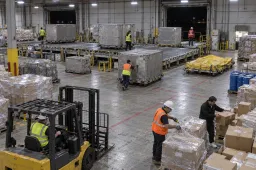
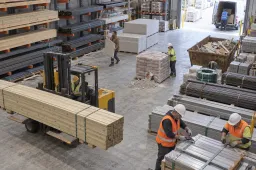
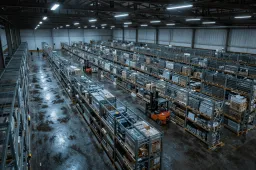
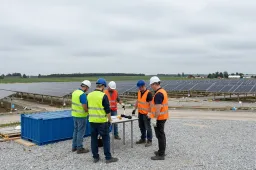
Ultralytics Construction-PPE, inşaat ve endüstriyel ortamlardaki insanları, forkliftleri, kişisel koruyucu ekipmanları ve gözle görülebilen eksik ekipmanları kapsayan, 1.000 görüntü, 14.863 sınırlayıcı kutu ve 12 sınıftan oluşan özgün bir nesne tespiti veri kümesidir.
Veri kümesi Kasım 2026'da Ultralytics ekibi tarafından oluşturulup açık kaynak olarak yayımlandı. Veri kümesi, insanlar tarafından toplanan ve oluşturulan görüntüleri bir araya getiriyor; uzmanlar tarafından yapılan insan etiketlemesi ve yapay zekâ destekli otomatik etiketleme Kasım 2026'da Ultralytics ekibi tarafından tamamlandı. Görüntüler ve etiketler Creative Commons Atıf 4.0 Uluslararası (CC BY 4.0) lisansı altında yayımlanıyor.
Görüntülere ve açıklamalara göz atmak, veri kümesini kopyalamak veya bir model eğitmek için Ultralytics Platform'da Construction-PPE'yi keşfet.
Görüntüler ve Etiketleme#
Görüntüler inşaat sahalarını, atölyeleri, depoları, yükleme alanlarını ve bakım çalışmalarını kapsıyor. Farklı bakış açıları, aydınlatma koşulları, çalışan düzenleri, koruyucu ekipmanlar ve forklift faaliyetleri içeriyor.
Görüntüler, farklı çözünürlüklerde yatay, dikey ve kare kompozisyonlardan oluşuyor.
Etiketlerde Ultralytics YOLO biçiminde sınırlayıcı kutular kullanılır. Ekipman sınıfları görünür öğeleri belirtir; eksik ekipman sınıfları ise ekipman bulunmadığında buna karşılık gelen görünür vücut bölgesini belirtir. Bir vücut bölümünün kapalı olması veya kadraj dışında kalması tek başına ekipmanın eksik olduğunu göstermez.
Veri Kümesi Yapısı#
Veri kümesinde sabit bir %80/%20 eğitim/doğrulama bölünmesi vardır:
| Bölüm | Görüntüler | Amaç |
|---|---|---|
| Eğit | 800 | Model eğitimi |
| Doğrulama | 200 | Geliştirme sırasında değerlendirme |
| Toplam | 1,000 |
Ayrı bir test bölümü yoktur. Özellikle gerçek kamera görüntülerindeki performansı değerlendirirken, nihai değerlendirme için hedef dağıtım ortamından bağımsız görüntüler kullan.
Sınıflar#
Aşağıdaki sınıf kimlikleri, veri kümesi etiketleriyle ve construction-ppe.yaml ile eşleşir:
| Kimlik | Sınıf | Hedef |
|---|---|---|
| 0 | helmet | Koruyucu kask veya baret |
| 1 | gloves | İş eldivenleri |
| 2 | vest | Yüksek görünürlüklü güvenlik yeleği, ceketi veya gömleği |
| 3 | boots | Koruyucu iş botları veya iş ayakkabıları |
| 4 | goggles | Koruyucu gözlük |
| 5 | Person | Kişi |
| 6 | no_helmet | Kasksız, görünür baş |
| 7 | no_goggle | Koruyucu gözlük olmadan görünür göz bölgesi |
| 8 | no_gloves | Eldivensiz, görünür el |
| 9 | no_boots | Koruyucu iş ayakkabısı olmadan görünür ayak veya ayakkabı |
| 10 | forklift | Forklift |
| 11 | no_vest | Yüksek görünürlüklü güvenlik giysisi olmadan görünür gövde |
Veri Kümesi YAML Dosyası#
Veri kümesi yapılandırması görüntü yollarını, sınıf sırasını ve indirme URL'sini tanımlar:
# Ultralytics 🚀 AGPL-3.0 License - https://ultralytics.com/license

# Ultralytics Construction-PPE dataset, November 2026, CC BY 4.0
# Documentation: https://docs.ultralytics.com/datasets/detect/construction-ppe
# Example usage: yolo train data=construction-ppe.yaml
# parent
# ├── ultralytics
# └── datasets
#     └── construction-ppe ← downloads here

# Train/val/test sets as 1) dir: path/to/imgs, 2) file: path/to/imgs.txt, or 3) list: [path/to/imgs1, path/to/imgs2, ..]
path: construction-ppe # dataset root dir
train: images/train # train images (relative to 'path') 800 images
val: images/val # val images (relative to 'path') 200 images

# Classes
names:
  0: helmet
  1: gloves
  2: vest
  3: boots
  4: goggles
  5: Person
  6: no_helmet
  7: no_goggle
  8: no_gloves
  9: no_boots
  10: forklift
  11: no_vest

# Download script/URL (optional)
download: https://github.com/ultralytics/assets/releases/download/v0.0.0/construction-ppe.zip
Kasım 2026 veri kümesi arşivi, görüntüleri, YOLO etiketlerini, veri kümesi meta verilerini ve CC BY 4.0 lisansını içeriyor. Arşiv construction-ppe dizinine çıkarılır.
Kullanım#
Ultralytics paketini yükle veya güncelle, ardından önceden eğitilmiş bir YOLO26 modelini eğit. YOLO, ilk kullanımda veri kümesini otomatik olarak indirip çıkarır.
from ultralytics import YOLO

model = YOLO("yolo26n.pt")
model.train(
    data="https://github.com/ultralytics/assets/releases/download/v0.0.0/construction-ppe.zip",
    epochs=100,
    imgsz=640,
)
Yapılandırma seçenekleri için eğitim kılavuzuna, eğitilmiş bir modeli değerlendirmek için doğrulama kılavuzuna bak. Construction-PPE not defteri Colab üzerinde adım adım bir uygulama sunar.
Uygulamalar#
- KKD algılama: kaskları, eldivenleri, yelekleri, botları ve koruyucu gözlükleri bul.
- Eksik ekipman algılama: inceleme için eksik KKD'nin görünür örneklerini belirle.
- İş sahası analizi: inşaat ve endüstriyel görüntülerdeki insanları ve forkliftleri algıla.
- Araştırma ve eğitim: İnsanlar tarafından toplanan ve oluşturulan görüntülerle modelleri karşılaştır ve eğitimi incele.
Lisans ve Atıf#
Veri kümesinin görüntüleri ve etiketleri Ultralytics tarafından CC BY 4.0 lisansı altında yayımlanmıştır; bu lisans, atıfta bulunulması koşuluyla ticari kullanım da dâhil olmak üzere paylaşım ve uyarlamaya izin verir. Ultralytics ekibini belirt, veri kümesine ve lisansa bağlantı ver ve yapılan değişiklikleri açıkla.
Önerilen atıf: Ultralytics Construction-PPE Veri Kümesi, Ultralytics ekibi, Kasım 2026, CC BY 4.0.
@dataset{Ultralytics_Construction_PPE_2026,
    author = "{Ultralytics team}",
    title = {Ultralytics Construction-PPE Dataset},
    month = {November},
    year = {2026},
    license = {CC-BY-4.0},
    url = {https://docs.ultralytics.com/datasets/detect/construction-ppe},
    publisher = {Ultralytics}
}


Yorumlar9
Bir soru sor, sonuçlarını paylaş veya başka birine yardım et.
panagiotamoraiti
Hello, may i ask what does the none class represents?
1Wally18796
It represents the missing of an item. I recommend not using the "no" classes and use the person bounding box to detect missing item. e.g if a helmet bounding box is missing inside a "person" bouding boxes. It's automatically "no helmet"
On Mon, 3 Aug 2026, 9:38 pm Panagiota Moraiti, @.***> wrote:
Hello, may i ask what does the none class represents?
— Reply to this email directly, view it on GitHub https://github.com/orgs/ultralytics/discussions/23364?email_source=notifications&email_token=A6BHGJNLIEEG3PDKZYO5CJD5IC5ZXA5CNFSNUABIM5UWIORPF5TWS5BNNB2WEL2ENFZWG5LTONUW63SDN5WW2ZLOOQXTCNZYHAZTEOBXUZZGKYLTN5XKOY3PNVWWK3TUUVSXMZLOOSWGM33PORSXEX3DNRUWG2Y#discussioncomment-17883287, or unsubscribe https://github.com/notifications/unsubscribe-auth/A6BHGJMNF5G3KG5GLTBGRH35IC5ZXAVCNFSNUABHKJSXA33TNF2G64TZHM2TGNJTGYYDINBVHNCGS43DOVZXG2LPNY5TSMZXGQZDINFBOYBA . You are receiving this because you commented.Message ID: @.*** com>
But what if the person is holding the helmet in their hand? With what you're proposing, the system won't raise an alert in that case, which isn't correct. The "No" classes exist for a reason in the dataset.
I think the None class means "no vest," though I'm not 100% sure. When I removed it, results got worse, so it's doing something useful.
 Glenn JocherUltralytics
You’re right that person–PPE association matters: a helmet merely inside a person box does not prove it is worn. However,
noneis a generic class and is not documented asno_vest; the Construction-PPE class list explicitly notes that no dedicated missing-vest class exists. Please keep questions and findings here so the Ultralytics team can clarify the source annotation semantics.
 Murat Raimbekov
hey @nhatminh-115, the numbers back up your observation, though i'd be careful about calling it a "problem" - some of this looks intentional given how construction sites actually look. i pulled the dataset and counted instances:
positive vs negative instances:
split positives negatives pos/neg ratio train 5410 1267 4.27 : 1 val 706 146 4.84 : 1 test 796 154 5.17 : 1 so yes, positives outnumber negatives roughly 4-5x in every split. but that ratio is actually close to what you'd see on real construction sites - most workers do wear ppe most of the time.
per-class breakdown (train):
class instances counterpart ratio helmet (0) 1341 no_helmet (7) -> 400 3.35 gloves (1) 1146 no_gloves (9) -> 442 2.59 boots (3) 1235 no_boots (10) -> 88 14.03 goggles (4) 419 no_goggle (8) -> 337 1.24 vest (2) 1269 no_vest does not exist - a few things worth understanding before treating these as bugs:
- no
no_vestclass: high-vis vests are essentially binary - they're either on or completely off, and they're very visible. ano_vestlabel would basically be "person box without overlapping vest box", which you can derive in post-processing without needing a dedicated class. - no_boots is rare (88 instances): boots are often occluded by trousers, dust, or camera angle, so annotators can't always confidently mark "missing boots". the rarity probably reflects what's actually verifiable in the imagery rather than an annotation gap.
co-occurrence in training images (1142 total):
- 900 contain only positive classes ("compliant" scenes)
- 184 contain only negative classes ("non-compliant" scenes)
- 56 contain both (~5%)
- 2 contain neither
the docs explicitly say the dataset "includes both compliant and non-compliant cases", which matches what we see - scenes tend to be one or the other, not heavily mixed.
if your specific use case needs better recall on the
no_*classes, the data distribution does work against you. some things that help:- class weighting or focal loss to compensate for imbalance
- oversampling images containing negative-class instances
- aggressive augmentation on rare classes (especially
no_boots) - derive "missing PPE" rules in post-processing: detect
Personboxes, then check for overlappinghelmet/gloves/boots/vest, infer missing items from absence. this scales better with limited neg examples
so: the imbalance is real, the data behaves as you described, but a lot of it is consistent with how the dataset is designed rather than an annotation defect.
- no
nhatminh-115
I think this dataset has a huge problem of partial annotation and prior distribution. It works great on the Positive but kinda bad on Neg. Can anyone confirm on this or is it just me?
Waqas7717
# Train/val/test sets as 1) dir: path/to/imgs, 2) file: path/to/imgs.txt, or 3) list: [path/to/imgs1, path/to/imgs2, ..]
path: construction-ppe # dataset root dir
train: images/train # train images (relative to 'path') 1132 images
val: images/val # val images (relative to 'path') 143 images
test: images/test # test images (relative to 'path') 141 images
1,132 images for training really isn’t enough for anything close to a real-world setup. Most of these images are close-up shots of people clearly posing in helmets and vests. That’s not how this would work in practice. In a real deployment, you’re dealing with CCTV cameras fixed angles, wide shots, bad lighting, blur, occlusion, and workers far from the camera. I’ve spent the last year banging my head against the wall just trying to get models to cross 80% accuracy. This isn’t going to generalize. What’s actually needed is real CCTV footage of real workers on real sites not internet images of models wearing PPE.
Sir, have u found a solution or a better dataset? I'm trying to find one for my fyp sice you're saying it won't go up more than 80%, I don't wanna waste my time with it.
hungtrieu07
Sir, have u found a solution or a better dataset? I'm trying to find one for my fyp sice you're saying it won't go up more than 80%, I don't wanna waste my time with it.
Lots of company will private this dataset for their AI team to process, so we have zero chance to get it in high quality :( I'm also get into this problem.