Dataset Construction-PPE của Ultralytics
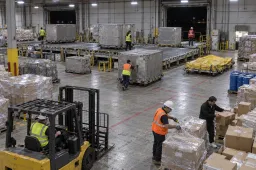
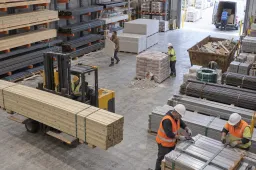
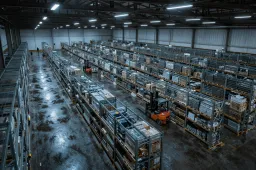
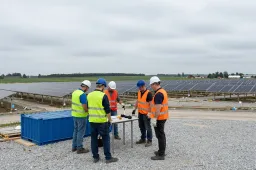
Ultralytics Construction-PPE là một bộ dữ liệu phát hiện đối tượng nguyên bản gồm 1.000 hình ảnh, 14.863 bounding box và 12 lớp, bao quát con người, xe nâng, thiết bị bảo hộ cá nhân và các thiết bị bảo hộ bị thiếu có thể nhìn thấy trong môi trường xây dựng và công nghiệp.
Bộ dữ liệu được nhóm Ultralytics tạo và công khai vào tháng 11 năm 2026. Bộ dữ liệu kết hợp hình ảnh do con người thu thập và hình ảnh được tạo, với chú thích do chuyên gia thực hiện và chú thích tự động bằng AI hoàn tất vào tháng 11 năm 2026 bởi nhóm Ultralytics. Hình ảnh và chú thích được phát hành theo giấy phép Ghi công Creative Commons Quốc tế 4.0 (CC BY 4.0).
Khám phá Construction-PPE trên Ultralytics Platform để duyệt hình ảnh và chú giải, sao chép dataset hoặc huấn luyện model.
Hình ảnh và chú giải#
Hình ảnh bao quát các công trường xây dựng, xưởng, nhà kho, khu vực bốc dỡ hàng và công việc bảo trì. Hình ảnh thể hiện nhiều góc nhìn, điều kiện ánh sáng, cách bố trí công nhân, thiết bị bảo hộ và hoạt động của xe nâng.
Hình ảnh có bố cục ngang, dọc và vuông với độ phân giải đa dạng.
Chú giải sử dụng bounding box theo định dạng Ultralytics YOLO. Các class thiết bị xác định những vật dụng có thể nhìn thấy; các class thiết bị bị thiếu xác định vùng cơ thể tương ứng có thể nhìn thấy khi không có thiết bị. Bộ phận cơ thể bị che khuất hoặc nằm ngoài khung hình không đủ để kết luận rằng thiết bị bị thiếu.
Cấu trúc dataset#
Dataset có phân chia train/validation cố định theo tỷ lệ 80/20:
| Tập dữ liệu | Hình ảnh | Mục đích |
|---|---|---|
| Huấn luyện | 800 | Huấn luyện model |
| Validation | 200 | Đánh giá trong quá trình phát triển |
| Tổng | 1,000 |
Không có tập test riêng. Hãy sử dụng hình ảnh độc lập từ môi trường triển khai dự kiến để đánh giá cuối cùng, đặc biệt khi đánh giá hiệu suất trên cảnh quay thực tế từ camera.
Các lớp#
Các class ID bên dưới khớp với chú giải của dataset và construction-ppe.yaml:
| ID | Class | Đích |
|---|---|---|
| 0 | helmet | Mũ bảo hộ hoặc mũ cứng |
| 1 | gloves | Găng tay bảo hộ lao động |
| 2 | vest | Áo ghi-lê, áo khoác hoặc áo sơ mi an toàn có độ phản quang cao |
| 3 | boots | Ủng bảo hộ lao động hoặc giày bảo hộ lao động |
| 4 | goggles | Kính bảo hộ |
| 5 | Person | Người |
| 6 | no_helmet | Đầu có thể nhìn thấy nhưng không đội mũ bảo hộ |
| 7 | no_goggle | Vùng mắt có thể nhìn thấy nhưng không đeo kính bảo hộ |
| 8 | no_gloves | Bàn tay có thể nhìn thấy nhưng không đeo găng |
| 9 | no_boots | Bàn chân hoặc giày dép có thể nhìn thấy nhưng không mang giày bảo hộ lao động |
| 10 | forklift | Xe nâng |
| 11 | no_vest | Thân mình có thể nhìn thấy nhưng không mặc trang phục an toàn có độ phản quang cao |
YAML của dataset#
Cấu hình dataset xác định đường dẫn hình ảnh, thứ tự class và URL tải xuống:
# Ultralytics 🚀 AGPL-3.0 License - https://ultralytics.com/license

# Ultralytics Construction-PPE dataset, November 2026, CC BY 4.0
# Documentation: https://docs.ultralytics.com/datasets/detect/construction-ppe
# Example usage: yolo train data=construction-ppe.yaml
# parent
# ├── ultralytics
# └── datasets
#     └── construction-ppe ← downloads here

# Train/val/test sets as 1) dir: path/to/imgs, 2) file: path/to/imgs.txt, or 3) list: [path/to/imgs1, path/to/imgs2, ..]
path: construction-ppe # dataset root dir
train: images/train # train images (relative to 'path') 800 images
val: images/val # val images (relative to 'path') 200 images

# Classes
names:
  0: helmet
  1: gloves
  2: vest
  3: boots
  4: goggles
  5: Person
  6: no_helmet
  7: no_goggle
  8: no_gloves
  9: no_boots
  10: forklift
  11: no_vest

# Download script/URL (optional)
download: https://github.com/ultralytics/assets/releases/download/v0.0.0/construction-ppe.zip
Kho lưu trữ bộ dữ liệu tháng 11 năm 2026 chứa hình ảnh, nhãn YOLO, metadata của bộ dữ liệu và giấy phép CC BY 4.0. Kho lưu trữ được giải nén vào construction-ppe.
Cách sử dụng#
Cài đặt hoặc cập nhật gói Ultralytics, sau đó huấn luyện một model YOLO26 đã được pretrained. YOLO tự động tải xuống và giải nén bộ dữ liệu trong lần sử dụng đầu tiên.
from ultralytics import YOLO

model = YOLO("yolo26n.pt")
model.train(
    data="https://github.com/ultralytics/assets/releases/download/v0.0.0/construction-ppe.zip",
    epochs=100,
    imgsz=640,
)
Xem hướng dẫn huấn luyện để biết các tùy chọn cấu hình và hướng dẫn validation để đánh giá model đã huấn luyện. Notebook Construction-PPE cung cấp hướng dẫn thực hành trên Colab.
Ứng dụng#
- Phát hiện PPE: xác định mũ bảo hộ, găng tay, áo ghi-lê, ủng và kính bảo hộ.
- Phát hiện thiết bị bị thiếu: xác định các trường hợp PPE bị thiếu có thể nhìn thấy để xem xét.
- Phân tích công trường: phát hiện người và xe nâng trong hình ảnh xây dựng và công nghiệp.
- Nghiên cứu và giáo dục: so sánh các model và tìm hiểu quá trình huấn luyện với hình ảnh do con người thu thập và hình ảnh được tạo.
Giấy phép và ghi nhận tác giả#
Hình ảnh và chú giải của dataset được Ultralytics phát hành theo CC BY 4.0, cho phép chia sẻ và điều chỉnh, kể cả sử dụng cho mục đích thương mại, với điều kiện ghi công. Hãy ghi công đội ngũ Ultralytics, liên kết đến dataset và giấy phép, đồng thời nêu rõ mọi thay đổi.
Gợi ý ghi công: Dataset Ultralytics Construction-PPE, đội ngũ Ultralytics, tháng 11 năm 2026, CC BY 4.0.
@dataset{Ultralytics_Construction_PPE_2026,
    author = "{Ultralytics team}",
    title = {Ultralytics Construction-PPE Dataset},
    month = {November},
    year = {2026},
    license = {CC-BY-4.0},
    url = {https://docs.ultralytics.com/datasets/detect/construction-ppe},
    publisher = {Ultralytics}
}


Bình luận9
Đặt câu hỏi, chia sẻ kết quả hoặc giúp đỡ người khác.
panagiotamoraiti
Hello, may i ask what does the none class represents?
1Wally18796
It represents the missing of an item. I recommend not using the "no" classes and use the person bounding box to detect missing item. e.g if a helmet bounding box is missing inside a "person" bouding boxes. It's automatically "no helmet"
On Mon, 3 Aug 2026, 9:38 pm Panagiota Moraiti, @.***> wrote:
Hello, may i ask what does the none class represents?
— Reply to this email directly, view it on GitHub https://github.com/orgs/ultralytics/discussions/23364?email_source=notifications&email_token=A6BHGJNLIEEG3PDKZYO5CJD5IC5ZXA5CNFSNUABIM5UWIORPF5TWS5BNNB2WEL2ENFZWG5LTONUW63SDN5WW2ZLOOQXTCNZYHAZTEOBXUZZGKYLTN5XKOY3PNVWWK3TUUVSXMZLOOSWGM33PORSXEX3DNRUWG2Y#discussioncomment-17883287, or unsubscribe https://github.com/notifications/unsubscribe-auth/A6BHGJMNF5G3KG5GLTBGRH35IC5ZXAVCNFSNUABHKJSXA33TNF2G64TZHM2TGNJTGYYDINBVHNCGS43DOVZXG2LPNY5TSMZXGQZDINFBOYBA . You are receiving this because you commented.Message ID: @.*** com>
But what if the person is holding the helmet in their hand? With what you're proposing, the system won't raise an alert in that case, which isn't correct. The "No" classes exist for a reason in the dataset.
I think the None class means "no vest," though I'm not 100% sure. When I removed it, results got worse, so it's doing something useful.
 Glenn JocherUltralytics
You’re right that person–PPE association matters: a helmet merely inside a person box does not prove it is worn. However,
noneis a generic class and is not documented asno_vest; the Construction-PPE class list explicitly notes that no dedicated missing-vest class exists. Please keep questions and findings here so the Ultralytics team can clarify the source annotation semantics.
 Murat Raimbekov
hey @nhatminh-115, the numbers back up your observation, though i'd be careful about calling it a "problem" - some of this looks intentional given how construction sites actually look. i pulled the dataset and counted instances:
positive vs negative instances:
split positives negatives pos/neg ratio train 5410 1267 4.27 : 1 val 706 146 4.84 : 1 test 796 154 5.17 : 1 so yes, positives outnumber negatives roughly 4-5x in every split. but that ratio is actually close to what you'd see on real construction sites - most workers do wear ppe most of the time.
per-class breakdown (train):
class instances counterpart ratio helmet (0) 1341 no_helmet (7) -> 400 3.35 gloves (1) 1146 no_gloves (9) -> 442 2.59 boots (3) 1235 no_boots (10) -> 88 14.03 goggles (4) 419 no_goggle (8) -> 337 1.24 vest (2) 1269 no_vest does not exist - a few things worth understanding before treating these as bugs:
- no
no_vestclass: high-vis vests are essentially binary - they're either on or completely off, and they're very visible. ano_vestlabel would basically be "person box without overlapping vest box", which you can derive in post-processing without needing a dedicated class. - no_boots is rare (88 instances): boots are often occluded by trousers, dust, or camera angle, so annotators can't always confidently mark "missing boots". the rarity probably reflects what's actually verifiable in the imagery rather than an annotation gap.
co-occurrence in training images (1142 total):
- 900 contain only positive classes ("compliant" scenes)
- 184 contain only negative classes ("non-compliant" scenes)
- 56 contain both (~5%)
- 2 contain neither
the docs explicitly say the dataset "includes both compliant and non-compliant cases", which matches what we see - scenes tend to be one or the other, not heavily mixed.
if your specific use case needs better recall on the
no_*classes, the data distribution does work against you. some things that help:- class weighting or focal loss to compensate for imbalance
- oversampling images containing negative-class instances
- aggressive augmentation on rare classes (especially
no_boots) - derive "missing PPE" rules in post-processing: detect
Personboxes, then check for overlappinghelmet/gloves/boots/vest, infer missing items from absence. this scales better with limited neg examples
so: the imbalance is real, the data behaves as you described, but a lot of it is consistent with how the dataset is designed rather than an annotation defect.
- no
nhatminh-115
I think this dataset has a huge problem of partial annotation and prior distribution. It works great on the Positive but kinda bad on Neg. Can anyone confirm on this or is it just me?
Waqas7717
# Train/val/test sets as 1) dir: path/to/imgs, 2) file: path/to/imgs.txt, or 3) list: [path/to/imgs1, path/to/imgs2, ..]
path: construction-ppe # dataset root dir
train: images/train # train images (relative to 'path') 1132 images
val: images/val # val images (relative to 'path') 143 images
test: images/test # test images (relative to 'path') 141 images
1,132 images for training really isn’t enough for anything close to a real-world setup. Most of these images are close-up shots of people clearly posing in helmets and vests. That’s not how this would work in practice. In a real deployment, you’re dealing with CCTV cameras fixed angles, wide shots, bad lighting, blur, occlusion, and workers far from the camera. I’ve spent the last year banging my head against the wall just trying to get models to cross 80% accuracy. This isn’t going to generalize. What’s actually needed is real CCTV footage of real workers on real sites not internet images of models wearing PPE.
Sir, have u found a solution or a better dataset? I'm trying to find one for my fyp sice you're saying it won't go up more than 80%, I don't wanna waste my time with it.
hungtrieu07
Sir, have u found a solution or a better dataset? I'm trying to find one for my fyp sice you're saying it won't go up more than 80%, I don't wanna waste my time with it.
Lots of company will private this dataset for their AI team to process, so we have zero chance to get it in high quality :( I'm also get into this problem.