Exportación de Sony IMX500 para Ultralytics YOLO11
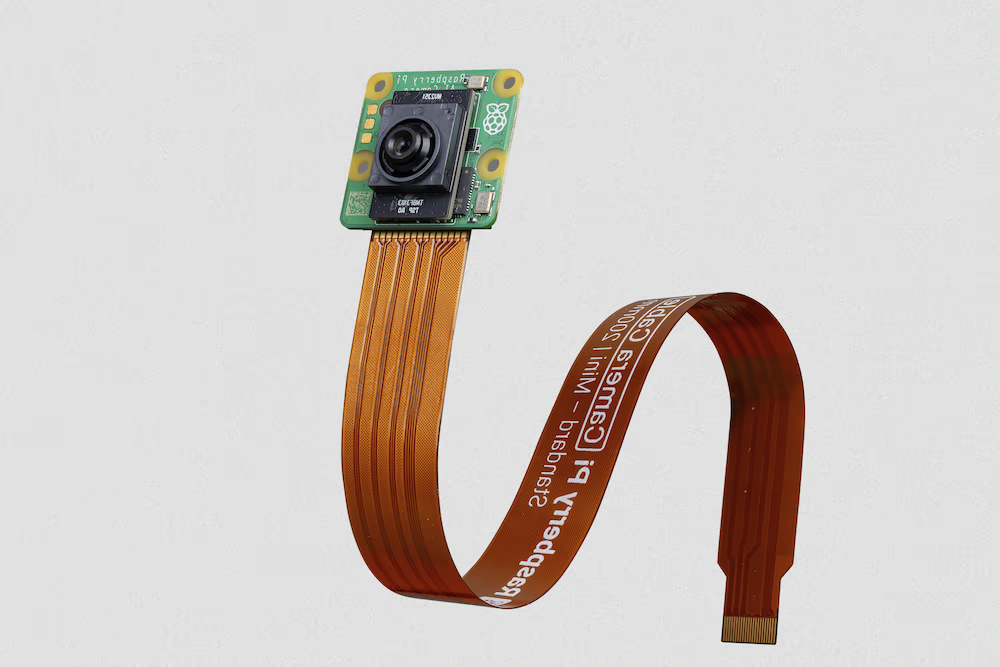
Esta guía explica cómo exportar e implementar los modelos Ultralytics YOLOv8n y YOLO11n en cámaras Raspberry Pi AI Camera que incorporan el sensor Sony IMX500.
Implementar modelos de visión artificial en dispositivos con poca potencia de cálculo, como la Raspberry Pi AI Camera, puede resultar complicado. Utilizar un formato de modelo optimizado para ofrecer un mayor rendimiento marca una gran diferencia.
El formato de modelo IMX500 está diseñado para consumir poca energía y ofrecer un alto rendimiento con redes neuronales. Permite optimizar tus modelos Ultralytics YOLO11 para realizar inferencias rápidas y de bajo consumo. Esta guía te explica cómo exportar tus modelos al formato IMX500 e implementarlos en la Raspberry Pi AI Camera.
¿Por qué deberías exportar a IMX500?#
El sensor de visión inteligente IMX500 de Sony ejecuta el procesamiento de IA en el propio sensor, lo que Sony describe como una primicia mundial para un sensor de visión inteligente. Ayuda a superar los desafíos habituales de la IA en el borde, como los cuellos de botella en el procesamiento de datos, los problemas de privacidad y las limitaciones de rendimiento. Mientras que los sensores convencionales solo transmiten imágenes y fotogramas, el IMX500 interpreta lo que captura, lo que permite a los dispositivos generar información útil en tiempo real.
Exportación de Sony IMX500 para modelos YOLO11#
El IMX500 está diseñado para procesar los datos directamente en el sensor, sin enviarlos a la nube para su procesamiento.
El IMX500 funciona con modelos cuantizados. La cuantización reduce el tamaño de los modelos y aumenta su velocidad sin apenas perder precisión. Se adapta a los recursos limitados de la computación en el borde y permite que las aplicaciones respondan rápidamente al reducir la latencia y procesar los datos en local, sin depender de la nube. El procesamiento local también mantiene los datos de los usuarios privados y seguros, ya que no se envían a un servidor remoto.
Características principales del IMX500:
- Salida de metadatos: En lugar de transmitir solo imágenes, el IMX500 puede generar tanto imágenes como metadatos (resultados de inferencia), y también puede generar únicamente metadatos para reducir el tamaño de los datos, el ancho de banda y los costes.
- Aborda las cuestiones de privacidad: al procesar los datos en el dispositivo, el IMX500 aborda las cuestiones de privacidad, por lo que resulta muy adecuado para aplicaciones centradas en las personas, como el recuento de personas y el seguimiento de la ocupación.
- Procesamiento en tiempo real: el procesamiento rápido en el sensor permite tomar decisiones en tiempo real para aplicaciones de IA en el borde, como los sistemas autónomos.
Antes de empezar: para obtener los mejores resultados, asegúrate de preparar bien tu modelo YOLO11 para la exportación siguiendo nuestra guía de entrenamiento de modelos, la descripción general de los conjuntos de datos y la guía de ajuste de hiperparámetros.
Tareas compatibles#
La exportación a IMX500 admite cuatro de las siete tareas de Ultralytics, y solo para YOLOv8n y YOLO11n: no se admiten otras familias de modelos, escalas ni arquitecturas, y al exportar un modelo de segmentación semántica, OBB o estimación de profundidad se produce un error.
| Tarea | YOLOv8 | YOLO11 | YOLO26 |
|---|---|---|---|
| Detectar | ✅ | ✅ | ❌ |
| Segmentar | ✅ | ✅ | ❌ |
| Semántica | ❌ | ❌ | ❌ |
| Profundidad | ❌ | ❌ | ❌ |
| Clasificar | ✅ | ✅ | ❌ |
| Pose | ✅ | ✅ | ❌ |
| OBB | ❌ | ❌ | ❌ |
Ejemplos de uso#
Exporta un modelo Ultralytics YOLO11 al formato IMX500 y ejecuta inferencias con el modelo exportado.
El formato IMX500 admite los modos Exportar, Predecir y Validar. La inferencia y la validación de Ultralytics ejecutan el model_imx.onnx exportado en la CPU del host.
En este caso, la inferencia solo sirve para confirmar que el modelo exportado funciona según lo previsto antes de implementarlo en la Raspberry Pi AI Camera.
from ultralytics import YOLO

# Carga un modelo YOLO11n PyTorch
model = YOLO("yolo11n.pt")

# Exporta el modelo
model.export(format="imx", data="coco8.yaml")  # exporta con cuantización PTQ de forma predeterminada

# Carga el modelo exportado
imx_model = YOLO("yolo11n_imx_model")

# Ejecutar inferencia
results = imx_model("https://ultralytics.com/images/bus.jpg")from ultralytics import YOLO
# Carga un modelo YOLO11n-pose PyTorch
model = YOLO("yolo11n-pose.pt")
# Exporta el modelo
model.export(format="imx", data="coco8-pose.yaml") # exporta con cuantización PTQ de forma predeterminada
# Carga el modelo exportado
imx_model = YOLO("yolo11n-pose_imx_model")
# Ejecutar inferencia
results = imx_model("https://ultralytics.com/images/bus.jpg")from ultralytics import YOLO
# Carga un modelo YOLO11n-cls PyTorch
model = YOLO("yolo11n-cls.pt")
# Exporta el modelo
model.export(format="imx", data="imagenet10") # exporta con cuantización PTQ de forma predeterminada
# Carga el modelo exportado
imx_model = YOLO("yolo11n-cls_imx_model")
# Ejecutar inferencia
results = imx_model("https://ultralytics.com/images/bus.jpg", imgsz=224)from ultralytics import YOLO
# Carga un modelo YOLO11n-seg PyTorch
model = YOLO("yolo11n-seg.pt")
# Exporta el modelo
model.export(format="imx", data="coco8-seg.yaml") # exporta con cuantización PTQ de forma predeterminada
# Carga el modelo exportado
imx_model = YOLO("yolo11n-seg_imx_model")
# Ejecutar inferencia
results = imx_model("https://ultralytics.com/images/bus.jpg")from ultralytics import YOLO
# Carga el modelo IMX500 exportado
model = YOLO("yolo11n_imx_model")
# Valida la precisión con el conjunto de datos COCO8
metrics = model.val(data="coco8.yaml")La exportación a IMX solo es compatible con Linux con Python 3.10–3.12 y requiere Java 17 o posterior. El paquete Ultralytics instala dependencias adicionales de exportación en tiempo de ejecución. La primera vez que ejecutes el comando de exportación, puede que tengas que reiniciar la consola para asegurarte de que funciona correctamente.
Argumentos de exportación#
| Argumento | Tipo | Predeterminado | Descripción |
|---|---|---|---|
format | str | 'imx' | Formato de destino del modelo exportado, que define su compatibilidad con distintos entornos de implementación. |
imgsz | int o tuple | 640 | Tamaño de imagen deseado para la entrada del modelo. Puede ser un número entero para imágenes cuadradas o una tupla (height, width) para dimensiones específicas. |
quantize | int o str | 8/auto | Precisión de cuantización. 8 (INT8/PTQ) es obligatorio y se activa automáticamente para IMX500. No se admite la exportación solo en FP32 ni FP16. Sustituye las opciones obsoletas half/int8. |
data | str | None | Ruta al archivo YAML del conjunto de datos, imprescindible para la cuantización; para la clasificación, se acepta un directorio de conjunto de datos o el nombre de un conjunto de datos integrado. Si se omite, Ultralytics selecciona el conjunto de datos de calibración predeterminado para la tarea del modelo. |
fraction | float, int o list | 1.0 | Subconjunto de calibración expresado como proporción, número de imágenes o proporciones/recuentos [train, val, test]. Las listas de dos elementos dejan completo test, mientras que 0 lo omite. |
nms | bool, opcional | None | Selecciona la salida sin procesar (None, predeterminada), NMS integrado (True) o el cabezal sin NMS (False). IMX requiere nms=True para detectar, segmentar y estimar poses, y lo selecciona automáticamente. |
device | str | None | Especifica el dispositivo para la exportación: GPU (device=0), CPU (device=cpu). |
Para obtener más información sobre el proceso de exportación, visita la página de documentación de Ultralytics sobre exportación.
El proceso de exportación crea un directorio llamado <model-name>_imx_model. Este directorio contiene model_imx.onnx para validar la cuantización y el archivo packerOut.zip, imprescindible para empaquetar el modelo e implementarlo en el hardware IMX500. Además, la carpeta <model-name>_imx_model contendrá un archivo de texto (labels.txt) con todas las etiquetas asociadas al modelo.
yolo11n_imx_model
├── dnnParams.xml
├── labels.txt
├── packerOut.zip
├── model_imx.onnx
├── model_imx_MemoryReport.json
└── model_imx.pbtxt
Uso de la exportación a IMX500 en el despliegue#
Tras exportar un modelo Ultralytics YOLO11n al formato IMX500, puedes implementarlo en la Raspberry Pi AI Camera para realizar inferencias.
Requisitos de hardware#
Asegúrate de disponer del siguiente hardware:
- Raspberry Pi 5 o Raspberry Pi 4 Model B
- Cámara AI de Raspberry Pi
Conecta la Raspberry Pi AI Camera al conector MIPI CSI de 15 pines de la Raspberry Pi y enciende la Raspberry Pi.
Requisitos de software#
Esta guía se ha probado con Raspberry Pi OS Bookworm en una Raspberry Pi 5.
Paso 1: Abre una ventana de terminal y ejecuta los siguientes comandos para actualizar el software de Raspberry Pi a la versión más reciente.
sudo apt update && sudo apt full-upgradePaso 2: Instala el firmware IMX500 necesario para utilizar el sensor IMX500.
sudo apt install imx500-allPaso 3: Reinicia la Raspberry Pi para que se apliquen los cambios.
sudo rebootPaso 4: Instala la biblioteca de módulos de aplicación AITRIOS para Raspberry Pi
pip install git+https://github.com/SonySemiconductorSolutions/aitrios-rpi-application-module-library.gitPaso 5: Ejecuta la detección de objetos, la estimación de pose, la clasificación y la segmentación con YOLO11 mediante los siguientes scripts, disponibles en los ejemplos de la biblioteca de módulos de aplicación de aitrios-rpi.
Asegúrate de sustituir los directorios model_file y labels.txt según tu entorno antes de ejecutar estos scripts.
import numpy as np
from modlib.apps import Annotator
from modlib.devices import AiCamera
from modlib.models import COLOR_FORMAT, MODEL_TYPE, Model
from modlib.models.post_processors import pp_od_yolo_ultralytics

class YOLO(Model):
    """YOLO model for IMX500 deployment."""

    def __init__(self):
        """Initialize the YOLO model for IMX500 deployment."""
        super().__init__(
            model_file="yolo11n_imx_model/packerOut.zip",  # replace with proper directory
            model_type=MODEL_TYPE.CONVERTED,
            color_format=COLOR_FORMAT.RGB,
            preserve_aspect_ratio=False,
        )

        self.labels = np.genfromtxt(
            "yolo11n_imx_model/labels.txt",  # replace with proper directory
            dtype=str,
            delimiter="\n",
        )

    def post_process(self, output_tensors):
        """Post-process the output tensors for object detection."""
        return pp_od_yolo_ultralytics(output_tensors)

device = AiCamera(frame_rate=16)  # Optimal frame rate for maximum FPS of the YOLO model running on the AI Camera
model = YOLO()
device.deploy(model)

annotator = Annotator()

with device as stream:
    for frame in stream:
        detections = frame.detections[frame.detections.confidence > 0.55]
        labels = [f"{model.labels[class_id]}: {score:0.2f}" for _, score, class_id, _ in detections]

        annotator.annotate_boxes(frame, detections, labels=labels, alpha=0.3, corner_radius=10)
        frame.display()
Pruebas de rendimiento#
Las pruebas de YOLOv8n, YOLO11n, YOLOv8n-pose, YOLO11n-pose, YOLOv8n-cls y YOLO11n-cls que se muestran a continuación las realizó el equipo de Ultralytics en Raspberry Pi AI Camera con el formato de modelo imx, midiendo la velocidad y la precisión.
| Modelo | Formato | Tamaño (píxeles) | Tamaño de packerOut.zip (MB) | mAP50-95(B) | Tiempo de inferencia (ms/im) |
|---|---|---|---|---|---|
| YOLOv8n | imx | 640 | 2.1 | 0.470 | 58.79 |
| YOLO11n | imx | 640 | 2.2 | 0.517 | 58.82 |
| YOLOv8n-pose | imx | 640 | 2.0 | 0.687 | 58.79 |
| YOLO11n-pose | imx | 640 | 2.1 | 0.788 | 62.50 |
| Modelo | Formato | Tamaño (píxeles) | Tamaño de packerOut.zip (MB) | precisión (top1) | precisión (top5) | Tiempo de inferencia (ms/im) |
|---|---|---|---|---|---|---|
| YOLOv8n-cls | imx | 224 | 2.3 | 0.25 | 0.5 | 33.31 |
| YOLO11n-cls | imx | 224 | 2.3 | 0.25 | 0.417 | 33.31 |
La validación de las pruebas de rendimiento anteriores se realizó con el conjunto de datos COCO128 para modelos de detección, el conjunto de datos COCO8-Pose para modelos de estimación de pose y ImageNet10 para modelos de clasificación.
¿Qué hay entre bastidores?#

Kit de herramientas de compresión de modelos de Sony (MCT)#
El kit de herramientas de compresión de modelos (MCT) de Sony permite optimizar modelos de aprendizaje profundo mediante cuantización y poda. Admite varios métodos de cuantización e incluye algoritmos avanzados para reducir el tamaño y la complejidad computacional de los modelos sin sacrificar demasiada precisión. MCT resulta especialmente útil para implementar modelos en dispositivos con recursos limitados, ya que permite realizar inferencias de forma eficiente y reducir la latencia.
Funciones compatibles con MCT#
MCT de Sony ofrece una serie de funciones diseñadas para optimizar modelos de redes neuronales:
- Optimizaciones del grafo: transforma los modelos en versiones más eficientes plegando capas como la normalización por lotes en las capas anteriores.
- Búsqueda de parámetros de cuantización: minimiza el ruido de cuantización mediante métricas como el error cuadrático medio, la ausencia de recorte y el error medio absoluto.
- Algoritmos avanzados de cuantización:
- Corrección de desplazamiento negativo: aborda los problemas de rendimiento derivados de la cuantización simétrica de activaciones.
- Filtrado de valores atípicos: utiliza la puntuación z para detectar y eliminar valores atípicos.
- Agrupamiento: utiliza rejillas de cuantización no uniforme para lograr una mejor correspondencia de distribuciones.
- Búsqueda de precisión mixta: asigna distintos anchos de bits de cuantización a cada capa según su sensibilidad.
- Visualización: utiliza TensorBoard para observar información sobre el rendimiento del modelo, las fases de cuantización y las configuraciones de ancho de bits.
Cuantización#
MCT admite varios métodos de cuantización para reducir el tamaño del modelo y mejorar la velocidad de inferencia:
- Cuantización posterior al entrenamiento (PTQ):
- Disponible mediante las API de Keras y PyTorch.
- Complejidad: baja
- Coste computacional: bajo (minutos de CPU)
- Cuantización posterior al entrenamiento basada en gradientes (GPTQ):
- Disponible mediante las API de Keras y PyTorch.
- Complejidad: media
- Coste computacional: moderado (2-3 horas de GPU)
- Entrenamiento consciente de la cuantización (QAT):
- Complejidad: alta
- Coste computacional: alto (12-36 horas de GPU)
MCT también admite varios esquemas de cuantización para los pesos y las activaciones:
- Potencia de dos (compatible con el hardware)
- Simétrica
- Uniforme
Poda estructurada#
MCT incorpora la poda de modelos estructurada y adaptada al hardware, diseñada para arquitecturas de hardware específicas. Esta técnica aprovecha las capacidades de instrucción única y datos múltiples (SIMD) de la plataforma de destino mediante la poda de grupos SIMD. Así se reduce el tamaño y la complejidad del modelo y se optimiza el uso de los canales, en consonancia con la arquitectura SIMD para aprovechar los recursos de memoria asignados a los pesos. Disponible a través de las API de Keras y PyTorch.
Herramienta de conversión IMX500 (compilador)#
La herramienta de conversión IMX500 es una parte esencial del conjunto de herramientas IMX500 y permite compilar modelos para implementarlos en el sensor IMX500 de Sony (por ejemplo, en cámaras Raspberry Pi AI Camera). Compila modelos Ultralytics YOLO11 cuantizados en un formato que se ejecuta de forma eficiente en el hardware de destino. Tras la cuantización, la exportación genera archivos binarios con los datos del modelo y la configuración específica del dispositivo necesarios para implementarlo en la Raspberry Pi AI Camera.
Casos de uso reales#
La exportación al formato IMX500 tiene amplias aplicaciones en distintos sectores. Estos son algunos ejemplos:
- IA en el borde e IoT: habilita la detección de objetos en drones o cámaras de seguridad, donde es esencial procesar datos en tiempo real en dispositivos de bajo consumo.
- Dispositivos ponibles: implementa modelos optimizados para el procesamiento de IA a pequeña escala en dispositivos ponibles de monitorización de la salud.
- Ciudades inteligentes: utiliza modelos YOLO11 exportados a IMX500 para supervisar el tráfico y analizar la seguridad con un procesamiento más rápido y una latencia mínima.
- Analítica para el comercio minorista: mejora la supervisión en tienda mediante la implementación de modelos optimizados en sistemas de punto de venta o estanterías inteligentes.
Conclusión#
Exportar modelos Ultralytics YOLO11 al formato IMX500 de Sony permite implementarlos para realizar inferencias de forma eficiente en cámaras basadas en IMX500. La cuantización reduce el tamaño del modelo y mejora la velocidad de inferencia con una pérdida mínima de precisión.
Para obtener más información y consultar directrices detalladas, visita el sitio web de IMX500 de Sony.
Preguntas frecuentes#
Para exportar un modelo YOLO11 al formato IMX500, utiliza la API de Python o el comando CLI:
from ultralytics import YOLO

model = YOLO("yolo11n.pt")
model.export(format="imx")  # Exporta con cuantización PTQ de forma predeterminada
El proceso de exportación creará un directorio con los archivos necesarios para la implementación, incluido
packerOut.zip.El formato IMX500 ofrece varias ventajas importantes para la implementación en el borde:
- El procesamiento de IA en el chip reduce la latencia y el consumo energético
- Genera tanto la imagen como los metadatos (resultado de la inferencia), en lugar de generar solo imágenes
- Mejora la privacidad al procesar los datos localmente, sin depender de la nube
- Capacidad de procesamiento en tiempo real, ideal para aplicaciones sensibles al tiempo
- Cuantización optimizada para implementar modelos de forma eficiente en dispositivos con recursos limitados
Para implementar modelos IMX500, necesitarás:
Hardware:
- Raspberry Pi 5 o Raspberry Pi 4 Model B
- Raspberry Pi AI Camera con sensor IMX500
Software:
- Raspberry Pi OS Bookworm
- Firmware y herramientas IMX500 (
sudo apt install imx500-all)
Según las pruebas de rendimiento de Ultralytics en Raspberry Pi AI Camera:
- YOLO11n alcanza un tiempo de inferencia de 58.82 ms por imagen
- mAP50-95 de 0.517 en el conjunto de datos COCO128
- Tamaño del modelo de solo 2.2 MB tras la cuantización
Esto demuestra que el formato IMX500 ofrece una inferencia eficiente en tiempo real y mantiene una buena precisión en aplicaciones de IA en el borde.


Comentarios86
Haz una pregunta, comparte tus resultados o ayuda a otra persona.
 Chad Walsh
where is the best place to get support on the IMX500. I am running into multiple issues: i. my first yolo11n model built fine and exported to imx500, no problem, but my second model with a LOT more training images build fine but crashed the imx500 export. ii. the output of the imx500 during inference is giving a lot of none outputs between solid recognitions. it seems like there is something interfering with or disrupting the inference outputs (e.g., good output, none, none, none, none, good output, ...). where is the best place to get help with these issues?
 Glenn JocherUltralytics
Please continue the discussion here so the Ultralytics team can help; for the export crash, share the exact export command, full text traceback, and output from
yolo checks, and for intermittentNoneresults include a minimal inference script, confidence threshold, and a short reproducible input sample. Note that IMX export uses the calibration dataset specified bydataand defaults to the full dataset, so testing a smallerfractionmay help isolate resource-related failures.
leeprevost
I've made considerable progress by moving conducting this model compression process with a Container using dtcooper/raspberrypi-os:python3.11 after considerable problems with dependencies. Now getting a container most of the way through the process of compressing my yolov11s model and its trained best.pt weights.
At the end of the process - I get a simple "killed" after the Calculation of quantization parameters step. I see memory spiking close to 100% on top and think I'm hitting OOM with my pi4 8gb.
root@a5e132f6b333:/app# yolo export model=./models/yolov11/best.pt data='Billfish-Breeds-1/data.yaml' format=imx verbos>
Ultralytics 8.3.221 🚀 Python-3.11.14 torch-2.9.0+cpu CPU (aarch64)
WARNING ⚠️ IMX export requires nms=True, setting nms=True.
YOLO11s summary (fused): 100 layers, 9,413,187 parameters, 0 gradients, 21.3 GFLOPs

PyTorch: starting from 'models/yolov11/best.pt' with input shape (1, 3, 640, 640) BCHW and output shape(s) ((1, 8400, 4>
IMX: collecting INT8 calibration images from 'data=Billfish-Breeds-1/data.yaml'
Fast image access ✅ (ping: 0.1±0.0 ms, read: 16.1±2.7 MB/s, size: 16.4 KB)
Scanning /app/Billfish-Breeds-1/valid/labels.cache... 268 images, 0 backgrounds, 0 corrupt: 100% ━━━━━━━━━━━━ 268/268 1>
WARNING ⚠️ IMX: >300 images recommended for INT8 calibration, found 268 images.

IMX: starting export with model_compression_toolkit 2.4.4...
representative_data_gen generates a batch size of 1 which can be slow for optimization: consider increasing the batch s>
WARNING:Model Compression Toolkit:OperatorSetNames.DEPTHWISE_CONV is not in model.
Statistics Collection: 268it [1:01:26, 13.76s/it]
Calculating quantization parameters: 100%|█████████████████████████████████████████████████████| 294/294 [12:44<00:00, >
Killed
Would appreciate any suggestion around this but think it probably pushes me over the edge to order my pi5? Or do I try to train on the yolov8 or yolov11n? I've not had very good success with the nano models. I've convinced myself the tradeoffs to the small is well worth it but that may be incompatible with this process?
@glenn-jocher am I posting at the right place? Put this in issues on gh?
- Glenn JocherUltralytics
@leeprevost you’re in the right place for discussion, but the OOM during IMX export is a new issue—please open a new issue for visibility. In the issue, include: the exact export command and full log,
yolo checksoutput (orultralytics.utils.checks.collect_system_info()), Java version (java --version), and the versions of IMX toolchain (pip freeze | grep -E "imx500|model-compression|sony-custom"). As immediate workarounds: export on a Linux x86_64 machine with more RAM, target YOLO11n/YOLOv8n (the IMX path is tuned for “n” models), and reduce calibration load withfraction(e.g., 0.25). Example:yolo export model=best.pt format=imx data=your.yaml imgsz=640 fraction=0.25IMX-specific knobs are summarized in the IMX500 export arguments here: Sony IMX500 export guide – Export arguments, and the exporter function requirements here: export_imx reference.
Thank you. I'll dig into the logs and see if I can add anything before opening new issue.
a few more questions and I will open an issue:
- Note that I was using a model trained on yolov11s rather than n as I've seen large degradation in the number of false positives in my model.
- I assume by "full log" you mean the output from the yolo export command with verbose at default (true). In other words, what I posted above?
- For some reason, I thought I read int he docs that i had to perform the model compression on the target machine. for me, the ultimate target is RpiZero2 but no way the model will export on that footprint . so, I went to the largest pi I have which is a Rpi4 -- that resulted in the OOM. So, am unsure by your guidance pointing me to the larger x86 linux machine. How will the process know the device limits if I perform it on that?
Trying to read these guides as best I can. I have not spent much time on the Sony site yet. If you'll point me, I don't want to start an issue that isn't an issue.
I opened an issue: https://github.com/ultralytics/ultralytics/issues/22512
Just tried the export again with the fraction=0.25 argument and got to "Optimal Solution Found" with objective measure of 0.94, then died with error:
Error x IMX: export failure 12662.7s: No module named 'onnxscript'
https://github.com/pytorch/pytorch/issues/166352 -- adding to my requirements.txt pointed to by Containerfile.
- Glenn JocherUltralytics(editado)
@leeprevost great progress. IMX export/quantization does not need to run on the target; it cross-compiles for IMX500, so doing it on a larger Linux host is recommended. “Full log” means the complete stdout/stderr from the export run.
The “No module named 'onnxscript'” failure is a missing dependency. Current Ultralytics installs the IMX toolchain (including
imx500-converterandmodel-compression-toolkit) itself, so upgrade withpip install -U ultralyticsand re-run the export rather than pinning old versions by hand. Let’s continue the deep-dive in the issue you opened for traceability. Ok -- @glenn-jocher: am moving this to my opened issue. Still trying this on my pi4 but can move to my dev machine with plenty of RAM + Cuda. Got further but still died with a torch error -- will post there.
- Glenn JocherUltralytics
Thanks—let’s continue in the issue for traceability. On the larger Linux host, try GPU-assisted export to reduce RAM pressure and speed up calibration; if needed, temporarily lower
imgszto validate the pipeline:yolo export model=path/to/best.pt format=imx data=path/to/data.yaml device=0 imgsz=640 # if memory is still tight during calibration yolo export model=path/to/best.pt format=imx data=path/to/data.yaml device=0 imgsz=512For a concise list of export options and behavior, see the Export mode docs at Ultralytics YOLO — Export.
Much thanks for posting this guide. Thank you.
I am having very solid success running the standard detection models right out of the box on the RpiZero 2 which is my target platform. I'm actually amazed at the power draw (ran detection/streaming for about 175 minutes on a 4400mahr battery using about 60% of its capacity). Also, very solid top/htop scores showing less than 1/8 of CPU utilization. Memory is still such a problem on a rpiz2 but not any more so than what is being used with streaming only on the pi. Still have about 50% of memory left over as I recall. I've got screen shots of top screens if needed.
But, I need to get a trained model working on my RpiZ2 and am running into problems. As the guide seemed to indicate (or perhaps Sony's), I need to do most of the quantization on my target platform. I assumed that meant my zero. I have a very good model trained with yolov11m or large. I've tried to reduce that to a nano but I'm getting too much loss of MAP scores and too much false positive rates. So, am now trying to get a yolov11s to work. On my quantization process (it was not clear how to do this with a custom model) but am first loading the yolov11s.pt and then loading my best.pt on top of that. Ultralytics successfully loads my data, gives me a warning prompt about my 290 images (< 300 not ideal) and then another about processing speed with 1 batch. The program then goes off the rails with no UI messages. I assume I'm running out of memory on the piz2. So, my next steps seem to be either:
- Start over and try with nano model.
- Do my quantization on a larger pi (i've got a spare pi4).
I guess another option would be to spend more time understanding Sony's under the hood tools to optimize those settings?
Would appreciate some guidance here down the right path.
One thing that would be very helpful is to show how to do this on something other than the target platform. i'm trying to get a small detection model to run on a rpi zero2 and hate to have to download all of my training data to the zero to do the quantization.
Idea: Have a step that allows collection of the "target_platform_capabilities" information using Sony's model compression toolkit you are using under the hood, pickle it, and then use that object to drive the model compression on a larger machine.
I could probably dig in and try to follow your code and follow the "imx" part of your export process...
bohlebots
Wie schaffe ich es, dass das Modell im Speicher des IMX500 bleibt? Die PICAM wurde ja angepriesen mit der Aussage, dass sie selbst an einem Pi zero-2 mit gleicher Geschwindigkeit läuft und in der Tat, das täte sie, aber das Modell muss jedes Mal neu aufgeladen werden, und das dauert beim Pi Zero ewig, ja selbst mit einem Pi5 dauert es Minuten. Grundsätzlich muss die imx500 aber ein Modell auch bei ausgeschaltetem Strom im Speicher halten können, so dass nach dem Anschalten das letzte Modell direkt zur Verfügung steht. Wie bekomme ich das hin?
Gruß Roland
Teo-treny
Hello ! When running object detection (step 5), I get the following error :
Exception in thread Thread-2 (_process_requests_func):
Traceback (most recent call last):
  File "/home/pi/.pyenv/versions/3.11.9/lib/python3.11/threading.py", line 1045, in _bootstrap_inner
    self.run()
  File "/home/pi/.pyenv/versions/3.11.9/lib/python3.11/threading.py", line 982, in run
    self._target(*self._args, **self._kwargs)
  File "/home/pi/Desktop/imx_test/venv/lib/python3.11/site-packages/modlib/devices/ai_camera/ai_camera.py", line 193, in _process_requests_func
    callback()
  File "/home/pi/Desktop/imx_test/venv/lib/python3.11/site-packages/modlib/devices/ai_camera/ai_camera.py", line 207, in _process_requests
    self._parse_request(req)
  File "/home/pi/Desktop/imx_test/venv/lib/python3.11/site-packages/modlib/devices/ai_camera/ai_camera.py", line 256, in _parse_request
    detections = self.model.post_process(outputs)
                 ^^^^^^^^^^^^^^^^^^^^^^^^^^^^^^^^
  File "/home/pi/Desktop/imx_test/Test_1.py", line 23, in post_process
    return pp_od_yolo_ultralytics(output_tensors)
           ^^^^^^^^^^^^^^^^^^^^^^^^^^^^^^^^^^^^^^
  File "/home/pi/Desktop/imx_test/venv/lib/python3.11/site-packages/modlib/models/post_processors/post_processors.py", line 129, in pp_od_yolo_ultralytics
    n_detections = int(output_tensors[3])
                   ^^^^^^^^^^^^^^^^^^^^^^
TypeError: only length-1 arrays can be converted to Python scalars
I'm running Python 3.11.9 and installed all the dependencies following the guide. My Raspberry PI is a 3B+ model with Bookworm 64 bits and is up to date.
aytacsekmen
In the official IMX500 documentation provided by Sony (https://developer.sony.com/tinyml-23/developer-tools/documentation/imx500-evaluation-kit-user-guide?version=2023-11-28&progLang=), they describe the process of generating the network.fpk and network_info.txt files that will be used to deploy the model to IMX500, using the Packager.sh script. However, when I attempt to apply the same procedure to the packerOut.zip file I created by following the tutorial on https://docs.ultralytics.com/integrations/sony-imx500, I am unable to run the model on the IMX500. Also I couldn't run your implementation because it says that some packages are not found which I believe is related to the version of the OS. Currently I use the Pi OS that is provided by SONY for compatibility issues. I could run some other deep learning models following the steps in the (https://developer.sony.com/tinyml-23/developer-tools/documentation/imx500-evaluation-kit-user-guide?version=2023-11-28&progLang=), but I believe, there must be something different related to the creation of packerOut.zip file.
Could you assist in resolving this issue with the conversion process? @glenn-jocher
HelloCigar
Hello, per picamera2 docs, creating apps with "a camera window embedded into the GUI is through Qt", is there no other way to embed the video feed in other GUI frameworks?
skim-sony
Hi, I followed the steps in this page to convert the yolov8n model with imx500 converter and tested it with raspberry ai camera. But I get 29.5 ms for the inference time with 640x640 input tensor size. So I wonder why my inference time is better than your result (58.82ms). Which version of imx500 converter did you use?
Also, how did you measure the inference time? Did you use imx500.get_kpi_info(metadata) or calculate the elapsed time of picam2.capture_metadata()?
- Glenn JocherUltralytics(editado)
@skim-sony congratulations on the faster result! Our documented figure (58.82 ms for YOLO11n, see the Benchmarks) was measured by the Ultralytics team on a Raspberry Pi AI Camera with the
imxformat. Differences can come from the converter version, firmware, hardware (Pi 5 vs Pi 4) or how the time is measured. Would you mind sharing which converter version and Raspberry Pi model you're using? This could help other community members. Hi, I have used Pi5 and tried both 3.14.3 and 3.16.1 for imx500-converter. And both produces 29.5ms for inference time. It seems like you also use Pi5, so I wonder why our results are different. I'd like to reproduce your results 58.82 ms to learn what improves the inference time. So it would be helpful if you could share some info how to sync with your environment. Thanks!
- Glenn JocherUltralytics(editado)
@skim-sony that's interesting you're seeing better performance! The discrepancy could be due to several factors:
- Measurement methodology: end-to-end time (pre/post-processing + inference) differs from model-only inference time
- Firmware and converter versions
- Image resolution and resizing
- Test conditions: background processes, temperature, and power settings
Our published numbers are in the Benchmarks. If you'd like to share more details about your implementation, the community would certainly benefit.
fracipriano
Hello, I'm trying to run the standard YOLOv8n model on a Raspberry Pi AI Camera. I followed the exemple in the documentation
from ultralytics import YOLO

# Load a YOLOv8n PyTorch model
model = YOLO("yolov8n.pt")

# Export the model
model.export(format="imx", data="coco8.yaml")  # exports with PTQ quantization by default

# Load the exported model
imx_model = YOLO("yolov8n_imx_model")

# Run inference
results = imx_model("https://ultralytics.com/images/bus.jpg")
I got a bunch of warnings during the execution (export_log.txt), but the imx_model seemed to work properly in the end.
I then packaged it via IMX500 Packager and test it using the imx500_object_detection_demo.py. The Network Firmware gets uploaded, the application starts, but I get no detection. I tried to lower the detection threshold, but it didn't help. Any idea on what could be the problem? Any suggestion would be much appreciated.
- Glenn JocherUltralytics
Thank you for the detailed issue. Let's troubleshoot step by step. First, ensure your Raspberry Pi AI Camera is correctly connected and recognized by running
libcamera-helloin the terminal. If the camera works, verify that thelabels.txtpath in your demo command matches the exported file. You can also try inference on a static image first withimx_model.predict("test.jpg")to isolate live feed issues. For further assistance, please share the full export log and a screenshot of your camera output.For additional guidance, refer to the Sony IMX500 and AITRIOS integration blog post which demonstrates successful deployment steps.
Hello @glenn-jocher,
libcamera-hello works fine as does the imx500_object_detection_demo.py when using the default model ("/usr/share/imx500-models/imx500_network_ssd_mobilenetv2_fpnlite_320x320_pp.rpk").
There seems to be no problem with the labels.txt file as, if a run the imx500_object_detection_demo.py specifying the path to my label.txt, it works fine.
The imx_model also works fine before the packaging.
Here a screenshot of the camera output:
You can find the full export log file in my first post. Do you think any of the errors and/or warnings there could cause any problem with the packaging process via the IMX500-Packager?
- Glenn JocherUltralytics
Thank you for sharing these details. The warnings in your export log about "No BN layers to fold" and quantization parameters are normal during IMX conversion and shouldn't affect packaging. Since your camera feed works with the default model but not your custom export, please verify:
- Your
imx500-packagecommand uses the exactpackerOut.zipfromyolov8n_imx_model - The input tensor shape in your exported model matches IMX500 expectations (640x640 by default)
If issues persist, we recommend trying the IMX500 conversion process with our pretrained YOLOv8n model from https://github.com/ultralytics/assets/releases as a validation step.
- Your
Hello @glenn-jocher , thank you for your answer.
- Yes, I'm the one specifying the packerOut.zip path when running imx500-package
- I think so. Here is the content of the dnnParams.xml file generated by the export function
<?xml version="1.0" encoding="UTF-8" standalone="yes"?>
<dnnParams>
    <networks>
        <network name="yolov8n_new_imx" ordinal="0" type="">
            <inputTensors>
                <inputTensor persistency="0" ordinal="0" name="Placeholder.input.uid1:0" l2Offset="260480" numOfDimensions="3" bitsPerElement="8" shift="0" scale="0.00390625" format="unsigned">
                    <dimensions>
                        <dimension size="3" serializationOrder="2" ordinal="0" padding="0"/>
                        <dimension size="640" serializationOrder="1" ordinal="1" padding="0"/>
                        <dimension size="640" serializationOrder="0" ordinal="2" padding="0"/>
                    </dimensions>
                </inputTensor>
            </inputTensors>
            <outputTensors>
                <outputTensor ordinal="1" name="transform-83-/MultiClassNMS:0" l2Offset="281984" numOfDimensions="1" bitsPerElement="8" shift="0" scale="0.00390625" format="unsigned">
                    <dimensions>
                        <dimension size="300" serializationOrder="0" ordinal="0" padding="0"/>
                    </dimensions>
                </outputTensor>
                <outputTensor ordinal="2" name="transform-84-/MultiClassNMS:0" l2Offset="280960" numOfDimensions="1" bitsPerElement="16" shift="0" scale="1.0" format="signed">
                    <dimensions>
                        <dimension size="300" serializationOrder="0" ordinal="0" padding="0"/>
                    </dimensions>
                </outputTensor>
                <outputTensor ordinal="3" name="transform-85-/MultiClassNMS:0" l2Offset="279936" numOfDimensions="1" bitsPerElement="16" shift="0" scale="1.0" format="signed">
                    <dimensions>
                        <dimension size="1" serializationOrder="0" ordinal="0" padding="0"/>
                    </dimensions>
                </outputTensor>
                <outputTensor ordinal="0" name="transform-86-/MultiClassNMS:0" l2Offset="260480" numOfDimensions="2" bitsPerElement="16" shift="0" scale="0.03125" format="signed">
                    <dimensions>
                        <dimension size="300" serializationOrder="0" ordinal="0" padding="0"/>
                        <dimension size="4" serializationOrder="1" ordinal="1" padding="0"/>
                    </dimensions>
                </outputTensor>
            </outputTensors>
        </network>
    </networks>
    <l2memory totalSize="8388480" coefficientsSize="2604544" reservedMemorySize="1024" networksRuntimeSize="5523456"/>
</dnnParams>
I downloaded the yolov8n.pt file from the Sep 29, 2024 Release and repeated the process from the beginning. Same result.
I'm adding here the terminal outputs I get when running the imx500-package: imx500-package_log.txt
- Glenn JocherUltralytics(editado)
Thanks for sharing the details. The
dnnParams.xmlshows correct 640x640 input dimensions. Since the default Mobilenet model works but your YOLOv8 export doesn't, please verify that your output tensor dimensions and ordering match the demo's expectations. YOLO IMX exports have a different output layout from Mobilenet, so the demo's post-processing must match. The deployment section of the IMX500 guide uses thepp_od_yolo_ultralyticspost-processor from the AITRIOS module library for Ultralytics YOLO IMX exports. Okay. So the problem was actually related to the output. The ordering is fine, as the scores and the classes. The problem are the bboxes. The values that I obtain are completely out of scale.
Example:
detection label: cup (0.56)
detection box: (396100, 107520, 0, 0)
whereas I would expect something like this:
detection label: cup (0.56)
detection box: (39, 459, 440, 177)
I'm not sure how to interpret this results. Is (396100, 107520, 0, 0) supposed to be the raw output of YOLOv8n? Also, in the dnnParams.xml posted above, I see that there is a scale="0.00390625" associated with the component of the output tensor relative to the bboxes. Should I renormalize my output using this factor?
Thank you for any insight you can provide.
- Glenn JocherUltralytics(editado)
The raw IMX500 outputs are quantized and need post-processing. Rather than decoding them by hand, use the
pp_od_yolo_ultralyticspost-processor shown in the deployment section of the IMX500 guide. Hello @glenn-jocher, a code snippet would be much appreciated for double-checking. Also, I can't find the documentation you mentioned—could you link it to me, please?
- Glenn JocherUltralytics(editado)
The IMX500 outputs are decoded for you by the AITRIOS module library, as shown in the deployment section of the IMX500 guide:
from modlib.models.post_processors import pp_od_yolo_ultralytics


def post_process(self, output_tensors):
    return pp_od_yolo_ultralytics(output_tensors)
Let us know if this resolves the coordinate scaling issue!
I think there’s been a misunderstanding. I thought there were other changes to be made besides rescaling. Scaling alone cannot be the solution since (396100, 107520, 0, 0) cannot become (39, 459, 440, 177) just by a scalar multiplication.
Also, I cannot find the "What's Under the Hood?" section anywhere here https://developer.sony.com/imx500. Could you be more precise about where I should look?
- Glenn JocherUltralytics(editado)
The "What's Under the Hood?" section refers to our Ultralytics IMX500 documentation, not Sony's site, but it describes the quantization and conversion toolchain, not output decoding. For box decoding use the post-processor from the deployment section:
from modlib.models.post_processors import pp_od_yolo_ultralytics def post_process(self, output_tensors): return pp_od_yolo_ultralytics(output_tensors) Hi @glenn-jocher , thank you very much for all the support. It finally works! There was no need to rescale the boxes by 0.03125. I was missing the --bbox-normalization flag when launching the script.
Once I added the flag, everything worked fine.
- Glenn JocherUltralytics(editado)
Great to hear you resolved it! For the current deployment workflow, including post-processing of the model outputs, see the IMX500 deployment guide. Happy detecting with your Raspberry Pi setup! 🚀