Ultralytics Construction-PPE 데이터셋
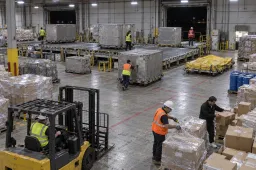
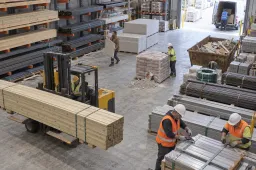
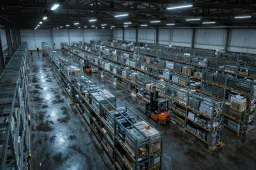
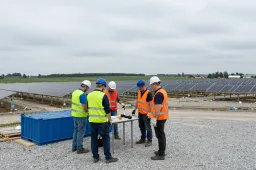
Ultralytics Construction-PPE는 건설 및 산업 현장의 작업자, 지게차, 개인 보호 장비, 그리고 눈에 보이는 장비 미착용 상황을 다루는 이미지 1,000장, 바운딩 박스 14,863개, 클래스 12개로 구성된 독창적인 객체 탐지 데이터셋입니다.
이 데이터셋은 2026년 11월 Ultralytics 팀이 제작하고 오픈소스로 공개했습니다. 사람이 수집한 이미지와 생성된 이미지를 결합했으며, 전문가의 사람 주석 작업과 AI 자동 주석 작업도 2026년 11월 Ultralytics 팀이 완료했습니다. 이미지와 주석은 크리에이티브 커먼즈 저작자표시 4.0 국제 (CC BY 4.0) 라이선스로 공개됩니다.
이미지와 어노테이션을 살펴보고, 데이터셋을 복제하거나 모델을 학습하려면 Ultralytics Platform에서 Construction-PPE 살펴보기를 이용하세요.
이미지 및 어노테이션#
이미지는 건설 현장, 작업장, 창고, 적재 구역, 유지보수 작업을 다룹니다. 다양한 시점, 조명, 작업자 배치, 보호 장비, 지게차 작업 상황이 포함됩니다.
이미지는 다양한 해상도의 가로형, 세로형, 정사각형 구도로 구성됩니다.
어노테이션은 Ultralytics YOLO 형식의 바운딩 박스를 사용합니다. 장비 클래스는 눈에 보이는 장비를 식별하고, 장비 미착용 클래스는 장비가 없는 경우 해당하는 눈에 보이는 신체 영역을 식별합니다. 신체 부위가 가려졌거나 프레임 밖에 있다는 사실만으로는 장비 미착용으로 판단하지 않습니다.
데이터셋 구조#
데이터셋은 고정된 80/20 학습/검증 분할을 사용합니다:
| 분할 | 이미지 | 용도 |
|---|---|---|
| 학습 | 800 | 모델 학습 |
| 검증 | 200 | 개발 중 평가 |
| 전체 | 1,000 |
별도의 테스트 분할은 없습니다. 최종 평가에는 실제 배포 환경에서 확보한 독립적인 이미지를 사용하세요. 특히 실제 카메라 영상에 대한 성능을 평가할 때는 이를 준수해야 합니다.
클래스#
아래 클래스 ID는 데이터셋 어노테이션 및 construction-ppe.yaml과 일치합니다:
| ID | 클래스 | 대상 |
|---|---|---|
| 0 | helmet | 보호 헬멧 또는 안전모 |
| 1 | gloves | 작업용 장갑 |
| 2 | vest | 고시인성 안전 조끼, 재킷 또는 셔츠 |
| 3 | boots | 보호용 작업화 또는 작업용 신발 |
| 4 | goggles | 보호 안경 |
| 5 | Person | 사람 |
| 6 | no_helmet | 헬멧을 착용하지 않은 상태로 보이는 머리 |
| 7 | no_goggle | 보호 안경을 착용하지 않은 상태로 보이는 눈 주변 |
| 8 | no_gloves | 장갑을 착용하지 않은 상태로 보이는 손 |
| 9 | no_boots | 보호 작업용 신발을 착용하지 않은 상태로 보이는 발 또는 신발 |
| 10 | forklift | 지게차 |
| 11 | no_vest | 고시인성 안전복을 착용하지 않은 상태로 보이는 몸통 |
데이터셋 YAML#
데이터셋 구성에서는 이미지 경로, 클래스 순서, 다운로드 URL을 정의합니다:
# Ultralytics 🚀 AGPL-3.0 License - https://ultralytics.com/license

# Ultralytics Construction-PPE dataset, November 2026, CC BY 4.0
# Documentation: https://docs.ultralytics.com/datasets/detect/construction-ppe
# Example usage: yolo train data=construction-ppe.yaml
# parent
# ├── ultralytics
# └── datasets
#     └── construction-ppe ← downloads here

# Train/val/test sets as 1) dir: path/to/imgs, 2) file: path/to/imgs.txt, or 3) list: [path/to/imgs1, path/to/imgs2, ..]
path: construction-ppe # dataset root dir
train: images/train # train images (relative to 'path') 800 images
val: images/val # val images (relative to 'path') 200 images

# Classes
names:
  0: helmet
  1: gloves
  2: vest
  3: boots
  4: goggles
  5: Person
  6: no_helmet
  7: no_goggle
  8: no_gloves
  9: no_boots
  10: forklift
  11: no_vest

# Download script/URL (optional)
download: https://github.com/ultralytics/assets/releases/download/v0.0.0/construction-ppe.zip
2026년 11월 데이터셋 아카이브에는 이미지, YOLO 레이블, 데이터셋 메타데이터, CC BY 4.0 라이선스가 포함되어 있습니다. 압축을 풀면 construction-ppe 디렉터리에 저장됩니다.
사용법#
Ultralytics 패키지를 설치하거나 업데이트한 다음 사전 학습된 YOLO26 모델을 학습시키세요. YOLO는 처음 사용할 때 데이터셋을 자동으로 다운로드하고 압축을 풉니다.
from ultralytics import YOLO

model = YOLO("yolo26n.pt")
model.train(
    data="https://github.com/ultralytics/assets/releases/download/v0.0.0/construction-ppe.zip",
    epochs=100,
    imgsz=640,
)
구성 옵션은 학습 가이드를, 학습된 모델의 평가 방법은 검증 가이드를 참조하세요. Construction-PPE 노트북에서는 Colab 사용 과정을 안내합니다.
응용 분야#
- PPE 탐지: 헬멧, 장갑, 조끼, 작업화, 보호 안경을 탐지합니다.
- 장비 미착용 탐지: 검토가 필요한 눈에 보이는 PPE 미착용 사례를 식별합니다.
- 작업 현장 분석: 건설 및 산업 이미지에서 사람과 지게차를 탐지합니다.
- 연구 및 교육: 사람이 수집한 이미지와 생성된 이미지를 활용해 모델을 비교하고 학습을 연구합니다.
라이선스 및 저작자 표시#
이 데이터셋의 이미지와 어노테이션은 Ultralytics가 CC BY 4.0 라이선스로 공개하며, 저작자 표시를 하는 경우 상업적 이용을 포함한 공유와 변경이 허용됩니다. Ultralytics 팀을 출처로 표시하고 데이터셋 및 라이선스 링크를 포함하며 변경 사항을 밝혀야 합니다.
권장 저작자 표시: Ultralytics Construction-PPE 데이터셋, Ultralytics 팀, 2026년 11월, CC BY 4.0.
@dataset{Ultralytics_Construction_PPE_2026,
    author = "{Ultralytics team}",
    title = {Ultralytics Construction-PPE Dataset},
    month = {November},
    year = {2026},
    license = {CC-BY-4.0},
    url = {https://docs.ultralytics.com/datasets/detect/construction-ppe},
    publisher = {Ultralytics}
}


댓글9
질문을 하거나 결과를 공유하거나 다른 사람을 도와주세요.
panagiotamoraiti
Hello, may i ask what does the none class represents?
1Wally18796
It represents the missing of an item. I recommend not using the "no" classes and use the person bounding box to detect missing item. e.g if a helmet bounding box is missing inside a "person" bouding boxes. It's automatically "no helmet"
On Mon, 3 Aug 2026, 9:38 pm Panagiota Moraiti, @.***> wrote:
Hello, may i ask what does the none class represents?
— Reply to this email directly, view it on GitHub https://github.com/orgs/ultralytics/discussions/23364?email_source=notifications&email_token=A6BHGJNLIEEG3PDKZYO5CJD5IC5ZXA5CNFSNUABIM5UWIORPF5TWS5BNNB2WEL2ENFZWG5LTONUW63SDN5WW2ZLOOQXTCNZYHAZTEOBXUZZGKYLTN5XKOY3PNVWWK3TUUVSXMZLOOSWGM33PORSXEX3DNRUWG2Y#discussioncomment-17883287, or unsubscribe https://github.com/notifications/unsubscribe-auth/A6BHGJMNF5G3KG5GLTBGRH35IC5ZXAVCNFSNUABHKJSXA33TNF2G64TZHM2TGNJTGYYDINBVHNCGS43DOVZXG2LPNY5TSMZXGQZDINFBOYBA . You are receiving this because you commented.Message ID: @.*** com>
But what if the person is holding the helmet in their hand? With what you're proposing, the system won't raise an alert in that case, which isn't correct. The "No" classes exist for a reason in the dataset.
I think the None class means "no vest," though I'm not 100% sure. When I removed it, results got worse, so it's doing something useful.
 Glenn JocherUltralytics
You’re right that person–PPE association matters: a helmet merely inside a person box does not prove it is worn. However,
noneis a generic class and is not documented asno_vest; the Construction-PPE class list explicitly notes that no dedicated missing-vest class exists. Please keep questions and findings here so the Ultralytics team can clarify the source annotation semantics.
 Murat Raimbekov
hey @nhatminh-115, the numbers back up your observation, though i'd be careful about calling it a "problem" - some of this looks intentional given how construction sites actually look. i pulled the dataset and counted instances:
positive vs negative instances:
split positives negatives pos/neg ratio train 5410 1267 4.27 : 1 val 706 146 4.84 : 1 test 796 154 5.17 : 1 so yes, positives outnumber negatives roughly 4-5x in every split. but that ratio is actually close to what you'd see on real construction sites - most workers do wear ppe most of the time.
per-class breakdown (train):
class instances counterpart ratio helmet (0) 1341 no_helmet (7) -> 400 3.35 gloves (1) 1146 no_gloves (9) -> 442 2.59 boots (3) 1235 no_boots (10) -> 88 14.03 goggles (4) 419 no_goggle (8) -> 337 1.24 vest (2) 1269 no_vest does not exist - a few things worth understanding before treating these as bugs:
- no
no_vestclass: high-vis vests are essentially binary - they're either on or completely off, and they're very visible. ano_vestlabel would basically be "person box without overlapping vest box", which you can derive in post-processing without needing a dedicated class. - no_boots is rare (88 instances): boots are often occluded by trousers, dust, or camera angle, so annotators can't always confidently mark "missing boots". the rarity probably reflects what's actually verifiable in the imagery rather than an annotation gap.
co-occurrence in training images (1142 total):
- 900 contain only positive classes ("compliant" scenes)
- 184 contain only negative classes ("non-compliant" scenes)
- 56 contain both (~5%)
- 2 contain neither
the docs explicitly say the dataset "includes both compliant and non-compliant cases", which matches what we see - scenes tend to be one or the other, not heavily mixed.
if your specific use case needs better recall on the
no_*classes, the data distribution does work against you. some things that help:- class weighting or focal loss to compensate for imbalance
- oversampling images containing negative-class instances
- aggressive augmentation on rare classes (especially
no_boots) - derive "missing PPE" rules in post-processing: detect
Personboxes, then check for overlappinghelmet/gloves/boots/vest, infer missing items from absence. this scales better with limited neg examples
so: the imbalance is real, the data behaves as you described, but a lot of it is consistent with how the dataset is designed rather than an annotation defect.
- no
nhatminh-115
I think this dataset has a huge problem of partial annotation and prior distribution. It works great on the Positive but kinda bad on Neg. Can anyone confirm on this or is it just me?
Waqas7717
# Train/val/test sets as 1) dir: path/to/imgs, 2) file: path/to/imgs.txt, or 3) list: [path/to/imgs1, path/to/imgs2, ..]
path: construction-ppe # dataset root dir
train: images/train # train images (relative to 'path') 1132 images
val: images/val # val images (relative to 'path') 143 images
test: images/test # test images (relative to 'path') 141 images
1,132 images for training really isn’t enough for anything close to a real-world setup. Most of these images are close-up shots of people clearly posing in helmets and vests. That’s not how this would work in practice. In a real deployment, you’re dealing with CCTV cameras fixed angles, wide shots, bad lighting, blur, occlusion, and workers far from the camera. I’ve spent the last year banging my head against the wall just trying to get models to cross 80% accuracy. This isn’t going to generalize. What’s actually needed is real CCTV footage of real workers on real sites not internet images of models wearing PPE.
Sir, have u found a solution or a better dataset? I'm trying to find one for my fyp sice you're saying it won't go up more than 80%, I don't wanna waste my time with it.
hungtrieu07
Sir, have u found a solution or a better dataset? I'm trying to find one for my fyp sice you're saying it won't go up more than 80%, I don't wanna waste my time with it.
Lots of company will private this dataset for their AI team to process, so we have zero chance to get it in high quality :( I'm also get into this problem.