Ultralytics Construction-PPE 数据集
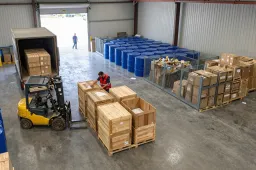
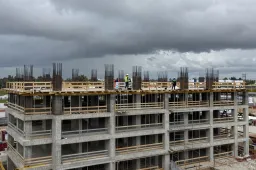
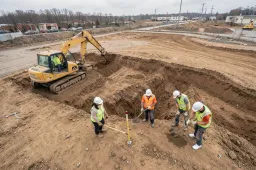
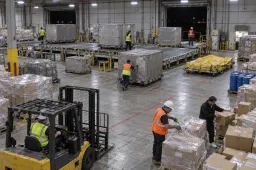
Ultralytics Construction-PPE 是一个原创的目标检测数据集,包含 1,000 张图像、14,863 个边界框和 12 个类别,涵盖建筑和工业场景中的人员、叉车、个人防护装备以及明显未佩戴的防护装备。
该数据集由 Ultralytics 团队于 2026 年 11 月创建并开源。数据集结合了人工采集和生成的图像,并由 Ultralytics 团队于 2026 年 11 月完成专家人工标注和 AI 自动标注。图像和标注采用知识共享署名 4.0 国际(CC BY 4.0)许可发布。
在 Ultralytics Platform 上探索 Construction-PPE,浏览图像和标注、克隆数据集或训练模型。
图像与标注#
图像涵盖建筑工地、车间、仓库、装卸区域和维护作业场景。其中包括不同的视角、光照条件、工人布置、防护装备和叉车作业情况。
图像采用横向、纵向和正方形构图,分辨率各不相同。
标注使用Ultralytics YOLO 格式中的边界框。装备类别标识可见物品;装备缺失类别则在装备缺失时标识相应的可见身体区域。身体部位被遮挡或位于画面之外,本身并不能证明装备缺失。
数据集结构#
该数据集采用固定的 80/20 训练/验证集划分:
| 划分 | 图像 | 用途 |
|---|---|---|
| 训练 | 800 | 模型训练 |
| 验证 | 200 | 开发期间的评估 |
| 总计 | 1,000 |
该数据集没有单独的测试集。最终评估时,请使用来自预期部署环境的独立图像,尤其是在评估模型对真实摄像头画面的表现时。
类别#
以下类别 ID 与数据集标注和 construction-ppe.yaml 一致:
| ID | 类别 | 目标 |
|---|---|---|
| 0 | helmet | 防护头盔或安全帽 |
| 1 | gloves | 工作手套 |
| 2 | vest | 高可视度安全背心、夹克或衬衫 |
| 3 | boots | 防护工作靴或工作鞋 |
| 4 | goggles | 防护眼镜 |
| 5 | Person | 人员 |
| 6 | no_helmet | 可见头部未戴头盔 |
| 7 | no_goggle | 可见眼部区域未佩戴防护眼镜 |
| 8 | no_gloves | 可见手部未戴手套 |
| 9 | no_boots | 可见脚部或鞋履未穿防护工作鞋 |
| 10 | forklift | 叉车 |
| 11 | no_vest | 可见躯干未穿高可视度安全服 |
数据集 YAML#
数据集配置定义图像路径、类别顺序和下载 URL:
# Ultralytics 🚀 AGPL-3.0 License - https://ultralytics.com/license

# Ultralytics Construction-PPE dataset, November 2026, CC BY 4.0
# Documentation: https://docs.ultralytics.com/datasets/detect/construction-ppe
# Example usage: yolo train data=construction-ppe.yaml
# parent
# ├── ultralytics
# └── datasets
#     └── construction-ppe ← downloads here

# Train/val/test sets as 1) dir: path/to/imgs, 2) file: path/to/imgs.txt, or 3) list: [path/to/imgs1, path/to/imgs2, ..]
path: construction-ppe # dataset root dir
train: images/train # train images (relative to 'path') 800 images
val: images/val # val images (relative to 'path') 200 images

# Classes
names:
  0: helmet
  1: gloves
  2: vest
  3: boots
  4: goggles
  5: Person
  6: no_helmet
  7: no_goggle
  8: no_gloves
  9: no_boots
  10: forklift
  11: no_vest

# Download script/URL (optional)
download: https://github.com/ultralytics/assets/releases/download/v0.0.0/construction-ppe.zip
2026 年 11 月数据集压缩包包含图像、YOLO 标签、数据集元数据和 CC BY 4.0 许可证。解压后内容位于 construction-ppe 目录中。
用法#
安装或更新 Ultralytics 软件包,然后训练预训练的 YOLO26 模型。首次使用时,YOLO 会自动下载并解压数据集。
from ultralytics import YOLO

model = YOLO("yolo26n.pt")
model.train(
    data="https://github.com/ultralytics/assets/releases/download/v0.0.0/construction-ppe.zip",
    epochs=100,
    imgsz=640,
)查看训练指南了解配置选项,并查看验证指南了解如何评估训练好的模型。Construction-PPE 笔记本提供了 Colab 操作演示。
应用场景#
- PPE 检测:定位头盔、手套、背心、靴子和防护眼镜。
- 装备缺失检测:识别可见的 PPE 缺失情况,供审核。
- 工地分析:检测建筑和工业图像中的人员和叉车。
- 研究与教育: 使用人工采集和生成的图像比较模型并研究训练过程。
许可与署名#
该数据集的图像和标注由 Ultralytics 依据 CC BY 4.0发布;该许可允许分享和改编,包括商业用途,但须注明出处。请注明 Ultralytics 团队,链接到数据集和许可证,并说明所做的任何更改。
建议的署名方式:Ultralytics Construction-PPE 数据集,Ultralytics 团队,2026 年 11 月,CC BY 4.0。
@dataset{Ultralytics_Construction_PPE_2026,
    author = "{Ultralytics team}",
    title = {Ultralytics Construction-PPE Dataset},
    month = {November},
    year = {2026},
    license = {CC-BY-4.0},
    url = {https://docs.ultralytics.com/datasets/detect/construction-ppe},
    publisher = {Ultralytics}
}


评论9
提出问题、分享结果,或帮助其他人。
panagiotamoraiti
Hello, may i ask what does the none class represents?
1Wally18796
It represents the missing of an item. I recommend not using the "no" classes and use the person bounding box to detect missing item. e.g if a helmet bounding box is missing inside a "person" bouding boxes. It's automatically "no helmet"
On Mon, 3 Aug 2026, 9:38 pm Panagiota Moraiti, @.***> wrote:
Hello, may i ask what does the none class represents?
— Reply to this email directly, view it on GitHub https://github.com/orgs/ultralytics/discussions/23364?email_source=notifications&email_token=A6BHGJNLIEEG3PDKZYO5CJD5IC5ZXA5CNFSNUABIM5UWIORPF5TWS5BNNB2WEL2ENFZWG5LTONUW63SDN5WW2ZLOOQXTCNZYHAZTEOBXUZZGKYLTN5XKOY3PNVWWK3TUUVSXMZLOOSWGM33PORSXEX3DNRUWG2Y#discussioncomment-17883287, or unsubscribe https://github.com/notifications/unsubscribe-auth/A6BHGJMNF5G3KG5GLTBGRH35IC5ZXAVCNFSNUABHKJSXA33TNF2G64TZHM2TGNJTGYYDINBVHNCGS43DOVZXG2LPNY5TSMZXGQZDINFBOYBA . You are receiving this because you commented.Message ID: @.*** com>
But what if the person is holding the helmet in their hand? With what you're proposing, the system won't raise an alert in that case, which isn't correct. The "No" classes exist for a reason in the dataset.
I think the None class means "no vest," though I'm not 100% sure. When I removed it, results got worse, so it's doing something useful.
 Glenn JocherUltralytics
You’re right that person–PPE association matters: a helmet merely inside a person box does not prove it is worn. However,
noneis a generic class and is not documented asno_vest; the Construction-PPE class list explicitly notes that no dedicated missing-vest class exists. Please keep questions and findings here so the Ultralytics team can clarify the source annotation semantics.
 Murat Raimbekov
hey @nhatminh-115, the numbers back up your observation, though i'd be careful about calling it a "problem" - some of this looks intentional given how construction sites actually look. i pulled the dataset and counted instances:
positive vs negative instances:
split positives negatives pos/neg ratio train 5410 1267 4.27 : 1 val 706 146 4.84 : 1 test 796 154 5.17 : 1 so yes, positives outnumber negatives roughly 4-5x in every split. but that ratio is actually close to what you'd see on real construction sites - most workers do wear ppe most of the time.
per-class breakdown (train):
class instances counterpart ratio helmet (0) 1341 no_helmet (7) -> 400 3.35 gloves (1) 1146 no_gloves (9) -> 442 2.59 boots (3) 1235 no_boots (10) -> 88 14.03 goggles (4) 419 no_goggle (8) -> 337 1.24 vest (2) 1269 no_vest does not exist - a few things worth understanding before treating these as bugs:
- no
no_vestclass: high-vis vests are essentially binary - they're either on or completely off, and they're very visible. ano_vestlabel would basically be "person box without overlapping vest box", which you can derive in post-processing without needing a dedicated class. - no_boots is rare (88 instances): boots are often occluded by trousers, dust, or camera angle, so annotators can't always confidently mark "missing boots". the rarity probably reflects what's actually verifiable in the imagery rather than an annotation gap.
co-occurrence in training images (1142 total):
- 900 contain only positive classes ("compliant" scenes)
- 184 contain only negative classes ("non-compliant" scenes)
- 56 contain both (~5%)
- 2 contain neither
the docs explicitly say the dataset "includes both compliant and non-compliant cases", which matches what we see - scenes tend to be one or the other, not heavily mixed.
if your specific use case needs better recall on the
no_*classes, the data distribution does work against you. some things that help:- class weighting or focal loss to compensate for imbalance
- oversampling images containing negative-class instances
- aggressive augmentation on rare classes (especially
no_boots) - derive "missing PPE" rules in post-processing: detect
Personboxes, then check for overlappinghelmet/gloves/boots/vest, infer missing items from absence. this scales better with limited neg examples
so: the imbalance is real, the data behaves as you described, but a lot of it is consistent with how the dataset is designed rather than an annotation defect.
- no
nhatminh-115
I think this dataset has a huge problem of partial annotation and prior distribution. It works great on the Positive but kinda bad on Neg. Can anyone confirm on this or is it just me?
Waqas7717
# Train/val/test sets as 1) dir: path/to/imgs, 2) file: path/to/imgs.txt, or 3) list: [path/to/imgs1, path/to/imgs2, ..]
path: construction-ppe # dataset root dir
train: images/train # train images (relative to 'path') 1132 images
val: images/val # val images (relative to 'path') 143 images
test: images/test # test images (relative to 'path') 141 images
1,132 images for training really isn’t enough for anything close to a real-world setup. Most of these images are close-up shots of people clearly posing in helmets and vests. That’s not how this would work in practice. In a real deployment, you’re dealing with CCTV cameras fixed angles, wide shots, bad lighting, blur, occlusion, and workers far from the camera. I’ve spent the last year banging my head against the wall just trying to get models to cross 80% accuracy. This isn’t going to generalize. What’s actually needed is real CCTV footage of real workers on real sites not internet images of models wearing PPE.
Sir, have u found a solution or a better dataset? I'm trying to find one for my fyp sice you're saying it won't go up more than 80%, I don't wanna waste my time with it.
hungtrieu07
Sir, have u found a solution or a better dataset? I'm trying to find one for my fyp sice you're saying it won't go up more than 80%, I don't wanna waste my time with it.
Lots of company will private this dataset for their AI team to process, so we have zero chance to get it in high quality :( I'm also get into this problem.