Deploy Ultralytics YOLO on MediaTek Dimensity with LiteRT
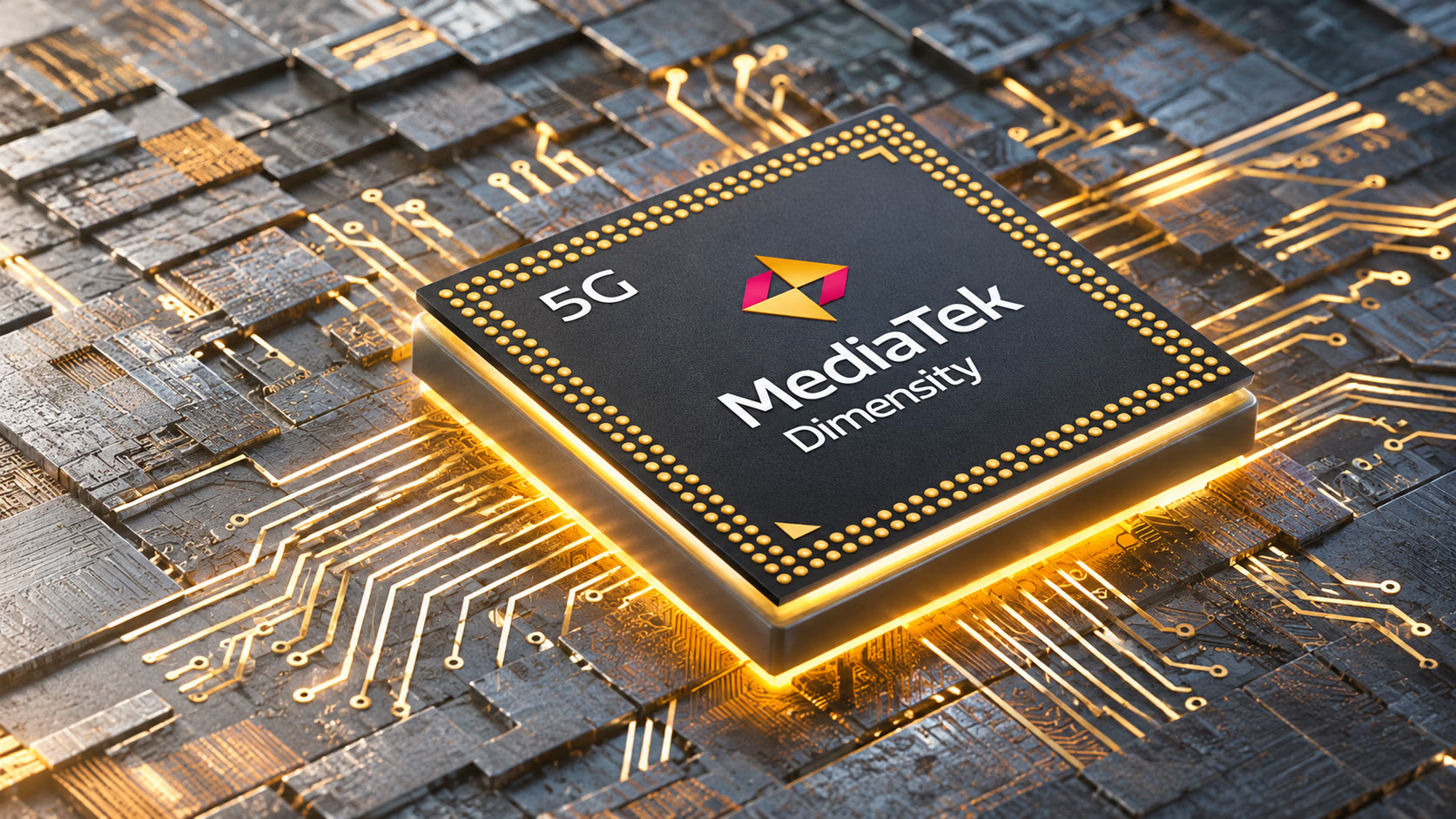
Ultralytics YOLO runs on MediaTek Dimensity Android phones through the existing LiteRT export. There is no MediaTek-specific export format: export a standard .tflite model and run it on Android with the official Ultralytics YOLO Flutter plugin, which uses LiteRT for CPU and GPU inference.
Export#
LiteRT export is supported on Linux x86_64 and macOS, not on Linux aarch64 hosts such as NVIDIA Jetson. Export classification models at imgsz=224 and all other tasks at imgsz=640.
pip install ultralyticsfrom ultralytics import YOLO
model = YOLO("yolo26n.pt")
model.export(format="litert", imgsz=640) # creates 'yolo26n.tflite' (FP32)
model.export(format="litert", quantize="w8a32", imgsz=640) # creates 'yolo26n_w8a32.tflite'You can check an exported model on the host with YOLO("yolo26n.tflite")("https://ultralytics.com/images/bus.jpg"). This runs LiteRT locally and does not select or test a MediaTek NPU. See the LiteRT guide for prediction, validation, and all export arguments.
Deploy on Android#
The Ultralytics YOLO Flutter plugin runs LiteRT .tflite exports on Android with camera and single-image inference for all seven YOLO26 tasks. Official w8a32 assets are published in the yolo-flutter-app v0.7.0 release.
Try the Ultralytics YOLO Android app on Google Play. The previews below show the app on iOS.
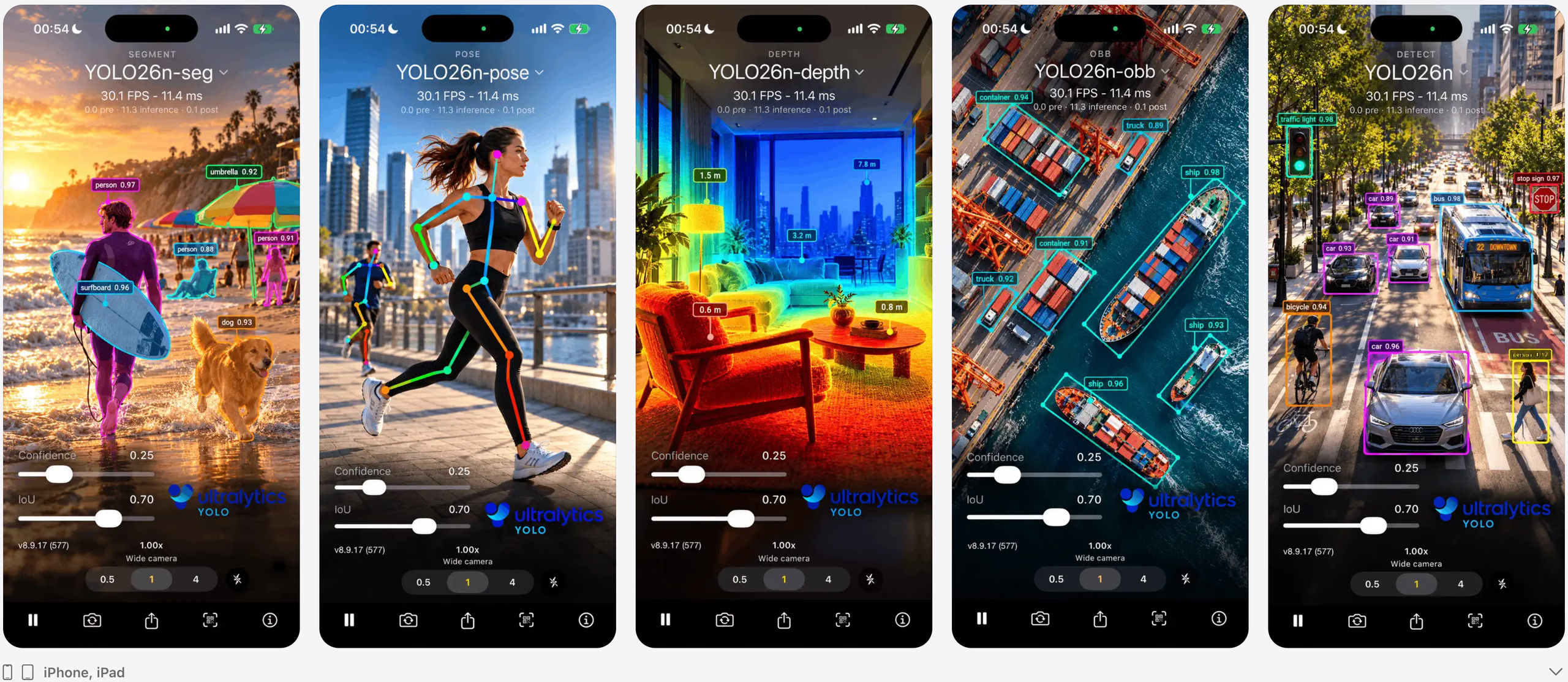

To run your exported model, copy yolo26n_w8a32.tflite into assets/models/ in a Flutter app and add the plugin and asset to pubspec.yaml:
dependencies:
    flutter:
        sdk: flutter
    ultralytics_yolo: ^0.7.1

flutter:
    assets:
        - assets/models/yolo26n_w8a32.tflite
Run flutter pub get, then use the model for camera inference in lib/main.dart:
import 'package:flutter/material.dart';
import 'package:ultralytics_yolo/ultralytics_yolo.dart';

void main() => runApp(
      MaterialApp(
        home: Scaffold(
          body: YOLOView(modelPath: 'assets/models/yolo26n_w8a32.tflite'),
        ),
      ),
    );
Set Android's minimum SDK to 24, add camera permission, and run flutter run on the phone. See the plugin installation guide for the Android setup and the quickstart for single-image inference. The plugin attempts GPU inference and falls back to CPU if the device or model cannot use the GPU.
On MediaTek devices, the released Flutter plugin supports LiteRT CPU and GPU inference, but not the MediaTek NPU. The NPU results below were measured with a prototype, unreleased NPU build of the plugin and the LiteRT mediatek 2.3.0 NPU runtime, using FP32 exports (no quantize). The w8a32 assets do not compile fully on the NPU.
Measured Performance#
The Xiaomi 17T Pro results in the LiteRT guide cover all seven YOLO26n tasks on a MediaTek Dimensity 9500 (MT6993) with MediaTek NPU 990 and Android 16 / API 36. Each value is the mean of 15 calls after 3 warmups. CPU and GPU measurements used ultralytics_yolo 0.7.1 and the official v0.7.0 w8a32 assets; the prototype NPU measurements used FP32 exports. YOLO26n detection takes 31.4 ms on the CPU, 25.6 ms on the GPU, and 11.0 ms on the prototype NPU path. Depth and OBB have no NPU result and run on the GPU instead.
Compare more devices and models on the Ultralytics mobile benchmarks page.
MediaTek Genio#
These results are for Dimensity Android phones using LiteRT. MediaTek Genio IoT platforms use a separate Yocto and NeuroPilot software stack. Ultralytics does not validate or document Genio deployment, and the Dimensity results above do not apply to Genio boards.
FAQ#
Use
model.export(format="litert", imgsz=640)oryolo export model=yolo26n.pt format=litert imgsz=640. Useimgsz=224for classification. The resulting.tflitefile can run with the Flutter plugin; there is no separate MediaTek export format.The released plugin supports LiteRT CPU and GPU inference. The NPU results above used an unreleased prototype with FP32 models; the official
w8a32assets do not compile fully on the NPU.No. The measurements are from an Android phone, while Genio uses a different software stack. Ultralytics has not validated Genio deployment.
Comments
Ask a question, share your results, or help someone else.