Ultralytics YOLO26 ile Nesne Kırpma
Nesne Kırpma Nedir?#
Ultralytics YOLO26 ile nesne kırpma, görüntü veya videoda algılanan belirli nesneleri ayırıp çıkarmayı içerir. YOLO26 her nesnenin yerini bir sınırlayıcı kutuyla belirler ve kırpıcı bu bölgeyi daha ayrıntılı analiz veya işleme için ayrı bir görüntü olarak kaydeder.
İzle: Ultralytics YOLO ile Nesne Kırpma
Nesne Kırpmanın Avantajları#
- Odaklı Analiz: YOLO26, nesneleri hedefe yönelik biçimde kırpmayı sağlar; böylece bir sahnedeki tek tek öğeleri derinlemesine inceleyebilir veya işleyebilirsin.
- Daha Az Veri: Yalnızca ilgili nesneleri çıkararak veri boyutunu küçülten nesne kırpma; depolama, aktarım ve sonraki hesaplama işlemlerini daha verimli hâle getirir.
- Daha Yüksek Hassasiyet: YOLO26'nın nesne algılama doğruluğu, sonraki analizler için gereken görsel ayrıntıları koruyan sıkı kırpmalar sağlar.
Görseller#
| Havalimanı Bagajları |
|---|
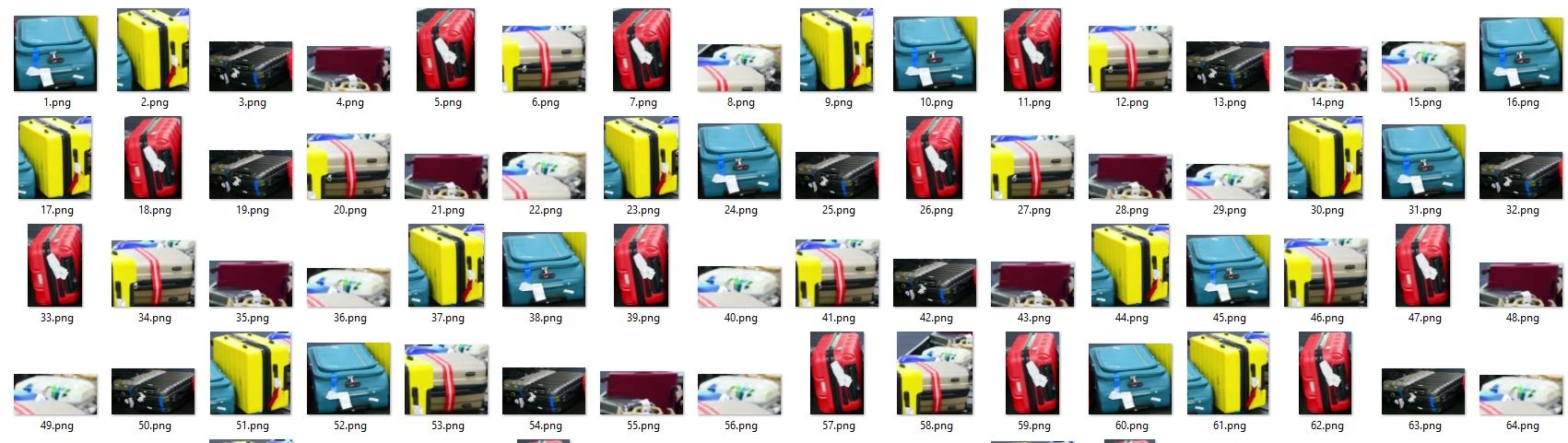 |
| Ultralytics YOLO26 ile havalimanı konveyör bandındaki valizleri kırpma |
YOLO26 ile Nesneleri Kırp#
Videonu ObjectCropper çözümüne aktar; çözüm her karede nesneleri algılar ve her tespiti ayrı bir görüntü olarak kaydeder. Kırpmayı belirli classes ile sınırla, yalnızca güven düzeyi yüksek tespitleri tutmak için conf değerini yükselt ve kırpımların nereye yazılacağını seçmek için crop_dir ayarla.
# Crop the objects
yolo solutions crop

# Pass a source video
yolo solutions crop source="path/to/video.mp4"

# Crop specific classes
yolo solutions crop classes="[0, 2]"
ObjectCropper Bağımsız Değişkenleri#
Aşağıda ObjectCropper bağımsız değişkenlerini içeren bir tablo bulabilirsin:
| Bağımsız değişken | Tür | Varsayılan | Açıklama |
|---|---|---|---|
model | str | None | Ultralytics YOLO model dosyasının yolu. |
crop_dir | str | 'cropped-detections' | Kırpılmış tespitleri depolamak için kullanılan dizinin adı. |
verbose | bool | True | Çözümün her kare için girdi şekli, sınıf sayıları ve işleme hızına ilişkin günlüğünü etkinleştirir. İzleme çağrısının kendisi her zaman sessizdir. |
ObjectCropper, track yerine predict çalıştırır; bu nedenle tracker dışındaki aşağıdaki çıkarım parametrelerini destekler:
| Bağımsız değişken | Tür | Varsayılan | Açıklama |
|---|---|---|---|
tracker | str | 'tracktrack.yaml' | Kullanılacak izleme algoritmasını belirtir. Yerleşik seçenekler: botsort.yaml, bytetrack.yaml, ocsort.yaml, deepocsort.yaml, fasttrack.yaml, tracktrack.yaml. |
conf | float | 0.25 | Algılamalar için güven eşiğini belirler; düşük değerler daha fazla nesnenin izlenmesine olanak tanır ancak yanlış pozitifleri de içerebilir. |
iou | float | 0.5 | Çakışan algılamaları filtrelemek için Kesişim-Birleşim Oranı (IoU) eşiğini belirler. |
classes | list | None | Sonuçları sınıf dizinine göre filtreler. Örneğin, classes=[0, 2, 3] yalnızca belirtilen sınıfları izler. |
device | str | None | Çıkarım için kullanılacak cihazı belirtir (ör. cpu, cuda:0 veya 0). Kullanıcıların model yürütme için CPU, belirli bir GPU veya başka hesaplama cihazları arasında seçim yapmasına olanak tanır. |
imgsz | int or tuple | 640 | Hedef çıkarım görüntü boyutu: kare görüntüler için bir tam sayı veya bir (height, width) çifti. Boyutlar model adım değerine göre ayarlanır. |
max_det | int | 300 | Yoğun sahnelerde bir çözümün işleyeceği nesne sayısını sınırlamak için izleme öncesinde kare başına tutulan en yüksek algılama sayısı. |
quantize | int or str | None | Çıkarım hassasiyeti: CPU dışında PyTorch ve TorchScript modelleri için 16 (FP16) veya 32/unset (FP32); diğer biçimler, model yapıtının ve çalışma zamanının seçtiği hassasiyeti kullanır. Kullanımdan kaldırılan half argümanının yerini alır. |
Sık Sorulan Sorular#
Ultralytics YOLO26 kullanarak nesne kırpma, YOLO26'nın tespit yeteneklerine göre belirli nesneleri bir görüntü veya videodan ayırıp çıkarmayı içerir. Bu işlem, nesneleri doğru biçimde belirlemek için YOLO26'yı kullanarak odaklı analiz yapılmasını ve veri hacminin azaltılmasını sağlar; ardından nesneler uygun şekilde kırpılır.
Ultralytics YOLO26, doğru tespiti, hızlı çıkarımı ve basit bir API'yi bir araya getirir; bu sayede kırpma işlemi yalnızca birkaç satır kodla yapılabilir ve odaklı analizi destekler. YOLO26 ayrıca farklı donanımlarda gerçek zamanlı dağıtımlar için OpenVINO ve TensorRT gibi biçimlere aktarılabilir.
Görüntü veya videolarından yalnızca ilgili nesneleri kırpmak için Ultralytics YOLO26'yı kullanarak veri boyutunu önemli ölçüde azaltabilir, depolama ve işlemeyi daha verimli hâle getirebilirsin. Önceden eğitilmiş bir model kullan veya ihtiyacın olan nesneleri algılaması için bir model eğit; ardından yalnızca bu bölgeleri kırpıp kaydet.
Ultralytics YOLO26 hem CPU hem de GPU ortamları için optimize edilmiştir; ancak özellikle gerçek zamanlı veya yüksek hacimli çıkarımda en iyi performansı elde etmek için özel bir GPU (ör. NVIDIA RTX veya veri merkezi GPU'su) önerilir. Düşük kaynaklı cihazlara dağıtım için iOS'ta CoreML, Android'de ise LiteRT kullanmayı düşünebilirsin.


Yorumlar15
Bir soru sor, sonuçlarını paylaş veya başka birine yardım et.
NOSPAA21
Can i use it so as to train a model especially for printed circuit board defect detection to find defects in certain regions of a pcb?Would this be helpful?
RizwanMunawar
@NOSPAA21 Yes, you can train the Ultralytics YOLO11 model on the circuit board defect detection dataset by following the training documentation. Once the model is trained, you can use the object-cropping solution to crop the different defects that the model detects.
AdityaJaiswal99
Can we make the model, so it does not take the same pictures in the frame again?
 Glenn JocherUltralytics
@AdityaJaiswal99 thank you for your question! If you're looking to avoid capturing the same objects multiple times within a frame, you can leverage the Non-Maximum Suppression (NMS) feature of YOLOv8. NMS helps in eliminating redundant bounding boxes by keeping only the highest confidence detections and discarding others that overlap significantly.
Here's a brief example of how you can adjust the
iouthreshold to refine your detections and reduce duplicates:from ultralytics import YOLO # Load the model model = YOLO("yolov8n.pt") # Set the IoU threshold to a lower value to reduce overlapping detections results = model.predict("path/to/your/image_or_video", iou=0.5) # Process the results as needed for result in results: boxes = result.boxes.xyxy.cpu().tolist() clss = result.boxes.cls.cpu().tolist() # Further processing...In this example, setting the
iouparameter to a lower value (e.g., 0.5) helps in reducing the number of overlapping boxes, thus minimizing the chances of capturing the same object multiple times.For a more comprehensive guide on object cropping and additional tips, please visit our Object Cropping Guide.
If you encounter any issues or have further questions, feel free to provide a reproducible example, and ensure you are using the latest version of the packages. This will help us assist you more effectively. 😊
Happy coding!
How can we change the frame height and width to a specific pixel and change FPS?
 Paula DerrengerUltralytics
@AdityaJaiswal99 hi there!
To change the frame height, width, and FPS of a video using OpenCV, you can set these properties directly on the
cv2.VideoCaptureandcv2.VideoWriterobjects. Below is an example of how you can achieve this:import cv2 # Load the video cap = cv2.VideoCapture("path/to/video/file.mp4") assert cap.isOpened(), "Error reading video file" # Set the desired frame width, height, and FPS frame_width = 640 # Set your desired width frame_height = 480 # Set your desired height fps = 30 # Set your desired FPS # Create a VideoWriter object to save the modified video video_writer = cv2.VideoWriter("modified_video.avi", cv2.VideoWriter_fourcc(*"mp4v"), fps, (frame_width, frame_height)) while cap.isOpened(): success, frame = cap.read() if not success: break # Resize the frame to the desired dimensions resized_frame = cv2.resize(frame, (frame_width, frame_height)) # Write the resized frame to the output video video_writer.write(resized_frame) # Display the frame (optional) cv2.imshow("Resized Video", resized_frame) if cv2.waitKey(1) & 0xFF == ord("q"): break # Release resources cap.release() video_writer.release() cv2.destroyAllWindows()This script reads a video, resizes each frame to the specified width and height, and writes the modified frames to a new video file with the desired FPS.
For more detailed information on object cropping using YOLOv8, you can refer to our Object Cropping Guide.
Feel free to reach out if you have any more questions! 😊
1
HsnKmlMt
Hi! How can i specify classed to be cropped like for my case i just want people.
- Glenn JocherUltralytics(düzenlendi)
Hello! To crop only people from your video, filter the detections by class. In COCO-trained models 'person' is class 0, so the simplest way is the
classesargument ofpredict:import os import cv2 from ultralytics import YOLO model = YOLO("yolo26n.pt") cap = cv2.VideoCapture("path/to/video/file.mp4") assert cap.isOpened(), "Error reading video file" crop_dir_name = "ultralytics_crop" os.makedirs(crop_dir_name, exist_ok=True) idx = 0 while cap.isOpened(): success, im0 = cap.read() if not success: break results = model.predict(im0, classes=[0]) # 0 = 'person' in COCO boxes = results[0].boxes.xyxy.cpu().tolist() for box in boxes: idx += 1 crop_obj = im0[int(box[1]) : int(box[3]), int(box[0]) : int(box[2])] cv2.imwrite(os.path.join(crop_dir_name, f"person_{idx}.png"), crop_obj) cap.release() cv2.destroyAllWindows()This will crop and save images only for detected persons. Note that
model.namesis a dictionary mapping class IDs to names, so to look up an ID by name usenext(k for k, v in model.names.items() if v == "person"). Adjust according to your specific classes and needs! 👍 Thank you, I really appreciate it!
- Glenn JocherUltralytics(düzenlendi)
Hello! We're really glad you found the materials helpful! If you ever need to crop specific classes, such as 'people', filter the detections by class ID. Here's a quick example:
import cv2

from ultralytics import YOLO

model = YOLO("yolo26n.pt")  # Load your model
person_class_id = next(k for k, v in model.names.items() if v == "person")  # model.names maps class ID -> name

cap = cv2.VideoCapture("path/to/video.mp4")
assert cap.isOpened(), "Error reading video file"

while cap.isOpened():
    ret, frame = cap.read()
    if not ret:
        break
    results = model.predict(frame, classes=[person_class_id])  # only 'person' detections
    boxes = results[0].boxes.xyxy.cpu().tolist()

    for idx, box in enumerate(boxes):
        x1, y1, x2, y2 = map(int, box[:4])
        crop_img = frame[y1:y2, x1:x2]
        cv2.imwrite(f"cropped_person_{idx}.jpg", crop_img)
Feel free to replace 'person' with any class you're interested in, and make sure the class name matches what's defined in your model's class names. Let us know if you need further assistance! 🚀
1 umairrkhn
Hey Glenn, I am getting this error using your implementation:
person_class_id = model.names.index('person') # Ensure 'person' is in the model's class names ^^^^^^^^^^^^^^^^^ AttributeError: 'dict' object has no attribute 'index'
- Glenn JocherUltralytics(düzenlendi)
Hey there!
It looks like you're trying to use the
.index()method on a dictionary, which isn't supported.model.namesis a dictionary mapping class IDs to class names, not a list. Here's how to find the ID for a class name:model = YOLO("yolo26n.pt") person_class_id = next(k for k, v in model.names.items() if v == "person")For COCO-trained models this is simply
0. If the issue persists, could you share more of your code context? That might help diagnose the issue better. 😊 - Glenn JocherUltralytics(düzenlendi)
Hey there! It looks like you're trying to use the
index()method on a dictionary, which isn't supported.model.namesis a dictionary mapping class IDs to class names, so you need to look up the ID by name:person_class_id = next(k for k, v in model.names.items() if v == "person")Make sure that 'person' is indeed the name of the class you're interested in. Let me know if this helps or if you need further assistance! 😊
zakirh
To those who are facing issue on finding person class:
person_class_id = None for class_id, class_name in model.names.items(): if class_name =='person': person_class_id = class_id break
if person_class_id is None: print("The 'person' class was not found.") else: print(f"'person' class ID: {person_class_id}")
- Glenn JocherUltralytics(düzenlendi)
@zakirh thank you for sharing this helpful approach to finding the class ID for 'person.' For others who might encounter similar issues, note that
model.namesis a dictionary mapping class IDs to class names, so finding an ID by name requires searching the values. If any further clarification is needed, feel free to ask!1