Tập dữ liệu SKU-110K

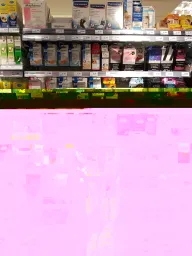
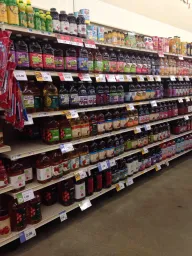

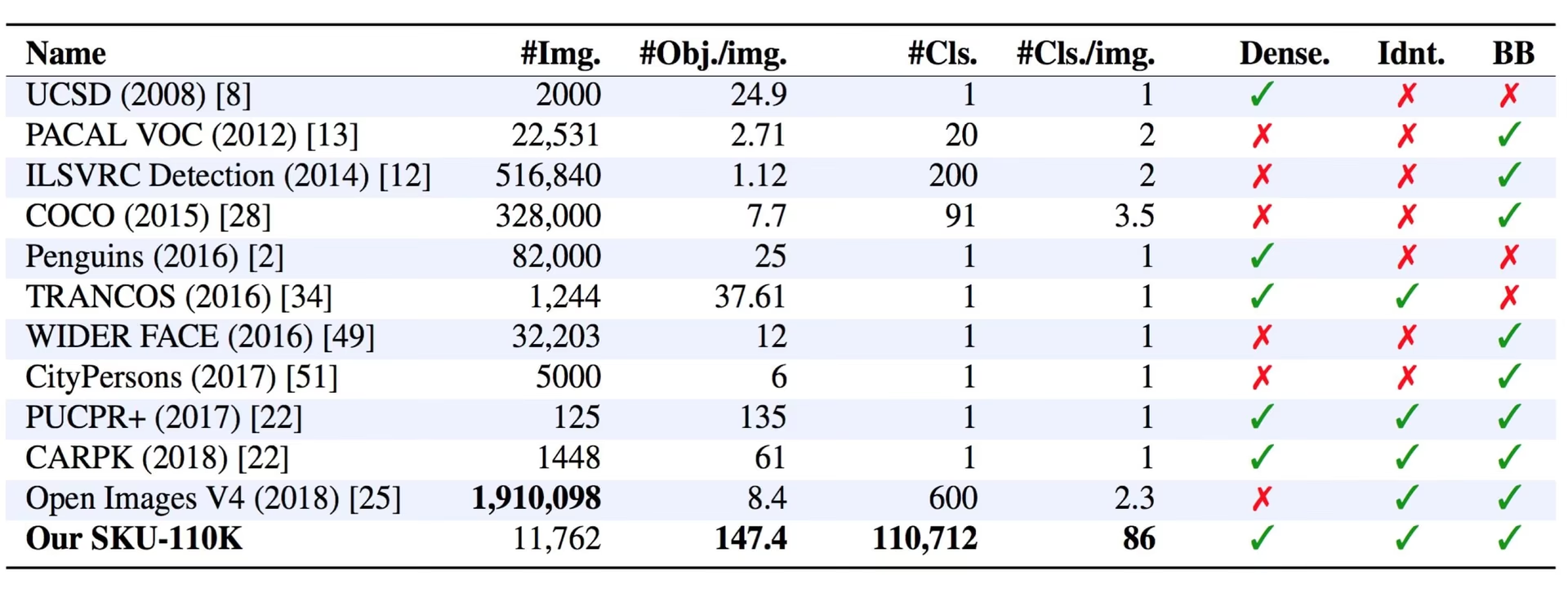
Tập dữ liệu SKU-110K là tập dữ liệu phát hiện đối tượng một class gồm 11.743 ảnh kệ bán lẻ có mật độ sản phẩm dày đặc, được chia thành 8.219 ảnh huấn luyện, 588 ảnh validation và 2.936 ảnh test. Mỗi sản phẩm được gán một bounding box thuộc class duy nhất, object — tên gọi này chỉ hơn 110.000 mã hàng lưu kho duy nhất (SKU) xuất hiện trong các cảnh, chứ không phải 110.000 class phát hiện. Tập dữ liệu do Eran Goldman và cộng sự tạo cho bài báo CVPR 2019 Phát hiện chính xác trong các cảnh có mật độ dày đặc, có hơn 1,7 triệu sản phẩm được gán nhãn — trung bình khoảng 147 sản phẩm mỗi ảnh — khiến đây trở thành benchmark đầy thách thức cho các model thị giác máy tính trong môi trường bán lẻ đông đúc.
Xem: Cách huấn luyện Ultralytics YOLO26 để phát hiện mọi sản phẩm trên kệ bán lẻ | SKU-110K 🛒
Tính năng chính#
- Phát hiện một class: Mỗi sản phẩm được gán một bounding box thuộc class duy nhất,
object(names: {0: object}) — các chú giải không có nhãn danh mục riêng cho từng SKU. - Mật độ đối tượng cực cao: Ảnh kệ hàng từ khắp nơi trên thế giới có trung bình khoảng 147 sản phẩm xếp sát nhau; các đối tượng thường trông tương tự hoặc thậm chí giống hệt nhau và được đặt gần nhau.
- Quy mô lớn: Hơn 110.000 SKU duy nhất và hơn 1,7 triệu bounding box được gán nhãn trên 11.743 ảnh đặt ra thách thức cho các bộ phát hiện đối tượng tiên tiến nhất.
Cấu trúc dataset#
Tập dữ liệu SKU-110K được chia thành ba tập con, tất cả đều dùng chung class duy nhất object:
| Tập dữ liệu | Hình ảnh | Mô tả |
|---|---|---|
| Huấn luyện | 8,219 | Ảnh và chú giải dùng để huấn luyện model |
| Validation | 588 | Ảnh giữ lại để đánh giá trong quá trình huấn luyện |
| Kiểm thử | 2,936 | Ảnh dùng để đánh giá cuối cùng model đã huấn luyện |
Ứng dụng#
Tập dữ liệu SKU-110K được sử dụng rộng rãi để huấn luyện và đánh giá các model deep learning trong tác vụ phát hiện đối tượng, đặc biệt trong các cảnh có mật độ dày đặc như quầy kệ bán lẻ. Các ứng dụng bao gồm:
- Quản lý và tự động hóa hàng tồn kho bán lẻ
- Nhận dạng sản phẩm trên các nền tảng thương mại điện tử
- Xác minh mức độ tuân thủ planogram
- Hệ thống tự thanh toán tại cửa hàng
- Robot lấy hàng và phân loại trong kho
Để gán nhãn ảnh kệ hàng của riêng bạn, huấn luyện và quản lý tập dữ liệu phát hiện sản phẩm bán lẻ ngay trên trình duyệt, hãy thực hiện toàn bộ quy trình bằng Ultralytics Platform.
YAML của dataset#
Tệp SKU-110K.yaml định nghĩa cấu hình tập dữ liệu — đường dẫn tập dữ liệu, tên class và metadata khác. Tệp được duy trì trong repository Ultralytics tại https://github.com/ultralytics/ultralytics/blob/main/ultralytics/cfg/datasets/SKU-110K.yaml.
# Ultralytics 🚀 AGPL-3.0 License - https://ultralytics.com/license

# SKU-110K retail items dataset https://github.com/eg4000/SKU110K_CVPR19 by Trax Retail
# Documentation: https://docs.ultralytics.com/datasets/detect/sku-110k
# Example usage: yolo train data=SKU-110K.yaml
# parent
# ├── ultralytics
# └── datasets
#     └── SKU-110K ← downloads here (13.6 GB)

# Train/val/test sets as 1) dir: path/to/imgs, 2) file: path/to/imgs.txt, or 3) list: [path/to/imgs1, path/to/imgs2, ..]
path: SKU-110K # dataset root dir
train: train.txt # train images (relative to 'path') 8219 images
val: val.txt # val images (relative to 'path') 588 images
test: test.txt # test images (optional) 2936 images

# Classes
names:
  0: object

# Download script/URL (optional) ---------------------------------------------------------------------------------------
download: |
  import shutil
  from pathlib import Path

  import numpy as np
  import polars as pl

  from ultralytics.utils import TQDM
  from ultralytics.utils.downloads import download
  from ultralytics.utils.ops import xyxy2xywh

  # Download
  dir = Path(yaml["path"])  # dataset root dir
  parent = Path(dir.parent)  # download dir
  urls = ["http://trax-geometry.s3.amazonaws.com/cvpr_challenge/SKU110K_fixed.tar.gz"]
  download(urls, dir=parent)

  # Rename directories
  if dir.exists():
      shutil.rmtree(dir)
  (parent / "SKU110K_fixed").rename(dir)  # rename dir
  (dir / "labels").mkdir(parents=True, exist_ok=True)  # create labels dir

  # Convert labels
  names = "image", "x1", "y1", "x2", "y2", "class", "image_width", "image_height"  # column names
  for d in "annotations_train.csv", "annotations_val.csv", "annotations_test.csv":
      x = pl.read_csv(dir / "annotations" / d, has_header=False, new_columns=names, infer_schema_length=None).to_numpy()  # annotations
      images, unique_images = x[:, 0], np.unique(x[:, 0])
      with open((dir / d).with_suffix(".txt").__str__().replace("annotations_", ""), "w", encoding="utf-8") as f:
          f.writelines(f"./images/{s}\n" for s in unique_images)
      for im in TQDM(unique_images, desc=f"Converting {dir / d}"):
          cls = 0  # single-class dataset
          with open((dir / "labels" / im).with_suffix(".txt"), "a", encoding="utf-8") as f:
              for r in x[images == im]:
                  w, h = r[6], r[7]  # image width, height
                  xywh = xyxy2xywh(np.array([[r[1] / w, r[2] / h, r[3] / w, r[4] / h]]))[0]  # instance
                  f.write(f"{cls} {xywh[0]:.5f} {xywh[1]:.5f} {xywh[2]:.5f} {xywh[3]:.5f}\n")  # write label
Cách sử dụng#
SKU-110K được tải xuống tự động trong lần đầu huấn luyện và cần khoảng 13.6 GB dung lượng đĩa trống cho 11.743 ảnh. Script tải xuống cũng lấy các chú giải gốc và chuyển đổi chúng sang định dạng YOLO; quá trình này có thể mất vài phút.
Để huấn luyện model YOLO26n trên dataset SKU-110K trong 100 epoch với kích thước ảnh 640, bạn có thể dùng các đoạn code sau.
from ultralytics import YOLO

# Tải model
model = YOLO("yolo26n.pt")  # tải model đã huấn luyện trước (được khuyến nghị khi huấn luyện)

# Huấn luyện model
results = model.train(data="SKU-110K.yaml", epochs=100, imgsz=640)
Dữ liệu mẫu và annotation#
Ảnh SKU-110K ghi lại các sản phẩm xếp dày đặc trên kệ hàng thực tế, nơi hàng chục mặt hàng gần như giống hệt nhau nằm cạnh nhau. Dưới đây là một ảnh ví dụ cùng các chú giải:
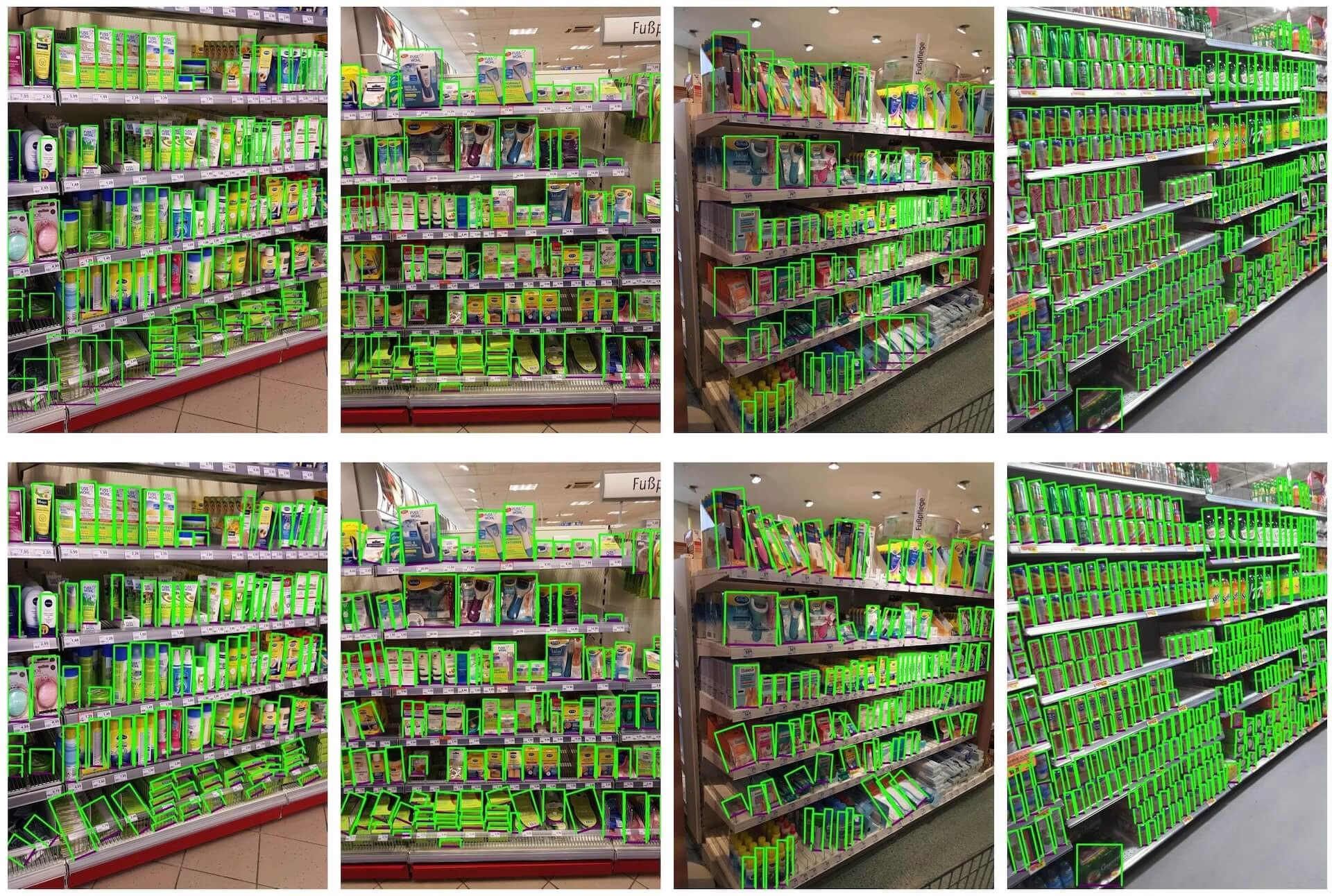
- Ảnh kệ bán lẻ có mật độ dày đặc: Ảnh này minh họa ví dụ về các đối tượng có mật độ dày đặc trong bối cảnh kệ hàng bán lẻ. Các đối tượng được chú giải bằng bounding box thuộc class duy nhất
object.
Cách sắp xếp sản phẩm dày đặc khiến SKU-110K đặc biệt hữu ích cho việc phát triển các giải pháp thị giác máy tính tập trung vào bán lẻ có độ bền vững cao, vì số lượng đối tượng lớn trong mỗi ảnh khiến các bộ phát hiện phải vượt xa những benchmark thông thường.
Trích dẫn và lời cảm ơn#
Nếu sử dụng tập dữ liệu SKU-110K trong nghiên cứu hoặc công việc phát triển, vui lòng trích dẫn bài báo sau:
@inproceedings{goldman2019dense,
  author    = {Eran Goldman and Roei Herzig and Aviv Eisenschtat and Jacob Goldberger and Tal Hassner},
  title     = {Precise Detection in Densely Packed Scenes},
  booktitle = {Proc. Conf. Comput. Vision Pattern Recognition (CVPR)},
  year      = {2019}
}
Chúng tôi xin ghi nhận Eran Goldman và cộng sự đã tạo và duy trì tập dữ liệu SKU-110K như một tài nguyên có giá trị cho cộng đồng nghiên cứu thị giác máy tính. Để biết thêm thông tin về tập dữ liệu SKU-110K và những người tạo ra tập dữ liệu, hãy truy cập repository GitHub của tập dữ liệu SKU-110K.
Câu hỏi thường gặp#
Dataset SKU-110K là dataset phát hiện đối tượng một lớp gồm 11.743 hình ảnh kệ bán lẻ có mật độ hàng hóa cao, do Eran Goldman và cộng sự tạo ra cho bài báo CVPR 2019. Mỗi sản phẩm được gắn một bounding box
object, và hình ảnh bao gồm hơn 110.000 đơn vị lưu kho (SKU) khác nhau, khiến dataset này trở thành benchmark mạnh để phát hiện đối tượng trong cảnh đông đúc và xây dựng hệ thống thị giác máy tính cho bán lẻ.Không. SKU-110K chỉ có một class: mỗi sản phẩm được gán một bounding box thuộc class
object(names: {0: object}). “110K” trong tên gọi chỉ số mã hàng lưu kho duy nhất (SKU) xuất hiện trong các ảnh, chứ không phải số lượng class phát hiện.Tập dữ liệu SKU-110K có 11.743 ảnh — 8.219 ảnh huấn luyện, 588 ảnh validation và 2.936 ảnh test — cùng một class phát hiện duy nhất,
object. Xem phần Cấu trúc tập dữ liệu và cấu hìnhSKU-110K.yamlđể biết chi tiết.SKU-110K có dung lượng khoảng 13.6 GB và được tải xuống tự động trong lần đầu huấn luyện bằng
data="SKU-110K.yaml"— không cần tải xuống thủ công. Để xem các tùy chọn nhỏ hơn, hãy tham khảo tổng quan về tập dữ liệu phát hiện.Việc huấn luyện model YOLO26 trên tập dữ liệu SKU-110K rất đơn giản. Dưới đây là ví dụ huấn luyện model YOLO26n trong 100 epoch với kích thước ảnh 640:
Ví dụ huấn luyệnfrom ultralytics import YOLO # Tải model model = YOLO("yolo26n.pt") # tải model đã huấn luyện trước (được khuyến nghị khi huấn luyện) # Huấn luyện model results = model.train(data="SKU-110K.yaml", epochs=100, imgsz=640)


Bình luận6
Đặt câu hỏi, chia sẻ kết quả hoặc giúp đỡ người khác.
syafiqmuda
Hi, newbie here, I try to use this dataset to compare and see the accuracy for this dataset with my own, but during training almost all the file were show
Corrupt JPEG data: 786 extraneous bytes before marker 0xd9and sometimesCorrupt JPEG data: premature end of data segment. can I know why? my code look like this:training.py
from ultralytics import YOLO, checks, hub checks() def main(): hub.login('something') model = YOLO('https://hub.ultralytics.com/models/ukr3hHHq88WJASNn3aUz') results = model.train(device=[0,1,2,3]) if __name__ == '__main__': main() Glenn JocherUltralytics
Those messages are PIL JPEG warnings from a handful of non-standard images in SKU-110K; Ultralytics usually auto-recovers/filters these during dataloading via
ultralytics.data.utils.verify_image()(see theverify_image()reference), so if training continues it’s safe to ignore—if it actually crashes, re-download/re-extract the dataset (or re-encode the specific bad JPGs), then delete any*.cacheunder yourlabels/folder and rerun; if you share the text output ofyolo checksplus the full traceback (not a screenshot) we can pinpoint whether it’s data corruption or an environment issue.
ApodiAlsurihi
Hi, thank you for this amazing and detailed explanation! Your work is incredibly helpful and inspiring. I would deeply appreciate it if you could share the trained model after the training process. It would make a significant difference in advancing my project and learning. Thank you so much for your generosity and support!
- Glenn JocherUltralytics
@ApodiAlsurihi thank you for your kind words! Unfortunately, we cannot share trained models directly. However, you can train your own model using the SKU-110K dataset by following the instructions provided in the documentation.
serna01
Are this warnings OK, when training? the batch=0.1 I used it to avoid a memory error. yolo detect train data=SKU-110K.yaml model=yolov8n.pt epochs=50 imgsz=640 batch=0.1
AutoBatch: Using batch-size 2 for CUDA:0 0.49G/3.81G (13%) ✅ train: Scanning /home/asm/cv_cornia/parking_mgmt/datasets/SKU-110K/labels... 8216 train: WARNING ⚠️ /home/asm/cv_cornia/parking_mgmt/datasets/SKU-110K/images/train_1797.jpg: 3 duplicate labels removed train: WARNING ⚠️ /home/asm/cv_cornia/parking_mgmt/datasets/SKU-110K/images/train_4222.jpg: ignoring corrupt image/label: image file is truncated (23 bytes not processed) train: WARNING ⚠️ /home/asm/cv_cornia/parking_mgmt/datasets/SKU-110K/images/train_882.jpg: ignoring corrupt image/label: image file is truncated (3 bytes not processed) train: WARNING ⚠️ /home/asm/cv_cornia/parking_mgmt/datasets/SKU-110K/images/train_924.jpg: ignoring corrupt image/label: image file is truncated (10 bytes not processed)
al: Scanning /home/asm/cv_cornia/parking_mgmt/datasets/SKU-110K/labels... 588 ima val: New cache created: /home/asm/cv_cornia/parking_mgmt/datasets/SKU-110K/labels.cache Corrupt JPEG data: 305 extraneous bytes before marker 0xd9 Corrupt JPEG data: 786 extraneous bytes before marker 0xd9 Plotting labels to runs/detect/train5/labels.jpg... optimizer: 'optimizer=auto' found, ignoring 'lr0=0.01' and 'momentum=0.937' and determining best 'optimizer', 'lr0' and 'momentum' automatically... optimizer: AdamW(lr=0.002, momentum=0.9) with parameter groups 57 weight(decay=0.0), 64 weight(decay=0.0005), 63 bias(decay=0.0) TensorBoard: model graph visualization added ✅ Image sizes 640 train, 640 val Using 8 dataloader workers Logging results to runs/detect/train5 Starting training for 50 epochs...
  Epoch    GPU_mem   box_loss   cls_loss   dfl_loss  Instances       Size
   1/50      1.14G      2.504      3.041       1.53        378        640:   5Corrupt JPEG data: premature end of data segment
   1/50      1.15G      2.382      2.658      1.454        331        640:   7Corrupt JPEG data: 562 extraneous bytes before marker 0xd9
   1/50      1.42G      2.273      2.314      1.382        314        640:  11Corrupt JPEG data: bad Huffman code
   1/50      1.42G      2.266      2.295      1.378        578        64       1/50      1.42G      2.266      2.293      1.377        678        64       1/50      1.42G      2.266      2.293      1.377        678        64       1/50      1.42G      2.265      2.292      1.377        723        64       1/50      1.42G      2.265      2.292      1.377        723        64       1/50      1.42G      2.266       2.29      1.377        695        64       1/50      1.42G      2.266          1/50      1.42G      2.255      2.2       1/50      1.42G      2.254      2.247       1.3       1/50      1       1/50              1/50                          1/50      1.42G      2.232      2.187      1.358        608        640:  13Corrupt JPEG data: bad Huffman code
   1/50      1.42G      2.216      2.138      1.347        437        640:  14Corrupt JPEG data: premature end of data segment
   1/50      1.42G      2.164      1.993      1.318        478        640:  17Corrupt JPEG data: 41 extraneous bytes before marker 0xd9
   1/50      1.42G      2.157      1.967      1.312        308        640:  17Corrupt JPEG data: premature end of data segment
   1/50      1.42G      2.011       1.61      1.239        173        640:  30Corrupt JPEG data: premature end of data segment
   1/50      1.42G      1.987      1.556      1.227        461        640:  33Corrupt JPEG data: 96 extraneous bytes before marker 0xd9
   1/50      1.42G      1.978      1.537      1.223        214        640:  34Corrupt JPEG data: bad Huffman code
   1/50      1.42G      1.959      1.497      1.215        250        640:  37Corrupt JPEG data: bad Huffman code
   1/50      1.42G      1.915      1.403      1.197        500        640:  46Corrupt JPEG data: premature end of data segment
   1/50      1.42G      1.888      1.345      1.185        616        640:  52Corrupt JPEG data: premature end of data segment
Thanks.
- Glenn JocherUltralytics
@serna01 the warnings you see are generally okay and indicate that the training process is handling issues like duplicate labels and corrupt images. Using
batch=0.1to avoid memory errors is fine, but consider adjusting your batch size to better utilize your GPU memory. If the warnings persist or cause issues, ensure you're using the latest version of the package. For more details on the SKU-110k dataset, visit SKU-110k Dataset Documentation.