Dataset Objects365#
Il dataset Objects365 è un benchmark su larga scala per il rilevamento degli oggetti, con 1.742.289 immagini di addestramento e 80.000 immagini di convalida che coprono 365 classi di oggetti, dalle persone, auto e sedie alle bottiglie, ai cani e ai lampioni. Creato dai ricercatori di Megvii e presentato a ICCV 2019, si concentra su oggetti eterogenei in ambienti reali ed è ampiamente usato per preaddestrare modelli di visione artificiale che generalizzano meglio rispetto a quelli preaddestrati su ImageNet.
Guarda: Come addestrare Ultralytics YOLO sul dataset Objects365
Modelli preaddestrati su Objects365#
Ultralytics pubblica modelli di rilevamento YOLO26 e di segmentazione preaddestrati su Objects365v1, così puoi rilevarne le 365 classi senza scaricare il dataset. Tutti i modelli sono stati addestrati per 150 epoche con immagini di dimensione 640.
| Modello | dimensione (pixel) | mAPval 50-95 | mAPval 50 | parametri (M) | FLOPs (B) |
|---|---|---|---|---|---|
| YOLO26n | 640 | 16.3 | 22.3 | 2.5 | 6.1 |
| YOLO26s | 640 | 24.3 | 31.7 | 9.6 | 21.5 |
| YOLO26m | 640 | 30.3 | 38.2 | 20.6 | 69.7 |
| YOLO26l | 640 | 32.2 | 40.1 | 25.0 | 88.0 |
| YOLO26x | 640 | 35.8 | 44.1 | 56.1 | 196.3 |
I modelli di segmentazione (da yolo26n-objv1-seg.pt fino a yolo26x-objv1-seg.pt) usano maschere generate per Objects365v1 e riportano l’accuratezza sia delle box sia delle maschere:
| Modello | dimensione (pixel) | mAPbox 50-95 | mAPmaschera 50-95 | parametri (M) | FLOPs (B) |
|---|---|---|---|---|---|
| YOLO26n-seg | 640 | 15.7 | 13.2 | 2.8 | 9.8 |
| YOLO26s-seg | 640 | 23.8 | 19.5 | 10.5 | 35.1 |
| YOLO26m-seg | 640 | 29.5 | 23.8 | 23.8 | 123.0 |
| YOLO26l-seg | 640 | 31.7 | 25.3 | 28.2 | 141.3 |
| YOLO26x-seg | 640 | 35.4 | 27.9 | 63.1 | 315.9 |
- I valori mAPval si riferiscono a un singolo modello e a una singola scala sulla suddivisione di convalida di Objects365v1.
- I valori Params e FLOPs si riferiscono al modello fuso dopo
model.fuse().
Puoi eseguire la predizione o avviare l'ottimizzazione a partire da questi checkpoint come segue.
from ultralytics import YOLO

# Carica un modello YOLO26n preaddestrato su Objects365
model = YOLO("yolo26n-objv1-150.pt")

# Esegui la predizione
results = model.predict(source="image.jpg")

# Avvia l'addestramento dal checkpoint preaddestrato
results = model.train(data="coco8.yaml", epochs=100, imgsz=640)
Funzionalità principali#
- Objects365 definisce 365 classi di oggetti e la versione originale riporta circa 2 milioni di immagini con un totale di 30 milioni di riquadri di delimitazione.
- Il dataset include oggetti eterogenei in diversi scenari del mondo reale e offre un benchmark ricco e impegnativo per le attività di rilevamento degli oggetti.
- Le annotazioni includono riquadri di delimitazione degli oggetti, rendendo il dataset adatto all'addestramento e alla valutazione di modelli di rilevamento degli oggetti.
- Secondo l'articolo di ICCV 2019, il preaddestramento su Objects365 supera quello su ImageNet di 5,6 punti (42,0 contro 36,4 mAP) sul benchmark COCO.
Struttura del dataset#
La configurazione Ultralytics Objects365.yaml definisce due suddivisioni:
| Subset | Immagini | Descrizione |
|---|---|---|
| Addestra | 1,742,289 | Immagini etichettate per l'addestramento del modello |
| Validazione | 80,000 | Immagini messe da parte per la valutazione e il confronto delle prestazioni |
Il download recupera le suddivisioni di addestramento e convalida — 1.822.289 immagini in totale — e la chiave test: nella configurazione viene lasciata vuota.
Applicazioni#
Il dataset Objects365 supporta numerose applicazioni di deep learning nel rilevamento degli oggetti:
- Preaddestramento degli estrattori di caratteristiche per il rilevamento: con 365 classi e annotazioni dense dei riquadri, il preaddestramento su Objects365 migliora l'ottimizzazione successiva su dataset più piccoli come COCO e VOC.
- Riconoscimento nel commercio al dettaglio e gestione dell'inventario: centinaia di categorie di uso quotidiano — bottiglie, tazze, scarpe da ginnastica, borse — consentono il monitoraggio degli scaffali e sistemi di pagamento automatici.
- Robotica e ambienti intelligenti: l'ampia copertura di oggetti domestici e stradali aiuta i robot e le telecamere intelligenti a riconoscere gli oggetti in scene non strutturate.
- Benchmark per i rilevatori: l'ampio elenco di classi e le immagini in ambienti reali lo rendono un benchmark impegnativo per valutare la capacità di generalizzazione dei modelli di rilevamento.
Per etichettare le tue immagini, addestrare modelli e gestire dataset su larga scala nel browser, esegui l'intero flusso di lavoro con Ultralytics Platform.
YAML del dataset#
Il file Objects365.yaml definisce la configurazione del dataset — i percorsi, i nomi delle classi e altri metadati. È gestito nel repository Ultralytics all'indirizzo https://github.com/ultralytics/ultralytics/blob/main/ultralytics/cfg/datasets/Objects365.yaml.
# Ultralytics 🚀 AGPL-3.0 License - https://ultralytics.com/license

# Objects365 dataset https://www.objects365.org/ by Megvii
# Documentation: https://docs.ultralytics.com/datasets/detect/objects365
# Example usage: yolo train data=Objects365.yaml
# parent
# ├── ultralytics
# └── datasets
#     └── Objects365 ← downloads here (712 GB = 367G data + 345G zips)

# Train/val/test sets as 1) dir: path/to/imgs, 2) file: path/to/imgs.txt, or 3) list: [path/to/imgs1, path/to/imgs2, ..]
path: Objects365 # dataset root dir
train: images/train # train images (relative to 'path') 1742289 images
val: images/val # val images (relative to 'path') 80000 images
test: # test images (optional)

# Classes
names:
  0: Person
  1: Sneakers
  2: Chair
  3: Other Shoes
  4: Hat
  5: Car
  6: Lamp
  7: Glasses
  8: Bottle
  9: Desk
  10: Cup
  11: Street Lights
  12: Cabinet/shelf
  13: Handbag/Satchel
  14: Bracelet
  15: Plate
  16: Picture/Frame
  17: Helmet
  18: Book
  19: Gloves
  20: Storage box
  21: Boat
  22: Leather Shoes
  23: Flower
  24: Bench
  25: Potted Plant
  26: Bowl/Basin
  27: Flag
  28: Pillow
  29: Boots
  30: Vase
  31: Microphone
  32: Necklace
  33: Ring
  34: SUV
  35: Wine Glass
  36: Belt
  37: Monitor/TV
  38: Backpack
  39: Umbrella
  40: Traffic Light
  41: Speaker
  42: Watch
  43: Tie
  44: Trash bin Can
  45: Slippers
  46: Bicycle
  47: Stool
  48: Barrel/bucket
  49: Van
  50: Couch
  51: Sandals
  52: Basket
  53: Drum
  54: Pen/Pencil
  55: Bus
  56: Wild Bird
  57: High Heels
  58: Motorcycle
  59: Guitar
  60: Carpet
  61: Cell Phone
  62: Bread
  63: Camera
  64: Canned
  65: Truck
  66: Traffic cone
  67: Cymbal
  68: Lifesaver
  69: Towel
  70: Stuffed Toy
  71: Candle
  72: Sailboat
  73: Laptop
  74: Awning
  75: Bed
  76: Faucet
  77: Tent
  78: Horse
  79: Mirror
  80: Power outlet
  81: Sink
  82: Apple
  83: Air Conditioner
  84: Knife
  85: Hockey Stick
  86: Paddle
  87: Pickup Truck
  88: Fork
  89: Traffic Sign
  90: Balloon
  91: Tripod
  92: Dog
  93: Spoon
  94: Clock
  95: Pot
  96: Cow
  97: Cake
  98: Dining Table
  99: Sheep
  100: Hanger
  101: Blackboard/Whiteboard
  102: Napkin
  103: Other Fish
  104: Orange/Tangerine
  105: Toiletry
  106: Keyboard
  107: Tomato
  108: Lantern
  109: Machinery Vehicle
  110: Fan
  111: Green Vegetables
  112: Banana
  113: Baseball Glove
  114: Airplane
  115: Mouse
  116: Train
  117: Pumpkin
  118: Soccer
  119: Skiboard
  120: Luggage
  121: Nightstand
  122: Tea pot
  123: Telephone
  124: Trolley
  125: Head Phone
  126: Sports Car
  127: Stop Sign
  128: Dessert
  129: Scooter
  130: Stroller
  131: Crane
  132: Remote
  133: Refrigerator
  134: Oven
  135: Lemon
  136: Duck
  137: Baseball Bat
  138: Surveillance Camera
  139: Cat
  140: Jug
  141: Broccoli
  142: Piano
  143: Pizza
  144: Elephant
  145: Skateboard
  146: Surfboard
  147: Gun
  148: Skating and Skiing shoes
  149: Gas stove
  150: Donut
  151: Bow Tie
  152: Carrot
  153: Toilet
  154: Kite
  155: Strawberry
  156: Other Balls
  157: Shovel
  158: Pepper
  159: Computer Box
  160: Toilet Paper
  161: Cleaning Products
  162: Chopsticks
  163: Microwave
  164: Pigeon
  165: Baseball
  166: Cutting/chopping Board
  167: Coffee Table
  168: Side Table
  169: Scissors
  170: Marker
  171: Pie
  172: Ladder
  173: Snowboard
  174: Cookies
  175: Radiator
  176: Fire Hydrant
  177: Basketball
  178: Zebra
  179: Grape
  180: Giraffe
  181: Potato
  182: Sausage
  183: Tricycle
  184: Violin
  185: Egg
  186: Fire Extinguisher
  187: Candy
  188: Fire Truck
  189: Billiards
  190: Converter
  191: Bathtub
  192: Wheelchair
  193: Golf Club
  194: Briefcase
  195: Cucumber
  196: Cigar/Cigarette
  197: Paint Brush
  198: Pear
  199: Heavy Truck
  200: Hamburger
  201: Extractor
  202: Extension Cord
  203: Tong
  204: Tennis Racket
  205: Folder
  206: American Football
  207: earphone
  208: Mask
  209: Kettle
  210: Tennis
  211: Ship
  212: Swing
  213: Coffee Machine
  214: Slide
  215: Carriage
  216: Onion
  217: Green beans
  218: Projector
  219: Frisbee
  220: Washing Machine/Drying Machine
  221: Chicken
  222: Printer
  223: Watermelon
  224: Saxophone
  225: Tissue
  226: Toothbrush
  227: Ice cream
  228: Hot-air balloon
  229: Cello
  230: French Fries
  231: Scale
  232: Trophy
  233: Cabbage
  234: Hot dog
  235: Blender
  236: Peach
  237: Rice
  238: Wallet/Purse
  239: Volleyball
  240: Deer
  241: Goose
  242: Tape
  243: Tablet
  244: Cosmetics
  245: Trumpet
  246: Pineapple
  247: Golf Ball
  248: Ambulance
  249: Parking meter
  250: Mango
  251: Key
  252: Hurdle
  253: Fishing Rod
  254: Medal
  255: Flute
  256: Brush
  257: Penguin
  258: Megaphone
  259: Corn
  260: Lettuce
  261: Garlic
  262: Swan
  263: Helicopter
  264: Green Onion
  265: Sandwich
  266: Nuts
  267: Speed Limit Sign
  268: Induction Cooker
  269: Broom
  270: Trombone
  271: Plum
  272: Rickshaw
  273: Goldfish
  274: Kiwi fruit
  275: Router/modem
  276: Poker Card
  277: Toaster
  278: Shrimp
  279: Sushi
  280: Cheese
  281: Notepaper
  282: Cherry
  283: Pliers
  284: CD
  285: Pasta
  286: Hammer
  287: Cue
  288: Avocado
  289: Hami melon
  290: Flask
  291: Mushroom
  292: Screwdriver
  293: Soap
  294: Recorder
  295: Bear
  296: Eggplant
  297: Board Eraser
  298: Coconut
  299: Tape Measure/Ruler
  300: Pig
  301: Showerhead
  302: Globe
  303: Chips
  304: Steak
  305: Crosswalk Sign
  306: Stapler
  307: Camel
  308: Formula 1
  309: Pomegranate
  310: Dishwasher
  311: Crab
  312: Hoverboard
  313: Meatball
  314: Rice Cooker
  315: Tuba
  316: Calculator
  317: Papaya
  318: Antelope
  319: Parrot
  320: Seal
  321: Butterfly
  322: Dumbbell
  323: Donkey
  324: Lion
  325: Urinal
  326: Dolphin
  327: Electric Drill
  328: Hair Dryer
  329: Egg tart
  330: Jellyfish
  331: Treadmill
  332: Lighter
  333: Grapefruit
  334: Game board
  335: Mop
  336: Radish
  337: Baozi
  338: Target
  339: French
  340: Spring Rolls
  341: Monkey
  342: Rabbit
  343: Pencil Case
  344: Yak
  345: Red Cabbage
  346: Binoculars
  347: Asparagus
  348: Barbell
  349: Scallop
  350: Noddles
  351: Comb
  352: Dumpling
  353: Oyster
  354: Table Tennis paddle
  355: Cosmetics Brush/Eyeliner Pencil
  356: Chainsaw
  357: Eraser
  358: Lobster
  359: Durian
  360: Okra
  361: Lipstick
  362: Cosmetics Mirror
  363: Curling
  364: Table Tennis

# Download script/URL (optional) ---------------------------------------------------------------------------------------
download: |
  from concurrent.futures import ThreadPoolExecutor
  from pathlib import Path

  import numpy as np

  from ultralytics.utils import TQDM
  from ultralytics.utils.checks import check_requirements
  from ultralytics.utils.downloads import download
  from ultralytics.utils.ops import xyxy2xywhn

  check_requirements("faster-coco-eval")
  from faster_coco_eval import COCO

  # Train, Val Splits
  dir = Path(yaml["path"])
  for split, patches in [("train", 50 + 1), ("val", 43 + 1)]:
      print(f"Processing {split} in {patches} patches ...")
      images, labels = dir / "images" / split, dir / "labels" / split
      images.mkdir(parents=True, exist_ok=True)
      labels.mkdir(parents=True, exist_ok=True)

      # Download
      url = f"https://dorc.ks3-cn-beijing.ksyun.com/data-set/2020Objects365%E6%95%B0%E6%8D%AE%E9%9B%86/{split}/"
      if split == "train":
          download([f"{url}zhiyuan_objv2_{split}.tar.gz"], dir=dir)  # annotations json
          download([f"{url}patch{i}.tar.gz" for i in range(patches)], dir=images, threads=17)  # 51 patches / 17 threads = 3
      elif split == "val":
          download([f"{url}zhiyuan_objv2_{split}.json"], dir=dir)  # annotations json
          download([f"{url}images/v1/patch{i}.tar.gz" for i in range(15 + 1)], dir=images, threads=16)
          download([f"{url}images/v2/patch{i}.tar.gz" for i in range(16, patches)], dir=images, threads=16)

      # Move
      files = list(images.rglob("*.jpg"))
      with ThreadPoolExecutor(max_workers=16) as executor:
          list(TQDM(executor.map(lambda f: f.rename(images / f.name), files), total=len(files), desc=f"Moving {split} images"))

      # Labels
      coco = COCO(dir / f"zhiyuan_objv2_{split}.json")
      names = [x["name"] for x in coco.loadCats(coco.getCatIds())]
      for cid, cat in enumerate(names):
          catIds = coco.getCatIds(catNms=[cat])
          imgIds = coco.getImgIds(catIds=catIds)

          def process_annotation(im):
              """Process and write annotations for a single image."""
              try:
                  width, height = im["width"], im["height"]
                  path = Path(im["file_name"])
                  with open(labels / path.with_suffix(".txt").name, "a", encoding="utf-8") as file:
                      annIds = coco.getAnnIds(imgIds=im["id"], catIds=catIds, iscrowd=None)
                      for a in coco.loadAnns(annIds):
                          x, y, w, h = a["bbox"]  # bounding box in xywh (xy top-left corner)
                          xyxy = np.array([x, y, x + w, y + h])[None]  # pixels(1,4)
                          x, y, w, h = xyxy2xywhn(xyxy, w=width, h=height, clip=True)[0]  # normalized and clipped
                          file.write(f"{cid} {x:.5f} {y:.5f} {w:.5f} {h:.5f}\n")
              except Exception as e:
                  print(e)

          images_list = coco.loadImgs(imgIds)
          with ThreadPoolExecutor(max_workers=16) as executor:
list(TQDM(executor.map(process_annotation, images_list), total=len(images_list), desc=f"Class {cid + 1}/{len(names)} {cat}"))Utilizzo#
Objects365 viene scaricato automaticamente al primo utilizzo e richiede circa 712 GB di spazio libero su disco: 345 GB per gli archivi ZIP scaricati e 367 GB per il dataset estratto. Lo script di download installa il pacchetto faster-coco-eval e converte le annotazioni nel formato YOLO; l'operazione può richiedere molto tempo, a seconda della connessione e dell'hardware.
Per addestrare un modello YOLO26n sul dataset Objects365 per 100 epoche con una dimensione dell'immagine di 640, puoi usare i seguenti snippet di codice. Per un elenco completo degli argomenti disponibili, consulta la pagina di addestramento del modello.
from ultralytics import YOLO

# Carica un modello
model = YOLO("yolo26n.pt")  # carica un modello preaddestrato (consigliato per l'addestramento)

# Addestra il modello
results = model.train(data="Objects365.yaml", epochs=100, imgsz=640)
Immagini di esempio e annotazioni#
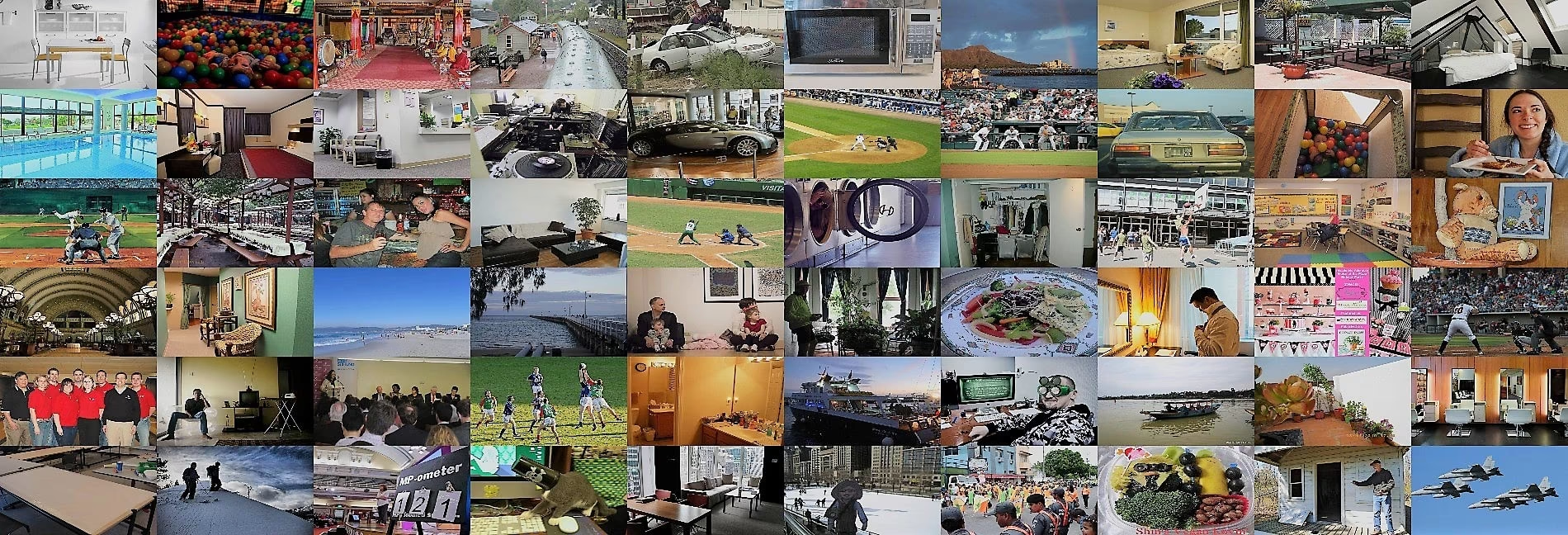
Il dataset Objects365 contiene immagini eterogenee ad alta risoluzione con annotazioni dense dei riquadri di delimitazione, distribuite tra le sue 365 classi. L'esempio seguente mostra le scene in ambienti reali e le annotazioni di più oggetti tipiche del dataset:
Citazioni e ringraziamenti#
Se usi il dataset Objects365 nelle tue attività di ricerca o sviluppo, cita il seguente articolo:
@InProceedings{Shao_2019_ICCV,
  author = {Shao, Shuai and Li, Zeming and Zhang, Tianyuan and Peng, Chao and Yu, Gang and Zhang, Xiangyu and Li, Jing and Sun, Jian},
  title = {Objects365: A Large-Scale, High-Quality Dataset for Object Detection},
  booktitle = {Proceedings of the IEEE/CVF International Conference on Computer Vision (ICCV)},
  month = {October},
  year = {2019}
}
Desideriamo ringraziare il team di ricercatori che ha creato e mantiene il dataset Objects365, una risorsa preziosa per la comunità di ricerca sulla visione artificiale. Per ulteriori informazioni sul dataset Objects365 e sui suoi creatori, visita il sito web del dataset Objects365.
Domande frequenti#
Il dataset Objects365 viene usato per addestrare e valutare modelli di rilevamento degli oggetti nell'apprendimento automatico e nella visione artificiale. Fornisce 1.742.289 immagini di addestramento e 80.000 immagini di convalida distribuite tra 365 classi di oggetti ed è particolarmente diffuso per il preaddestramento di rilevatori che vengono poi ottimizzati su dataset più piccoli e specifici per attività.
La configurazione Ultralytics
Objects365.yamlcopre 365 classi di oggetti, suddivise in 1.742.289 immagini di addestramento e 80.000 immagini di convalida — 1.822.289 in totale, senza una suddivisione per il test. La versione originale riporta circa 2 milioni di immagini e 30 milioni di riquadri di delimitazione complessivi.Objects365 richiede circa 712 GB di spazio su disco: circa 345 GB per gli archivi ZIP, scaricati automaticamente la prima volta che esegui l'addestramento con
data="Objects365.yaml", più 367 GB per il dataset estratto. Lo script di download installa il pacchettofaster-coco-evale converte le annotazioni nel formato YOLO. Puoi consultare alternative più piccole nella panoramica dei dataset di rilevamento.Per addestrare un modello YOLO26n usando il dataset Objects365 per 100 epoche con una dimensione dell'immagine di 640, segui queste istruzioni:
Esempio di addestramentofrom ultralytics import YOLO # Carica un modello model = YOLO("yolo26n.pt") # carica un modello preaddestrato (consigliato per l'addestramento) # Addestra il modello results = model.train(data="Objects365.yaml", epochs=100, imgsz=640)Consulta la pagina di addestramento per un elenco completo degli argomenti disponibili.
Il vocabolario di 365 classi e le annotazioni dense di Objects365 lo rendono uno dei migliori dataset di preaddestramento per il rilevamento degli oggetti: l'articolo di ICCV 2019 riporta un guadagno di 5,6 punti (42,0 contro 36,4 mAP) rispetto al preaddestramento su ImageNet sul benchmark COCO. Le immagini coprono diversi scenari del mondo reale, aiutando i modelli a generalizzare bene alle attività di rilevamento successive.
Il file di configurazione YAML del dataset Objects365 è disponibile all'indirizzo Objects365.yaml. Contiene informazioni essenziali, come i percorsi del dataset e le etichette delle classi, fondamentali per configurare l'ambiente di addestramento.