Ritaglio degli oggetti con Ultralytics YOLO26
Che cos'è il ritaglio degli oggetti?#
Il ritaglio degli oggetti con Ultralytics YOLO26 consiste nell'isolare ed estrarre specifici oggetti rilevati da un'immagine o da un video. YOLO26 individua ogni oggetto con un riquadro di delimitazione e lo strumento di ritaglio salva quell'area come immagine separata per ulteriori analisi o elaborazioni.
Guarda: Ritaglio degli oggetti con Ultralytics YOLO
Vantaggi del ritaglio degli oggetti#
- Analisi mirata: YOLO26 consente di ritagliare oggetti specifici, permettendo un esame o un'elaborazione approfonditi dei singoli elementi di una scena.
- Riduzione del volume dei dati: estraendo solo gli oggetti pertinenti, il ritaglio riduce le dimensioni dei dati e rende più efficienti l'archiviazione, la trasmissione e le successive attività di calcolo.
- Maggiore precisione: la precisione del rilevamento degli oggetti di YOLO26 produce ritagli accurati che preservano i dettagli visivi necessari per ulteriori analisi.
Elementi visivi#
| Bagagli in aeroporto |
|---|
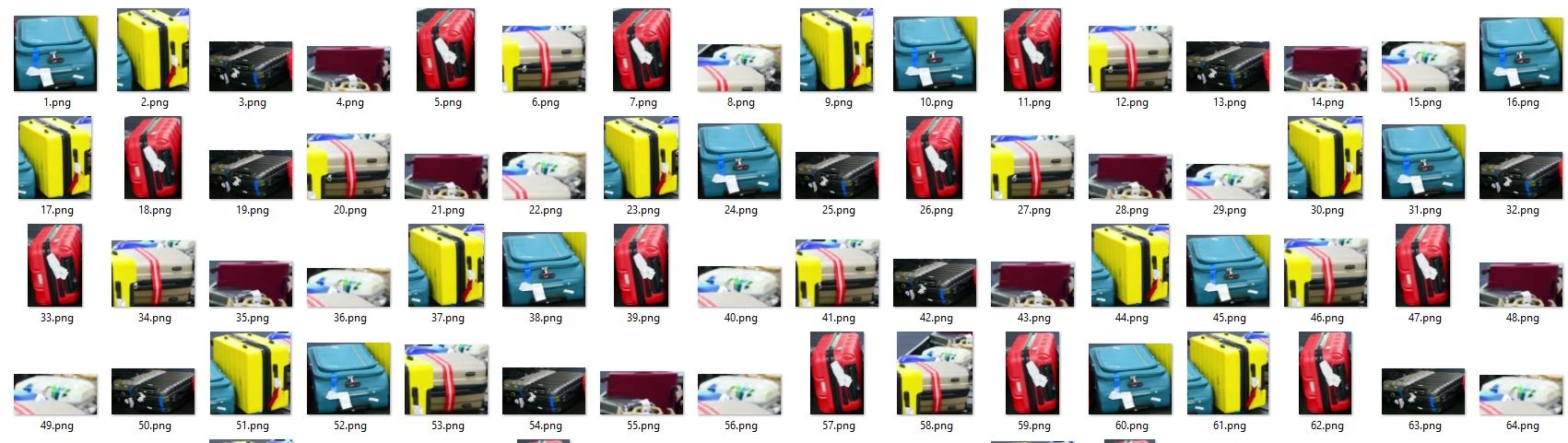 |
| Ritaglio delle valigie sul nastro trasportatore di un aeroporto con Ultralytics YOLO26 |
Ritaglia gli oggetti con YOLO26#
Passa il tuo video alla soluzione ObjectCropper: questa rileva gli oggetti in ogni frame e salva ogni rilevamento come immagine separata. Limita il ritaglio a specifiche classes, aumenta conf per mantenere solo i rilevamenti attendibili e imposta crop_dir per scegliere dove salvare i ritagli.
# Crop the objects
yolo solutions crop

# Pass a source video
yolo solutions crop source="path/to/video.mp4"

# Crop specific classes
yolo solutions crop classes="[0, 2]"
Argomenti di ObjectCropper#
Ecco una tabella con gli argomenti di ObjectCropper:
| Argomento | Tipo | Predefinito | Descrizione |
|---|---|---|---|
model | str | None | Percorso a un file modello Ultralytics YOLO. |
crop_dir | str | 'cropped-detections' | Nome della directory in cui archiviare le rilevazioni ritagliate. |
verbose | bool | True | Abilita il log per frame della soluzione, con forma dell'input, conteggi per classe e velocità di elaborazione. La chiamata di tracking è sempre silenziosa. |
ObjectCropper esegue predict anziché track, quindi supporta i seguenti parametri di inferenza, tranne tracker:
| Argomento | Tipo | Predefinito | Descrizione |
|---|---|---|---|
tracker | str | 'tracktrack.yaml' | Specifica l'algoritmo di tracciamento da usare. Opzioni integrate: botsort.yaml, bytetrack.yaml, ocsort.yaml, deepocsort.yaml, fasttrack.yaml, tracktrack.yaml. |
conf | float | 0.25 | Imposta la soglia di confidenza per le rilevazioni; valori più bassi consentono di tracciare più oggetti, ma possono includere falsi positivi. |
iou | float | 0.5 | Imposta la soglia di Intersezione sull'unione (IoU) per filtrare le rilevazioni sovrapposte. |
classes | list | None | Filtra i risultati in base all'indice della classe. Ad esempio, classes=[0, 2, 3] traccia solo le classi specificate. |
device | str | None | Specifica il dispositivo per l'inferenza (ad es. cpu, cuda:0 o 0). Consente di scegliere tra CPU, una GPU specifica o altri dispositivi di calcolo per l'esecuzione del modello. |
imgsz | int or tuple | 640 | Dimensione dell'immagine di destinazione per l'inferenza: un intero per un'immagine quadrata o una coppia (height, width). Le forme vengono adattate allo stride del modello. |
max_det | int | 300 | Numero massimo di rilevazioni da mantenere per fotogramma prima del tracciamento, che limita gli oggetti elaborati da una soluzione nelle scene dense. |
quantize | int or str | None | Precisione dell’inferenza: 16 (FP16) oppure 32/unset (FP32) per i modelli PyTorch e TorchScript quando non si usa la CPU; gli altri formati usano la precisione selezionata dal rispettivo artefatto e ambiente di esecuzione. Sostituisce l’argomento deprecato half. |
Domande frequenti#
Il ritaglio degli oggetti con Ultralytics YOLO26 consiste nell'isolare ed estrarre oggetti specifici da un'immagine o da un video in base alle capacità di rilevamento di YOLO26. Questo processo consente di concentrarsi sull'analisi e ridurre il volume dei dati: YOLO26 identifica gli oggetti con precisione e li ritaglia di conseguenza.
Ultralytics YOLO26 combina rilevamento accurato, inferenza rapida e un'API semplice, quindi bastano poche righe di codice per ritagliare gli oggetti e supportare un'analisi mirata. YOLO26 può anche essere esportato in formati come OpenVINO e TensorRT per distribuzioni in tempo reale su hardware diversi.
Usando Ultralytics YOLO26 per ritagliare solo gli oggetti pertinenti nelle immagini o nei video, puoi ridurre notevolmente le dimensioni dei dati, rendendo più efficienti l'archiviazione e l'elaborazione. Usa un modello preaddestrato oppure addestrane uno per rilevare gli oggetti che ti interessano, quindi ritaglia e salva solo quelle aree.
Sì, Ultralytics YOLO26 può elaborare flussi video in tempo reale per rilevare e ritagliare dinamicamente gli oggetti. La sua inferenza rapida è adatta ad applicazioni in tempo reale come la videosorveglianza, l'analisi sportiva e i sistemi di ispezione automatizzati.
Ultralytics YOLO26 è ottimizzato per ambienti CPU e GPU, ma per ottenere prestazioni ottimali, soprattutto con inferenza in tempo reale o ad alto volume, è consigliata una GPU dedicata, ad esempio una NVIDIA RTX o una GPU per data center. Per la distribuzione su dispositivi leggeri, valuta CoreML per iOS o LiteRT per Android.


Commenti15
Fai una domanda, condividi i tuoi risultati o aiuta qualcun altro.
NOSPAA21
Can i use it so as to train a model especially for printed circuit board defect detection to find defects in certain regions of a pcb?Would this be helpful?
RizwanMunawar
@NOSPAA21 Yes, you can train the Ultralytics YOLO11 model on the circuit board defect detection dataset by following the training documentation. Once the model is trained, you can use the object-cropping solution to crop the different defects that the model detects.
AdityaJaiswal99
Can we make the model, so it does not take the same pictures in the frame again?
 Glenn JocherUltralytics
@AdityaJaiswal99 thank you for your question! If you're looking to avoid capturing the same objects multiple times within a frame, you can leverage the Non-Maximum Suppression (NMS) feature of YOLOv8. NMS helps in eliminating redundant bounding boxes by keeping only the highest confidence detections and discarding others that overlap significantly.
Here's a brief example of how you can adjust the
iouthreshold to refine your detections and reduce duplicates:from ultralytics import YOLO # Load the model model = YOLO("yolov8n.pt") # Set the IoU threshold to a lower value to reduce overlapping detections results = model.predict("path/to/your/image_or_video", iou=0.5) # Process the results as needed for result in results: boxes = result.boxes.xyxy.cpu().tolist() clss = result.boxes.cls.cpu().tolist() # Further processing...In this example, setting the
iouparameter to a lower value (e.g., 0.5) helps in reducing the number of overlapping boxes, thus minimizing the chances of capturing the same object multiple times.For a more comprehensive guide on object cropping and additional tips, please visit our Object Cropping Guide.
If you encounter any issues or have further questions, feel free to provide a reproducible example, and ensure you are using the latest version of the packages. This will help us assist you more effectively. 😊
Happy coding!
How can we change the frame height and width to a specific pixel and change FPS?
 Paula DerrengerUltralytics
@AdityaJaiswal99 hi there!
To change the frame height, width, and FPS of a video using OpenCV, you can set these properties directly on the
cv2.VideoCaptureandcv2.VideoWriterobjects. Below is an example of how you can achieve this:import cv2 # Load the video cap = cv2.VideoCapture("path/to/video/file.mp4") assert cap.isOpened(), "Error reading video file" # Set the desired frame width, height, and FPS frame_width = 640 # Set your desired width frame_height = 480 # Set your desired height fps = 30 # Set your desired FPS # Create a VideoWriter object to save the modified video video_writer = cv2.VideoWriter("modified_video.avi", cv2.VideoWriter_fourcc(*"mp4v"), fps, (frame_width, frame_height)) while cap.isOpened(): success, frame = cap.read() if not success: break # Resize the frame to the desired dimensions resized_frame = cv2.resize(frame, (frame_width, frame_height)) # Write the resized frame to the output video video_writer.write(resized_frame) # Display the frame (optional) cv2.imshow("Resized Video", resized_frame) if cv2.waitKey(1) & 0xFF == ord("q"): break # Release resources cap.release() video_writer.release() cv2.destroyAllWindows()This script reads a video, resizes each frame to the specified width and height, and writes the modified frames to a new video file with the desired FPS.
For more detailed information on object cropping using YOLOv8, you can refer to our Object Cropping Guide.
Feel free to reach out if you have any more questions! 😊
1
HsnKmlMt
Hi! How can i specify classed to be cropped like for my case i just want people.
- Glenn JocherUltralytics(modificato)
Hello! To crop only people from your video, filter the detections by class. In COCO-trained models 'person' is class 0, so the simplest way is the
classesargument ofpredict:import os import cv2 from ultralytics import YOLO model = YOLO("yolo26n.pt") cap = cv2.VideoCapture("path/to/video/file.mp4") assert cap.isOpened(), "Error reading video file" crop_dir_name = "ultralytics_crop" os.makedirs(crop_dir_name, exist_ok=True) idx = 0 while cap.isOpened(): success, im0 = cap.read() if not success: break results = model.predict(im0, classes=[0]) # 0 = 'person' in COCO boxes = results[0].boxes.xyxy.cpu().tolist() for box in boxes: idx += 1 crop_obj = im0[int(box[1]) : int(box[3]), int(box[0]) : int(box[2])] cv2.imwrite(os.path.join(crop_dir_name, f"person_{idx}.png"), crop_obj) cap.release() cv2.destroyAllWindows()This will crop and save images only for detected persons. Note that
model.namesis a dictionary mapping class IDs to names, so to look up an ID by name usenext(k for k, v in model.names.items() if v == "person"). Adjust according to your specific classes and needs! 👍 Thank you, I really appreciate it!
- Glenn JocherUltralytics(modificato)
Hello! We're really glad you found the materials helpful! If you ever need to crop specific classes, such as 'people', filter the detections by class ID. Here's a quick example:
import cv2

from ultralytics import YOLO

model = YOLO("yolo26n.pt")  # Load your model
person_class_id = next(k for k, v in model.names.items() if v == "person")  # model.names maps class ID -> name

cap = cv2.VideoCapture("path/to/video.mp4")
assert cap.isOpened(), "Error reading video file"

while cap.isOpened():
    ret, frame = cap.read()
    if not ret:
        break
    results = model.predict(frame, classes=[person_class_id])  # only 'person' detections
    boxes = results[0].boxes.xyxy.cpu().tolist()

    for idx, box in enumerate(boxes):
        x1, y1, x2, y2 = map(int, box[:4])
        crop_img = frame[y1:y2, x1:x2]
        cv2.imwrite(f"cropped_person_{idx}.jpg", crop_img)
Feel free to replace 'person' with any class you're interested in, and make sure the class name matches what's defined in your model's class names. Let us know if you need further assistance! 🚀
1 umairrkhn
Hey Glenn, I am getting this error using your implementation:
person_class_id = model.names.index('person') # Ensure 'person' is in the model's class names ^^^^^^^^^^^^^^^^^ AttributeError: 'dict' object has no attribute 'index'
- Glenn JocherUltralytics(modificato)
Hey there!
It looks like you're trying to use the
.index()method on a dictionary, which isn't supported.model.namesis a dictionary mapping class IDs to class names, not a list. Here's how to find the ID for a class name:model = YOLO("yolo26n.pt") person_class_id = next(k for k, v in model.names.items() if v == "person")For COCO-trained models this is simply
0. If the issue persists, could you share more of your code context? That might help diagnose the issue better. 😊 - Glenn JocherUltralytics(modificato)
Hey there! It looks like you're trying to use the
index()method on a dictionary, which isn't supported.model.namesis a dictionary mapping class IDs to class names, so you need to look up the ID by name:person_class_id = next(k for k, v in model.names.items() if v == "person")Make sure that 'person' is indeed the name of the class you're interested in. Let me know if this helps or if you need further assistance! 😊
zakirh
To those who are facing issue on finding person class:
person_class_id = None for class_id, class_name in model.names.items(): if class_name =='person': person_class_id = class_id break
if person_class_id is None: print("The 'person' class was not found.") else: print(f"'person' class ID: {person_class_id}")
- Glenn JocherUltralytics(modificato)
@zakirh thank you for sharing this helpful approach to finding the class ID for 'person.' For others who might encounter similar issues, note that
model.namesis a dictionary mapping class IDs to class names, so finding an ID by name requires searching the values. If any further clarification is needed, feel free to ask!1