ADE20K Dataset#
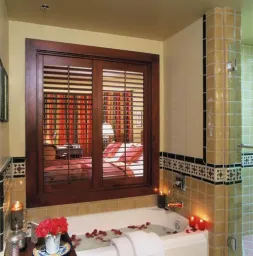
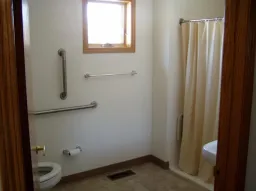
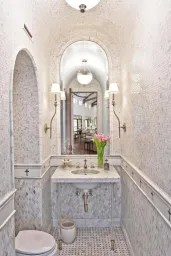
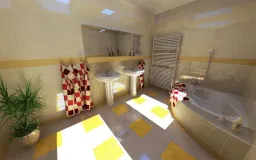
The ADE20K dataset is a large-scale semantic segmentation benchmark from MIT CSAIL with 20,210 training and 2,000 validation images densely annotated across 150 indoor, outdoor, object, and stuff categories. It is a standard resource for training and evaluating dense scene-understanding models with Ultralytics YOLO.
Key Features#
- ADE20K's full SceneParsing benchmark totals 25,562 images: 20,210 for training, 2,000 for validation, and 3,352 for testing. Test-image annotations are not publicly released, so the downloadable
ADEChallengeData2016archive and the Ultralyticsade20k.yamlconfig use only the training and validation splits. - The dataset covers 150 semantic classes spanning indoor, outdoor, object, and stuff categories.
- Annotations are dense pixel-level segmentation masks suitable for scene parsing.
Dataset Structure#
The Ultralytics configuration expects the official ADEChallengeData2016 layout:
ADEChallengeData2016/
├── images/
│   ├── training/
│   └── validation/
└── annotations/
    ├── training/
└── validation/ADE20K has no automatic download script. Download the ~1 GB ADEChallengeData2016.zip archive and extract it directly into your datasets/ folder. The archive's own top-level folder is already named ADEChallengeData2016/, so this produces datasets/ADEChallengeData2016/ matching the layout above — do not create an ADEChallengeData2016 folder yourself and extract into it, or you'll end up with a nested datasets/ADEChallengeData2016/ADEChallengeData2016/ directory that the YAML won't find.
The masks_dir field is set to annotations, so each image under images/ is paired with its corresponding mask under annotations/. The original ADE20K masks use source label IDs where 0 is ignored, and the label_mapping section converts valid labels 1 through 150 to contiguous train IDs 0 through 149, mapping ignored pixels to 255.
Applications#
ADE20K is widely used for training and evaluating deep learning models in semantic segmentation and scene parsing. Its diverse set of categories and complex scenes make it valuable for applications such as autonomous navigation, robotics, augmented reality, and image editing.
The breadth of indoor and outdoor scenes also makes ADE20K a strong benchmark for evaluating model generalization across domains. Pretrained YOLO26 semantic segmentation models reach up to 51.5 mIoU on the ADE20K validation set — see the semantic segmentation models page for the full benchmark table. ADE20K-format datasets are also fully compatible with Ultralytics Platform for dataset management and training.
Dataset YAML#
A dataset YAML file defines the ADE20K paths, classes, mask directory, and label mapping. The ade20k.yaml file is maintained at https://github.com/ultralytics/ultralytics/blob/main/ultralytics/cfg/datasets/ade20k.yaml.
# Ultralytics 🚀 AGPL-3.0 License - https://ultralytics.com/license

# ADE20K semantic segmentation dataset (150 classes)
# Documentation: https://docs.ultralytics.com/datasets/semantic/ade20k
# Example usage: yolo semantic train data=ade20k.yaml model=yolo26n-sem-ade20k.pt
# parent
# ├── ultralytics
# └── datasets
#     └── ADEChallengeData2016 ← downloads here (1 GB)
#         └── images
#         └── annotations

# Dataset root directory
path: ADEChallengeData2016
train: images/training
val: images/validation

masks_dir: annotations # semantic mask directory

# ADE20K 150-class labels
names:
  0: wall
  1: building
  2: sky
  3: floor
  4: tree
  5: ceiling
  6: road
  7: bed
  8: windowpane
  9: grass
  10: cabinet
  11: sidewalk
  12: person
  13: earth
  14: door
  15: table
  16: mountain
  17: plant
  18: curtain
  19: chair
  20: car
  21: water
  22: painting
  23: sofa
  24: shelf
  25: house
  26: sea
  27: mirror
  28: rug
  29: field
  30: armchair
  31: seat
  32: fence
  33: desk
  34: rock
  35: wardrobe
  36: lamp
  37: bathtub
  38: railing
  39: cushion
  40: base
  41: box
  42: column
  43: signboard
  44: chest of drawers
  45: counter
  46: sand
  47: sink
  48: skyscraper
  49: fireplace
  50: refrigerator
  51: grandstand
  52: path
  53: stairs
  54: runway
  55: case
  56: pool table
  57: pillow
  58: screen door
  59: stairway
  60: river
  61: bridge
  62: bookcase
  63: blind
  64: coffee table
  65: toilet
  66: flower
  67: book
  68: hill
  69: bench
  70: countertop
  71: stove
  72: palm
  73: kitchen island
  74: computer
  75: swivel chair
  76: boat
  77: bar
  78: arcade machine
  79: hovel
  80: bus
  81: towel
  82: light
  83: truck
  84: tower
  85: chandelier
  86: awning
  87: streetlight
  88: booth
  89: television receiver
  90: airplane
  91: dirt track
  92: apparel
  93: pole
  94: land
  95: bannister
  96: escalator
  97: ottoman
  98: bottle
  99: buffet
  100: poster
  101: stage
  102: van
  103: ship
  104: fountain
  105: conveyor belt
  106: canopy
  107: washer
  108: plaything
  109: swimming pool
  110: stool
  111: barrel
  112: basket
  113: waterfall
  114: tent
  115: bag
  116: minibike
  117: cradle
  118: oven
  119: ball
  120: food
  121: step
  122: tank
  123: trade name
  124: microwave
  125: pot
  126: animal
  127: bicycle
  128: lake
  129: dishwasher
  130: screen
  131: blanket
  132: sculpture
  133: hood
  134: sconce
  135: vase
  136: traffic light
  137: tray
  138: ashcan
  139: fan
  140: pier
  141: crt screen
  142: plate
  143: monitor
  144: bulletin board
  145: shower
  146: radiator
  147: glass
  148: clock
  149: flag

# Map source label IDs to train IDs; ignore_label is converted to 255.
label_mapping:
  0: ignore_label
  1: 0
  2: 1
  3: 2
  4: 3
  5: 4
  6: 5
  7: 6
  8: 7
  9: 8
  10: 9
  11: 10
  12: 11
  13: 12
  14: 13
  15: 14
  16: 15
  17: 16
  18: 17
  19: 18
  20: 19
  21: 20
  22: 21
  23: 22
  24: 23
  25: 24
  26: 25
  27: 26
  28: 27
  29: 28
  30: 29
  31: 30
  32: 31
  33: 32
  34: 33
  35: 34
  36: 35
  37: 36
  38: 37
  39: 38
  40: 39
  41: 40
  42: 41
  43: 42
  44: 43
  45: 44
  46: 45
  47: 46
  48: 47
  49: 48
  50: 49
  51: 50
  52: 51
  53: 52
  54: 53
  55: 54
  56: 55
  57: 56
  58: 57
  59: 58
  60: 59
  61: 60
  62: 61
  63: 62
  64: 63
  65: 64
  66: 65
  67: 66
  68: 67
  69: 68
  70: 69
  71: 70
  72: 71
  73: 72
  74: 73
  75: 74
  76: 75
  77: 76
  78: 77
  79: 78
  80: 79
  81: 80
  82: 81
  83: 82
  84: 83
  85: 84
  86: 85
  87: 86
  88: 87
  89: 88
  90: 89
  91: 90
  92: 91
  93: 92
  94: 93
  95: 94
  96: 95
  97: 96
  98: 97
  99: 98
  100: 99
  101: 100
  102: 101
  103: 102
  104: 103
  105: 104
  106: 105
  107: 106
  108: 107
  109: 108
  110: 109
  111: 110
  112: 111
  113: 112
  114: 113
  115: 114
  116: 115
  117: 116
  118: 117
  119: 118
  120: 119
  121: 120
  122: 121
  123: 122
  124: 123
  125: 124
  126: 125
  127: 126
  128: 127
  129: 128
  130: 129
  131: 130
  132: 131
  133: 132
  134: 133
  135: 134
  136: 135
  137: 136
  138: 137
  139: 138
  140: 139
  141: 140
  142: 141
  143: 142
  144: 143
  145: 144
  146: 145
  147: 146
  148: 147
  149: 148
  150: 149
# Download URL (manual): https://data.csail.mit.edu/places/ADEchallenge/ADEChallengeData2016.zipUsage#
To train a YOLO26n-sem model on the ADE20K dataset for 100 epochs with an image size of 640, you can use the following code snippets. For a comprehensive list of available arguments, refer to the model Training page.
from ultralytics import YOLO

# Load a model
model = YOLO("yolo26n-sem-ade20k.pt")  # load an ADE20K-pretrained model (recommended for training)

# Train the model
results = model.train(data="ade20k.yaml", epochs=100, imgsz=640)
Citations, License and Acknowledgments#
ADE20K images are released for non-commercial research and educational use only; the dataset's annotation software is separately licensed under BSD-3. Commercial use requires permission from MIT CSAIL.
If you use the ADE20K dataset in your research or development work, please cite the following paper:
@inproceedings{zhou2017scene,
  title={Scene Parsing through ADE20K Dataset},
  author={Zhou, Bolei and Zhao, Hang and Puig, Xavier and Fidler, Sanja and Barriuso, Adela and Torralba, Antonio},
  booktitle={Proceedings of the IEEE Conference on Computer Vision and Pattern Recognition},
  year={2017}
}
We would like to acknowledge the MIT CSAIL Computer Vision Group for creating and maintaining this valuable resource for the computer vision community. For more information about the ADE20K dataset and its creators, visit the ADE20K dataset website.
FAQ#
The ADE20K dataset is a large-scale scene parsing benchmark used for semantic segmentation, with 20,210 training and 2,000 validation images publicly released across 150 categories covering indoor, outdoor, object, and stuff classes. Researchers use ADE20K because of its diverse scenes, fine-grained category set, and standardized evaluation metrics like mean Intersection over Union (mIoU), which make it ideal for benchmarking dense prediction models.
To train a YOLO26n-sem model on the ADE20K dataset for 100 epochs with an image size of 640, you can use the following code snippets. For a detailed list of available arguments, refer to the model Training page.
Train Examplefrom ultralytics import YOLO # Load a model model = YOLO("yolo26n-sem-ade20k.pt") # load an ADE20K-pretrained model (recommended for training) # Train the model results = model.train(data="ade20k.yaml", epochs=100, imgsz=640)The ADE20K dataset follows the official ADEChallengeData2016 layout, with images organized under
images/training/andimages/validation/, and corresponding masks underannotations/training/andannotations/validation/. The Ultralytics YAML file pairs each image with its mask via themasks_dir: annotationsfield, and useslabel_mappingto convert source label IDs1–150into contiguous train IDs0–149, mapping the ignore label to255.Yes. Download the
ADEChallengeData2016.ziparchive (~1 GB) and extract it directly into yourdatasets/folder before training — the archive's own top-level folder is already namedADEChallengeData2016/, so extracting it there (not into a separateADEChallengeData2016folder you create yourself) produces theimages/andannotations/layout thatade20k.yamlexpects.ADE20K annotation masks store source label IDs where
0denotes the ignore or background class. Thelabel_mappingsection maps valid labels1through150to contiguous train IDs0through149, and assigns255to ignored pixels so they are excluded from the loss and metrics during training and validation.No. ADE20K images are released under terms restricting use to non-commercial research and education; the accompanying annotation software is separately licensed under BSD-3. Contact MIT CSAIL for commercial licensing options.