スライス推論でYOLO26を使用する
この SAHI 統合ガイドは非推奨となり、トレーニング、検証、予測には Ultralytics の tile 引数を使用してください。高解像度タイリングをご覧ください。

このガイドでは、YOLO26でSAHI(Slicing Aided Hyper Inference)を使用する方法を説明します。SAHIの概要、大規模な高解像度画像でスライス推論が小さな物体の検出に役立つ理由、YOLO26と組み合わせて物体検出の結果を向上させる方法を扱います。
SAHIの概要#
SAHI(Slicing Aided Hyper Inference)は、大規模かつ高解像度の画像に対する物体検出を改善するためのライブラリです。画像を扱いやすいサイズのスライスに分割し、各スライスで物体検出を実行してから、結果を結合します。SAHIはYOLOシリーズを含む、さまざまな物体検出モデルと互換性があります。
視聴: Ultralytics YOLO26でSAHIを使用して小さな物体を検出する方法 | スライス支援型ハイパー推論 🚀
SAHIの主な機能#
- 簡単な統合: SAHIは
AutoDetectionModelを通じてUltralytics YOLOモデルと連携するため、コードをほとんど変更せずにスライスと検出を開始できます。 - リソース効率: 大きな画像を小さな部分に分割することで、SAHIはメモリ使用量を抑え、リソースが限られたハードウェアでも高品質な検出を実行できます。
- 高い精度: SAHIはスライスの結合時に隣接するスライスの重複検出を統合し、非極大値抑制や非極大値マージなどの後処理を適用します。
スライス推論とは何ですか?#
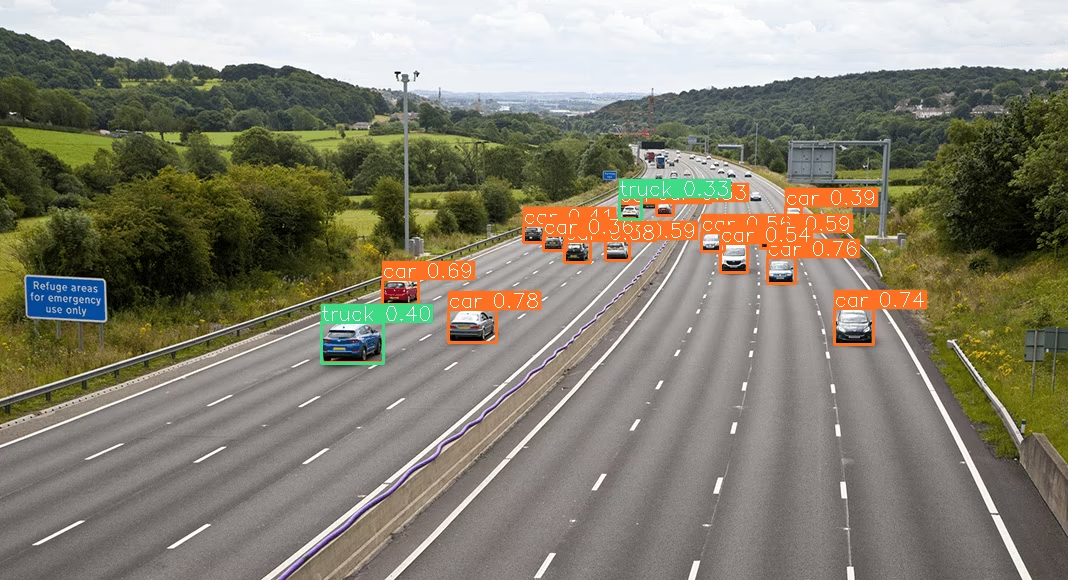
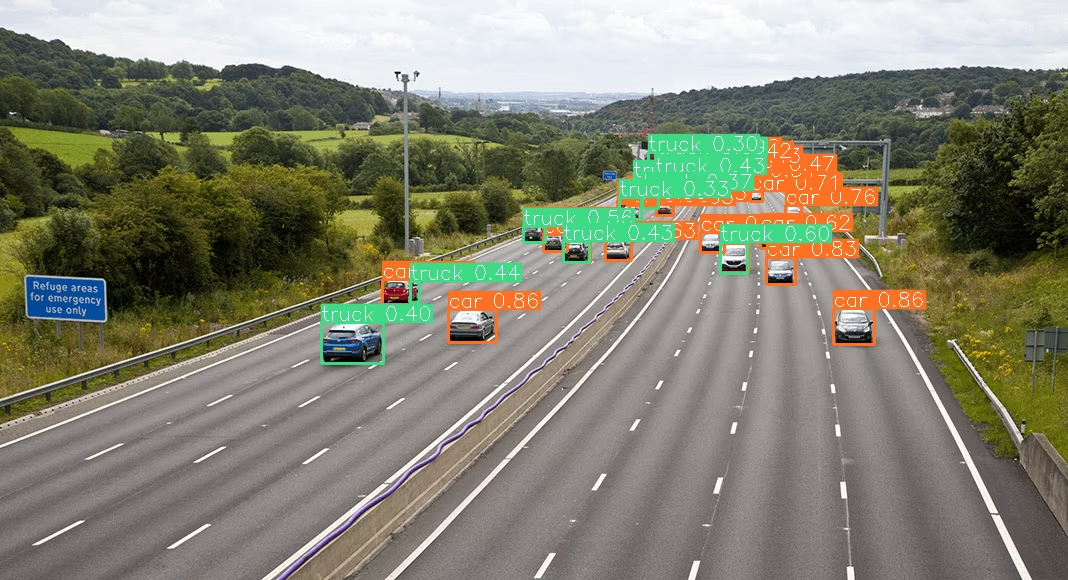
スライス推論とは、大きな画像や高解像度の画像を小さなセグメント(スライス)に分割し、各スライスで物体検出を行ってから、検出結果を元画像上の物体位置に対応付ける手法です。計算リソースが限られている場合、非常に高解像度の画像によってメモリの問題が発生する可能性がある場合、または画像全体をモデルの入力サイズに縮小すると物体が小さすぎて検出できない場合に有効です。
スライス推論のメリット#
-
メモリ負荷の軽減: 各スライスが小さいため、非常に大きな画像でもピーク時のメモリ使用量を抑え、性能の低いハードウェアでも安定して動作できます。
-
小さな物体の検出精度向上: 各スライスはモデルの入力解像度で処理されるため、関心のある物体を捉えるのに十分な大きさのスライスを使用すれば、小さな物体が占めるピクセル数が増えて検出しやすくなります。
-
スケーラビリティの向上: この手法により、さまざまなサイズや解像度の画像に対する物体検出を容易にスケーリングできるため、衛星画像から医療診断まで幅広い用途に適しています。
| SAHIなしのYOLO26 | SAHIありのYOLO26 |
|---|---|
 |  |
インストールと準備#
インストール#
始めるには、SAHIとUltralyticsの最新バージョンをインストールします:
pip install -U ultralytics sahiモジュールのインポートとリソースのダウンロード#
テスト画像をダウンロードする方法は次のとおりです:
from sahi.utils.file import download_from_url

# テスト画像をダウンロード
download_from_url(
    "https://raw.githubusercontent.com/obss/sahi/main/demo/demo_data/small-vehicles1.jpeg",
    "demo_data/small-vehicles1.jpeg",
)
download_from_url(
    "https://raw.githubusercontent.com/obss/sahi/main/demo/demo_data/terrain2.png",
    "demo_data/terrain2.png",
)YOLO26による標準推論#
モデルをインスタンス化する#
次のようにして、物体検出用のYOLO26モデルをインスタンス化できます:
from sahi import AutoDetectionModel

detection_model = AutoDetectionModel.from_pretrained(
    model_type="ultralytics",
    model_path="yolo26n.pt",
    confidence_threshold=0.3,
    device="cpu",  # または 'cuda:0'
)標準の予測を実行する#
画像パスを指定して標準的な推論を実行します。
from sahi.predict import get_prediction

result = get_prediction("demo_data/small-vehicles1.jpeg", detection_model)

result.export_visuals(export_dir="demo_data/", hide_conf=True)結果を可視化する#
予測されたバウンディングボックスとマスクをエクスポートして可視化します:
from PIL import Image

# 予測画像を開く
processed_image = Image.open("demo_data/prediction_visual.png")

# 予測画像を表示する
processed_image.show()YOLO26によるスライス推論#
スライスの寸法と重複率を指定して、スライス推論を実行します:
from PIL import Image
from sahi.predict import get_sliced_prediction

result = get_sliced_prediction(
    "demo_data/small-vehicles1.jpeg",
    detection_model,
    slice_height=256,
    slice_width=256,
    overlap_height_ratio=0.2,
    overlap_width_ratio=0.2,
)

# 結果をエクスポート
result.export_visuals(export_dir="demo_data/", hide_conf=True)

# 予測画像を開く
processed_image = Image.open("demo_data/prediction_visual.png")

# 予測画像を表示する
processed_image.show()予測結果の処理#
SAHIはPredictionResultオブジェクトを提供しており、さまざまなアノテーション形式に変換できます:
# オブジェクトの予測リストにアクセスする
object_prediction_list = result.object_prediction_list

# COCOアノテーション形式とCOCO予測形式に変換する
result.to_coco_annotations()[:3]
result.to_coco_predictions(image_id=1)[:3]バッチ予測#
画像ディレクトリ内のファイルをバッチ予測するには:
from sahi.predict import predict

predict(
    model_type="ultralytics",
    model_path="yolo26n.pt",
    model_device="cpu",  # または 'cuda:0'
    model_confidence_threshold=0.4,
    source="path/to/dir",
    slice_height=256,
    slice_width=256,
    overlap_height_ratio=0.2,
    overlap_width_ratio=0.2,
)
これで、標準推論とスライス推論の両方で、YOLO26とSAHIを使用する準備が整いました。
引用と謝辞#
研究または開発でSAHIを使用する場合は、SAHIの原著論文を引用し、著者に謝意を表してください:
@article{akyon2022sahi,
  title={Slicing Aided Hyper Inference and Fine-tuning for Small Object Detection},
  author={Akyon, Fatih Cagatay and Altinuc, Sinan Onur and Temizel, Alptekin},
  journal={2022 IEEE International Conference on Image Processing (ICIP)},
  doi={10.1109/ICIP46576.2022.9897990},
  pages={966-970},
  year={2022}
}コンピュータービジョンコミュニティに向けて、このリソースを作成・維持してくださったSAHI研究グループに感謝します。
よくある質問#
Ultralytics YOLO26をSAHI(Slicing Aided Hyper Inference)と統合してスライス推論を行うと、高解像度画像を扱いやすいスライスに分割することで物体検出を改善できます。この方法では、メモリ使用量を抑えながら小さな物体を検出できます。開始するには、ultralyticsライブラリとsahiライブラリをインストールします。
pip install -U ultralytics sahi次に、テスト画像をダウンロードします:
from sahi.utils.file import download_from_url # テスト画像をダウンロード download_from_url( "https://raw.githubusercontent.com/obss/sahi/main/demo/demo_data/small-vehicles1.jpeg", "demo_data/small-vehicles1.jpeg", ) download_from_url( "https://raw.githubusercontent.com/obss/sahi/main/demo/demo_data/terrain2.png", "demo_data/terrain2.png", )大きな画像の物体検出にUltralytics YOLO26とSAHIを使用すると、次のようなメリットがあります:
- メモリ負荷の軽減: 小さなスライスはメモリ消費量が少ないため、リソースが限られたハードウェアでも高品質な検出を実行できます。
- 小さな物体の検出精度向上: スライスを使用すると、小さな物体がモデルの入力サイズに対して相対的に大きくなり、SAHIは隣接するスライスの重複するBBoxを統合します。
- スケーラビリティの向上: さまざまな画像サイズや解像度に応じて物体検出タスクをスケーリングできるため、SAHIは衛星画像の分析や医療診断など、幅広い用途に適しています。
ドキュメントでスライス推論のメリットについて詳しくご覧ください。
はい。YOLO26とSAHIを使用するとき、予測結果を可視化できます。結果をエクスポートして可視化する方法は次のとおりです:
from PIL import Image result.export_visuals(export_dir="demo_data/", hide_conf=True) processed_image = Image.open("demo_data/prediction_visual.png") processed_image.show()このコマンドを実行すると、可視化した予測結果が指定したディレクトリに保存されます。保存した画像を読み込み、ノートブックやアプリケーションで表示できます。詳しい手順は、標準推論のセクションをご覧ください。
SAHI(スライス支援型ハイパー推論)は、物体検出においてUltralytics YOLO26を補完する次のような機能を提供します:
- 簡単な統合: YOLOモデルでは、コードを最小限変更するだけでSAHIを使用できます。
- リソース効率: 大きな画像を小さなスライスに分割するため、メモリ使用量を抑えられます。
- 高い精度: スライスを結合する際に重複する検出ボックスを統合することで、SAHIはスライス境界での重複検出を防ぎます。
理解を深めるには、SAHIの主な機能についてご覧ください。
YOLO26とSAHIを使用した大規模な推論プロジェクトを進めるには、次のベストプラクティスに従ってください。
- 必要なライブラリをインストールする: ultralyticsとsahiの最新バージョンがインストールされていることを確認してください。
- スライス推論を設定する: プロジェクトに適したスライスの寸法とオーバーラップ率を決定してください。
- バッチ予測を実行する: SAHIの
predict関数を使用して、画像ディレクトリ内の画像に対するバッチ予測を実行します。
バッチ予測の例:
from sahi.predict import predict predict( model_type="ultralytics", model_path="path/to/yolo26n.pt", model_device="cpu", # または 'cuda:0' model_confidence_threshold=0.4, source="path/to/dir", slice_height=256, slice_width=256, overlap_height_ratio=0.2, overlap_width_ratio=0.2, )詳しい手順については、バッチ予測のセクションをご覧ください。


コメント215
質問したり、結果を共有したり、ほかの人をサポートしたりできます。
ZSBSB
Your work is perfect, I have one question, does the current point SAHI library support yolov11's rotating frame target detection?
1 Fatih AkyonUltralytics
Yes it supports 👌🏻
illink7
Hi folks. I still work with SAHI and YOLOv8-seg When I tried to do segmentation with small aerial image without SAHI it works well and segment my objects (forest and buildings) But when I try to do this with SAHI it doesn't provide results with mask. I've installed all nececcary libraries, and they have the same environment but still no results Could you check my code and maybe you find the best solution?
from sahi.predict import get_sliced_prediction from sahi import AutoDetectionModel from PIL import Image import os from ultralytics import YOLO import torch import numpy as np from PIL import Image
Set the path to the image
IMAGE_PATH = r"PATH"
Setting the path to the model
MODEL_PATH = r"PATH"
Upload an image
image = Image.open(IMAGE_PATH)
Initialize the model
detection_model = AutoDetectionModel.from_pretrained( model_type='yolov8', model_path=MODEL_PATH, confidence_threshold=0.25, device="cpu" # if torch.cuda.is_available() else "cpu" )
Performing predictions with cutting the image into 512x512 parts
result = get_sliced_prediction( image, detection_model, slice_height=512, slice_width=512, overlap_height_ratio=0.2, overlap_width_ratio=0.2 )
Saving the results
output_dir = 'output_vs' os.makedirs(output_dir, exist_ok=True) result.export_visuals(export_dir=output_dir, file_name='segmented_image.png')
Initialize the dictionary for merged masks by class
combined_masks_by_class = {}
Export masks and combine them by class
for prediction in result.object_prediction_list: mask = prediction.mask
category_name = prediction.category.name
if mask is not None: mask_array = mask.bool_mask # Scale the mask to the size of the original image mask_image = Image.fromarray((mask_array.astype(np.uint8) * 255)) mask_resized = mask_image.resize((image.width, image.height), resample=Image.NEAREST) mask_resized_np = np.array(mask_resized)# Add a mask to the appropriate class in the dictionary if category_name not in combined_masks_by_class: combined_masks_by_class[category_name] = np.zeros((image.height, image.width), dtype=np.uint8) combined_masks_by_class[category_name] = np.maximum(combined_masks_by_class[category_name], mask_resized_np)Store merged masks by class
for category_name, combined_mask in combined_masks_by_class.items(): combined_mask_image = Image.fromarray(combined_mask) combined_mask_image.save(os.path.join(output_dir, f'combined_mask_{category_name}.png'))
print(f"Results saved in {output_dir}")
After that code I receive aerial image with boxes and label but without masks ( How I can export masks divided by classes which exist in my model?
1 Paula DerrengerUltralytics(編集済み)
@illink7 hi there!
Thank you for sharing your detailed code and describing the issue you're encountering with SAHI and YOLOv8-seg. Let's work through this together to find a solution.
Firstly, could you please confirm that you are using the latest versions of both
torchandultralytics? You can upgrade them using the following commands:pip install --upgrade torch ultralyticsNext, let's ensure that the issue isn't related to the specific environment or versions. If you haven't already, please try running your code in a fresh environment with the latest versions of all necessary libraries.
Regarding your code, it looks well-structured, but there are a few areas we can check and potentially improve:
- Model Initialization: Ensure that the model path and image path are correctly set.
- Prediction Results: Verify that the
result.object_prediction_listcontains the expected mask data.
Here's a slightly modified version of your code with additional checks and comments:
from sahi.predict import get_sliced_prediction
from sahi import AutoDetectionModel
from PIL import Image
import os
from ultralytics import YOLO
import torch
import numpy as np

# Set the path to the image and model
IMAGE_PATH = r"PATH_TO_IMAGE"
MODEL_PATH = r"PATH_TO_MODEL"

# Upload an image
image = Image.open(IMAGE_PATH)

# Initialize the model
detection_model = AutoDetectionModel.from_pretrained(
    model_type='ultralytics',
    model_path=MODEL_PATH,
    confidence_threshold=0.25,
    device="cuda" if torch.cuda.is_available() else "cpu"
)

# Performing predictions with slicing the image into 512x512 parts
result = get_sliced_prediction(
    image,
    detection_model,
    slice_height=512,
    slice_width=512,
    overlap_height_ratio=0.2,
    overlap_width_ratio=0.2
)

# Check if masks are present in the predictions
if not result.object_prediction_list:
    print("No predictions found. Please check your model and input image.")
else:
    print(f"Found {len(result.object_prediction_list)} predictions.")

# Saving the results
output_dir = 'output_vs'
os.makedirs(output_dir, exist_ok=True)
result.export_visuals(export_dir=output_dir, file_name='segmented_image.png')

# Initialize the dictionary for merged masks by class
combined_masks_by_class = {}

# Export masks and combine them by class
for prediction in result.object_prediction_list:
    mask = prediction.mask
    category_name = prediction.category.name
    if mask is not None:
        mask_array = mask.bool_mask
        # Scale the mask to the size of the original image
        mask_image = Image.fromarray((mask_array.astype(np.uint8) * 255))
        mask_resized = mask_image.resize((image.width, image.height), resample=Image.NEAREST)
        mask_resized_np = np.array(mask_resized)

        # Add a mask to the appropriate class in the dictionary
        if category_name not in combined_masks_by_class:
            combined_masks_by_class[category_name] = np.zeros((image.height, image.width), dtype=np.uint8)
        combined_masks_by_class[category_name] = np.maximum(combined_masks_by_class[category_name], mask_resized_np)

# Store merged masks by class
for category_name, combined_mask in combined_masks_by_class.items():
    combined_mask_image = Image.fromarray(combined_mask)
    combined_mask_image.save(os.path.join(output_dir, f'combined_mask_{category_name}.png'))

print(f"Results saved in {output_dir}")
Please ensure that the paths to your image and model are correct. Additionally, the
result.object_prediction_listshould contain the mask data if the model is correctly configured and the image contains detectable objects.If the issue persists, could you provide more details or a minimum reproducible example? This will help us better understand the problem and provide a more accurate solution. You can refer to our guide on creating a minimum reproducible example here: Minimum Reproducible Example.
Looking forward to your response! 😊
- Paula DerrengerUltralytics(編集済み)
@illink7 hi there! Thanks for reaching out and providing a detailed description of your issue along with the code snippet. Let's work through this together to get your segmentation results with SAHI and YOLOv8-seg.
Firstly, let's ensure a few things:
-
Reproducible Example: Your code looks comprehensive, but to help us reproduce the issue accurately, could you please confirm that you are using the latest versions of
torch,ultralytics, andsahi? You can update them using:pip install -U torch ultralytics sahi -
Model and Environment: Verify that your model path and image path are correctly set and accessible. Also, ensure that your environment is correctly set up to use the necessary libraries.
-
Code Review: Your code for performing sliced inference and exporting masks looks good. However, let's make sure that the masks are being correctly processed and saved. Here’s a slightly modified version of your code to ensure that the masks are correctly handled:
from sahi.predict import get_sliced_prediction from sahi import AutoDetectionModel from PIL import Image import os import numpy as np # Set the path to the image and model IMAGE_PATH = r"PATH_TO_IMAGE" MODEL_PATH = r"PATH_TO_MODEL" # Upload an image image = Image.open(IMAGE_PATH) # Initialize the model detection_model = AutoDetectionModel.from_pretrained( model_type='ultralytics', model_path=MODEL_PATH, confidence_threshold=0.25, device="cpu" # or 'cuda:0' ) # Performing predictions with slicing the image into 512x512 parts result = get_sliced_prediction( image, detection_model, slice_height=512, slice_width=512, overlap_height_ratio=0.2, overlap_width_ratio=0.2 ) # Saving the results output_dir = 'output_vs' os.makedirs(output_dir, exist_ok=True) result.export_visuals(export_dir=output_dir, file_name='segmented_image.png') # Initialize the dictionary for merged masks by class combined_masks_by_class = {} # Export masks and combine them by class for prediction in result.object_prediction_list: mask = prediction.mask category_name = prediction.category.name if mask is not None: mask_array = mask.bool_mask # Scale the mask to the size of the original image mask_image = Image.fromarray((mask_array.astype(np.uint8) * 255)) mask_resized = mask_image.resize((image.width, image.height), resample=Image.NEAREST) mask_resized_np = np.array(mask_resized) # Add a mask to the appropriate class in the dictionary if category_name not in combined_masks_by_class: combined_masks_by_class[category_name] = np.zeros((image.height, image.width), dtype=np.uint8) combined_masks_by_class[category_name] = np.maximum(combined_masks_by_class[category_name], mask_resized_np) # Store merged masks by class for category_name, combined_mask in combined_masks_by_class.items(): combined_mask_image = Image.fromarray(combined_mask) combined_mask_image.save(os.path.join(output_dir, f'combined_mask_{category_name}.png')) print(f"Results saved in {output_dir}") -
Debugging: If the issue persists, please check the following:
- Ensure that the
maskattribute inprediction.maskis notNone. - Verify that the
mask.bool_maskis correctly processed and resized.
- Ensure that the
If you continue to face issues, please provide any error messages or additional details that could help us diagnose the problem further.
For more detailed guidance, you can refer to our SAHI Tiled Inference Guide.
Let us know how it goes! 😊
-
Hi, I did this but there is no result so yeah result exist but there is only image with bboxes and labels but without masks( Could you help me with peace of code or some recommendations how I can do this in another way?
- Paula DerrengerUltralytics(編集済み)
Hi there! 😊
Thank you for providing the details. It sounds like you're encountering an issue where the masks are not being generated during sliced inference with SAHI and YOLOv8-seg. Let's troubleshoot this together.
First, please ensure that you are using the latest versions of
torch,ultralytics, andsahi. You can update them using:pip install -U torch ultralytics sahiNext, let's verify that your code is correctly set up to handle masks. Here’s a refined version of your code with additional checks to ensure that masks are processed correctly:
from sahi.predict import get_sliced_prediction
from sahi import AutoDetectionModel
from PIL import Image
import os
import numpy as np
import torch

# Set the path to the image and model
IMAGE_PATH = r"PATH_TO_IMAGE"
MODEL_PATH = r"PATH_TO_MODEL"

# Upload an image
image = Image.open(IMAGE_PATH)

# Initialize the model
detection_model = AutoDetectionModel.from_pretrained(
    model_type='ultralytics',
    model_path=MODEL_PATH,
    confidence_threshold=0.25,
    device="cuda" if torch.cuda.is_available() else "cpu"
)

# Performing predictions with slicing the image into 512x512 parts
result = get_sliced_prediction(
    image,
    detection_model,
    slice_height=512,
    slice_width=512,
    overlap_height_ratio=0.2,
    overlap_width_ratio=0.2
)

# Check if masks are present in the predictions
if not result.object_prediction_list:
    print("No predictions found. Please check your model and input image.")
else:
    print(f"Found {len(result.object_prediction_list)} predictions.")

# Saving the results
output_dir = 'output_vs'
os.makedirs(output_dir, exist_ok=True)
result.export_visuals(export_dir=output_dir, file_name='segmented_image.png')

# Initialize the dictionary for merged masks by class
combined_masks_by_class = {}

# Export masks and combine them by class
for prediction in result.object_prediction_list:
    mask = prediction.mask
    category_name = prediction.category.name
    if mask is not None:
        mask_array = mask.bool_mask
        # Scale the mask to the size of the original image
        mask_image = Image.fromarray((mask_array.astype(np.uint8) * 255))
        mask_resized = mask_image.resize((image.width, image.height), resample=Image.NEAREST)
        mask_resized_np = np.array(mask_resized)

        # Add a mask to the appropriate class in the dictionary
        if category_name not in combined_masks_by_class:
            combined_masks_by_class[category_name] = np.zeros((image.height, image.width), dtype=np.uint8)
        combined_masks_by_class[category_name] = np.maximum(combined_masks_by_class[category_name], mask_resized_np)

# Store merged masks by class
for category_name, combined_mask in combined_masks_by_class.items():
    combined_mask_image = Image.fromarray(combined_mask)
    combined_mask_image.save(os.path.join(output_dir, f'combined_mask_{category_name}.png'))

print(f"Results saved in {output_dir}")
Key Points to Check:
- Model Path and Image Path: Ensure that the paths to your model and image are correct.
- Prediction Results: Verify that
result.object_prediction_listcontains predictions with masks. - Mask Processing: Ensure that the mask processing logic correctly handles and resizes the masks.
If the issue persists, please provide a minimum reproducible example as outlined in our Minimum Reproducible Example Guide. This will help us investigate the issue more effectively.
Feel free to reach out if you have any further questions or need additional assistance. We're here to help! 🚀
from sahi.predict import get_sliced_prediction
from sahi import AutoDetectionModel
from PIL import Image
import os
import numpy as np

# Встановлюємо шлях до зображення
IMAGE_PATH = r"D:\Illia\YOLO_test\weights_v2_multiModel\img4test\img_139_shift.png"

# Встановлюємо шлях до моделі
MODEL_PATH = r"D:\Illia\YOLO_test\weights_v2_multiModel\best.pt"

# Upload an image
image = Image.open(IMAGE_PATH)

# Initialize the model
detection_model = AutoDetectionModel.from_pretrained(
    model_type='yolov8',
    model_path=MODEL_PATH,
    confidence_threshold=0.25,
    device="cuda" # if torch.cuda.is_available() else "cpu"
)

# Performing predictions with slicing the image into 512x512 parts
result = get_sliced_prediction(
    image,
    detection_model,
    slice_height=512,
    slice_width=512,
    overlap_height_ratio=0.2,
    overlap_width_ratio=0.2
)

# Check if masks are present in the predictions
if not result.object_prediction_list:
    print("No predictions found. Please check your model and input image.")
else:
    print(f"Found {len(result.object_prediction_list)} predictions.")

# Saving the results
output_dir = 'output_vs2'
os.makedirs(output_dir, exist_ok=True)
result.export_visuals(export_dir=output_dir, file_name='segmented_image.png')

# Initialize the dictionary for merged masks by class
combined_masks_by_class = {}

# Export masks and combine them by class
for prediction in result.object_prediction_list:
    mask = prediction.mask
    category_name = prediction.category.name
    if mask is not None:
        mask_array = mask.bool_mask
        # Scale the mask to the size of the original image
        mask_image = Image.fromarray((mask_array.astype(np.uint8) * 255))
        mask_resized = mask_image.resize((image.width, image.height), resample=Image.NEAREST)
        mask_resized_np = np.array(mask_resized)

        # Add a mask to the appropriate class in the dictionary
        if category_name not in combined_masks_by_class:
            combined_masks_by_class[category_name] = np.zeros((image.height, image.width), dtype=np.uint8)
        combined_masks_by_class[category_name] = np.maximum(combined_masks_by_class[category_name], mask_resized_np)

# Store merged masks by class
for category_name, combined_mask in combined_masks_by_class.items():
    combined_mask_image = Image.fromarray(combined_mask)
    combined_mask_image.save(os.path.join(output_dir, f'combined_mask_{category_name}.png'))

print(f"Results saved in {output_dir}")
Result: Performing prediction on 60 slices. Found 33 predictions. Results saved in output_vs2 But still just image without masks, only bboxes and labels I double-checked model and images but still noresult Maybe that is a bug
- Paula DerrengerUltralytics(編集済み)
Hi @illink7,
Thank you for sharing your detailed code and the issue you're encountering. Let's work through this together to resolve the problem with the masks not appearing in your results.
Steps to Troubleshoot and Resolve
-
Verify Library Versions: Ensure you are using the latest versions of
torch,ultralytics, andsahi. You can update them using:pip install -U torch ultralytics sahi -
Check Model and Image Paths: Ensure that the paths to your model and image are correct and accessible.
-
Debugging the Mask Generation:
- Ensure that the
maskattribute inprediction.maskis notNone. - Verify that the
mask.bool_maskis correctly processed and resized.
- Ensure that the
Here’s a slightly modified version of your code with additional checks:
from sahi.predict import get_sliced_prediction
from sahi import AutoDetectionModel
from PIL import Image
import os
import numpy as np
import torch

# Set the path to the image and model
IMAGE_PATH = r"D:\Illia\YOLO_test\weights_v2_multiModel\img4test\img_139_shift.png"
MODEL_PATH = r"D:\Illia\YOLO_test\weights_v2_multiModel\best.pt"

# Upload an image
image = Image.open(IMAGE_PATH)

# Initialize the model
detection_model = AutoDetectionModel.from_pretrained(
    model_type='ultralytics',
    model_path=MODEL_PATH,
    confidence_threshold=0.25,
    device="cuda" if torch.cuda.is_available() else "cpu"
)

# Performing predictions with slicing the image into 512x512 parts
result = get_sliced_prediction(
    image,
    detection_model,
    slice_height=512,
    slice_width=512,
    overlap_height_ratio=0.2,
    overlap_width_ratio=0.2
)

# Check if masks are present in the predictions
if not result.object_prediction_list:
    print("No predictions found. Please check your model and input image.")
else:
    print(f"Found {len(result.object_prediction_list)} predictions.")

# Saving the results
output_dir = 'output_vs2'
os.makedirs(output_dir, exist_ok=True)
result.export_visuals(export_dir=output_dir, file_name='segmented_image.png')

# Initialize the dictionary for merged masks by class
combined_masks_by_class = {}

# Export masks and combine them by class
for prediction in result.object_prediction_list:
    mask = prediction.mask
    category_name = prediction.category.name
    if mask is not None:
        mask_array = mask.bool_mask
        # Scale the mask to the size of the original image
        mask_image = Image.fromarray((mask_array.astype(np.uint8) * 255))
        mask_resized = mask_image.resize((image.width, image.height), resample=Image.NEAREST)
        mask_resized_np = np.array(mask_resized)

        # Add a mask to the appropriate class in the dictionary
        if category_name not in combined_masks_by_class:
            combined_masks_by_class[category_name] = np.zeros((image.height, image.width), dtype=np.uint8)
        combined_masks_by_class[category_name] = np.maximum(combined_masks_by_class[category_name], mask_resized_np)

# Store merged masks by class
for category_name, combined_mask in combined_masks_by_class.items():
    combined_mask_image = Image.fromarray(combined_mask)
    combined_mask_image.save(os.path.join(output_dir, f'combined_mask_{category_name}.png'))

print(f"Results saved in {output_dir}")
Additional Recommendations:
- Check the Model Output: Ensure that your model is indeed capable of generating masks. You can test this by running standard inference without slicing to verify mask generation.
- Review SAHI Documentation: For more detailed guidance, refer to the SAHI Tiled Inference Guide.
If the issue persists, please provide a minimum reproducible example as outlined in our Minimum Reproducible Example Guide. This will help us investigate the issue more effectively.
Feel free to reach out if you have any further questions or need additional assistance. We're here to help! 😊
-
Hi. I checked all above mentioned Here is MRE Bug description: I wrote a code which can export the detected mask of the objects and divide them into existing classes. However, something unexpectable happened and I still don't have a desirable result. Segmentation masks disappeared:))). The most strange thing when I run this code on my laptop - it works correctly, but when I shared this code to my friend or even tried to run on my PC - it didn't export masks I cloned the environments and in both situations environment was Python 3.12 here is the link on image - https://www.princeton.edu/sites/default/files/styles/1x_full_2x_half_crop/public/images/2022/02/KOA_Nassau_2697x1517.jpg?itok=Bg2K7j7J Code
from sahi.predict import get_sliced_prediction
from sahi import AutoDetectionModel
from PIL import Image
import os
import numpy as np
import torch
import torchvision
# Set the path to the image and model
IMAGE_PATH = r"D:\Illia\dog.jpg"
MODEL_PATH = "yolov8n-seg.pt"

# Upload an image
image = Image.open(IMAGE_PATH)

# Initialize the model
detection_model = AutoDetectionModel.from_pretrained(
    model_type='yolov8',
    model_path=MODEL_PATH,
    confidence_threshold=0.25,
    device="cuda" if torch.cuda.is_available() else "cpu"
)

# Performing predictions with slicing the image into 512x512 parts
result = get_sliced_prediction(
    image,
    detection_model,
    slice_height=1024,
    slice_width=1024,
    overlap_height_ratio=0.2,
    overlap_width_ratio=0.2
)

# Check if masks are present in the predictions
if not result.object_prediction_list:
    print("No predictions found. Please check your model and input image.")
else:
    print(f"Found {len(result.object_prediction_list)} predictions.")

# Saving the results
output_dir = 'output_vs2'
os.makedirs(output_dir, exist_ok=True)
result.export_visuals(export_dir=output_dir, file_name='segmented_image.png')

# Initialize the dictionary for merged masks by class
combined_masks_by_class = {}

# Export masks and combine them by class
for prediction in result.object_prediction_list:
    mask = prediction.mask
    category_name = prediction.category.name
    if mask is not None:
        mask_array = mask.bool_mask
        # Scale the mask to the size of the original image
        mask_image = Image.fromarray((mask_array.astype(np.uint8) * 255))
        mask_resized = mask_image.resize((image.width, image.height), resample=Image.NEAREST)
        mask_resized_np = np.array(mask_resized)

        # Add a mask to the appropriate class in the dictionary
        if category_name not in combined_masks_by_class:
            combined_masks_by_class[category_name] = np.zeros((image.height, image.width), dtype=np.uint8)
        combined_masks_by_class[category_name] = np.maximum(combined_masks_by_class[category_name], mask_resized_np)

# Store merged masks by class
for category_name, combined_mask in combined_masks_by_class.items():
    combined_mask_image = Image.fromarray(combined_mask)
    combined_mask_image.save(os.path.join(output_dir, f'combined_mask_{category_name}.png'))

print(f"Results saved in {output_dir}")
I wish we can solve this together
- Paula DerrengerUltralytics(編集済み)
Hi @illink7,
Thank you for providing a detailed description and the minimum reproducible example (MRE). Let's work together to resolve the issue with the segmentation masks not appearing in your results.
Steps to Troubleshoot and Resolve
-
Verify Library Versions: Ensure you are using the latest versions of
torch,ultralytics, andsahi. You can update them using:pip install -U torch ultralytics sahi -
Environment Consistency: Since the code works on your laptop but not on other machines, ensure that all environments are consistent. Verify that the same versions of Python and all dependencies are installed.
-
Debugging the Mask Generation:
- Ensure that the
maskattribute inprediction.maskis notNone. - Verify that the
mask.bool_maskis correctly processed and resized.
- Ensure that the
Here’s a slightly modified version of your code with additional checks:
from sahi.predict import get_sliced_prediction
from sahi import AutoDetectionModel
from PIL import Image
import os
import numpy as np
import torch

# Set the path to the image and model
IMAGE_PATH = r"D:\Illia\YOLO_test\weights_v2_multiModel\img4test\img_139_shift.png"
MODEL_PATH = r"D:\Illia\YOLO_test\weights_v2_multiModel\best.pt"

# Upload an image
image = Image.open(IMAGE_PATH)

# Initialize the model
detection_model = AutoDetectionModel.from_pretrained(
    model_type='ultralytics',
    model_path=MODEL_PATH,
    confidence_threshold=0.25,
    device="cuda" if torch.cuda.is_available() else "cpu"
)

# Performing predictions with slicing the image into 512x512 parts
result = get_sliced_prediction(
    image,
    detection_model,
    slice_height=512,
    slice_width=512,
    overlap_height_ratio=0.2,
    overlap_width_ratio=0.2
)

# Check if masks are present in the predictions
if not result.object_prediction_list:
    print("No predictions found. Please check your model and input image.")
else:
    print(f"Found {len(result.object_prediction_list)} predictions.")

# Saving the results
output_dir = 'output_vs2'
os.makedirs(output_dir, exist_ok=True)
result.export_visuals(export_dir=output_dir, file_name='segmented_image.png')

# Initialize the dictionary for merged masks by class
combined_masks_by_class = {}

# Export masks and combine them by class
for prediction in result.object_prediction_list:
    mask = prediction.mask
    category_name = prediction.category.name
    if mask is not None:
        mask_array = mask.bool_mask
        # Scale the mask to the size of the original image
        mask_image = Image.fromarray((mask_array.astype(np.uint8) * 255))
        mask_resized = mask_image.resize((image.width, image.height), resample=Image.NEAREST)
        mask_resized_np = np.array(mask_resized)

        # Add a mask to the appropriate class in the dictionary
        if category_name not in combined_masks_by_class:
            combined_masks_by_class[category_name] = np.zeros((image.height, image.width), dtype=np.uint8)
        combined_masks_by_class[category_name] = np.maximum(combined_masks_by_class[category_name], mask_resized_np)

# Store merged masks by class
for category_name, combined_mask in combined_masks_by_class.items():
    combined_mask_image = Image.fromarray(combined_mask)
    combined_mask_image.save(os.path.join(output_dir, f'combined_mask_{category_name}.png'))

print(f"Results saved in {output_dir}")
Additional Recommendations:
- Check the Model Output: Ensure that your model is indeed capable of generating masks. You can test this by running standard inference without slicing to verify mask generation.
- Review SAHI Documentation: For more detailed guidance, refer to the SAHI Tiled Inference Guide.
If the issue persists, please provide any error messages or additional details that could help us diagnose the problem further.
Feel free to reach out if you have any further questions or need additional assistance. We're here to help! 😊
-
Thank you for help, but again there is no masks Could you provide me maybe another solution And try as I mentioned above with open model and image IMAGE_PATH = r"D:\Illia\dog.jpg" here is the link on image - https://www.princeton.edu/sites/default/files/styles/1x_full_2x_half_crop/public/images/2022/02/KOA_Nassau_2697x1517.jpg?itok=Bg2K7j7J MODEL_PATH = "yolov8n-seg.pt"
- Paula DerrengerUltralytics(編集済み)
Hi @illink7,
Thank you for your patience and for providing the detailed information. Let's work through this together to resolve the issue with the segmentation masks not appearing in your results.
Steps to Troubleshoot and Resolve
-
Verify Library Versions: Ensure you are using the latest versions of
torch,ultralytics, andsahi. You can update them using:pip install -U torch ultralytics sahi -
Environment Consistency: Since the code works on your laptop but not on other machines, ensure that all environments are consistent. Verify that the same versions of Python and all dependencies are installed.
-
Debugging the Mask Generation:
- Ensure that the
maskattribute inprediction.maskis notNone. - Verify that the
mask.bool_maskis correctly processed and resized.
- Ensure that the
Here’s a slightly modified version of your code with additional checks:
from sahi.predict import get_sliced_prediction
from sahi import AutoDetectionModel
from PIL import Image
import os
import numpy as np
import torch

# Set the path to the image and model
IMAGE_PATH = r"D:\Illia\dog.jpg"
MODEL_PATH = "yolov8n-seg.pt"

# Upload an image
image = Image.open(IMAGE_PATH)

# Initialize the model
detection_model = AutoDetectionModel.from_pretrained(
    model_type='ultralytics',
    model_path=MODEL_PATH,
    confidence_threshold=0.25,
    device="cuda" if torch.cuda.is_available() else "cpu"
)

# Performing predictions with slicing the image into 1024x1024 parts
result = get_sliced_prediction(
    image,
    detection_model,
    slice_height=1024,
    slice_width=1024,
    overlap_height_ratio=0.2,
    overlap_width_ratio=0.2
)

# Check if masks are present in the predictions
if not result.object_prediction_list:
    print("No predictions found. Please check your model and input image.")
else:
    print(f"Found {len(result.object_prediction_list)} predictions.")

# Saving the results
output_dir = 'output_vs2'
os.makedirs(output_dir, exist_ok=True)
result.export_visuals(export_dir=output_dir, file_name='segmented_image.png')

# Initialize the dictionary for merged masks by class
combined_masks_by_class = {}

# Export masks and combine them by class
for prediction in result.object_prediction_list:
    mask = prediction.mask
    category_name = prediction.category.name
    if mask is not None:
        mask_array = mask.bool_mask
        # Scale the mask to the size of the original image
        mask_image = Image.fromarray((mask_array.astype(np.uint8) * 255))
        mask_resized = mask_image.resize((image.width, image.height), resample=Image.NEAREST)
        mask_resized_np = np.array(mask_resized)

        # Add a mask to the appropriate class in the dictionary
        if category_name not in combined_masks_by_class:
            combined_masks_by_class[category_name] = np.zeros((image.height, image.width), dtype=np.uint8)
        combined_masks_by_class[category_name] = np.maximum(combined_masks_by_class[category_name], mask_resized_np)

# Store merged masks by class
for category_name, combined_mask in combined_masks_by_class.items():
    combined_mask_image = Image.fromarray(combined_mask)
    combined_mask_image.save(os.path.join(output_dir, f'combined_mask_{category_name}.png'))

print(f"Results saved in {output_dir}")
Additional Recommendations:
- Check the Model Output: Ensure that your model is indeed capable of generating masks. You can test this by running standard inference without slicing to verify mask generation.
- Review SAHI Documentation: For more detailed guidance, refer to the SAHI Tiled Inference Guide.
If the issue persists, please provide any error messages or additional details that could help us diagnose the problem further.
Feel free to reach out if you have any further questions or need additional assistance. We're here to help! 😊
-
pinnintipraneethkumar
Hi, @illink7 can you please check the sahi version, i have the same problem i fixed this by updating the sahi library.
Rohan-Python
@pinnintipraneethkumar Do you know how to disable bounding boxes on segmented images?
mxxxbbbb
When I use Sahi, the inference speed is normal in a single main thread, but when I load Sahi into one of multiple threads, it causes the inference speed to be much slower. What is the reason for this
1 Glenn JocherUltralytics
Hello! It sounds like you're experiencing a slowdown when running SAHI in a multi-threaded environment. This can often happen due to the increased overhead of managing multiple threads, especially if the threads are competing for limited computational resources like CPU or GPU.
Here are a couple of suggestions to potentially improve the performance:
-
Ensure Adequate Resources: Make sure that your system has enough resources (CPU/GPU) to handle multiple threads efficiently. If each thread is performing intensive computations, you might need more powerful hardware or fewer concurrent threads.
-
Optimize Thread Management: Try to manage the number of threads based on the workload and the hardware capabilities. Sometimes, reducing the number of threads can actually improve overall performance.
-
Profile Your Application: Use profiling tools to understand where the bottlenecks are. This can provide insights into whether the issue is due to thread management, I/O operations, or something else.
If you continue to experience issues, consider providing more details about your setup, such as the hardware specifications and the specific code implementation, so we can help you better. 🚀
-
I have loaded many deep learning models in one thread across multiple threads, among which sahi is one. When testing with a single main thread, the speed is not a problem, but with multiple threads, the speed is very slow
def pre_sahi(self,img_all):
    resize_img = self.resize_long_image(img_all,640)
    t1 = time.time()
    slice_image_result = slice_image(
        image=resize_img,
        slice_height=640,
        slice_width=640,
        overlap_height_ratio=0.2,
        overlap_width_ratio=0.2,
        auto_slice_resolution=True,
    )

    result = get_sliced_prediction(
        resize_img,
        slice_image_result,
        self.model_sahi,
    )
    box = []
    t2 = time.time()
    print("time:",t2-t1)
This is my call to this class's function in a certain thread, and the model is actually loaded by the constructor
- Glenn JocherUltralytics
Hello! It sounds like you're encountering a common issue when using multiple threads for inference, especially when each thread is loading a deep learning model like SAHI. This slowdown can occur due to several reasons:
-
Resource Contention: Each thread may be competing for limited computational resources (CPU/GPU). This is particularly significant if each model in the threads is substantial in size and computational demand.
-
Global Interpreter Lock (GIL) in Python: If you're using Python, the GIL can become a bottleneck in multi-threaded applications, as it allows only one thread to execute Python bytecode at a time. This can severely limit performance when using CPU-bound tasks.
-
I/O Bottlenecks: If your application involves reading from or writing to disk, such as loading models or accessing data, I/O operations can become a bottleneck when scaled across multiple threads.
To mitigate these issues, consider the following:
- Use multiprocessing instead of multithreading: This can help bypass the GIL and better utilize multiple cores.
- Optimize resource allocation: Ensure that each thread or process has enough resources to perform its tasks efficiently.
- Load models once: If possible, load your models once and share them across threads, rather than loading them separately in each thread.
For more detailed guidance, you might find our documentation on using YOLOv8 with SAHI helpful: Using YOLOv8 with SAHI for Sliced Inference. This guide provides insights into efficiently managing resources and optimizing inference tasks.
-
How I can combine SAHI with segmentation model for aerial images, could you provide me some details please
1- Paula DerrengerUltralytics(編集済み)
Certainly! To use SAHI with a segmentation model for aerial images, you can follow these steps to integrate and run sliced inference, which is particularly useful for large images, like those taken from aerial perspectives.
-
Install SAHI and Ultralytics:
pip install -U ultralytics sahi -
Import Necessary Modules:
from sahi.predict import get_sliced_prediction from sahi import AutoDetectionModel -
Download and Set Up Your Model: Assuming you have a trained segmentation model, ensure it's compatible with SAHI. You can convert YOLO models to work with SAHI quite easily.
-
Perform Sliced Inference: Here’s how to perform sliced inference on an aerial image:
# Assuming 'model_path' is the path to your trained model detection_model = AutoDetectionModel.from_pretrained( model_type='ultralytics', model_path=model_path, confidence_threshold=0.3, device="cpu", ) # Perform sliced prediction result = get_sliced_prediction( image="path/to/aerial_image.jpg", detection_model=detection_model, slice_height=256, slice_width=256, overlap_height_ratio=0.2, overlap_width_ratio=0.2 ) -
Visualize Results: You can visualize or further process the detection results as needed.
This approach helps handle large aerial images by dividing them into smaller, manageable slices, running the segmentation, and then combining the results. Let me know if you need more details on any specific part! 🚀
-
I did it, but unfortunately I receive the same result, detection instead segmentation
- Paula DerrengerUltralytics(編集済み)
Hello! SAHI supports sliced inference for segmentation too, as long as you load a segmentation model and use a recent
sahiversion. If you're not getting masks, check that:- Correct Model: The model loaded is a segmentation model (for example
yolo26n-seg.ptor your own trained-segweights), not a detection model. - Model Type: You load it with
AutoDetectionModel.from_pretrained(model_type="ultralytics", ...). - Versions: Both packages are current (
pip install -U ultralytics sahi). Masks are then available asprediction.maskon each item inresult.object_prediction_list.
If you need more specific guidance or a code example, let me know, and I'd be happy to help further! Cheers! 🚀
- Correct Model: The model loaded is a segmentation model (for example
Okay, I'll provide my code and maybe we solve this together
from sahi import AutoDetectionModel
detection_model = AutoDetectionModel.from_pretrained( model_type='yolov8', model_path=r"D:\best.pt", confidence_threshold=0.7, device="cuda:0", # or 'cuda:0' )
result = get_sliced_prediction( r"D:\img_0_shift.png", detection_model, slice_height=600, slice_width=600, overlap_height_ratio=0.2, overlap_width_ratio=0.2 )
result.export_visuals(export_dir="demo_data/") Image("demo_data/prediction_visual.png")
My best.pt is definitely segmentation model, but instead of doing this it does detection
- Paula DerrengerUltralytics(編集済み)
Hello! It seems like there's an issue with the setup where you're expecting segmentation results but getting detection results instead. Here's a couple of things you could check:
-
Model Type: Ensure that the model loaded is specifically trained for segmentation tasks. Even though the file might be named aptly, it's crucial to confirm its internals are meant for segmentation.
-
Model Loading: Use
AutoDetectionModel.from_pretrained(model_type="ultralytics", model_path=...), which also loads Ultralytics segmentation models, and make suresahiandultralyticsare up to date. -
Output Handling: Segmentation masks are returned on each prediction as
prediction.mask(for exampleprediction.mask.bool_mask) inresult.object_prediction_list, so check that your code reads them from there.
If none of these checks resolve the issue, consider sharing more details about the model and its training specifics. This will help narrow down the issue! 😊 Keep me posted on your progress!
-
Hi, I've tried a lot to find a solution on the internet, but I haven't found any results. What can you recommend or suggest to me?
recall - my purpose is segment objects from aerial images with my custom model
Yeah, I did it. Here is my code
import os from sahi import AutoDetectionModel from sahi.predict import get_sliced_prediction from PIL import Image
import torchIMAGE_PATH = r"C:\Users\ILLINK\Desktop\img4test\img_10_shift.png"
MODEL_PATH = r"C:\Users\ILLINK\Desktop\img4test\best.pt"
image = Image.open(IMAGE_PATH)
detection_model = AutoDetectionModel.from_pretrained( model_type='yolov8', model_path=MODEL_PATH, confidence_threshold=0.25, device="cuda" if torch.cuda.is_available() else "cpu" )
result = get_sliced_prediction( image, detection_model, slice_height=512, slice_width=512, overlap_height_ratio=0.2, overlap_width_ratio=0.2 )
output_dir = 'output' os.makedirs(output_dir, exist_ok=True) result.export_visuals(export_dir=output_dir, file_name='segmented_image.png')
print(f"Результати збережено в {output_dir}")
How I can get rid of bboxes and labels, just pure result, please help me?
- Paula DerrengerUltralytics(編集済み)
Hello! SAHI exposes the masks on each prediction rather than on the result, so you can skip
export_visualsand save only the masks without boxes or labels. Each item inresult.object_prediction_listhas amaskattribute (prediction.mask.bool_mask) when you use a segmentation model:import os import numpy as np from PIL import Image # 'result' is the PredictionResult from get_sliced_prediction() and 'image' is the PIL image you passed in combined_mask = np.zeros((image.height, image.width), dtype=np.uint8) for prediction in result.object_prediction_list: if prediction.mask is not None: combined_mask = np.maximum(combined_mask, prediction.mask.bool_mask.astype(np.uint8) * 255) Image.fromarray(combined_mask).save(os.path.join(output_dir, "segmentation_mask.png"))This requires a segmentation model loaded with
model_type="ultralytics"and a recentsahiversion. 👍Feel free to reach out if you need further clarification or assistance!
I combined your and my code there
import os from sahi import AutoDetectionModel from sahi.predict import get_sliced_prediction from PIL import Image import numpy as np import torch
IMAGE_PATH = r"C:\Users\ILLINK\Desktop\img4test\img_10_shift.png" MODEL_PATH = r"C:\Users\ILLINK\Desktop\img4test\best.pt"
Load the image
image = Image.open(IMAGE_PATH)
Load the detection model
detection_model = AutoDetectionModel.from_pretrained( model_type='yolov8', model_path=MODEL_PATH, confidence_threshold=0.25, device="cuda" if torch.cuda.is_available() else "cpu" )
Get sliced prediction
result = get_sliced_prediction( image, detection_model, slice_height=512, slice_width=512, overlap_height_ratio=0.2, overlap_width_ratio=0.2 )
Define output directory and create it if it doesn't exist
output_dir = 'output' os.makedirs(output_dir, exist_ok=True)
Simplified approach to handle masks and save them as an image
if hasattr(result, 'masks'): masks = result.masks # Your masks would come from your model's output combined_mask = np.max(masks, axis=0) # Combine masks assuming each is a separate channel
# Convert to a uint8 grayscale image mask_image = Image.fromarray((combined_mask * 255).astype(np.uint8)) mask_image.save(os.path.join(output_dir, 'segmentation_mask.png')) print(f"Результати збережено в {output_dir}")else: print("No masks found in the result. Ensure the model outputs segmentation masks.")
And there is result - No masks found in the result. Ensure the model outputs segmentation masks. Help me solve problem please
- Paula DerrengerUltralytics(編集済み)
Hello! The error message "No masks found in the result. Ensure the model outputs segmentation masks" means the predictions have no
mask. SAHI does return masks for Ultralytics segmentation models, so check the following:- Model: Confirm
best.ptis a segmentation model (it should load astask=segment), and that you load it withAutoDetectionModel.from_pretrained(model_type="ultralytics", model_path="best.pt", ...). - Versions: Update both packages with
pip install -U ultralytics sahi. Oldersahireleases don't return masks. - Verify: Run the plain Ultralytics model on one image (
YOLO("best.pt")("image.jpg")[0].masks) and then checkprediction.maskon the items ofresult.object_prediction_list.
If you need further assistance, feel free to reach out! Happy coding! 😊
1 - Model: Confirm
But here is AttributeError: 'dict' object has no attribute 'eval'. What you can recommend me please?
- Paula DerrengerUltralytics
Hey there! It looks like you're trying to call
.eval()on a dictionary object, which isn't possible since.eval()is a method typically used on PyTorch models to set them to evaluation mode. If you're trying to set your model to evaluation mode, make sure you're applying.eval()to your model instance, not a dictionary.Here's a quick example to ensure you're using it correctly:
import torch # Assuming 'model' is your loaded model instance model = torch.load('path_to_your_model.pt') model.eval() # Set the model to evaluation modeMake sure that
modelis indeed a PyTorch model object. If you're loading the model and it's returning a dictionary (perhaps with model state and other metadata), you'll need to properly extract the model from that dictionary. Typically, this looks something like:model = torch.load('path_to_your_model.pt') actual_model = model['model'] # Adjust the key according to how your model is saved actual_model.eval()Hope this helps! Let me know if there's anything else you need! 😊
thank you for your reply but unfortunately I didn't get the result I wanted or I don't understand your idea. initially I wanted to use the YOLOv8-seg model to segment aerial images. it worked for me, but along with the result there were labels and bounding boxes that hindered me. maybe there is a way to export the segmented image (data) separately or any other ideas? I am very grateful for your attention and tips, thank you so much
- Paula DerrengerUltralytics(編集済み)
Hello! Thank you for your feedback and for sharing your experience with the YOLOv8-seg model. It sounds like you're looking to extract just the segmentation masks without the bounding boxes and labels. With SAHI, every item in
result.object_prediction_listcarries its mask, so you can save only the mask data:import os import numpy as np from PIL import Image # 'result' is the PredictionResult from get_sliced_prediction() and 'image' is the PIL image you passed in combined_mask = np.zeros((image.height, image.width), dtype=np.uint8) for prediction in result.object_prediction_list: if prediction.mask is not None: combined_mask = np.maximum(combined_mask, prediction.mask.bool_mask.astype(np.uint8) * 255) Image.fromarray(combined_mask).save(os.path.join(output_dir, "segmentation_mask.png"))This works with segmentation models loaded via
AutoDetectionModel.from_pretrained(model_type="ultralytics", ...). If you need more specific guidance, please let me know more about your model and setup! 😊 Thank you so much
- Paula DerrengerUltralytics(編集済み)
Hello! Thanks for reaching out. 🌟
If you're looking to use YOLOv8-seg for segmentation and want to export the segmented images without bounding boxes and labels, you can read the masks from the SAHI result:
import os

import numpy as np
from PIL import Image

# 'result' is the PredictionResult from get_sliced_prediction() and 'image' is the PIL image you passed in
combined_mask = np.zeros((image.height, image.width), dtype=np.uint8)
for prediction in result.object_prediction_list:
    if prediction.mask is not None:
        combined_mask = np.maximum(combined_mask, prediction.mask.bool_mask.astype(np.uint8) * 255)

Image.fromarray(combined_mask).save(os.path.join(output_dir, "segmentation_mask.png"))
This saves the segmentation masks directly, bypassing any bounding boxes or labels. Hope this helps! Let me know if there's anything else you need. 😊
傅民 王
Thanks for your sharing, I would like to know that if the performance will be a side-effect. Do you have any report to compare the performance with and without SAHI? Thanks!
- Paula DerrengerUltralytics
Yes—SAHI generally trades inference speed for better small-object detection because it runs detection on multiple slices and merges the results. The original SAHI paper, Tables 1–2, compares full-image and sliced inference, reporting gains of up to 6.8 AP points for the evaluated detectors—not YOLO26—and discusses the additional computational cost. (arxiv.org) This guide does not provide a numerical YOLO26 speed comparison. For your application, compare mAP and end-to-end latency on the same images and hardware, including slicing and merging time.
Mz-Han
Hello. When using YOLO26 for instance segmentation, I encountered an issue of insufficient CUDA memory and plan to solve it through slice inference. The current environment is torch==1.13.1+cu116, torchvision==0.14.1+cu116, torchaudio==0.13.1, while installing the latest version of Sahi requires PyTorch 2.4+ as a prerequisite. Is there a version of Sahi that can be installed without upgrading PyTorch? It would be greatly appreciated if you could provide an example of inference visualization. I have installed sahi==0.11.15, but this version cannot output masks
- Glenn JocherUltralytics
@Mz-Han
sahi==0.11.15is too old for Ultralytics segmentation mask support, so gettingmask=Nonethere is expected; mask output was added in newer SAHI releases (see the SAHI maintainer note in obss/sahi discussion #1000) and the current SAHI PyPI page shows the latest version stream. If you’re pinned totorch==1.13.1, you can install/upgrade SAHI without forcing a PyTorch upgrade by avoiding dependency resolution, but to actually run YOLO26-seg + sliced masks you’ll likely need a newer PyTorch/Ultralytics stack—please paste!yolo checks(orultralytics.utils.checks.collect_system_info()) and your full install command here so we can confirm what’s constraining your environment; also restart your notebook kernel after any upgrades. For visualization (without SAHI), this works for YOLO26 segmentation:from ultralytics import YOLO model = YOLO("yolo26n-seg.pt") results = model.predict(source="path/to/image.jpg", imgsz=640, conf=0.25, device=0) results[0].plot(pil=True).save("pred.png")If you do proceed with SAHI, the parameter/visual export pattern is the same as in the SAHI sliced inference guide, but you’ll need a newer SAHI version than
0.11.15to get masks. Hello, thank you for your reply. I have upgraded PyTorch. How can I display only the mask? My image resolution is 3807*3000, with over a thousand small targets. How can I improve the running speed
- Glenn JocherUltralytics
@Mz-Han To visualize/save only the mask, render the pixel-space polygons from
results[0].masks.xy(see theMasksoutputs in Predict mode docs) into a blank image, e.g.:from ultralytics import YOLO import cv2 import numpy as np model = YOLO("yolo26n-seg.pt") img_path = "path/to/image.jpg" img = cv2.imread(img_path) h, w = img.shape[:2] r = model.predict(source=img_path, device=0, imgsz=1280, conf=0.25)[0] mask_img = np.zeros((h, w), dtype=np.uint8) if r.masks is not None: for seg in r.masks.xy: # list of Nx2 polygons in pixel coords cv2.fillPoly(mask_img, [seg.astype(np.int32)], 255) cv2.imwrite("mask.png", mask_img)For speed on 3807×3000 with 1000+ small objects, sliced inference runtime is dominated by slice count, so increase
slice_height/slice_widthand reduce overlap until you stop missing small targets (and if you’re on NVIDIA, exporting to TensorRT can help; if you share!yolo checksplus your current slice settings we can suggest concrete values based on your GPU/CPU).
YWJ-sudo
你好,请问预测时出现预测的锚框的长或宽为0的无效锚框,那么其是否会自动过滤这些无效锚框
- Glenn JocherUltralytics
@YWJ-sudo 一般情况下 Ultralytics 的后处理不会返回宽或高为 0 的检测框;若在 SAHI 切片拼接或导出为 COCO 后仍出现,可在评估前用 SAHI 的
remove_invalid_coco_results进行清理,示例:from sahi.utils.coco import remove_invalid_coco_results from sahi.utils.file import save_json coco_results = remove_invalid_coco_results("coco_results.json") # 过滤无效/越界框 save_json(coco_results, "coco_results_fixed.json")函数示例见SAHI COCO utilities 文档。
Hello author, I am encountering an issue when using SAHI for sliced prediction. When I change the model_path in detection_model to the path of my locally trained weight file (best.pt), it produces an error. However, if I rename best.pt to yolov8n.pt, it can run successfully.What's going on here? How should I quickly use my own weight file?
ERROR:TypeError: ('model_path is not a valid Ultralytics model path: ', SSLError(MaxRetryError('HTTPSConnectionPool(host='api.github.com', port=443): Max retries exceeded with url: /repos/ultralytics/assets/releases/tags/v8.3.0 (Caused by SSLError("Can't connect to HTTPS URL because the SSL module is not available."))')))
Sorry, it's been resolved now. There were just some minor errors.
1- Fatih AkyonUltralytics
@YWJ-sudo I'm glad to hear it's resolved. Feel free to tag me if you have any more SAHI related issues (SAHI author and core maintainer here) 👍🏻
1 How to obtain the COCO format annotation file after batch patch prediction?
如果我有一张16001600的图片,在预处理阶段我先将其切割成4个切片,即每个切片尺寸为400400,并以此训练模型,而当预测时,我在原图上进行预测,且使用sahi切片推理并将切片高宽设置为400,这会不会得到更好的效果
- Fatih AkyonUltralytics
@YWJ-sudo when you provide
coco_dataset_jsonto sahi predict cli or function, it saves results in coco prediction format: cli usage | functional usageOr you can convert each ObjectPrediction object to COCO prediction format by using
object_prediction.to_coco_prediction(image_id=...): https://github.com/obss/sahi/blob/e7109ee3a117d421f64ed383ad4a073b8ff7b000/sahi/prediction.py#L122 - Fatih AkyonUltralytics
@YWJ-sudo based on your second question. If you are cropping images to 400x400, then resize to 640 on training (ultralytics does this by default), then you should use 400 as slice height and width in
sahi, and that's all (sahi ultralytics integration resizes crops to 640 before inference by default).Optionally (I don't suggest this unless you know what you are doing), if you want
sahito crop images to 400, then perform inference without resizing the crops, then you should set image_size in UltralyticsDetectionModel/AutoDetectionModel class as 400.
MasIgor
Hello! Could you please elaborate on how the training would work? Lets say i have 100 images with 24 mpx. what would the steps be? would I label the 24 mpx images and use sahi for training? if yes, how? or would i have to extract 640x640 images on my own from the 24mpx images and do the training as usual? any help is greatly appreciated.
thanks
Tony2408
Hi. I've applied sahi and yolov11 to infer the bbox of small instance. What confuses me is that multiple local regions of some large targets are individually detected as bounding boxes. I would like to ask: Can this situation only be mitigated by adjusting the slice size and confidence threshold? Are there parameters similar to global NMS that can be adjusted?
- Fatih AkyonUltralytics
Hey, SAHI author here 👋🏻
@Tony2408, it means your slices are smaller than your objects. You can slightly increase the slice height and width or you apply Non-Maximum-Merging to combine these predictions that belong to same object.
1 Great work! Thank you for your reply. Increasing the height and width of the slices for the same image has significantly improved the results. However, I'm wondering if this means that when my task requires identifying multi-scale targets in an image, it's difficult for Sahi's inference method to cover all scales?
- Glenn JocherUltralytics
@Tony2408 You've identified an important challenge with tiled inference approaches. When dealing with multi-scale targets, there's indeed a trade-off: larger slices work better for big objects but might be less efficient for small ones, while smaller slices excel at detecting tiny objects but fragment larger ones.
Some approaches to handle multi-scale targets with SAHI:
- Use multiple inference passes with different slice configurations and merge results
- Adjust overlap ratios (higher overlap can help with object fragmentation)
- Customize the Non-Maximum-Merging parameters to better combine fragmented detections
The SAHI library continues to evolve with improvements to handle these scenarios. For particularly challenging multi-scale detection tasks, you might also consider combining SAHI with model ensembling techniques for more robust results.