Ultralytics YOLOによる姿勢推定#
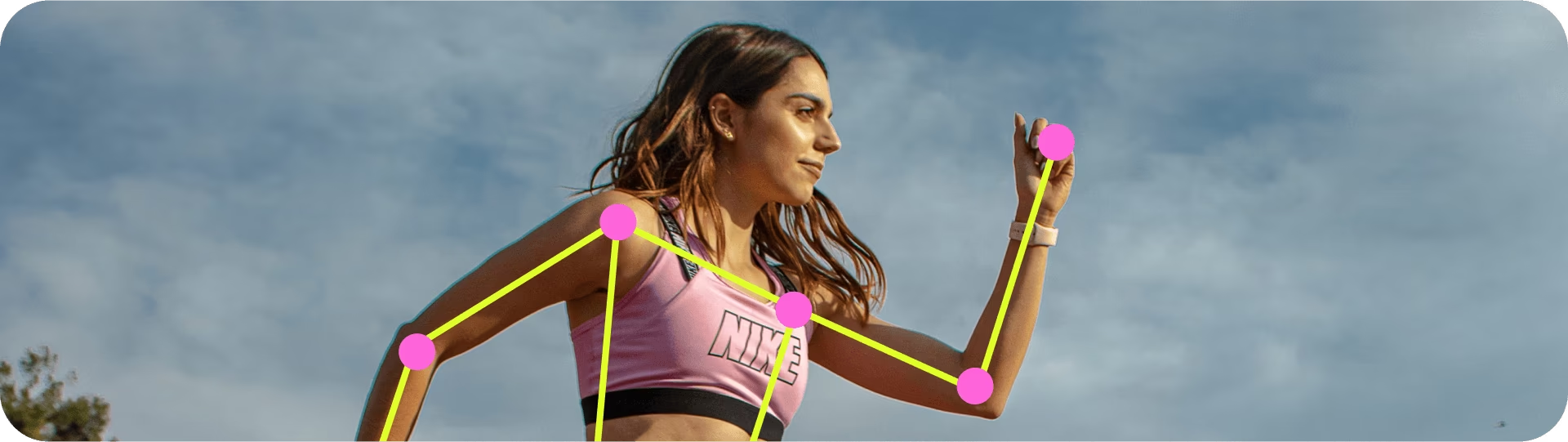
姿勢推定は、画像内の特定の点(通常はキーポイントと呼ばれます)の位置を特定するタスクです。キーポイントは、関節、ランドマーク、その他の特徴的な部分など、オブジェクトのさまざまな部位を表します。キーポイントの位置は通常、2Dの[x, y]座標のセットで表され、オプションで可視性フラグ[x, y, visible]が付与されます。
姿勢推定モデルの出力は、画像内のオブジェクトのキーポイントを表す点のセットで、通常は各点の信頼度スコアも含まれます。シーン内のオブジェクトの特定の部分と、それら相互の位置関係を特定する必要がある場合、姿勢推定が適しています。
視聴: Ultralytics YOLO26 でリアルタイム姿勢推定を実行する方法 | トラッキングとキーポイント抽出 🕺
YOLO26 Poseモデルでは、-poseサフィックス(例:yolo26n-pose.pt)が使用され、COCOキーポイントで事前学習されています。
モデル#
COCOキーポイントデータセットで事前学習されたYOLO26 Poseモデルを以下に示します。
モデルは、初回使用時に最新のUltralytics リリースから自動的にダウンロードされます。
| モデル | サイズ (ピクセル) | mAP姿勢 50-95(e2e) | mAP姿勢 50(e2e) | 速度 CPU ONNX (ms) | 速度 T4 TensorRT10 (ms) | パラメーター (M) | FLOPs (B) |
|---|---|---|---|---|---|---|---|
| YOLO26n-pose | 640 | 57.2 | 83.3 | 40.3 ± 0.5 | 1.8 ± 0.0 | 2.9 | 7.6 |
| YOLO26s-pose | 640 | 63.0 | 86.6 | 85.3 ± 0.9 | 2.7 ± 0.0 | 10.4 | 24.1 |
| YOLO26m-pose | 640 | 68.8 | 89.6 | 218.0 ± 1.5 | 5.0 ± 0.1 | 21.5 | 73.3 |
| YOLO26l-pose | 640 | 70.4 | 90.5 | 275.4 ± 2.4 | 6.5 ± 0.1 | 25.9 | 91.7 |
| YOLO26x-pose | 640 | 71.6 | 91.6 | 565.4 ± 3.0 | 12.2 ± 0.2 | 57.6 | 202.3 |
- mAPvalの値は、COCO Keypoints val2017データセットで、単一モデル・単一スケールを使用した場合のものです。
yolo pose val data=coco-pose.yaml device=0 nms=Falseで再現できます - 速度は、COCO val画像に対してONNXをCPUで、TensorRT10をNVIDIA T4 GPUで使用した場合の平均値です。
yolo pose val data=coco-pose.yaml batch=1 device=0|cpu nms=Falseで再現できます。 - ParamsとFLOPsの値は、Conv/BatchNormのfoldingと未使用の検出ブランチの削除を適用した後の、融合済みモデルの値です。事前学習済みチェックポイントにはトレーニング時のアーキテクチャ全体が保持されているため、より大きな値が表示される場合があります。
予備的なCOCOキーポイントの結果については、未リリースのYOLO27プレビューをご覧ください。
学習#
COCO8-poseデータセットでYOLO26n-poseを、画像サイズ640、100エポックで学習します。使用可能な引数の一覧は、設定ページをご覧ください。
from ultralytics import YOLO

# モデルを読み込む
model = YOLO("yolo26n-pose.yaml")  # YAMLから新しいモデルを構築します
model = YOLO("yolo26n-pose.pt")  # 事前トレーニング済みモデルを読み込みます(トレーニングにはこちらを推奨します)
model = YOLO("yolo26n-pose.yaml").load("yolo26n-pose.pt")  # YAMLからモデルを構築し、重みを転送します

# モデルをトレーニングする
results = model.train(data="coco8-pose.yaml", epochs=100, imgsz=640)trainモードの詳細については、学習ページをご覧ください。姿勢推定モデルは、Ultralytics Platformのクラウドトレーニングでも学習できます。
データセットのフォーマット#
YOLO姿勢データセット形式の詳細については、データセットガイドをご覧ください。既存のCOCOキーポイントJSONデータセットをYOLO形式に変換するには、COCOからYOLOへのガイドで説明されているように、組み込みのconvert_coco関数をuse_keypoints=Trueとともに使用します。Ultralytics Platformのアノテーションでは、人、手、顔、およびカスタムのキーポイント配置に対応した組み込みのスケルトンテンプレートを使って、姿勢ラベルを付けることもできます。
カスタム姿勢推定タスクでは、動物の姿勢推定に使えるTiger-Pose、手のトラッキングに使えるHand Keypoints、犬の姿勢分析に使えるDog-Poseなどの専門データセットもご検討ください。
検証#
学習済みのYOLO26n-poseモデルの精度を検証します。modelは学習時のdataと引数をモデル属性として保持するため、引数は不要です。学習の例にあるpath/to/best.ptはCOCO8-poseで検証します。公式ウェイトには、お使いのマシン上に存在しない学習データセットのパスが記録されているため、警告を表示してタスクのデフォルトcoco8-pose.yamlにフォールバックします。別のデータセットで検証するには、dataを指定します。
from ultralytics import YOLO

# モデルを読み込む
model = YOLO("yolo26n-pose.pt")  # 公式モデルを読み込みます
model = YOLO("path/to/best.pt")  # カスタムモデルを読み込む

# モデルを検証します
metrics = model.val()  # データセットと設定が記憶されるため、引数は不要です
metrics.box.map  # map50-95
metrics.box.map50  # map50
metrics.box.map75  # map75
metrics.box.maps  # カテゴリごとのmAP50-95を含むリスト
metrics.box.image_metrics  # ボックスの画像ごとのメトリクス辞書。precision、recall、F1、TP、FP、FNを含みます
metrics.pose.map  # map50-95(P)
metrics.pose.map50  # map50(P)
metrics.pose.map75  # map75(P)
metrics.pose.maps  # 各カテゴリのmAP50-95(P)を含むリスト
metrics.pose.image_metrics # 姿勢の画像ごとのメトリクス辞書。precision、recall、F1、TP、FP、FNを含みます推論#
学習済みのYOLO26n-poseモデルを使用して、画像に対する予測を実行します。
from ultralytics import YOLO

# モデルを読み込む
model = YOLO("yolo26n-pose.pt")  # 公式モデルを読み込みます
model = YOLO("path/to/best.pt")  # カスタムモデルを読み込む

# モデルで予測します
results = model("https://ultralytics.com/images/bus.jpg")  # 画像に対して予測します

# 結果にアクセスします
for result in results:
    xy = result.keypoints.xy  # x座標とy座標
    xyn = result.keypoints.xyn  # normalized
kpts = result.keypoints.data # x、y、可視性(利用可能な場合)Predictページでpredictモードの詳細をご確認ください。
結果の出力#
姿勢推定では、画像ごとに1つのResultsオブジェクトが返されます。主な予測フィールドは、姿勢の座標を示すresult.keypointsと、それらのキーポイントが属する検出インスタンスを示すresult.boxesです。
| 属性 | 種類 | 形状 | 説明 |
|---|---|---|---|
result.keypoints | Keypoints | (N) | キーポイントです。 |
result.keypoints.data | torch.float32 | (N,K,2/3) | x,yに、オプションで可視性/信頼度が加わります。 |
result.keypoints.xy | torch.float32 | (N,K,2) | ピクセル座標のキーポイントです。 |
result.keypoints.xyn | torch.float32 | (N,K,2) | 正規化されたキーポイントです。 |
result.boxes | Boxes | (N) | インスタンスボックスです。 |
すべてのタスクにおける、タスク固有のResultsフィールドについては、タスク別の予測結果セクションをご覧ください。
キーポイントのインデックスマップ#
デフォルトのYOLO26 Poseモデルは17個のCOCOキーポイントを予測するため、result.keypoints.xy[:, k]内のインデックスkは次のとおりです。
- 鼻
- 左目
- 右目
- 左耳
- 右耳
- 左肩
- 右肩
- 左肘
- 右肘
- 左手首
- 右手首
- 左腰
- 右腰
- 左膝
- 右膝
- 左足首
- 右足首
エクスポート#
YOLO26n-poseモデルをONNX、CoreMLなどの別の形式にエクスポートします。
from ultralytics import YOLO

# モデルを読み込む
model = YOLO("yolo26n-pose.pt")  # 公式モデルを読み込みます
model = YOLO("path/to/best.pt")  # カスタムモデルを読み込む

# モデルをエクスポートする
model.export(format="onnx")使用可能なYOLO26-poseのエクスポート形式を以下の表に示します。format引数を使用すれば、format='onnx'やformat='engine'など、任意の形式にエクスポートできます。エクスポート済みモデルで直接予測または検証することもできます(例:yolo predict model=yolo26n-pose.onnx)。エクスポートが完了すると、お使いのモデルに対応する使用例が表示されます。
| 形式 | format引数 | モデル | メタデータ | 引数 |
|---|---|---|---|---|
| PyTorch | - | yolo26n-pose.pt | ✅ | - |
| TorchScript | torchscript | yolo26n-pose.torchscript | ✅ | imgsz, quantize, dynamic, nms, batch, device |
| ONNX | onnx | yolo26n-pose.onnx | ✅ | imgsz, quantize, dynamic, simplify, opset, nms, batch, data, fraction, device |
| OpenVINO | openvino | yolo26n-pose_openvino_model/ | ✅ | imgsz, quantize, dynamic, nms, batch, data, fraction, device |
| TensorRT | engine | yolo26n-pose.engine | ✅ | imgsz, quantize, dynamic, simplify, opset, workspace, nms, batch, data, fraction, device |
| CoreML | coreml | yolo26n-pose.mlpackage | ✅ | imgsz, dynamic, quantize, nms, batch, device |
| Apple Core AI | coreai | yolo26n-pose.aimodel | ✅ | imgsz, batch, quantize |
| TF SavedModel | saved_model | yolo26n-pose_saved_model/ | ✅ | imgsz, quantize, opset, nms, batch, data, fraction, device |
| TF GraphDef | pb | yolo26n-pose.pb | ❌ | imgsz, opset, batch, device |
| TF Edge TPU | edgetpu | yolo26n-pose_edgetpu.tflite | ✅ | imgsz, quantize, opset, data, fraction, device |
| LiteRT | litert | yolo26n-pose.tflite | ✅ | imgsz, quantize, batch, data, fraction, device |
| PaddlePaddle | paddle | yolo26n-pose_paddle_model/ | ✅ | imgsz, batch, device |
| MNN | mnn | yolo26n-pose.mnn | ✅ | imgsz, batch, dynamic, quantize, simplify, opset, nms, device |
| NCNN | ncnn | yolo26n-pose_ncnn_model/ | ✅ | imgsz, quantize, batch, device |
| IMX500 | imx | yolo26n-pose_imx_model/ | ✅ | imgsz, quantize, data, fraction, nms, device |
| RKNN | rknn | yolo26n-pose_rknn_model/ | ✅ | imgsz, batch, name, quantize, simplify, opset, data, fraction, device |
| ExecuTorch | executorch | yolo26n-pose_executorch_model/ | ✅ | imgsz, batch, device |
| Axelera | axelera | yolo26n-pose_axelera_model/ | ✅ | imgsz, batch, quantize, data, fraction, device |
| DEEPX | deepx | yolo26n-pose_deepx_model/ | ✅ | imgsz, quantize, simplify, opset, data, optimize, device |
| Qualcomm QNN | qnn | yolo26n-pose_qnn.onnx | ✅ | imgsz, batch, name, quantize, simplify, opset, data, fraction, device |
| Hailo | hailo | yolo26n-pose_hailo_model/ | ✅ | imgsz, name, quantize, data, fraction, simplify, conf, iou, device |
| Huawei Ascend | ascend | yolo26n-pose_ascend_model/ | ✅ | imgsz, batch, name, quantize, opset, simplify, nms, device |
| AMD Xilinx | xilinx | yolo26n-pose_xilinx_model/ | ✅ | imgsz, name, quantize, data, fraction, opset, simplify, device |
nms=None は外部NMS向けにraw出力をデフォルトで使用します。利用可能なNMSフリーヘッドを選択するには、nms=Falseを設定してください。未対応のフォーマットでは、ネイティブの出力パスにフォールバックします。上記のnmsの項目は、nms=Trueを使用してNMSを埋め込めるフォーマットを示しています。
詳細なexport情報については、Exportページをご覧ください。
よくある質問#
Ultralytics YOLO26による姿勢推定では、画像内のキーポイントと呼ばれる特定の点を特定します。キーポイントは通常、関節やオブジェクトのその他の重要な特徴を表します。出力には、各点の
[x, y]座標と信頼度スコアが含まれます。YOLO26-poseモデルはこのタスク専用に設計されており、-poseサフィックス(例:yolo26n-pose.pt)を使用します。これらのモデルはCOCOキーポイントなどのデータセットで事前学習されており、さまざまな姿勢推定タスクに使用できます。詳細については、姿勢推定のページをご覧ください。カスタムデータセットでYOLO26-poseモデルを学習するには、YAMLファイルで定義した新しいモデルまたは事前学習済みモデルを読み込みます。その後、指定したデータセットとパラメーターを使用して学習を開始できます。
例from ultralytics import YOLO # モデルを読み込む model = YOLO("yolo26n-pose.yaml") # YAMLから新しいモデルを構築します model = YOLO("yolo26n-pose.pt") # 事前トレーニング済みモデルを読み込みます(トレーニングにはこちらを推奨します) # モデルをトレーニングする results = model.train(data="your-dataset.yaml", epochs=100, imgsz=640)学習の詳細については、学習セクションをご覧ください。カスタム姿勢推定モデルをノーコードで学習するには、Ultralytics Platformのクラウドトレーニングも利用できます。
YOLO26-poseモデルの検証では、学習時に保持されたものと同じデータセットパラメーターを使用して精度を評価します。次に例を示します。
例from ultralytics import YOLO # モデルを読み込む model = YOLO("yolo26n-pose.pt") # 公式モデルを読み込みます model = YOLO("path/to/best.pt") # カスタムモデルを読み込む # モデルを検証します metrics = model.val() # データセットと設定が記憶されるため、引数は不要です詳細については、検証セクションをご覧ください。
はい、YOLO26-poseモデルはONNX、CoreML、TensorRTなどのさまざまな形式にエクスポートできます。Pythonまたはコマンドラインインターフェース(CLI)を使用してエクスポートできます。
例from ultralytics import YOLO # モデルを読み込む model = YOLO("yolo26n-pose.pt") # 公式モデルを読み込みます model = YOLO("path/to/best.pt") # カスタムモデルを読み込む # モデルをエクスポートする model.export(format="onnx")詳細については、エクスポートセクションをご覧ください。エクスポートしたモデルは、フィットネストラッキング、スポーツ分析、ロボティクスなどのリアルタイムアプリケーション向けにエッジデバイスへデプロイできます。
Ultralytics YOLO26には、YOLO26n-pose、YOLO26s-pose、YOLO26m-poseなど、さまざまな事前学習済み姿勢モデルがあります。これらのモデルはサイズ、精度(mAP)、速度が異なります。各モデルのCOCOキーポイントmAP、速度、パラメーター数、FLOPsを含む一覧は、モデルセクションをご覧ください。