Conjunto de dados DOTA com OBB
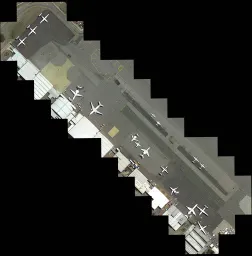
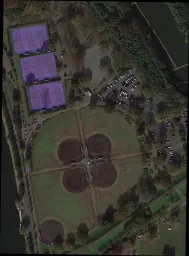
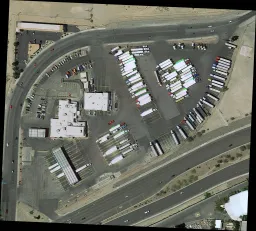
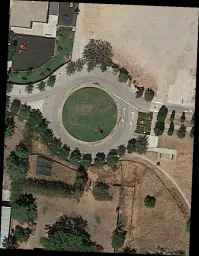
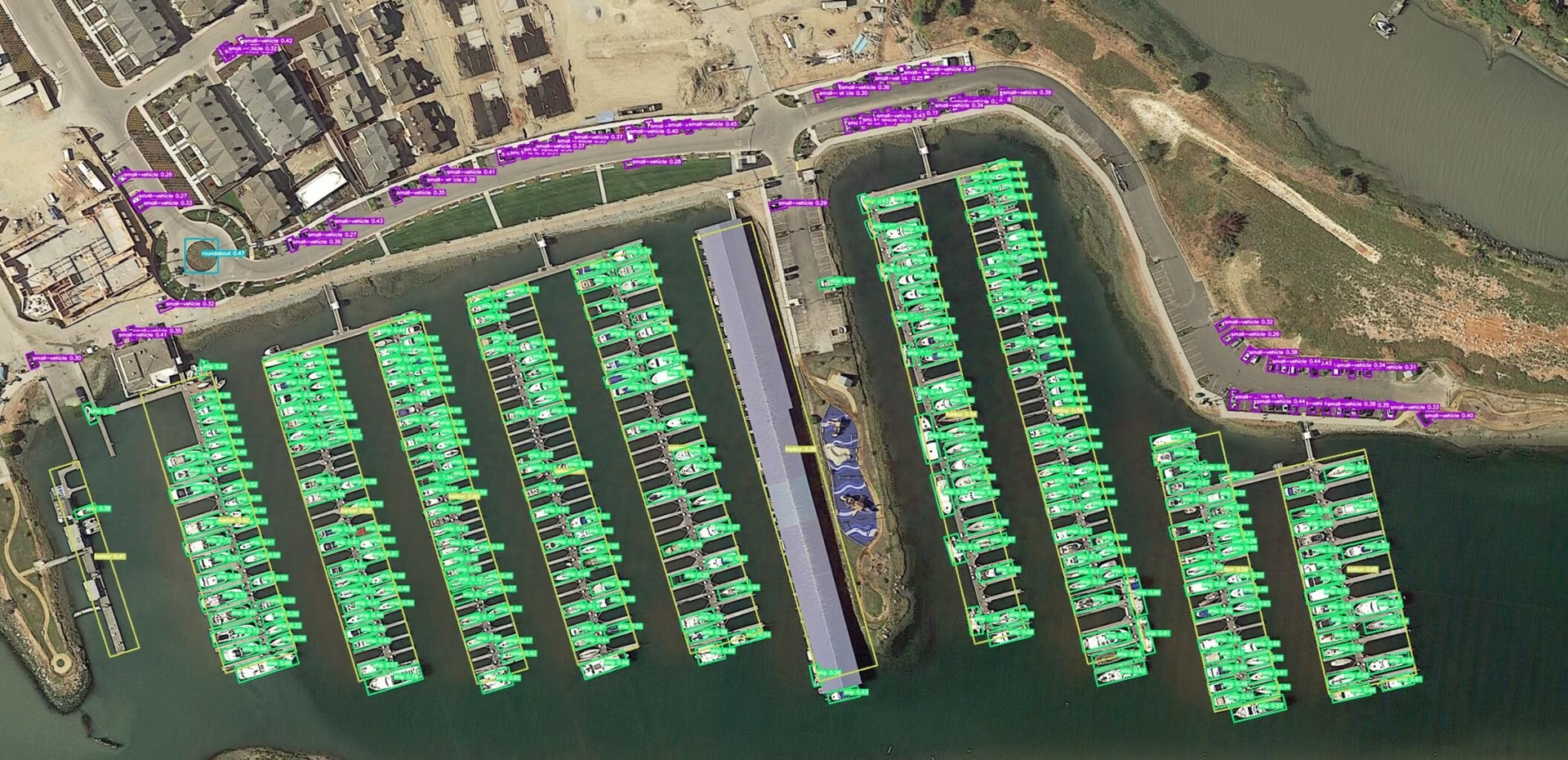
O conjunto de dados DOTA é um benchmark de grande escala para a deteção de objetos em imagens aéreas. Foi lançado em três versões (v1.0, v1.5 e v2.0) e contém até 1,7 milhões de anotações de caixas delimitadoras orientadas (OBB) distribuídas por 18 categorias, captadas por diversos sensores e plataformas aéreas.
Explora os conjuntos de dados oficialmente alojados DOTA v1.5 e DOTA v1.0 na Ultralytics Platform para pré-visualizar as anotações orientadas, consultar as estatísticas e cloná-los para treino.
Principais funcionalidades#
Assista: Como treinar Ultralytics YOLO no conjunto de dados DOTA para caixas delimitadoras orientadas no Google Colab
- Recolhido com vários sensores e plataformas, com tamanhos de imagem entre 800 × 800 e 20.000 × 20.000 píxeis.
- Inclui mais de 1,7 milhões de caixas delimitadoras orientadas distribuídas por 18 categorias.
- Abrange a deteção de objetos em várias escalas, graças à ampla gama de tamanhos dos objetos em cada imagem.
- As instâncias são anotadas por especialistas com quadriláteros arbitrários (8 graus de liberdade), que representam objetos com diferentes escalas, orientações e formas.
Versões do conjunto de dados#
DOTA-v1.0#
- Contém 15 categorias comuns.
- É composto por 2.806 imagens com 188.282 instâncias.
- Proporções das divisões: 1/2 para treino (1.411 imagens), 1/6 para validação (458 imagens) e 1/3 para teste (937 imagens).
DOTA-v1.5#
- Inclui as mesmas imagens que o DOTA-v1.0.
- Também são anotadas instâncias muito pequenas (com menos de 10 píxeis).
- Adição de uma nova categoria: "grua de contentores".
- Um total de 403.318 instâncias.
- Lançado para o Desafio DOAI 2019 de deteção de objetos em imagens aéreas.
DOTA-v2.0#
- Coleções do Google Earth, do satélite GF-2 e de outras imagens aéreas.
- Contém 18 categorias comuns.
- Compreende 11.268 imagens com 1.793.658 instâncias.
- Novas categorias introduzidas: "aeroporto" e "heliporto".
- Divisões das imagens:
- Treino: 1.830 imagens com 268.627 instâncias.
- Validação: 593 imagens com 81.048 instâncias.
- Test-dev: 2.792 imagens com 353.346 instâncias.
- Test-challenge: 6.053 imagens com 1.090.637 instâncias.
Estrutura do conjunto de dados#
O DOTA apresenta um layout estruturado, desenvolvido para desafios de detecção de objetos com OBB:
- Imagens: Uma vasta coleção de imagens aéreas de alta resolução que capturam terrenos e estruturas diversos.
- Caixas delimitadoras orientadas: Anotações na forma de retângulos rotacionados que delimitam objetos independentemente da orientação, ideais para capturar objetos como aviões, navios e edifícios.
Aplicações#
O DOTA serve como benchmark para treinar e avaliar modelos desenvolvidos para análise de imagens aéreas. Suas anotações de caixas delimitadoras orientadas fazem dele um teste exigente para modelos de detecção de objetos em alvos aéreos rotacionados e densamente agrupados. O conjunto de dados é amplamente utilizado em sensoriamento remoto, vigilância e monitoramento ambiental.
YAML do conjunto de dados#
Um arquivo YAML do conjunto de dados especifica as raízes de imagens/rótulos, os nomes das classes e outros metadados importantes. A Ultralytics mantém arquivos YAML oficiais para as duas versões mais usadas:
Usa o YAML correspondente à versão que baixaste ou cria um YAML personalizado se estiveres a trabalhar com DOTA-v2 ou outro derivado. Ambas as versões são baixadas automaticamente (2 GB) dos recursos do Ultralytics GitHub na primeira vez que treinas.
# Ultralytics 🚀 AGPL-3.0 License - https://ultralytics.com/license

# DOTA 1.0 dataset https://captain-whu.github.io/DOTA/index.html for object detection in aerial images by Wuhan University
# Documentation: https://docs.ultralytics.com/datasets/obb/dota-v2
# Example usage: yolo train model=yolov8n-obb.pt data=DOTAv1.yaml
# parent
# ├── ultralytics
# └── datasets
#     └── DOTAv1 ← downloads here (2 GB)

# Train/val/test sets as 1) dir: path/to/imgs, 2) file: path/to/imgs.txt, or 3) list: [path/to/imgs1, path/to/imgs2, ..]
path: DOTAv1 # dataset root dir
train: images/train # train images (relative to 'path') 1411 images
val: images/val # val images (relative to 'path') 458 images
test: images/test # test images (optional) 937 images

# Classes for DOTA 1.0
names:
  0: plane
  1: ship
  2: storage tank
  3: baseball diamond
  4: tennis court
  5: basketball court
  6: ground track field
  7: harbor
  8: bridge
  9: large vehicle
  10: small vehicle
  11: helicopter
  12: roundabout
  13: soccer ball field
  14: swimming pool

# Download script/URL (optional)
download: https://github.com/ultralytics/assets/releases/download/v0.0.0/DOTAv1.zip
Dividir imagens DOTA#
As imagens brutas costumam ultrapassar 10.000 pixels de cada lado, por isso recomenda-se dividi-las em blocos antes de fornecer os dados ao YOLO. Usa o auxiliar abaixo para dividir as imagens de origem em recortes sobrepostos de 1024 × 1024 em várias escalas, mantendo as anotações sincronizadas.
from ultralytics.data.split_dota import split_test, split_trainval

# Dividir os conjuntos de treino e validação, com rótulos.
split_trainval(
    data_root="path/to/DOTAv1.0/",
    save_dir="path/to/DOTAv1.0-split/",
    rates=[0.5, 1.0, 1.5],  # multiscale
    gap=500,
)
# Dividir o conjunto de teste, sem rótulos.
split_test(
    data_root="path/to/DOTAv1.0/",
    save_dir="path/to/DOTAv1.0-split/",
    rates=[0.5, 1.0, 1.5],  # multiscale
    gap=500,
)Mantém o diretório de saída organizado no layout padrão do YOLO (images/train, labels/train, etc.) para que possas referenciá-lo diretamente no YAML do conjunto de dados.
Uso#
Para treinar um modelo YOLO26n-obb no conjunto de dados DOTA v1, use os trechos de código a seguir. Consulte sempre a documentação do seu modelo para ver a lista completa de argumentos disponíveis. Se você quiser experimentar primeiro um subconjunto menor, considere usar o conjunto de dados DOTA8, que contém apenas 8 imagens para testes rápidos e pode ser explorado na Plataforma Ultralytics.
Todas as imagens e anotações associadas no conjunto de dados DOTAv1 podem ser usadas apenas para fins acadêmicos; o uso comercial é proibido. A Ultralytics interpreta essas restrições como aplicáveis ao conjunto de dados de origem, e não aos pesos de modelos pré-treinados ou ajustados. Consulte os termos do DOTA para o uso pretendido.
from ultralytics import YOLO

# Carrega um modelo YOLO26n-OBB pré-treinado
model = YOLO("yolo26n-obb.pt")

# Treina o modelo no conjunto de dados DOTAv1
results = model.train(data="DOTAv1.yaml", epochs=100, imgsz=1024)
Dados de exemplo e anotações#
A amostra abaixo mostra cenas e anotações típicas do DOTA:
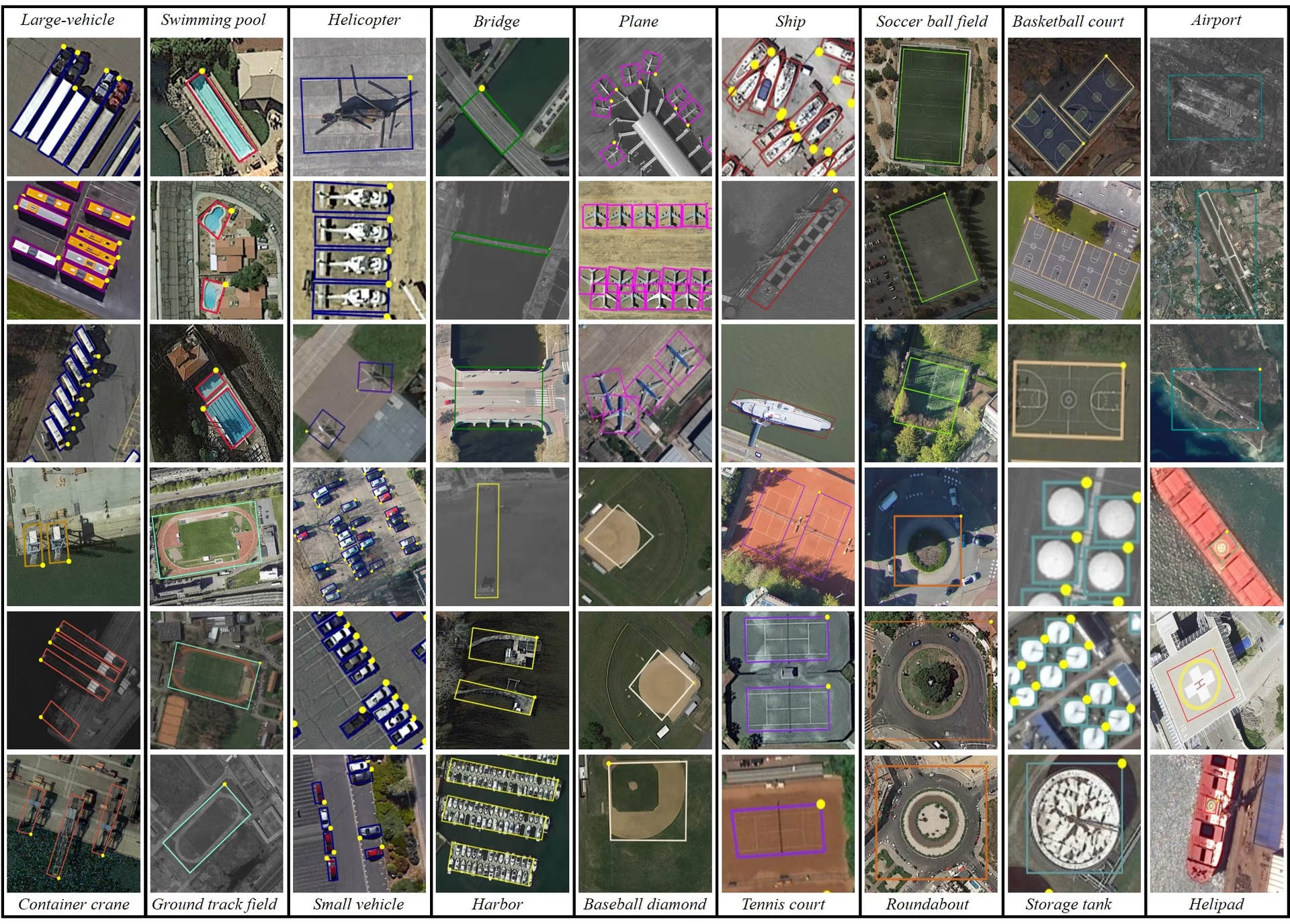
- Exemplos do DOTA: Esta imagem destaca a complexidade das cenas aéreas e a importância das anotações de caixas delimitadoras orientadas, que capturam objetos na sua orientação natural.
Essas cenas destacam os desafios de detecção específicos de imagens aéreas. O DOTA-v2.0 é amplamente usado em projetos de sensoriamento remoto e vigilância aérea graças às suas anotações abrangentes e às diversas categorias de objetos.
Citações e agradecimentos#
Se usares o DOTA no teu trabalho, cita os artigos de pesquisa pertinentes:
@article{9560031,
  author={Ding, Jian and Xue, Nan and Xia, Gui-Song and Bai, Xiang and Yang, Wen and Yang, Michael and Belongie, Serge and Luo, Jiebo and Datcu, Mihai and Pelillo, Marcello and Zhang, Liangpei},
  journal={IEEE Transactions on Pattern Analysis and Machine Intelligence},
  title={Object Detection in Aerial Images: A Large-Scale Benchmark and Challenges},
  year={2022},
  volume={44},
  number={11},
  pages={7778-7796},
  doi={10.1109/TPAMI.2021.3117983}
}
Agradecemos à equipe por trás dos conjuntos de dados DOTA por organizá-los. Para ver todos os detalhes do conjunto de dados, visite o site oficial do DOTA.
Perguntas frequentes#
O conjunto de dados DOTA é um conjunto de dados especializado em detecção de objetos em imagens aéreas. Ele inclui caixas delimitadoras orientadas (OBB) e imagens anotadas de diversas cenas aéreas. A diversidade de orientação, escala e forma dos objetos no DOTA, com 1,7 milhão de anotações e 18 categorias, torna-o ideal para desenvolver e avaliar modelos voltados à análise de imagens aéreas, como os usados em vigilância, monitoramento ambiental e gestão de desastres.
O DOTA usa caixas delimitadoras orientadas (OBB) para anotação, representadas por retângulos rotacionados que envolvem os objetos, independentemente da orientação. Esse método garante que os objetos, sejam pequenos ou estejam em ângulos diferentes, sejam capturados com precisão. As imagens multiescala do conjunto de dados, que variam de 800 × 800 a 20.000 × 20.000 pixels, também permitem detectar objetos pequenos e grandes com eficiência. Essa abordagem é especialmente valiosa para imagens aéreas, nas quais os objetos aparecem em vários ângulos e escalas.
Para treinar um modelo no conjunto de dados DOTA, podes usar o exemplo a seguir com Ultralytics YOLO:
Exemplo de treinofrom ultralytics import YOLO # Carrega um modelo YOLO26n-OBB pré-treinado model = YOLO("yolo26n-obb.pt") # Treina o modelo no conjunto de dados DOTAv1 results = model.train(data="DOTAv1.yaml", epochs=100, imgsz=1024)Para mais detalhes sobre como dividir e pré-processar as imagens DOTA, consulta a seção sobre divisão de imagens DOTA.
- DOTA-v1.0: Inclui 15 categorias comuns em 2.806 imagens, com 188.282 instâncias. O conjunto de dados é dividido em conjuntos de treino, validação e teste.
- DOTA-v1.5: Expande o DOTA-v1.0 ao anotar instâncias muito pequenas (com menos de 10 pixels) e adicionar uma nova categoria, "guindaste de contêiner", totalizando 403.318 instâncias.
- DOTA-v2.0: Expande ainda mais as anotações com imagens do Google Earth e do satélite GF-2, abrangendo 11.268 imagens e 1.793.658 instâncias. Inclui novas categorias, como "aeroporto" e "heliponto".
Para uma comparação detalhada e informações adicionais, consulta a seção sobre versões do conjunto de dados.
As imagens DOTA podem ser muito grandes, por isso são divididas em imagens menores para facilitar o treino. Aqui está um trecho de código Python para dividir as imagens:
Exemplofrom ultralytics.data.split_dota import split_test, split_trainval # dividir os conjuntos de treino e validação, com rótulos. split_trainval( data_root="path/to/DOTAv1.0/", save_dir="path/to/DOTAv1.0-split/", rates=[0.5, 1.0, 1.5], # multiscale gap=500, ) # dividir o conjunto de teste, sem rótulos. split_test( data_root="path/to/DOTAv1.0/", save_dir="path/to/DOTAv1.0-split/", rates=[0.5, 1.0, 1.5], # multiscale gap=500, )Esse processo melhora a eficiência do treino e o desempenho do modelo. Para instruções detalhadas, visita a seção sobre divisão de imagens DOTA.


Comentários17
Faz uma pergunta, partilha os teus resultados ou ajuda alguém.
XWP-PPP
May I ask how you converted the inference results from YOLOV8 OBB into inference results that can be uploaded to DOTA's Task 1 server? I saved the final inference results of the model in the form of xyxyxy and uploaded them via email. However, the mAP results provided on YOLO's official website differ significantly. I would like to know the reason for this. Can you provide me with a conversion code to convert the test image set into a result that can be uploaded to DOTA's Task 1 server? Thank you very much for your help!
1 Paula DerrengerUltralytics(editado)
@XWP-PPP hi there!
DOTA's Task 1 server expects a zip of one text file per class (
Task1_plane.txt,Task1_storage-tank.txt, ...), where each line isimgname score x1 y1 x2 y2 x3 y3 x4 y4, with the image name given without extension. OBB results are stored inresult.obb, notresult.boxes. Here is a snippet that builds those files:import shutil from collections import defaultdict from pathlib import Path from ultralytics import YOLO # Load your trained YOLO26-OBB model model = YOLO("path/to/your/yolo26n-obb.pt") # Collect one DOTA Task1 line per detection: imgname score x1 y1 x2 y2 x3 y3 x4 y4 (pixels) category_results = defaultdict(list) for r in model.predict(source="path/to/test/images", stream=True): img_name = Path(r.path).stem for cls, conf, pts in zip(r.obb.cls.int().tolist(), r.obb.conf.tolist(), r.obb.xyxyxyxy.flatten(1).tolist()): coords = " ".join(f"{p:.1f}" for p in pts) category_results[f"Task1_{model.names[cls].replace(' ', '-')}.txt"].append(f"{img_name} {conf:.6f} {coords}\n") # Save one file per category and zip the submission folder output_dir = Path("submission") output_dir.mkdir(exist_ok=True) for category_file, lines in category_results.items(): (output_dir / category_file).write_text("".join(lines)) shutil.make_archive("submission", "zip", output_dir)Upload
submission.zipto the DOTA Task 1 server. If your mAP differs from your local validation, check that image names match the test set and that the coordinates are in pixels of the original (unsplit) images. For more details, see the DOTA Dataset Documentation. Happy coding! 😊
Taufiq-Ahmed-pranto
Hi, I want to use the DOTA dataset only for YOLOv11 Nano. I don't want to use the model with oriented bounding boxes (OBB). What is the procedure?
 Jie Liu
I have download dotav1 form
https://github.com/ultralytics/assets/releases/download/v0.0.0/DOTAv1.zipand use script split dataset.from ultralytics.data.split_dota import split_test, split_trainval # split train and val set, with labels. split_trainval( data_root="/dataset/coco/DOTAv1", save_dir="/dataset/coco/DOTAv1.0-split/", rates=[0.5, 1.0, 1.5], # multiscale gap=500, ) # split test set, without labels. split_test( data_root="/dataset/coco/DOTAv1/", save_dir="/dataset/coco/DOTAv1.0-split/", rates=[0.5, 1.0, 1.5], # multiscale gap=500, )how to reproduce yolov11 obb result, please show me the command like
yolo train model=ultralytics-8.3.13/ultralytics/cfg/models/11/yolo11n-obb.yaml data=DOTAv1/DOTAv1.yaml epochs=500 batch=32*4 imgsz=640 device=4,5,6,7 cache=disk amp=True Glenn JocherUltralytics(editado)
@keeper-jie for training YOLO26-OBB on DOTAv1 after splitting, use this command with your 4 GPUs:
yolo obb train data=DOTAv1.yaml model=yolo26n-obb.pt epochs=500 imgsz=1024 batch=128 device=4,5,6,7Key parameters from our DOTA documentation:
imgsz=1024(matches dataset's multiscale split)- Use official model name
yolo26n-obb.ptrather than YAML path - Batch size 128 (32*4 GPUs) via
batch=128
Ensure your dataset YAML paths point to the split images directory.
huynhkhoa44
I have labeled data in YOLOv8 object detection format, our label data format is already rotated rectangles to the correct angle of the object, however since it is in YOLOv8 object detection format, the "angle" parameter is missing. I no longer keep the label folder on CVAT so I cannot export to a different label format. Is there a way to add the angle value from the 4 pre-existing <x_center> <y_center> values?
- Glenn JocherUltralytics
To add the angle value from your existing YOLOv8 labels, you'll need to calculate it based on the coordinates. Unfortunately, without the original CVAT labels, this requires manual computation or using a tool that supports angle annotations. For guidance on datasets with oriented bounding boxes, you can refer to the DOTA dataset documentation at https://docs.ultralytics.com/datasets/obb/dota-v2/.
jack-ready
Recently, I've been using YOLOv8 to train the DOTAv1 dataset and encountered some issues. I was wondering if I could seek advice. 1.To train the DOTA dataset, we split the original DOTA images with high-resolution into images with 1024x1024. I noticed that the provided segmentation code provides three sizes, rates=[0.5, 1.0, 1.5]. In order to obtain 1024×1024 images, it seems that we should choose rates=1, but I noticed that some images in the segmentation results of the validation set are smaller than 1024×1024, such as 1024×1023, 824*1024, etc. What is the reason for this?Will it affect the experiment? 2.Another issue arises during the training process. I noticed that the training process conducts validation after each epoch. I attempted to disable validation by setting val=False, but it seems to have no effect. What could be the reason for this? The training code snippet is as follows: results = model.train(data="DOTAv1.yaml", epochs=100, imgsz=640, batch=10, workers=0, val=False). Additionally, during validation, it seems that the images are not being resized to 640. Printing the results in the code yields torch.Size([10, 3, 672, 672]), whereas during the training process, images are correctly resized to 640. Could someone help me understand this?
- Glenn JocherUltralytics(editado)
@jack-ready hi there!
Thank you for reaching out with your questions regarding training the DOTA dataset with YOLOv8. Let's address each of your concerns:
-
Image Splitting and Sizes: When splitting high-resolution DOTA images into 1024x1024 segments using
rates=[0.5, 1.0, 1.5], you might notice some resulting images are slightly smaller than 1024x1024 (e.g., 1024x1023 or 824x1024). This occurs due to the way the splitting algorithm handles the edges of the original images. If the original image dimensions are not perfectly divisible by 1024, the last segment in each row or column might be smaller. This should not significantly affect your experiment as long as the majority of your data maintains the expected size. However, you can ensure consistency by padding these smaller images to 1024x1024 if necessary. -
Disabling Validation: The
val=Falseargument should indeed disable validation during training. If it doesn't seem to work, please ensure you are using the latest version of the Ultralytics package. You can update it using:pip install --upgrade ultralyticsIf the issue persists, providing a minimum reproducible example would be very helpful for us to diagnose the problem. You can find guidance on creating one here: Minimum Reproducible Example.
-
Image Resizing During Validation: The discrepancy in image sizes during validation (e.g.,
torch.Size([10, 3, 672, 672])instead of 640) might be due to the model's internal resizing logic. Ensure that theimgszparameter is correctly set for both training and validation. Validation uses the sameimgszas training, so set it explicitly in your training script:results = model.train(data="DOTAv1.yaml", epochs=100, imgsz=640, batch=10, workers=0, val=True)
I hope this helps! If you have any further questions or need additional assistance, feel free to ask. Happy training! 🚀
-
Thank you very much for your help. I have another question regarding the YOLOV8 training on the DOTA v1.0 dataset. I would like to know how to set the training parameters, such as learning rate, optimizer, and loss function. When I try to reproduce the results, my mAP50 is about 74%, but it does not reach 78%. I would greatly appreciate any assistance you can provide.Below is my training code. from ultralytics import YOLO model = YOLO("yolov8n-obb.yaml") model.load("yolov8n-obb.pt") model = YOLO("yolov8n-obb.yaml").load("yolov8n.pt") results = model.train(data="DOTAv1.yaml", epochs=100, imgsz=640, batch=48, workers=0,project="runs/DOTAV1.0",val=True,resume=True)
- Glenn JocherUltralytics(editado)
Hi there! Glad to help with your training setup. To fine-tune your training parameters for better mAP50 results, you can adjust the learning rate, optimizer, and loss function. For instance, you might try a lower learning rate or switch to a different optimizer like Adam. Here's a quick example:
from ultralytics import YOLO

model = YOLO("yolo26n-obb.yaml").load("yolo26n-obb.pt")
results = model.train(
    data="DOTAv1.yaml",
    epochs=100,
    imgsz=640,
    batch=48,
    workers=0,
    project="runs/DOTAV1.0",
    val=True,
    lr0=0.001,  # Adjust learning rate
    optimizer='Adam'  # Change optimizer
)
Ensure you're using the latest version of the Ultralytics package to avoid any bugs. If you still face issues, feel free to share more details. Happy training! 🚀
Tintin26100
How can I find the number of instances per class in DOTA v1.5 ? I've been searching for this information for a moment and I can't find any answers
- Paula DerrengerUltralytics
@Tintin26100 hello!
The number of instances per class in DOTA v1.5 isn't directly listed in the dataset's summary. However, you can obtain this information by analyzing the annotation files provided with the dataset. Each object instance in these files is labeled with a class, and you can count the number of times each class appears.
If you need further guidance on how to process these annotation files or any other assistance with the DOTA dataset, feel free to ask!
Happy coding! 😊
Hi, thanks for your quick answer, I will gladly accept your help because I don't really know what to do to extract those informations, where do you find the annotation files ? Is it on the github ? If it is what's it's path ? Thanks for the time you spend helping
- Paula DerrengerUltralytics
@Tintin26100 hello!
The annotation files for the DOTA dataset are typically included within the dataset download itself. These files contain the details for each instance, including class labels and oriented bounding box coordinates.
For the DOTA v1.5 dataset, you can find these files in the dataset directory after you download it from the official DOTA dataset page or the provided download link in the dataset's YAML configuration file. The path to the annotations will usually be structured under the
labelsorannotationsdirectory within the main dataset folder.If you've already downloaded the dataset, you should look for
.txtor.jsonfiles corresponding to each image in the dataset, which contain the annotations. If you need further assistance navigating these files or extracting specific data, feel free to ask!Thank you for reaching out, and happy analyzing! 😊
hencai
how to test DOTA datatests online using YOLOv8-obb? somebody help me ?
- Glenn JocherUltralytics(editado)
Hey there! 😊 Testing the DOTA dataset online using YOLO26-obb is quite straightforward. If you've already prepared your dataset according to the Ultralytics guidelines and split the images, here's a simple example to get you started with training:
# Train a YOLO26n-OBB model on the DOTA v1 dataset
yolo obb train data=DOTAv1.yaml model=yolo26n-obb.pt epochs=100 imgsz=640
This command uses DOTA v1 and the corresponding
.yamlfile (DOTAv1.yaml) describing your dataset paths and classes. Adjustepochsandimgszbased on your needs.Just make sure to check out the DOTA dataset page on Ultralytics docs for more info on dataset preparation and additional configurations! Happy detecting! 🚀