Carparts Segmentation Dataset#
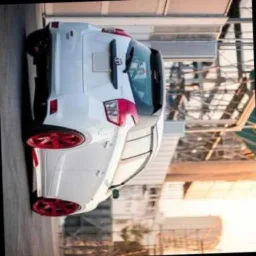
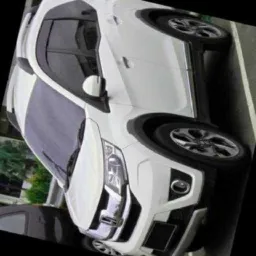
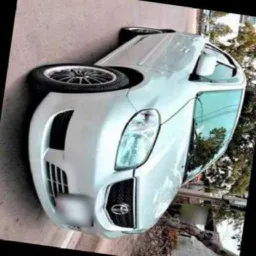
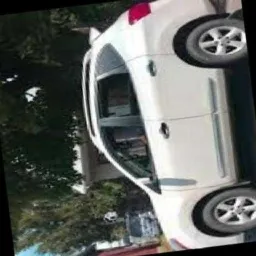

The Ultralytics Carparts Segmentation Dataset provides 3,833 annotated images across 23 car-part classes — including bumpers, doors, lights, mirrors, hood, and trunk — for training instance segmentation models on automotive computer vision tasks. Captured from multiple perspectives and annotated with pixel-level masks, it pairs directly with Ultralytics YOLO for use cases ranging from automotive quality control and auto repair to insurance-claim damage assessment and autonomous-vehicle perception.
Watch: How to Segment Carparts with Ultralytics Platform | Train, Deploy & Inference | Ultralytics YOLO26 🚀
Dataset Structure#
The Carparts Segmentation Dataset splits its 3,833 images as follows:
- Training set: 3,156 images used for training the deep learning model.
- Validation set: 401 images used during training to tune hyperparameters and prevent overfitting on validation data.
- Testing set: 276 images used to evaluate the model on held-out test data after training.
- Classes: 23 in total — 22 named car-part categories (bumpers, doors, lights, glass, mirrors, hood, tailgate, trunk, and wheels) plus a catch-all
objectclass for parts outside those categories. - Download size: ~133 MB.
Applications#
Carparts Segmentation finds applications in various domains including:
- Automotive Quality Control: Identifying defects or inconsistencies in car parts during manufacturing (AI in Manufacturing).
- Auto Repair: Assisting mechanics in identifying parts for repair or replacement.
- E-commerce Cataloging: Automatically tagging and categorizing car parts in online stores for e-commerce platforms.
- Traffic Monitoring: Analyzing vehicle components in traffic surveillance footage.
- Autonomous Vehicles: Enhancing the perception systems of self-driving cars to better understand surrounding vehicles.
- Insurance Processing: Automating damage assessment by identifying affected car parts during insurance claims.
- Recycling: Sorting vehicle components for efficient recycling processes.
- Smart City Initiatives: Contributing data for urban planning and traffic management systems within Smart Cities.
The complete Carparts Segmentation Dataset can also be browsed and managed on Ultralytics Platform.
Dataset YAML#
A YAML file defines the dataset configuration, including paths, class names, and other essential details. For the Carparts Segmentation dataset, the carparts-seg.yaml file is available at https://github.com/ultralytics/ultralytics/blob/main/ultralytics/cfg/datasets/carparts-seg.yaml. You can learn more about the YAML format at yaml.org.
# Ultralytics 🚀 AGPL-3.0 License - https://ultralytics.com/license

# Carparts-seg dataset by Ultralytics
# Documentation: https://docs.ultralytics.com/datasets/segment/carparts-seg
# Example usage: yolo train data=carparts-seg.yaml
# parent
# ├── ultralytics
# └── datasets
#     └── carparts-seg ← downloads here (133 MB)

# Train/val/test sets as 1) dir: path/to/imgs, 2) file: path/to/imgs.txt, or 3) list: [path/to/imgs1, path/to/imgs2, ..]
path: carparts-seg # dataset root dir
train: images/train # train images (relative to 'path') 3156 images
val: images/val # val images (relative to 'path') 401 images
test: images/test # test images (relative to 'path') 276 images

# Classes
names:
  0: back_bumper
  1: back_door
  2: back_glass
  3: back_left_door
  4: back_left_light
  5: back_light
  6: back_right_door
  7: back_right_light
  8: front_bumper
  9: front_door
  10: front_glass
  11: front_left_door
  12: front_left_light
  13: front_light
  14: front_right_door
  15: front_right_light
  16: hood
  17: left_mirror
  18: object
  19: right_mirror
  20: tailgate
  21: trunk
  22: wheel

# Download script/URL (optional)
download: https://github.com/ultralytics/assets/releases/download/v0.0.0/carparts-seg.zipUsage#
To train an Ultralytics YOLO26 model on the Carparts Segmentation dataset for 100 epochs with an image size of 640, use the following code snippets. Refer to the model Training guide for a comprehensive list of available arguments and explore model training tips for best practices.
from ultralytics import YOLO

# Load a pretrained segmentation model like YOLO26n-seg
model = YOLO("yolo26n-seg.pt")  # load a pretrained model (recommended for training)

# Train the model on the Carparts Segmentation dataset
results = model.train(data="carparts-seg.yaml", epochs=100, imgsz=640)

# After training, you can validate the model's performance on the validation set
results = model.val()

# Or perform prediction on new images or videos
results = model.predict("path/to/your/image.jpg")
Sample Data and Annotations#
Below is an example image from the Carparts Segmentation Dataset with its object segmentation masks overlaid, showing how individual car parts are outlined and labeled:
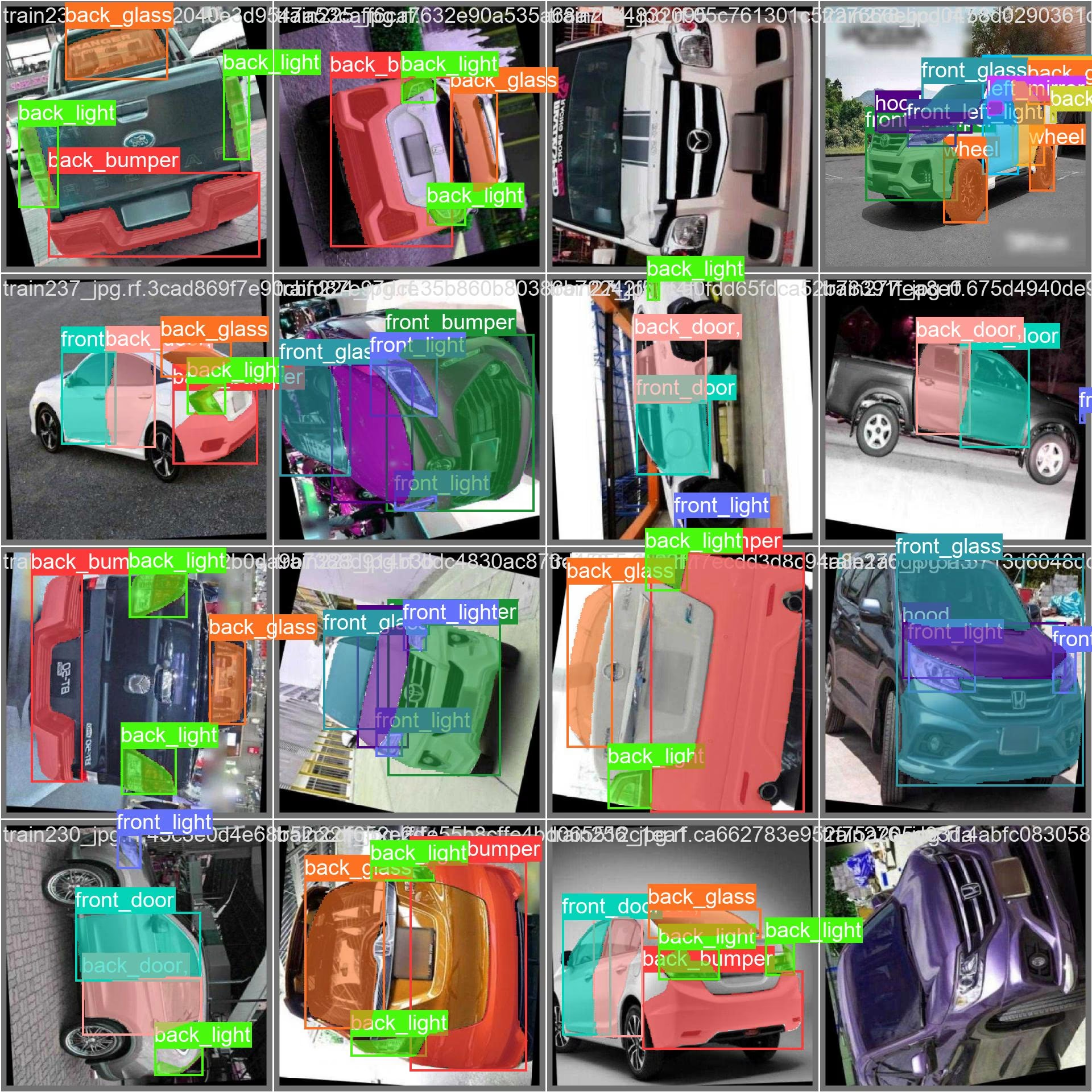
The dataset spans varied locations, lighting conditions, and object densities, giving models trained on it exposure to the range of real-world scenes they'll need to generalize across.
Citations and Acknowledgments#
If you utilize the Carparts Segmentation dataset in your research or development efforts, please cite the original source:
@misc{car-seg-un1pm_dataset,
      title = { car-seg Dataset },
      type = { Open Source Dataset },
      author = { Gianmarco Russo },
      url = { https://universe.roboflow.com/gianmarco-russo-vt9xr/car-seg-un1pm },
      year = { 2023 },
      month = { nov },
      note = { visited on 2024-01-24 },
}
We acknowledge the contribution of Gianmarco Russo and the Roboflow team in creating and maintaining this valuable dataset for the computer vision community. For more datasets, visit the Ultralytics Datasets collection.
FAQ#
The Carparts Segmentation Dataset is a curated collection of 3,833 annotated images spanning 23 car-part classes — bumpers, doors, lights, mirrors, hood, trunk, and more — for training and evaluating instance segmentation models. It's built for automotive computer vision applications like quality control, auto repair, and damage assessment, and is used directly with Ultralytics YOLO26 via the
carparts-seg.yamlconfiguration file.The dataset totals 3,833 images — 3,156 for training, 401 for validation, and 276 for testing — across 23 classes: 22 named car-part categories plus a catch-all
objectclass for parts outside them. The full archive downloads automatically as a ~133 MB.zipon first use.Load a pretrained segmentation model (e.g.,
yolo26n-seg.pt) and train it with thecarparts-seg.yamlconfiguration using the Python or CLI snippets in the Usage section above. See the Training guide for the full list of available arguments.Carparts segmentation supports automotive quality control, auto repair, e-commerce cataloging, traffic monitoring, autonomous-vehicle perception, insurance damage assessment, recycling, and smart-city initiatives — see the Applications section above for details on each use case.
The dataset configuration file,
carparts-seg.yaml, which contains details about the dataset paths and classes, is located in the Ultralytics GitHub repository: carparts-seg.yaml.This dataset offers rich, annotated data crucial for developing accurate segmentation models for automotive applications. Its diversity helps improve model robustness and performance in real-world scenarios like automated vehicle inspection, enhancing safety systems, and supporting autonomous driving technology. Using high-quality, domain-specific datasets like this accelerates AI development.