Tiger-Pose 데이터셋
소개#
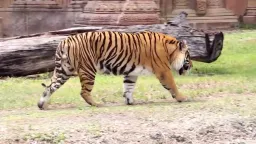
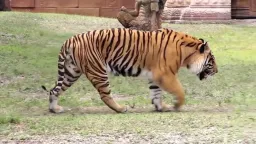
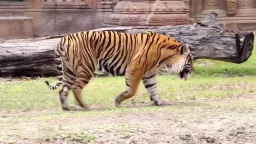
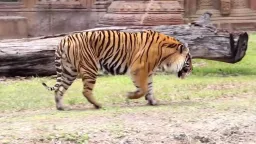
Ultralytics Tiger-Pose 데이터셋은 호랑이당 키포인트 12개가 주석 처리된 소규모 포즈 추정 데이터셋입니다. YouTube 동영상에서 수집한 이미지 263개로 구성되며, 이 중 210개는 학습용이고 53개는 검증용입니다. 포즈 추정 알고리즘을 테스트하고 문제를 해결하는 데 적합합니다.
학습용 데이터가 210개 이미지로 적당한 규모이지만, Tiger-Pose 데이터셋은 다양한 이미지를 제공하므로 학습 파이프라인을 평가하고 잠재적 오류를 식별하는 데 적합하며, 더 큰 포즈 추정 데이터셋을 다루기 전에 유용한 첫 단계로 활용할 수 있습니다.
이 작은 데이터셋으로 파이프라인 학습을 문제없이 완료한 후에는 자체 동물 또는 객체 키포인트로 바꾸고, 브라우저를 벗어나지 않고 Ultralytics Platform에서 학습 규모를 확장할 수 있습니다.
데이터셋 구조#
- 총 이미지 수: 263개 (학습 210개 / 검증 53개).
- 키포인트: 호랑이 한 마리당 12개 (가시성 플래그 없음).
- 다운로드 크기: ~49.8 MB.
- 디렉터리 레이아웃: YOLO 형식의 키포인트는
labels/{train,val}아래에 저장되며,images/{train,val}디렉터리와 나란히 배치됩니다.
시청: Tiger-Pose 데이터셋으로 Ultralytics YOLO 포즈 모델 학습하기
데이터셋 YAML#
tiger-pose.yaml 파일은 파일 경로, 클래스 정의, 키포인트 설정을 포함한 데이터셋 구성을 지정합니다.
# Ultralytics 🚀 AGPL-3.0 License - https://ultralytics.com/license

# Tiger Pose dataset by Ultralytics
# Documentation: https://docs.ultralytics.com/datasets/pose/tiger-pose
# Example usage: yolo train data=tiger-pose.yaml
# parent
# ├── ultralytics
# └── datasets
#     └── tiger-pose ← downloads here (49.8 MB)

# Train/val/test sets as 1) dir: path/to/imgs, 2) file: path/to/imgs.txt, or 3) list: [path/to/imgs1, path/to/imgs2, ..]
path: tiger-pose # dataset root dir
train: images/train # train images (relative to 'path') 210 images
val: images/val # val images (relative to 'path') 53 images

# Keypoints
kpt_shape: [12, 2] # number of keypoints, number of dims (2 for x,y or 3 for x,y,visible)
flip_idx: [0, 1, 2, 3, 7, 6, 5, 4, 10, 11, 8, 9]

# Classes
names:
  0: tiger

# Keypoint names per class
kpt_names:
  0:
    - nose
    - head
    - withers
    - tail_base
    - right_hind_hock
    - right_hind_paw
    - left_hind_paw
    - left_hind_hock
    - right_front_wrist
    - right_front_paw
    - left_front_wrist
    - left_front_paw

# Download script/URL (optional)
download: https://github.com/ultralytics/assets/releases/download/v0.0.0/tiger-pose.zip사용법#
이미지 크기를 640으로 설정하고 Tiger-Pose 데이터셋에서 YOLO26n-pose 모델을 100 에폭 동안 학습하려면 다음 코드 스니펫을 사용할 수 있습니다.
from ultralytics import YOLO

# 모델 로드
model = YOLO("yolo26n-pose.pt")  # 사전 학습된 모델을 불러옵니다(학습에 권장).

# 모델 학습
results = model.train(data="tiger-pose.yaml", epochs=100, imgsz=640)
샘플 이미지 및 어노테이션#
다음은 Tiger-Pose 데이터셋의 이미지와 해당 어노테이션 예시입니다.
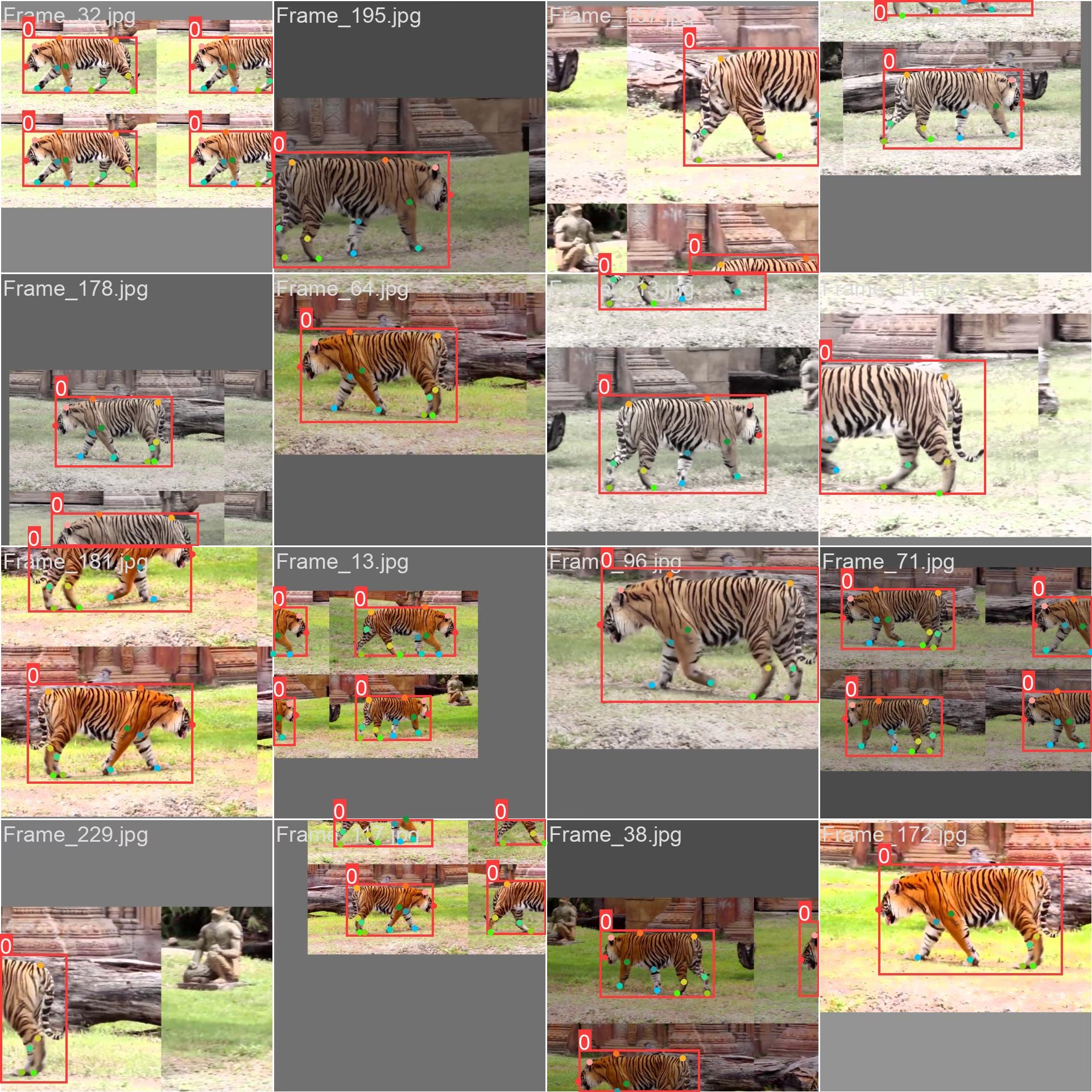
- 모자이크 이미지: 이 이미지는 모자이크 처리된 데이터셋 이미지로 구성된 학습 배치를 보여줍니다. 모자이크 처리는 학습 중 여러 이미지를 하나의 이미지로 결합해 각 학습 배치에 포함되는 객체와 장면의 다양성을 높이는 기법입니다. 이 기법은 모델이 다양한 객체 크기, 종횡비 및 맥락에 일반화하는 능력을 향상하는 데 도움이 됩니다.
이 예시는 Tiger-Pose 데이터셋 이미지의 다양성과 복잡성, 그리고 학습 과정에서 모자이크를 사용하는 이점을 보여줍니다.
추론 예시#
학습 후 최적의 체크포인트를 불러와 새 이미지나 동영상에서 추론을 실행하세요. 전체 인수 목록은 예측 페이지를 참조하세요.
from ultralytics import YOLO

# 모델 로드
model = YOLO("path/to/best.pt")  # tiger-pose로 학습한 모델 불러오기

# 추론 실행
results = model.predict(source="https://youtu.be/Gc6K5eKrTNQ", show=True)
인용 및 감사의 글#
Ultralytics는 Tiger-Pose 데이터셋 어노테이션을 AGPL-3.0 라이선스에 따라 배포합니다. 원본 동영상에는 원래 이용 약관이 계속 적용되므로, 추출한 프레임을 사용하거나 재배포하기 전에 해당 약관을 검토해야 합니다.
자주 묻는 질문#
Ultralytics Tiger-Pose 데이터셋은 포즈 추정 작업을 위해 설계되었으며, YouTube 동영상에서 가져온 이미지 263개로 구성됩니다. 데이터셋은 학습 이미지 210개와 검증 이미지 53개로 나뉘어 테스트, 학습, 포즈 추정 알고리즘 개선에 적합합니다.
tiger-pose.yaml파일은 데이터셋 경로, 학습/검증 이미지 디렉터리, 단일 클래스(tiger),kpt_shape: [12, 2]를 정의합니다. 즉, 인스턴스당 키포인트 12개가 포함되며 가시성 플래그는 없습니다. 정확한 구성은 Ultralytics Tiger-Pose 데이터셋 구성 파일을 참조하세요.총 이미지 263개(학습 210개 / 검증 53개), 클래스 1개, 인스턴스당 키포인트 12개, 다운로드 크기 ~49.8 MB인 Tiger-Pose는 빠르게 다룰 수 있을 만큼 작으면서도 포즈 학습 파이프라인을 점검하고 더 큰 데이터셋을 사용하기 전에 오류를 파악하기에 충분한 다양성을 갖추고 있습니다.


댓글17
질문을 하거나 결과를 공유하거나 다른 사람을 도와주세요.
wcy7788
@glenn-jocherWhere should I go to Ultralytics to find the code for this?
 Glenn JocherUltralytics
You can find the code for the Tiger-Pose dataset in the
ultralytics/cfg/datasets/tiger-pose.yamlfile. For more details, please visit the Tiger-Pose documentation.
What software should be used for the training of fish key points,I should mark a few key points?
- Glenn JocherUltralytics(수정됨)
@wcy7788 for training fish keypoints, you can use the YOLO26-pose model. Annotate your dataset with keypoints and follow the training process similar to the Tiger-Pose example. For more details, refer to the Ultralytics documentation.
PedroPiana
In my dataset, do I necessarily need to have the Bounding Boxes?
- Glenn JocherUltralytics(수정됨)
Yes, for pose estimation tasks like those using the Tiger-Pose dataset, each label row includes a bounding box followed by the keypoints:
<class-index> <x> <y> <width> <height> <px1> <py1> .... The bounding box (normalized center x, y, width, height) is part of the pose label format, so annotate both the box and the keypoints for each object. 🐅For more details on setting up your dataset for pose estimation, you can refer to the Tiger-Pose dataset documentation and the pose dataset format.
teengineer
Hello, when i executed the predict code, i took a warning 'WARNING ⚠️ Environment does not support cv2.imshow() or PIL Image.show() google colab'. I worked on Google Colab. How can i see the results?
- Glenn JocherUltralytics(수정됨)
@teengineer hello! 😊 It seems you're facing an issue with displaying images in Google Colab due to its environment limitations. To view your results in Colab, you can use the following approach to display images directly in the notebook:
from pathlib import Path

from IPython.display import Image, display
from ultralytics import YOLO

# Load your model
model = YOLO('yolo26n.pt')  # or your custom model

# Run prediction (ensure 'save' is True to save output images)
results = model.predict(source='path/to/your/image.jpg', save=True)

# Display the saved image
display(Image(f"{results[0].save_dir}/{Path(results[0].path).name}"))  # saved output in the predict run folder
This method saves the output image and then uses IPython's display capabilities to show the image within your notebook. Hope this helps you see your results! Let us know if you have any more questions.
1 Thank you @glenn-jocher, i forgot the 'save' parameter on predict func.
Hi, I want to show prediction result on video but it throw an warning, is there a way for showing? This warning is 'WARNING ⚠️ Environment does not support cv2.imshow() or PIL Image.show()'
- Glenn JocherUltralytics(수정됨)
Hey there! 😊 It looks like you're trying to display video predictions in an environment that doesn't support
cv2.imshow()orPIL Image.show(), such as Google Colab. No worries, you can still view your video predictions by saving the output and then displaying it directly in the notebook. Here's a quick example on how you could modify your code to save the video predictions and then useIPython.displayto show the video:from ultralytics import YOLO from pathlib import Path from IPython.display import FileLink, display # Load your model model = YOLO('yolo26n.pt') # or your custom model # Run prediction on your video and save the output results = model.predict(source='path/to/your/video.mp4', save=True) # The output is saved in the predict run folder (results[0].save_dir), named after the source file # (.mp4 on macOS, .avi on Windows/Linux) # Generate a link to download the video file output_video_path = next(Path(results[0].save_dir).glob('*.*')) display(FileLink(output_video_path))This code will provide a link to download the video file with the predictions. Just replace
'path/to/your/video.mp4'with your actual video path. Hope this helps you view your prediction results! Let me know if there's anything else I can assist you with.1 Thank you for your time.
- Glenn JocherUltralytics
Hey there! 😊 If you're encountering the 'WARNING ⚠️ Environment does not support cv2.imshow() or PIL Image.show()' message while trying to display video predictions in Google Colab, you can save the predictions to a video file and then display it directly in the notebook. Here's a quick example on how to do it:
from ultralytics import YOLO

# Load your model
model = YOLO('yolov8n.pt')  # or your custom model

# Run prediction on your video and save the output
results = model.predict(source='path/to/your/video.mp4', save=True)

# Use the 'files.download()' function from Google Colab to download the result video
from google.colab import files
files.download('path/to/saved/video.mp4')  # Adjust the path to your saved video
This way, you can view the video with predictions by downloading it. Hope this helps! Let me know if you have any more questions.
1
Hi, can yolov8-pose make classifications such as tiger standing, tiger lying down?
- Glenn JocherUltralytics
@teengineer hey there! 🐯 YOLOv8-pose can indeed classify different tiger poses like standing or lying down, but it primarily focuses on pose estimation rather than direct classification. You'd typically train the model to recognize various keypoints on the tiger, and based on the keypoints' positions, you could infer the pose.
For example, after training with the Tiger-Pose dataset, you could analyze the keypoints to determine the pose:
from ultralytics import YOLO

# Load your trained model
model = YOLO('path/to/your/trained_model.pt')

# Run inference
results = model.predict(source='path/to/your/image.jpg')

# Analyze keypoints for pose classification
keypoints = results[0].keypoints
# Here you'd implement your logic to classify poses based on keypoints
This approach gives you the flexibility to define what constitutes a "standing" or "lying down" pose based on the keypoints' arrangement. Hope this helps! Let us know if you have more questions.
Thank you.
- Glenn JocherUltralytics
Hey there! 🐅 Absolutely, YOLOv8-pose can be tailored to classify specific tiger poses by analyzing the keypoints' arrangement. While it's primarily designed for pose estimation, you can infer poses like standing or lying down based on the keypoints. Here's a quick example using the Tiger-Pose dataset:
from ultralytics import YOLO

# Load your trained model
model = YOLO('path/to/your/trained_model.pt')

# Run inference on an image
results = model.predict(source='path/to/your/image.jpg')

# Analyze keypoints for pose classification
keypoints = results[0].keypoints
# Implement your logic here to classify poses based on keypoints
This way, you can classify the tiger's pose by examining the positions of detected keypoints. Hope this helps, and feel free to reach out if you have more questions! 🚀
2