뇌종양 데이터셋
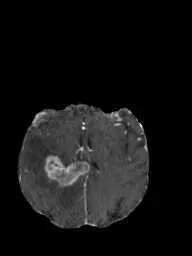
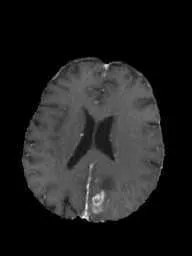
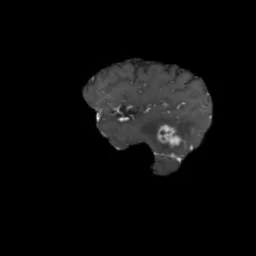
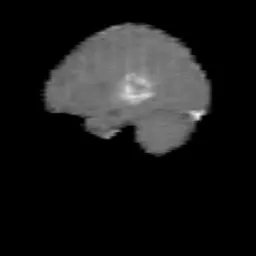

Ultralytics 뇌종양 데이터셋은 뇌 MRI 이미지 1,115개(학습용 994개, 검증용 121개)와 단일 클래스 tumor의 바운딩 박스 1,180개로 구성된 객체 탐지 데이터셋입니다. 모든 이미지에는 종양 박스가 1~3개씩 포함되어 있습니다. 검증 분할에는 환자 ID가 확인된 25명의 이미지가 포함되며, ID가 확인된 환자는 두 분할에 중복으로 포함되지 않습니다. 크기가 4.06 MB인 이 데이터셋은 헬스케어 애플리케이션을 위한 컴퓨터 비전 모델을 학습하고 프로토타이핑하기에 적합한 소규모 데이터셋이며, 임상적으로 검증된 진단 자료는 아닙니다.
시청: Ultralytics YOLO26 및 Ultralytics Platform을 사용한 뇌종양 감지 | 객체 감지 🚀
데이터셋 구조#
Ultralytics 뇌종양 데이터셋은 뇌 MRI 이미지 1,115개와 바운딩 박스 1,180개로 구성되며, brain-tumor.yaml 구성에 정의된 두 개의 분할로 나뉩니다:
| 분할 | 이미지 | 바운딩 박스 | 환자 |
|---|---|---|---|
| 학습 | 994 | 1,057 | ID가 있는 이미지 95개, 환자 ID가 없는 이미지 541개 |
| 검증 | 121 | 123 | 25 |
| 전체 | 1,115 | 1,180 |
모든 이미지에는 단일 클래스 tumor의 바운딩 박스가 1~3개씩 포함되며, 이미지 크기는 192x256~512x512픽셀입니다. 구성에는 별도의 테스트 분할이 정의되어 있지 않습니다.
검증 분할은 환자별로 구성됩니다. 일부 파일 이름은 다섯 자리 환자 ID로 시작합니다. 예를 들어 00097_77.jpg은 환자 00097에 해당합니다. ID가 확인된 환자 중 25명의 이미지가 검증 분할을 구성하고, 나머지 95명의 이미지가 학습 분할에 포함되므로 ID가 확인된 환자는 두 분할에 중복으로 포함되지 않습니다. 나머지 이미지 541개는 파일 이름에 환자 ID가 없으며 모두 학습 분할에 포함됩니다.
첫 학습 실행 시 Ultralytics GitHub 에셋에서 데이터셋(4.06 MB)이 자동으로 다운로드되므로 수동으로 다운로드하거나 준비할 필요가 없습니다.
데이터셋은 2026년 11월에 단일 tumor 클래스로 변경되었습니다. 로컬 brain-tumor/images/train 폴더에 이미지가 994개가 아닌 893개 있는 경우, 데이터셋 디렉터리에서 brain-tumor 폴더를 삭제하고(yolo settings의 datasets_dir 참조) pip install -U ultralytics로 패키지를 업데이트하세요. 그러면 다음 학습 실행 시 최신 버전이 다운로드됩니다.
Ultralytics Platform의 뇌종양 데이터셋을 살펴보며 어노테이션 오버레이가 포함된 이미지를 확인하고, Charts 탭에서 클래스 분포와 바운딩 박스 히트맵을 확인한 다음, 데이터셋을 복제해 클라우드에서 직접 모델을 학습하세요.
응용 분야#
뇌종양 탐지 모델은 뇌 MRI 이미지에서 종양의 위치를 찾습니다. 이미지 1,115개와 다운로드 크기 4.06 MB로 구성된 Ultralytics 뇌종양 데이터셋은 다음 용도에 적합합니다:
- 워크플로 학습: 소규모 데이터셋으로 의료 이미지에서 전체 학습, 검증, 예측 주기를 실행합니다.
- 프로토타이핑: 더 큰 임상 데이터셋으로 전환하기 전에 종양 위치 추정 파이프라인을 구축하고 테스트합니다.
- ID가 확인된 환자를 대상으로 한 평가: 검증 환자 25명에 대한 탐지 성능을 측정합니다. 환자 ID가 없는 학습 이미지 541개가 포함되어 있으므로 이 환자들과의 중복 여부를 배제할 수 없습니다.
- 연구 및 교육: 탐지 모델을 비교하고 의료 영상 분석 및 방사선학 분야의 AI를 연구합니다.
이 데이터셋으로 학습한 모델은 연구 및 교육용이며 임상 진단을 위해 검증되지 않았습니다.
데이터셋 YAML#
brain-tumor.yaml 구성은 데이터셋 경로, 학습 및 검증 이미지 폴더, 단일 클래스 tumor, 다운로드 URL을 정의합니다. 라벨은 Ultralytics YOLO 형식을 사용합니다.
# Ultralytics 🚀 AGPL-3.0 License - https://ultralytics.com/license

# Brain-tumor dataset by Ultralytics
# Documentation: https://docs.ultralytics.com/datasets/detect/brain-tumor
# Example usage: yolo train data=brain-tumor.yaml
# parent
# ├── ultralytics
# └── datasets
#     └── brain-tumor ← downloads here (4.06 MB)

# Train/val/test sets as 1) dir: path/to/imgs, 2) file: path/to/imgs.txt, or 3) list: [path/to/imgs1, path/to/imgs2, ..]
path: brain-tumor # dataset root dir
train: images/train # train images (relative to 'path') 994 images
val: images/val # val images (relative to 'path') 121 images

# Classes
names:
  0: tumor

# Download script/URL (optional)
download: https://github.com/ultralytics/assets/releases/download/v0.0.0/brain-tumor.zip사용법#
아래 코드 조각을 사용하면 이미지 크기 640으로 뇌종양 데이터셋에서 100 에포크 동안 YOLO26n 모델을 학습할 수 있습니다.
from ultralytics import YOLO

# 모델 로드
model = YOLO("yolo26n.pt")  # 사전 학습된 모델을 불러옵니다(학습에 권장).

# 모델 학습
results = model.train(data="brain-tumor.yaml", epochs=100, imgsz=640)from ultralytics import YOLO
# 모델 로드
model = YOLO("path/to/best.pt") # 뇌종양 데이터셋으로 미세 조정된 모델 로드
# 모델을 사용한 추론
results = model.predict("https://ultralytics.com/assets/brain-tumor-sample.jpg")샘플 이미지 및 어노테이션#
아래는 주석이 포함된 Ultralytics 뇌종양 데이터셋의 샘플 이미지입니다:
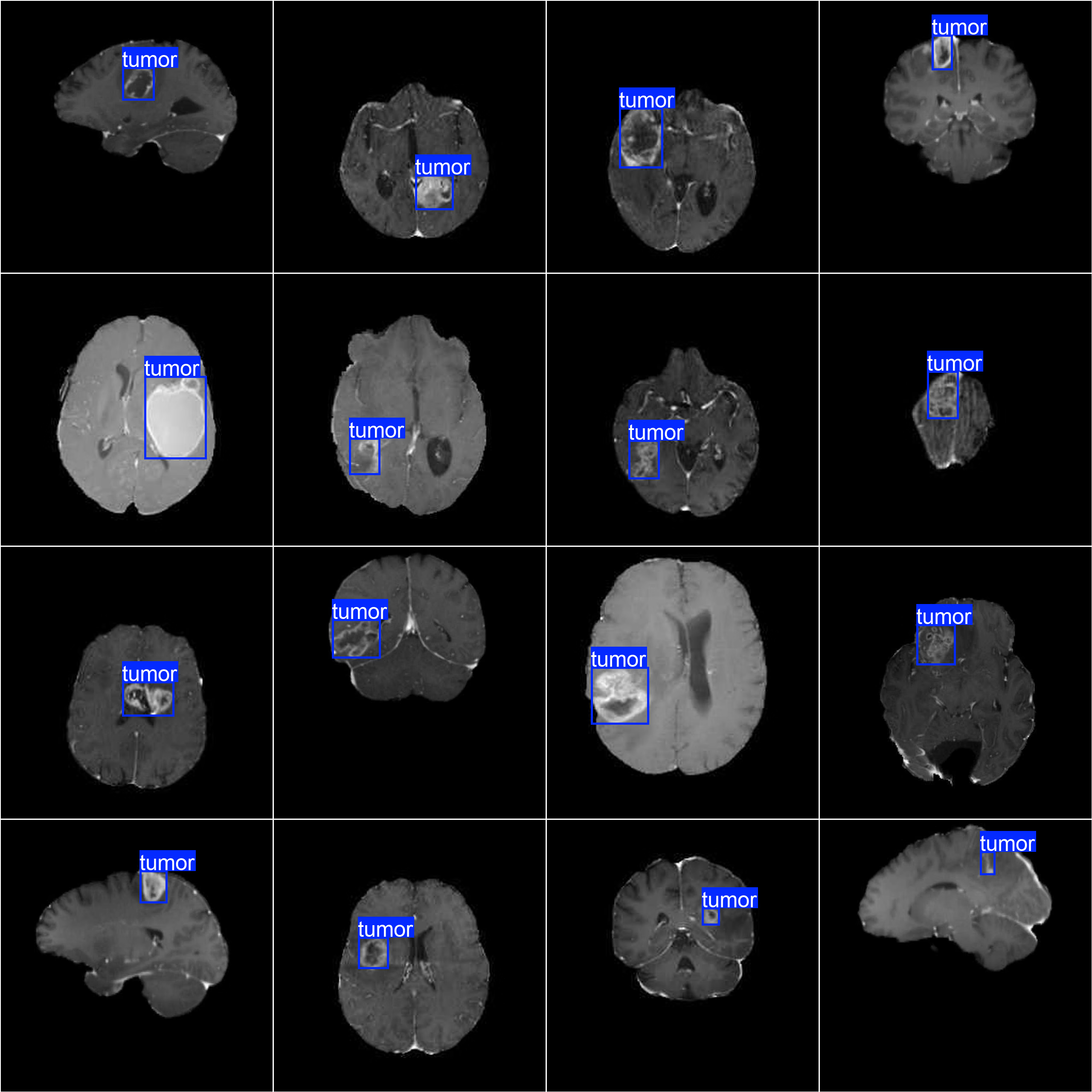
- 주석이 달린 이미지: 그리드에는 각 병변 주위에
tumor바운딩 박스가 표시된 학습 이미지 16개가 나타납니다. 데이터셋 전체에서 종양의 크기, 모양, 위치가 다양하므로 탐지 모델의 일반화에 도움이 됩니다.
인용 및 감사의 글#
이 데이터셋은 AGPL-3.0 License에 따라 제공됩니다.
연구 또는 개발 작업에 뇌종양 데이터셋을 사용하는 경우 다음과 같이 인용해 주세요:
@dataset{Ultralytics_Brain_Tumor_Dataset_2023,
    author = {Ultralytics},
    title = {Brain Tumor Detection Dataset},
    year = {2023},
    publisher = {Ultralytics},
    url = {https://docs.ultralytics.com/datasets/detect/brain-tumor}
}
자주 묻는 질문#
Ultralytics 뇌종양 데이터셋에는 뇌 MRI 이미지 1,115개와 클래스 1개(
tumor)가 있습니다. 학습 이미지 994개에는 바운딩 박스 1,057개가, 검증 이미지 121개에는 바운딩 박스 123개가 포함되어 있습니다. 모든 이미지에는 박스가 1~3개씩 있으며 별도의 테스트 분할은 없습니다. 분할에 대한 자세한 내용은 데이터셋 구조를 참조하세요.Ultralytics 뇌종양 데이터셋에는 뇌 MRI 이미지가 포함되어 있으며 CT 스캔은 없습니다. 이미지 크기는 192x256~512x512픽셀이며, 각 이미지에는 Ultralytics YOLO 형식의
tumor바운딩 박스가 1~3개씩 라벨링되어 있습니다.아니요. Ultralytics 뇌종양 데이터셋에는 종양이 없는 이미지나 음성 클래스가 포함되어 있지 않습니다. 이미지 1,115개 모두에
tumor바운딩 박스가 1~3개씩 있으므로, 이 데이터셋으로 학습한 모델은 스캔이 정상인지 여부가 아니라 종양의 위치를 학습합니다. 이 데이터셋으로 학습한 모델은 임상 진단이 아닌 연구 및 교육용입니다.Ultralytics 뇌종양 데이터셋은 환자별로 분할됩니다. 검증 이미지 121개에는 환자 25명의 ID가 포함되어 있으며, ID가 확인된 환자는 두 분할에 중복으로 포함되지 않습니다. 환자는
00097_77.jpg과 같이 파일 이름의 다섯 자리 접두사로 식별됩니다. 학습 세트에는 나머지 ID가 확인된 환자 95명과 파일 이름에 환자 ID가 없는 이미지 541개가 포함됩니다.Ultralytics 뇌종양 데이터셋(4.06 MB)은
data="brain-tumor.yaml"으로 처음 학습할 때 Ultralytics GitHub 에셋에서 자동으로 다운로드되므로 수동으로 다운로드할 필요가 없습니다. 학습 이미지가 893개인 이전 사본이 이미 저장되어 있다면 해당 사본의brain-tumor폴더를 삭제하고 먼저ultralytics패키지를 업데이트하여 현재의 단일 클래스 버전을 다운로드하세요. 다른 소규모 의료 영상 데이터셋은 의료용 알약 탐지 데이터셋을 참조하세요.Ultralytics 뇌종양 데이터셋으로 YOLO26을 학습하려면 학습 명령에
data="brain-tumor.yaml"을 전달하세요. 데이터셋은 자동으로 다운로드됩니다. 아래 예시에서는 이미지 크기 640으로 YOLO26n을 100 에포크 동안 학습합니다:학습 예제from ultralytics import YOLO # 모델 로드 model = YOLO("yolo26n.pt") # 사전 학습된 모델을 불러옵니다(학습에 권장). # 모델 학습 results = model.train(data="brain-tumor.yaml", epochs=100, imgsz=640)사용 가능한 인수의 자세한 목록은 학습 페이지를 참조하세요.
Ultralytics 뇌종양 데이터셋으로 파인튜닝한 YOLO26 모델을 사용해 추론하려면
best.pt가중치를 불러오고 뇌 MRI 이미지에 대해 predict를 호출하세요. 각 결과에는 신뢰도 점수가 포함된tumor바운딩 박스가 포함됩니다:추론 예제from ultralytics import YOLO # 모델 로드 model = YOLO("path/to/best.pt") # 뇌종양 데이터셋으로 미세 조정된 모델 로드 # 모델을 사용한 추론 results = model.predict("https://ultralytics.com/assets/brain-tumor-sample.jpg")Ultralytics가 제작한 Ultralytics 뇌종양 데이터셋은 AGPL-3.0 라이선스에 따라 배포됩니다.


댓글11
질문을 하거나 결과를 공유하거나 다른 사람을 도와주세요.
ZoltinZyc
how can i download this datasett??
1 Paula DerrengerUltralytics(수정됨)
Hey there! 😊 The easiest way is to train with
data=brain-tumor.yaml, which downloads the dataset automatically the first time. To download it manually, use:wget https://github.com/ultralytics/assets/releases/download/v0.0.0/brain-tumor.zip unzip brain-tumor.zip -d path/to/destinationReplace
path/to/destinationwith the directory where you'd like the dataset stored. Once you have the dataset, you're all set to start training or inferencing with YOLO models on brain tumor images!Should you need further guidance, feel free to ask. Happy coding! 🚀
G-qingqian
Thank you for your reply. I noticed that in the original dataset, the images in the train folder do have ID prefixes, but the images in the val folder are all prefixed with val1_, making it impossible to distinguish which patient the data belongs to. Therefore, I cannot redivide the dataset. Could you please provide data with complete identifiers? ---- Replied Message ---- FromGlenn @.>Date1/18/2026 @.>@.>, @.>SubjectRe: [ultralytics/ultralytics] zh/datasets/detect/brain-tumor/ (Discussion #9988) The packaged brain-tumor dataset split is provided at the image-folder level and doesn’t ship patient IDs/metadata, so we can’t guarantee a patient-disjoint (no same patient in both train/val) split; if you need patient-wise separation, you’ll need to rebuild the split from patient identifiers and point a custom YAML to *.txt image lists (supported by Ultralytics YOLO), e.g. see the provided config in the Brain Tumor dataset docs and the brain-tumor.yaml in the repo.
my-brain-tumor.yaml path: /data/brain-tumor train: splits/train.txt # one image path per line (ideally grouped by patient ID when you create it) val: splits/val.txt names: 0: negative 1: positive
— Reply to this email directly, view it on GitHub, or unsubscribe. You are receiving this because you commented.Message ID: @.***>
 Glenn JocherUltralytics
The packaged
brain-tumorzip only includes image-level labels with anonymized filenames (no patient IDs/metadata), so we can’t provide “complete identifiers” or guarantee a patient-disjoint re-split; for patient-wise splitting you’ll need to rebuild from a source that includes patient IDs (e.g., your DICOM/NIfTI originals) and then generatetrain.txt/val.txt, and if you just need stronger evaluation without IDs you can use our K-Fold Cross Validation guide—please keep follow-ups here in the GitHub discussion (we can’t provide support over email/DM).
Can your dataset ensure that the data are independently and identically distributed by patient? That is, there will be no data from the same patient in both the training set and the validation set.
- Glenn JocherUltralytics
The packaged
brain-tumordataset split is provided at the image-folder level and doesn’t ship patient IDs/metadata, so we can’t guarantee a patient-disjoint (no same patient in both train/val) split; if you need patient-wise separation, you’ll need to rebuild the split from patient identifiers and point a custom YAML to*.txtimage lists (supported by Ultralytics YOLO), e.g. see the provided config in the Brain Tumor dataset docs and the brain-tumor.yaml in the repo.# my-brain-tumor.yaml path: /data/brain-tumor train: splits/train.txt # one image path per line (ideally grouped by patient ID when you create it) val: splits/val.txt names: 0: negative 1: positive
pizzas17
How could I download this dataset on COCO format or how could I convert it? (Since I wish to have an EDA on it
xySun17
How can i train the yoloV8 using this dataset without loading the pre-trained weights?
- Paula DerrengerUltralytics(수정됨)
@xySun17 hello!
To train YOLO26 without loading the pre-trained weights, you can initialize the model from scratch by specifying the model architecture file (e.g.,
yolo26n.yaml) instead of the pre-trained weights file. Here’s how you can do it:Python
from ultralytics import YOLO

# Load a model architecture without pre-trained weights
model = YOLO("yolo26n.yaml")  # build a new model from YAML

# Train the model
results = model.train(data="brain-tumor.yaml", epochs=100, imgsz=640)
CLI
# Train from scratch using the model architecture file
yolo detect train data=brain-tumor.yaml model=yolo26n.yaml epochs=100 imgsz=640
This approach ensures that the model starts training with random weights rather than pre-trained ones. If you encounter any issues, please ensure you are using the latest version of the Ultralytics package and provide a minimum reproducible example if the problem persists. You can find more details on creating a reproducible example here.
Feel free to reach out if you have any further questions. Happy training! 🚀
1 Thank you!! However, there is another problem, that is, why it says the path of dataset is not found? I already downloaded the dataset files and changed the path in "brain-tumor.yaml" file.
The threw error was follows: "Dataset 'brain-tumor.yaml' images not found ⚠️, missing path '/valid/images' Note dataset download directory is '/home/ros/datasets'. You can update this in '/home/ros/.config/Ultralytics/settings.yaml'"
- Paula DerrengerUltralytics(수정됨)
Hello @xySun17,
Thank you for reaching out! It looks like the issue might be related to the dataset path configuration in your
brain-tumor.yamlfile. Here are a few steps to troubleshoot and resolve this:-
Verify Dataset Path: Ensure that the paths specified in your
brain-tumor.yamlfile correctly point to the locations of your dataset images. For example:path: /home/ros/datasets/brain-tumor train: images/train val: images/val -
Check Directory Structure: Confirm that the directory structure matches what is specified in the YAML file. The
images/trainandimages/valdirectories should exist within/home/ros/datasets/brain-tumor. -
Update Configuration: If the dataset is located in a different directory, update the
pathin the YAML file accordingly. For instance, if your dataset is in/home/ros/my-datasets/brain-tumor, update thepathto:path: /home/ros/my-datasets/brain-tumor -
Reproducible Example: If the issue persists, providing a minimum reproducible example can greatly help in diagnosing the problem. You can find guidance on creating a reproducible example here.
-
Latest Version: Ensure you are using the latest version of the Ultralytics package. You can update it using:
pip install --upgrade ultralytics
Here’s an example of how your
brain-tumor.yamlshould look:# Ultralytics 🚀 AGPL-3.0 License - https://ultralytics.com/license # Brain-tumor dataset by Ultralytics # Documentation: https://docs.ultralytics.com/datasets/detect/brain-tumor/ # Example usage: yolo train data=brain-tumor.yaml path: /home/ros/datasets/brain-tumor # dataset root dir train: images/train # train images (relative to 'path') val: images/val # val images (relative to 'path') # Classes names: 0: negative 1: positive # Download script/URL (optional) download: https://github.com/ultralytics/assets/releases/download/v0.0.0/brain-tumor.zipIf you follow these steps and still encounter issues, please share more details or any error messages you receive. This will help us assist you better.
Best regards and happy coding! 🚀
-